Jay Bowman (I) is On the Edge
The entrepreneur from Boone County wants to inspire Congress to 'do its job'
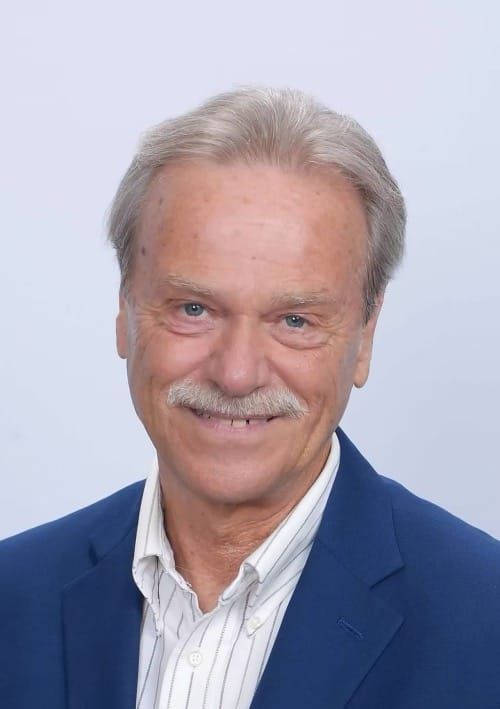
Inventor, entrepreneur, and sportsman Jay Bowman (I) says it's time for Congress to do its job. And even though he'd rather go fishing and hunting, this Independent believes he can go to Washington to get things done. Bowman is a skilled and accomplished inventor and holder of dozens of patents who says he has a demonstrated record of doing things that "can't be done" and doing them for less money than budgeted. His priorities include addressing corporate subsidies to Amazon, Walmart, and others, who pay little taxes, receive various subsidies, but don't pay their employees a living wage. He also wants to address what he thinks is Congress's supine attitude to its War Powers.
Sign up for The Edge, our free email newsletter.
Get the latest stories right in your inbox.
UNEDITED TRANSCRIPT
Speaker 1: 00:00
Well, welcome Jay Bowman to On the Edge. I'm the host and producer Whitney McKnight in the race for Congressional District Six for the U.S. Congress here in Kentucky. And uh Jay Bowman, why are you doing this?
Speaker: 00:12
Well, I'm asked that all the time. Um, I always introduce myself as a small businessman who's gone crazy. And they look at me and take a step back and they say, What? And I said, I've decided to run for Congress. Typically they'll laugh. Sometimes they say, Don't you care about your family? Don't you care about, you know, what you're doing and you know how it's going to be perceived? And there's so much wrong right now that somebody needs to do something. We need to do something different.
Speaker 1: 00:41
Well, let's talk about who you are, where you come from, and what skills you think you have that you can apply to all of these issues that you're seeing as being wrong in Congress.
Speaker: 00:51
Okay. Uh, I started my own business when I was 24, and I've had my own business since then. I know how to get things done on tight budgets and prioritize what's important uh over things that are just peripheral that really don't matter. Uh for instance, we have a truck behind us. Uh, that that's a hybrid truck. Um we've been involved uh to develop that. We were told that you would need 10 years and $100 million to develop a new drivetrain. They were right about the 10 years, but we only spent five and a half million dollars to develop it.
Speaker 1: 01:27
Explain why you were able to do something that experts thought were gonna take was gonna take infinitely more money than you actually were able to do it for. How did that happen?
Speaker: 01:36
Uh I hired a uh uh electrical engineer to come in and review the project when we'd first finished the first prototype. And I told him, I said, I'm so jealous. I wish I had your training, your experience. And he says, Jay, be glad you didn't, because you never would have done it this way. So I bring a fresh outlook, is what I do. I can look at problems and come up with innovative solutions.
Speaker 1: 02:00
And what was the reason you needed a hybrid truck? What is your industry?
Speaker: 02:04
Uh we don't need it. Uh, we do research and development in my business. Uh before the hybrid trucks, we were doing uh uh energy efficient construction products. I have lots of patents in that field, uh process and items. I have international patents on this uh hybrid design that we've done. Uh right now we're working on uh agricultural uh pest control using AI. Uh we can basically take uh an electric bug zapper and make it very smart. It can determine what insect is coming into it by the frequency of its wing beat.
Speaker 1: 02:40
Oh my goodness.
Speaker: 02:41
When it's a pollinator, we shut it down. And when it's a pest that we want to get rid of, we leave it charged up.
Speaker 1: 02:47
And so you sound very technically savvy. Do you did you go to are you an engineer? Did you get a degree in something that's relevant to what you do?
Speaker: 02:57
Hard school of knocks. Uh I barely graduated high school. Uh the the evening of my graduation, I had to call my English teacher to see if I passed or failed. She was so tired of me, she gave me a D minus, so I couldn't leave.
Speaker 1: 03:14
That's great. So, how did you find out though that you're actually you may not have been suited for school, but you were definitely suited for uh being clever with with technology.
Speaker: 03:25
Well, after uh graduating high school by the skin of my teeth, I was accepted conditionally at the University of Utah. I grew up out west, and I got straight A's for the first two semesters. Interesting. Problem I had was everything I was interested in, you couldn't make a living at.
Speaker 1: 03:42
Like what?
Speaker: 03:43
Anthropology, archaeology. Uh, I've always been fascinated with history. Uh, my mother is an archaeologist, and uh she she's been all over the world on digs. I'm jealous, but she never made a dime. Most of them she paid for. Wow. So my father gave me an opportunity to go into business when I was 24 years old. Uh I jumped on it and never looked back.
Speaker 1: 04:05
So, what brought you to Kentucky from Utah? And and you said you've been here, I think I read somewhere that you've been.
Speaker: 04:10
Mid nineties. Yeah, the mid-90s. Uh, a business opportunity. We were doing uh construction products, uh uh innovative construction products. We were manufacturing those out in Salt Lake City, Utah, and they needed an eastern location. So I hopped in the car, drove out here, ran around, identified Florence, Kentucky is an ideal location for manufacturing and distribution, and uh we've had a plant here since then.
Speaker 1: 04:39
So, where do you actually live? Are you in Madison County? Are you in Lex uh Fayette County?
Speaker: 04:44
I could claim three different residences. My my single family home is in Boone County.
Speaker 1: 04:50
Oh, okay, okay. Okay. Is that part of the 6th district? I don't remember that.
Speaker: 04:53
That is no, that is the fourth district. But that's what I thought.
Speaker 1: 04:56
Yeah, it was further north.
Speaker: 04:57
Yeah, most people don't know that you don't have to be uh a resident of the district to run, only to vote. I have strategically picked uh the 6th district as being possible for an independent to win.
Speaker 1: 05:14
Interesting. Okay. So what is your connection to Madison County, or what are the other two um locations that you run?
Speaker: 05:22
Okay, I have an off-grid farm in Owenton, outside of Owenton, Owen County that borders up to the district. I have an office in Lexington that I work out of.
Speaker 1: 05:31
And that's yeah.
Speaker: 05:33
Uh not a real strong connection, but I have a connection with people, the type of people that live there. I I didn't grow up wealthy, I'm not famous, uh just working really hard to make things happen, and that's what I do. People that know me know that I work my butt off.
Speaker 1: 05:54
Well, okay, so then if if you you were very um strategic about your your run your announcing your candidacy, um one of the things that uh Andy Barr cultivated was the extraction industries. They paid a lot, you know, they they paid a lot to his campaign and then to his whatever his legislative vote was going to be was influenced by that. Um I bring that up because those industries have nothing to do with the sixth district. So there's already a pattern of influence coming from someplace other than right here. And since you're more fluid with this type of um, you know, the residency is fluid here. I did not know that you could run without having an actual residency. So that's information I didn't have before.
Speaker: 06:45
But how let me qualify, I do have residency in Lexington, but it's for this election. I mean, I my single family home is in Florence, Kentucky.
Speaker 1: 06:55
Okay, gotcha. So, but that still kind of feeds into where I'm going with this, which is you know, there there's the fluidity here. And and so how do you feel about taking on the interests of people that you don't directly represent? If you if you're elected, how are you like will will the extraction companies be coming to you? And what would you say to them?
Speaker: 07:17
Well, uh, I I'm more people oriented than company oriented, believe it or not, being a small businessman. I have talked to thousands of people in the 6th congressional district over the last six months. It's a microcosm of what's wrong with the country. I mean, affordability is a huge issue. Uh, living wages when you work full-time is a huge issue. Uh housing, I mean, it's ridiculous. Uh people who work full-time can't afford a home. That's that's wrong. And I blame it on Congress. Congress has lost their power of checks and balances. Now, does that relate directly to the sixth district? I believe it does. I mean, what's wrong in Washington affects all of us, uh, right down to the drug problem.
Speaker 1: 08:02
But let's start with the kind of um broad ills that you're you're speaking about.
Speaker: 08:08
Our trading partners are not happy with us. They would prefer to work with some other country than us. That hurts us. I mean, one of the regions, reasons that the United States has been so peaceful and so strong is we have peaceful neighbors. That's being destroyed. And it's not, I'm not blaming anybody in particular, but I'm blaming Congress for not doing their job.
Speaker 1: 08:30
Yeah, you say that they gave up their authority. And um, I would agree with that. That's not necessarily opinion. That's actually it's fact. They they have um negated their own ability to put the checks and balances on both the legislative or sorry, the um the executive branch and the judicial branches. But how would you change that? Because um they're aware of it. Chuck Schumer is aware of it. Mitch McConnell was aware of it.
Speaker: 08:56
Well, well, despite when I introduced myself saying I'm a businessman who's gone crazy, I'm not. Okay. There's a coalition that's forming in the U.S. right now, and it's it's nationwide. Right now, there's 30 independents running for congressional seats in different districts. We're hoping to get five elected. If we can, we can control the narrative that Congress has. It's gonna be a close Congress, no matter what anybody says, it's still gonna be close. There's gonna be so much money dumped into this that it's gonna be a close race. And five people who think differently in Congress can make a huge difference in the next 250 years of our country. Uh, we need to instill hope in the young people. I mean, the young people I talked to, you can't fix it. What's why even vote? I mean, that's wrong. That you know, that needs to be fixed.
Speaker 1: 09:44
But I don't think that it's unique to that generation. I think it's not.
Speaker: 09:47
No, it's every generation. It's every generation after my generation. I mean, I don't know if you can bleep this or what, but my generation screwed every generation that's come after them. We started a boomer?
Speaker 1: 09:60
You're a boomer?
Speaker: 10:00
Yeah, I'm a boomer. Yeah.
Speaker 1: 10:02
I mean, I know who the guilty are.
Speaker: 10:04
So Yeah, yeah. Uh I'm 72 years old. I did it. You know, I voted against things that made housing more expensive. I didn't realize at the time what I was doing, you know, but the conglomeration of mistakes that we made in the how greedy we got, I can't believe.
Speaker 1: 10:20
Well, let's be specific. So, what are specific things that Congress is doing wrong that you and your coalition of other independents are envisioning differently?
Speaker: 10:30
Okay. One thing, uh, the housing crisis, uh, companies like BlackRock need to be taken out of there.
Speaker 1: 10:36
Well, let's explain what that means because I don't know that everybody in my audience knows who BlackRock is and what their influence is on the housing market.
Speaker: 10:44
Okay. They they are an investment company equity.
Speaker 1: 10:47
They're private equity. They're very large. They're one of the top private equity companies in the world. Yeah.
Speaker: 10:52
Right. And what they do is they buy single family homes. They may spend some money to uh pretty it up a little bit, and they put it back out on the market as a rental, which adds to the supply and demand problem we have in housing. I read an article this morning. Some people say we we could use up to you know six million more homes to make a difference uh in the housing.
Speaker 1: 11:14
What's interesting to me about this is it began in 2008. This is when private equity began to infiltrate the housing market at local levels. And I've always wondered about how much we really don't know about the great recession that happened in 2008. Because it sure seemed very, I mean, perhaps this sounds conspiratorial, but I've seen these things happen up close, and sometimes you really don't understand why the policy is what it is, which makes you think, well, there was a money trail somewhere behind it that we just don't see. Yes. So I'm saying how interesting it is that after 2008, the housing market completely fell apart, but BlackRock uh and a whole bunch of other Apollo capital. A whole bunch of, yeah. And then suddenly the housing, the local housing markets, much of the inventory, I don't know a statistic on it, so forgive me, but much of the inventory was suddenly owned by private equity. And when I lived in Washington, private equity bought an entire block that I lived on. And then people say supply and demand changes the difference between what you'll pay if there is a large uh large demand for something versus a lower demand for something. But once they bought the whole block, they set the rent.
Speaker: 12:29
They did, they did, and that's happening all over the country. It's happening in Madison. I mean, you know, every place. It it really is. Uh here in Covington, it's happening.
Speaker 1: 12:38
You know, it's but that's not I I guess the the the coda to that is it's not democratic. And it's definitely not the economic, you know, um maxim that we've all grown up with, which is supply and demand determines the marketplace, but it doesn't.
Speaker: 12:52
No, no, it it really uh changes the supply and demand equation completely. And it's not just BlackRock. I mean, boomers, my retired people, many of them own several homes for retirement income. And that does the exact same thing on a smaller scale. But when you add all that together, it creates a housing shortage. And you're right, it it started in 2008. We were building two million homes a year up until 2008, and all of a sudden the bottom fell out.
Speaker 1: 13:18
Well, that had a lot to do with the way that the banks were playing with the second uh second mortgage market. So um, I mean, but they never do seem to pay for their sins, do they?
Speaker: 13:30
They don't. And and can I make it even more base than that? You know, uh one of the people I like to quote is George Washington, and in his farewell address, he warned people about parties and politicians putting the party interests in front of the country's interests. I think that's exactly what you see, and that leads to all kinds of issues. I when I talk to young people, again, they they feel no hope. And I can see why. I mean, they they can't live the American dream, and a lot of that is caused by partisan politics. The fact that we spend so much money that we don't have. I mean, for the first time this year, we're gonna spend more on the deficit interest than we do on national defense. That's obscene.
Speaker 1: 14:17
Wow, that's a lot because we spend more on national defense by by I can't remember that statistic. It was something like three times three times more than the sec than China.
Speaker: 14:26
Yeah.
Speaker 1: 14:26
We're the largest defense budget in the world.
Speaker: 14:28
By far. I mean, yeah, we you know, people say we're the I talk to a lot of Democrats when I'm out, you know, in Lexington, and they say we're the richest country in the world. We can do whatever we want. We just need to change our priorities. They're correct, but we have to get our house in order first. The deficit spending is one of the main reasons I'm doing this. This adds to inflation, it adds to housing shortage, uh, makes interest rates higher, and makes everything more expensive.
Speaker 1: 14:53
So, what do we do? What is the solution? What's the strategy to bring the deficit down?
Speaker: 14:59
My strategy for 2026 is I'm part of this coalition of 30, and we're hoping to get five. And if we can get five elected to Congress, I think we can force a ballot's budget for the first time since 1997.
Speaker 1: 15:12
But you have to cut things.
Speaker: 15:14
You do, and I have a plan on my website for cutting it.
Speaker 1: 15:17
What what I mean kind of, yeah, give us a general idea.
Speaker: 15:20
I call it it's kind of after 6'7. I call it my 1010 plan. You know, I'm not so old, I can't learn new tricks. But basically, I tell people the first part and they laugh. I said, I believe that we can cut 10% of spending through efficiency in the federal government. Of course you can. I mean, there's no doubt.
Speaker 1: 15:39
Well, didn't we try that with Doge? What happened there?
Speaker: 15:41
No, you had you had a businessman who's used to going in and getting his own way and just cutting, cutting, cutting. You need department heads to decide where their cuts can come from. I see. They know their departments.
Speaker 1: 15:54
It'd be collaborative, is what you would say.
Speaker: 15:55
Yeah, yeah. It's not go in with a chainsaw and start cutting. I mean, the workers we have in the federal government are important for the federal government to function properly. And they're human beings, you know, uh treat them like human beings.
Speaker 1: 16:07
I recently went back to Washington and for something to do with being a small newspaper, and I ended up having the opportunity to meet with a whole bunch of truly the I would call them the political class, but a lot of bureaucrats, very top level, but still, you know, they worked, they were civil servants. And in the aggregate, after talking to several of them from the DOJ, from um from Medicare, Medicaid, so CMS, um a whole bunch of other oh, the National Weather Service, and then uh the Pentagon. So I also spoke with people from the Department of Defense. They all said after all of the budget cuts and after all of the federal layoffs, the government's broken. It's already fallen. And truthfully, I don't have a problem with them saying that because when I look at everything that's going on, I think we're just watching it all collapse in slow motion. We are if that's the case, what's your job? Is your job as a congressman to rebuild or is it to start over?
Speaker: 17:10
Well, you know, a lot of people say burn it down and start over. I don't agree with that. I mean, there's a lot of good left in America. But again, I blame Congress. The checks and balance system is not working.
Speaker 1: 17:21
Uh why do you think they they abdicated their duty?
Speaker: 17:26
The wrong people are there.
Speaker 1: 17:28
And how did they get there? Is that because American people make dumb choices, or how'd they get there?
Speaker: 17:33
No, I I I mean, Americans aren't stupid, but they don't study politics the way they should when they go vote.
Speaker 1: 17:40
Um actually, I don't know that that's our fault. I think there's no for whatever reason, and and I'm not a scholar of this, so I don't have a good grasp on what the reasons are, but I have seen just observationally, we don't know anything about civics. It's not taught in school anymore. I don't know why that is. Because I had civics.
Speaker: 18:00
I'm I had civics. We did the Pledge of Allegiance every morning in school, you know.
Speaker 1: 18:04
Well, I'm waiting well, hold on. I don't see the Pledge of Allegiance as the same thing as civics.
Speaker: 18:08
Pledge of allegiance is it's not, but it's it's you know, it's representative of of what's changed in education, I believe. Okay.
Speaker 1: 18:15
So do you think if that were reinstated in Oh no? Do you think oh you don't know?
Speaker: 18:20
Not that simple.
Speaker 1: 18:21
Okay.
Speaker: 18:22
Uh it in in your podcast with Zach, you were discussing, you know, whether Washington corrupts or corrupt people go to Washington.
Speaker 1: 18:30
I love this question. I'd love to hear your thoughts on this.
Speaker: 18:33
Uh I think there's a lot of good people that go to Washington, and the corruption is so bad, it's really hard to resist. Uh and you know, I mean there there's uh 13,000 registered lobbyists in Washington, D.C. That's I think it's 24 for every congressman.
Speaker 1: 18:52
Something like that, yeah.
Speaker: 18:53
Yeah, and and they're pretty higher. And they throw money around like crazy. Uh if you and I believe that the executive uh branch of the government has taken over Congress through their fear of primary congressional candidates that are in place.
Speaker 1: 19:14
Which would only be a fear if what you wanted was to keep your power.
Speaker: 19:18
And I believe that that's part of what the issue is. Uh I want to go to you know, I believe in term limits, I believe in campaign finance reform. Being an independent, if you go to my website, the largest donation you can make to me is five dollars.
Speaker 1: 19:37
Oh, really? Okay.
Speaker: 19:38
I will not owe anybody anything when I go to Washington except for what I stand for, and that's to balance the budget, take back congressional power, unite the country, because instill hope into our young people. It's all if we don't, we're not gonna have another 250 years. And people say we can't fix it, it's too big, it's too broke. You have to try.
Speaker 1: 20:02
When you are only allowing um a maximum of five dollars, spread that out across the number of people you would have to have donate. I don't know, is that enough to actually compete with the other candidates, or do you have to fund part of it yourself?
Speaker: 20:17
Uh I I am totally funding everything right now. I don't have a lot of money, but I'm spending it to get on the ballot. Once I'm on the ballot, then I'm gonna push for fundraising, but it's gonna be the $5 limit. Uh, I have to reach a lot of people and they have to agree with me to do that. We're we're looking at, you know, right now they're predicting, you know, Zach to be the Democratic uh candidate and Ralph to be the Republican based on their bank accounts. That's not how America should be. I am from the kitchen table when you sit down with your family and you talk about what's wrong and how we can fix it. And at the end, everybody throws up their hands and they say it's just Washington, there's nothing you can do about it. Empires don't last forever. I don't agree with that. I'm standing up to try and do something.
Speaker 1: 21:03
Well, what do you think about the word empire? Is that something that you endorse? Is that something you would agree has happened with the United States?
Speaker: 21:09
No, no. Uh I think we're headed that direction if we don't, you know, stand up and do some things. Um like what?
Speaker 1: 21:17
What do we need to do to not be an empire?
Speaker: 21:19
Congress needs to take back their power. Checks and balances needs to be there. I mean, that's the reason that we have 250 years under our belt. We had checks and balances. A lot of is the newscasters. And if you watch the news, I agree. It's obscene. I mean, I the they they are feeding fire so they can get ratings.
Speaker 1: 21:38
Yeah, that is true. And they're also owned by 14 billionaire men globally. There's only there are only really 14 owners of all the media.
Speaker: 21:46
Well, that's let me tell you something. Uh, as a small business owner, they'll probably surprise you. AOC once said there should be no billionaires. I don't agree 100% with that statement, but I do say there should be no billionaires whose employees can't make. A living wage.
Speaker 1: 22:01
Absolutely.
Speaker: 22:02
We subsidize Walmart, you know, we subsidize McDonald's, Prime, you know, everything.
Speaker 1: 22:09
How do we do that? Do you how how are we subsidizing corporations and not helping people who work for corporations?
Speaker: 22:16
I'll give you an example. My son worked for Amazon. Okay. He had to live in my basement because he couldn't afford rent. Okay. When you get hired at Amazon or McDonald's or something, uh HR takes you in, they show you how to sign up for SNAP benefits and Medicaid because they don't pay enough for you to be able to feed yourself or to have health insurance.
Speaker 1: 22:37
Goodness.
Speaker: 22:38
Yeah.
Speaker 1: 22:39
So, so okay. Um, the now who pays that?
Speaker: 22:43
We saw it.
Speaker 1: 22:44
So I was just thinking about the politics of this.
Speaker: 22:46
Yeah.
Speaker 1: 22:47
So we're but that's policy. That's actually driven by policy. If you have a corporation who is able to pay their employees so little that they then instruct their employees on federal benefits, the only reason that that can happen is because a policy is in place that allows it to happen.
Speaker: 23:07
That's correct. And there is a bill in Congress called Stop Bezos, is the nickname.
Speaker 1: 23:13
What's the bill addressing? What does it do?
Speaker: 23:16
They want to go back and bill any uh corporation that is subsidized by the U.S. taxpayer through SNAP benefits or you know, federal federal benefits in general. They want to be able to go back and bill that corporation for those benefits.
Speaker 1: 23:33
And then what would be done with the money when it was collected?
Speaker: 23:36
That's that's a whole nother issue.
Speaker 1: 23:38
Yeah, I always find that interesting. We're saving this, we're saving that. The tariffs are coming in with more money. Really, where's that money? Where did it end up? I'd like to know where on the butt on the balance sheet it you can find that money that we recouped.
Speaker: 23:50
Well, look at it this way: you owe $38 trillion. Do you think $200 billion makes a dent? That's what they've collected in tariffs. And again, foreign governments don't pay that. As a small businessman, I write the check to the Treasury Department when my products come in from China. You know, we pay for that, and then I pass that on to you. You know, so the American taxpayer is paying a tax is disguised as a tariff.
Speaker 1: 24:14
I see. Yeah.
Speaker: 24:16
And Congress is allowing that.
Speaker 1: 24:18
Well, let's talk about Congress then. In terms of the wrong, you said the wrong people are there.
Speaker: 24:24
No, I didn't say the well, they they've turned into the wrong people. They're they're worried about their jobs. Right, because they're that's the wrong reason to be in Congress. If you're worried about being re-elected, you shouldn't be there.
Speaker 1: 24:38
And and you you were uh referring to the conversation I had with Zach Dembo about do people go to Congress and become corrupted, or do corrupt people go to Congress? And your take on it is that, well, you go to Washington and it's so bad you get corrupt. Okay, so you go to Washington, what happens to you?
Speaker: 24:57
Uh I'm 72 years old, I'm gonna serve two years and leave. They won't care what I think. They're not, you know.
Speaker 1: 25:05
Is that enough time to accomplish anything?
Speaker: 25:08
Probably to get started, but I'm not gonna I'm not gonna solve everything. I'm hoping I can get a younger person to come along and support them to take my place after two years. I mean, I want to retire. I I want to enjoy what's left, but this is so important that you know I'm gonna step up and do it. I'm I'm spending retirement money to do it. Uh, you know, everybody in my family thinks I'm nuts.
Speaker 1: 25:34
Well, uh it seems that you're accustomed to envisioning something, something and then getting it done. Yes. So I'm imagining you're bringing that same attitude to this endeavor. You're, you know, you're you you're a visionary, you see it, you get it done. Okay, so you see yourself in Congress.
Speaker: 25:52
And there's alternative ways of doing things. You don't have to do it the same old way every time. I mean, that's what I'm good at is looking at a problem, finding an alternative solution. I mean, I had multinational companies pay me to come in and look at their patent portfolios and say, what else can we do with this? And they paid me very well to do that for years.
Speaker 1: 26:10
Okay, so you have a different idea. You're creatively solving problems in your mind. Um, what do you do if you don't win? How are you going to take this enthusiasm and these visions? And uh, because I don't think you'll just walk away.
Speaker: 26:24
I'd like to think I will, but I think you're right. I won't. Uh I'd like to go fishing and hunting and camping and you know, forget it, but I'm not going to. Uh I think it's too important of an issue. If I can't, you know, I can't find an effective way to do it outside of Congress right now, or I would, because I don't I don't want to go to Washington. I mean, I I like my little off-grid farm in Owen County. I'd rather be there on the weekends than stuck in Washington, D.C. But again, I'm not going to sit around and talk about problems, and we all know there's problems and the amount of money we spend and not try and do something about it. Right now, the most important thing I can see is get elected to Congress, try to form some unity, take Congress's power of the purse back. I mean, whoever controls the purse string should be able to make a difference in this country and the way we're headed. If we don't, we're not going to last another 250 years.
Speaker 1: 27:24
Uh well, if you get into Congress, does it matter to you, do you think, who the president is?
Speaker: 27:31
Not at this point. No. No. Uh right now, Congress should have the attitude of we've given up our power, we need to retake our power. It doesn't matter if it's a Democrat, you know, a Republican, whoever. Uh the say and the same is true with the Supreme Court. I mean, you know, they've advocated their power to the Supreme Court, even. Uh Congress is impotent. It it needs to stand up and do what it's designed to do, where our democracy doesn't work.
Speaker 1: 28:02
Mm-hmm. Well, I mean, I can think of one other question, but I also want to give you the opportunity to talk about anything that we haven't touched on.
Speaker: 28:11
Uh, the War Powers Act is very important. They need to stand up and take care of that. Uh, what's going on is in Venezuela, you know, they say they're blowing up drug dealers. My understanding, and I have lots of connections throughout South America, these are not drug dealers on those boats. These are people who's had their wives and children taken and saying, you will deliver this or we will kill them.
Speaker 1: 28:34
Some of them were just fishermen, is my understanding, too.
Speaker: 28:37
How do you know? They're blown up. I mean, you know, the the Constitution, sure, they're not in the United States, but the Constitution says that everybody, not just citizens, is entitled to due process.
Speaker 1: 28:49
And I got rid of paper corpus.
Speaker: 28:51
Yeah.
Speaker 1: 28:52
Pretty much on January 24th or something to that effect.
Speaker: 28:56
I mean, there is a list of things that are wrong. I mean, there really is.
Speaker 1: 28:60
So Congress, Congress uses the War Powers Act, but there are other things that Congress can do to help regulate what the president's agenda is when it comes to foreign policy versus domestic policy. So the types of things that Congress could in in insert itself into, I'm asking about that.
Speaker: 29:16
Uh they control the purse strings. I mean, they really can control what happens. I mean, the the money rules everything in the United States. We're a capitalist you know country. Uh I think it's time for responsible capitalism now.
Speaker 1: 29:34
And Congress Well, I wonder, I wonder about that. Because capitalism is not democracy.
Speaker: 29:40
And it sounds No, it's not, but we don't have a democracy when it comes right down to it. We have a republic.
Speaker 1: 29:45
Because we always talk about free markets, though, as being where our democracy happens. And that's just not true. That's not true. No, it's not.
Speaker: 29:52
No, I'm I mean, businessmen. I can't even our current president, I can't blame them. We're letting them do the things they're doing, and Congress is a portion of that, okay? But a businessman that they they are there to make a profit for their shareholders. That's it. I mean, you know, they say they they have stewardship over this and that, the other thing, but their main focus is profit, and they are influencing Congress to an unusual amount of influence lately. That needs to be stopped. That's something that can be done. And that's what I want the sixth district to do is step up and do more. Send somebody different, see if we can't make a difference. It's gonna cost you two years, five dollars. That's it. Everybody I talk to says, hey, what you're doing is wonderful, but you can't change it. Maybe not, but I'm not gonna not try. You're supposed to go to the people's house, serve your time, and then return to your life so that you don't become a monster.
Speaker 1: 30:51
I can't think of any other questions. I'm really grateful for your time. I do wish you all the best. And I I I can see that this this is sincere. It's clearly it is.
Speaker: 30:60
It's got nothing to do with power and you know, fame and fortune. I would prefer to go fishing and hiking.