Greg Plucinski (R) is On the Edge
The pharmaceutical manufacturer has a lot to say about taxation
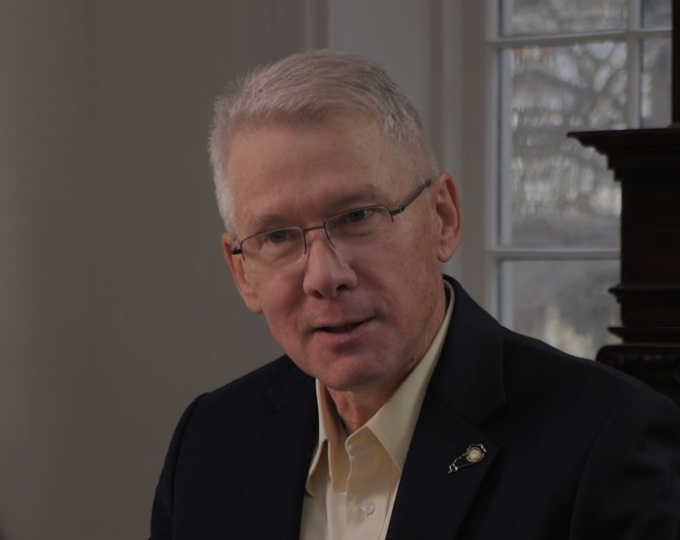
The son of a rural Wisconsin milkman, Greg Plucinksi (R) is a successful entrepreneur who says that on an annual basis, he contributes $20 million to the state's economy with his pharmaceutical manufacturing business. The Jessamine County resident is a fan of Andy Barr, President Trump, and anyone who cuts taxes, especially on businesses. Plucinski says if he's elected, his first priority will be to lower the steep drug review fees placed on small drugmakers, which he says drives up the costs of new life-saving medicines. Candidate Plucinksi also says he would lend urgency to formalizing aspects of Trump's agenda, something he said Congress is failing to do.
The UNEDITED transcript follows below.
Sign up for The Edge, our free email newsletter.
Get the latest stories right in your inbox.
Speaker: 00:00
Welcome, Greg Plucinski, Republican candidate for the Kentucky 6th Congressional District. It's very nice to have you on the edge.
Speaker 1: 00:07
Well, thank you for having me here today.
Speaker: 00:10
You're very welcome. So you are one of a very large field, actually. There are, I think, nine candidates running for this seat. What makes you have that special mojo that's going to take you to the front of the line?
Speaker 1: 00:23
Well, my special mojo is that I've already done what I'm going to do when I get to Congress. I'm going to create good jobs and I'm going to lower the cost of living.
Speaker: 00:31
How are you going to do that?
Speaker 1: 00:32
And I've done that right here in Kentucky. I came to Kentucky and started hiring people. And the people that I was hiring came from the companies or from the counties surrounding Kentucky. So I hired a Marine from Paris. I hired people from Midway. I hired a lot of Lexingtonians. I hired a lot of people in the surrounding counties, and that boosts the economic footprint for that county. So I'm going to continue to do that, but I want to do it a little differently. I want to have a bigger scope so that we can bring these companies and put them in these counties and then boost the scope of the economy in that county and the surrounding areas of that community.
Speaker: 01:23
Well, let's back up a little bit then. Let's talk more about what you have done and how you apply that. You said you came to Kentucky, so what's that story? Where did you come from? What were you doing when you came here?
Speaker 1: 01:34
Well, I grew up in Wisconsin. I went to college there. I got a degree in biology. At University in University of Wisconsin, Whitewater.
Speaker: 01:42
Oh, okay.
Speaker 1: 01:43
Yeah, small community. We lived about eight miles from Whitewater, out in La Grange, a rural community. And I I went to school there and I got out of school and there were no jobs. Kind of like it is here. There are no jobs. So I had to go and I went to Chicago to get a job where I was working on the south side of Chicago, working in a startup pharmaceutical plant, and then we decided to take that out to a suburb of Chicago, and we built a plant to manufacture a life-saving product for the treatment of acute blood loss. No, no. I started from the started from scratch there as well. You know, I was a research technologist down in Chicago, and then as I worked and worked my way up in the industry, I became the manager of the manufacturing plant that we were running in Chicago. You know, it took a lot of hard work and grit to get to that point. And uh I continued my education. I took business classes, I took accounting classes, I took um even Spanish classes for two years or one year of Spanish.
Speaker: 03:11
And um was that so that you could what was the reason you took Spanish?
Speaker 1: 03:14
Well, there were a lot of Spanish-speaking people around, and my first wife was Spanish.
Speaker: 03:18
Oh, I see.
Speaker 1: 03:19
So that really helped out a lot.
Speaker: 03:21
So you moved to a suburb. Which one did you go to?
Speaker 1: 03:24
Well, there were several, but the plant was in Mount Prospect, Illinois, Illinois.
Speaker: 03:29
What's the trajectory from there to how you ended up in Kentucky?
Speaker 1: 03:33
Well, we took that plant or we took that product forward into clinical studies and it got to phase three and it didn't make the cutoff uh for being approved.
Speaker: 03:46
That would mean just for my audience who doesn't necessarily know what the phases are in a clinical trial, but there's phase one, there's two, and there's three, and sometimes there's like a two A or a two B, but you get up to three. And if the drug that you're testing meets the endpoint that was set up ahead of time, as in X number of people will see this type of response to the drug, then it can be moved on to take to the FDA for approval in the marketplace. So you're saying that just didn't make it to market?
Speaker 1: 04:12
You're exactly right. Yes, it didn't meet the end point for a phase three um moving forward study. So it essentially we had to rework the product, which we didn't have the money to do, uh, or pretty much it went out of business. So the the company went out of business. Unfortunately, the product would have been a revolutionary product for Has anyone made something similar since then? No, there's really nothing that will carry uh oxygen during acute blood loss situations. You know, if you got in an accident, lost a lot of blood, the ambulance would show up with a product that would be able to carry oxygen to be able to get you to the hospital so that you could get actual blood. This uh didn't require cross-typing or matching, and it was virus-free. And we started with whole blood and took out the hemoglobin and and uh combined that into a product, and it was aseptically filled, and it showed up just like a bag of blood.
Speaker: 05:11
Wow, I mean it sounds really impressive. It's how how close did it come? How cl was it just did it just miss the endpoint?
Speaker 1: 05:18
It just missed the endpoint, not not by far. And we did some um studies where we would ship it, um compassionate use studies where we would ship it to uh hospitals that were having Jehovah's Witnesses where they would not receive blood, but they needed something to carry their oxygen. So, you know, Friday night.
Speaker: 05:42
Let's explain why though, because it it's against the religion of the Jehovah's Witnesses to receive a blood transfusion. That's why you specifically wanted that population, okay?
Speaker 1: 05:49
Yes. Yeah, so it would be Friday night where we just filled a batch, we're ready to go home, and all of a sudden we get this compassionate use study. So everybody starts rolling and gets some some uh some of our product that's approved for use into a uh cooler, and somebody gets on a plane and starts going to wherever that site may be.
Speaker: 06:10
So they were what was the outcome? They were positive reports when they lived. Okay, so uh you tried uh to manufacture a drug, didn't quite work out, so you pivot. Is that where you come to Kentucky?
Speaker 1: 06:22
Well, I took a little stop in California. I went to Napa Valley and worked on, started with nasal sprays and a dry powder inhaler.
Speaker: 06:31
And were you the one with the patents? Were you manufacturing these?
Speaker 1: 06:35
No, I I was I didn't have any patents there. I came into a company that was working on nasal sprays. They were working on a Glaxo Smith Klein generic for flow nas. And my my role was to come in and expand the plant, uh, 80,000 square foot plant to make the nasal spray and to make the dry powder inhaler. And that was a another generic product for, I forgot the exact product, um, but it was uh albuterol uh inhaler so that it was uh indicated for COPD. So it would have been a big product too, but um Merck uh owned the company, Merck of uh German Merck.
Speaker: 07:22
It's a pharmaceutical company.
Speaker 1: 07:23
Yeah. Um and they um they put $50 million into that project and decided to pull the plug not too long after I'd gotten there. So then I was headed back to Illinois um to try to find the next role, and I saw an ad in the paper to come to Kentucky to be an assistant vice president at the at the uh at this company and start nasal spray manufacturing.
Speaker: 07:52
Oh, wonderful.
Speaker 1: 07:53
Yeah.
Speaker: 07:53
Who knew there was that many opportunities for people who know about nasal spraying?
Speaker 1: 07:57
Well, that's why they found me, because I had that nasal spray background. And uh yeah, I came here and I started the company. Uh again at the time.
Speaker: 08:05
Wait, wait, you started the company. Who was looking for it? I thought it was a company hiring you.
Speaker 1: 08:10
Yes. Well, it was a collaboration between some uh researchers at the University of Kentucky and my current partner, uh Ed Cohen, and he was looking for people to start a nasal spray company because he thought we needed the scientist. Yeah, that we could um take products that are injected or oral and make them work faster or better through nasal delivery.
Speaker: 08:35
Trevor Burrus Were you involved in what I think it's called Nephi, the um epinephrine nose nasal spray for people who are um allergic to certain foods.
Speaker 1: 08:44
Aaron Powell Yes. We started working on that project and that's a really great product. Not Nephi. We were working on the bidose nasal spray. So we're working on the bidose, they're working on a single dose. We actually um went to the FDA in 2013, way back, we submitted a pre-NDA package saying we want to develop a nasal spray for epinephrine, and they said um you're gonna have to do it in patients that are having anaphylactic shock. That's just not reasonable. You should cancel the project. That's what we got back from the FDA.
Speaker: 09:21
So uh so you get to Kentucky, you're part of a startup essentially.
Speaker 1: 09:25
Uh-huh.
Speaker: 09:25
But it's my understanding, and correct me if I'm wrong, you end up actually running the company. Is that true?
Speaker 1: 09:32
Yes. That particular company, I ran it for six years, and we got outside investment. We got $41 million so we could take our products forward, hire people, and and then uh unfortunately the ep economic recession came, and the company that bought us, essentially a venture capital firm, spent all the money on on a lot of high-priced um consultants, and people were out of a job at in mid-2008. That's when I picked up the company that I'm talking about working on with um Summit Biosciences. We we took over the company by by essentially picking up the um the rant and and took it over, and that's where I started the company from scratch.
Speaker: 10:23
And what what is your claim to fame running what was the name of the company?
Speaker 1: 10:27
It's called Summit Biosciences. We created that.
Speaker: 10:30
You created that, okay. What did you manufacture?
Speaker 1: 10:34
Well, we started out manufacturing this Immatrax nasal spray that I'm showing you on the table.
Speaker: 10:39
Aaron Ross Powell The generic or the actual Imatrax?
Speaker 1: 10:41
Well, we had to work with the Imatrax so that we could mimic it with our drug product. So we had to do real extensive studies to get it to uh spray right, to get the dosage right, to get the formulation correct. Uh it's a very complex uh design. It looks simple, but it's not. And it took us uh six years to get that approved. Now, we started paying the FDA in 2012, they put out a Generic Drug User Fee Act. This is a uh new fee by the FDA that we didn't know was coming. They said, well, you're you just put in an application for this drug, that's gonna cost you $289,000, and next year it's gonna cost you another $250,000. So we want it all right now so that we can review your drug.
Speaker: 11:33
And at the time this I forgot the name of the act, of the Congressional Act that passed that, but that was to stop the um corruption that was. Oh, really? Yeah, the corruption.
Speaker 1: 11:43
Well, I don't know, but it really almost bankrupt us.
Speaker: 11:46
Oh my god. Well but did you mean that.
Speaker 1: 11:47
And it's still bankrupting uh companies out there today.
Speaker: 11:52
So let's go from there to the future then. If you were elected, would this kind of penalty, I guess, is the way it sounds like you see it, but this sort of pay-to-play kind of a uh an arrangement with the FDA be something that you would target for legislation that changes it? Trevor Burrus, Jr.
Speaker 1: 12:10
I would absolutely target it. It's uh putting small manufacturers, biotech companies out of business. We can't pay those kind of fees just to get the just to get the application reviewed. At the time they said it was a four-year review. So that's not only the 289 and the 250, it's another 250 and 250 and 250. And uh and now they go after our suppliers, they make our suppliers go through this inspection where they have to pay. That's a negotiation that we have to do with the company, who's gonna pay this FDA fee? Well, you're the only company that's using our product, so you should pay it. And we say, well, if you want to sell your product, you should pay it. And these are overseas companies. So they they apply one fee for in in the U.S., one fee for outside the U.S. Uh they're hitting their drug development um companies too, the plastic suppliers. So they have to pay fees. Everybody's having to pay fees. And it doesn't stop.
Speaker: 13:14
It sounds very much like a mafia. Well, first of all, obviously, the only the only companies that can play this game successfully are the big ones.
Speaker 1: 13:22
Big pharma.
Speaker: 13:23
Which they are the largest lobby in Washington.
Speaker 1: 13:26
They don't want us in business.
Speaker: 13:28
Right.
Speaker 1: 13:29
Because we're going to make generics of their products. Trevor Burrus, Jr.
Speaker: 13:32
That's pretty much what the smaller drug companies do, you're saying?
Speaker 1: 13:35
Well, we make not only I mean we do that so that we can survive until we make our own product, like we just did at Summit Biosciences, a naloxone nasal spray that's a 10 milligram strength rather than a four, so you don't have to give as many. But that's how it goes. We try to try to pay to the bills by either contract manufacturing or developing generic drug products, and then we can come out with the big products that really um have a unique application.
Speaker: 14:08
So it sounds like what your experience tells you is that the FDA is designed to penalize anybody but the big companies, which are usually multinational companies. So how though, as a congressperson, do you legislate something that ta tackles this problem but ultimately has a positive effect on the electorate? How does this matter to the electorate in the day-to-day?
Speaker 1: 14:35
Well, the day-to-day, we're going to move drugs, drug products faster to market without having to pay these fees.
Speaker: 14:43
So what are they doing with that money? Do they need that money to operate?
Speaker 1: 14:48
Well, they tell us that they're using it so that they can review these products faster. They said they had a big backlog at the FDA, and they're using these fees to make the FDA move faster to get approvals to market. Trevor Burrus, Jr.
Speaker: 15:03
Did that happen?
Speaker 1: 15:04
Well, it's happening. It has happened somewhat, but it really depends on the product. And um, you know, the barriers that are going up through the FDA, again, they are designed to help big pharma. We had to serialize all of our products in 2017. Putting in a system that will serialize every product, every package, every skid that you're sending out the door, then it has to be uh tracked and traced. There's a big track and trace. These are these are huge systems that require fees and you need to upkeep them.
Speaker: 15:44
Well, would would addressing any of this make drugs cheaper for the American people?
Speaker 1: 15:48
No, they make them more expensive.
Speaker: 15:50
But I mean if you have a lot of people.
Speaker 1: 15:52
They protect the highly priced drugs that are coming in for big pharma. Trevor Burrus, Jr.
Speaker: 15:57
Right. And I understand that. I'm saying is there a legislative move that you could take that would dismantle this operation where they're making so much money, so that the direct result would be drugs would be cheaper for the American public, or would it just not matter? Trevor Burrus, Jr.
Speaker 1: 16:12
No, they're gonna be cheaper, for sure. If we're not spending money on FDA fees, we're gonna be able to hire more people and we're gonna make the drugs cheaper. Because that all go goes into overhead, and that overhead is gonna go into the price of the product. Otherwise, we can't survive, we can't even make them, and then you get stuck with paying uh innovator fees or the big pharma fees.
Speaker: 16:34
I don't think most people are aware of how much insider trading is going on.
Speaker 1: 16:40
Well, they're they're not. I spoke with Tom Emmer not long ago and I started talking about these fees and how these fees are tell the audience who Tom Emmer is. Tom Emmer is the um chairman of the Energy and Commerce Commission in Congress, and he was very interested to learn about these fees and how they were putting small businesses out of business.
Speaker: 17:06
And the small businesses aren't necessarily just the drug manufacturers, it could be the manu or the suppliers that suppliers. So it's it's pervasive.
Speaker 1: 17:14
It is.
Speaker: 17:15
So taking what you've learned from being a businessman, you were in the pharmaceutical industry for 30, 40 years?
Speaker 1: 17:21
35 years. 35 years, okay. Working on drug products to meet unmet medical needs.
Speaker: 17:27
How do you leverage what you learned into becoming a legislator? What are you seeing as your skill set that you bring?
Speaker 1: 17:34
Well, I'm bringing grit and tenacity to get things done. You know, that's what we need right now in Congress. We need people who can get things done. Not talk about it all day long, but actually get in, get things done, organize it in such a way we need more businessmen in Congress so that they can get things done for the president. We need to work on his agenda, we need to codify all of his executive actions. None of that's happening right now.
Speaker: 18:03
Well, I'm gonna play devil's advocate. Washington moves slow.
Speaker 1: 18:07
Yes.
Speaker: 18:07
Well, a b uh that's that's how it's designed. Washington moves slowly. And as a businessman, and particularly as an entrepreneur, you're gonna come to Washington and you're gonna wait, you know, cracking a whip wanting to get things done. Washington isn't that way. It's not built that way. How do you do that?
Speaker 1: 18:21
Not anymore.
Speaker: 18:22
No, it's never been fast. It's never been a place where things happen quickly.
Speaker 1: 18:26
That's right, because there's been too many politicians in in Congress that make things move slow.
Speaker: 18:47
Trevor Burrus, Jr.
Speaker 1: 18:47
I understand that. They um we have a lot of explanations going on, uh. if there's a snake in the road, kill it.
unknown: 19:01
Trevor Burrus, Jr.
Speaker: 19:01
What does that have to do with it? You mean just direct action?
Speaker 1: 19:05
That means if if there's something that's in your way and you can take care of it, get it out of your way and don't make it a big project. Don't have a committee meeting about it. Don't uh form a group, you know, just get it done. That's what we want to do in Congress. We want to bring in people that have outside experience, not political experience, not sitting on committees all day long, but people who have actually done things in their life and they know how to get things done because a lot of times the answer is not readily apparent. You need to think about it for a while, and then you need to act. And sometimes things don't go as well as you wanted, but you pivot and you make it happen. You know, there's a lot of people who said, I'll never develop that nasal spray. You'll never do it against Big Pharma with uh with the supplier of that company already wrapped up with Big Pharma. They're not going to supply it to you, you're not gonna be able to make it. We did it anyway. And it was very successful. And that's what really allowed us to grow in Kentucky. We went from 60 employees to over a hundred in a short period of time to supply this product to the market.
Speaker: 20:24
So I hear what what I hear about your experience then is that you know you can get tough things done.
Speaker 1: 20:31
Whenever whenever somebody tells me you can't do it, I mean that makes me want to do it even more.
Speaker: 20:36
I understand. Taking that as your uh attitude toward getting things done, going to Washington, what happens if let's say for whatever reason a miracle happens and and the other Congress people are not obfuscating and dragging their feet and stopping things from happening, the process itself is built to go back and forth and back and forth. How will you approach that? I mean, that is that's the way government is built in this country.
Speaker 1: 21:05
Sure, going back and forth is no problem. If somebody has a good idea, I would run with that idea. I don't care where it comes from. I can work across the aisle. Um there's no problem there. I mean, you in business, you need to put your heads together. And sometimes that's with um, you know, with manufacturing people, maybe it's clinical investigators. Clinical investigators say, when is that drug gonna be ready? When is that drug gonna be ready? And and you say, well, I just got the formulation like three days ago. Yeah, it's gonna be ready in a little while. And you come to some agreement and you make plans and things happen and uh everything goes really well.
Speaker: 21:47
Do you think one person can make that much of an impact on the way things are done in Washington? Or have you already started to make alliances with people that are like-minded?
Speaker 1: 21:57
Aaron Powell Yeah, there's a lot of people that are like me. That want to go and get things done and go home. I don't want to be in Washington forever. I want to go there, get things done, uh, move forward with the American agenda, and um, you know, make a real difference. And it won't be just me, it will be many people like me. We need to get the talkers out of Washington and get people in there who have really accomplished things during their career, you know, people who have built businesses. Um that that is so that is so different than what we have in Congress right now. When you go in and you build a business, there's a lot of risk in that business. Um you may not make it. There's a lot of people that I know I've talked to recently that they said they took a lot of risk. They put everything they had into this one idea. People didn't think it was going to work out, and all of a sudden they're the ones that are um, you know, they have all the money, and they don't want the government to come and take that money. Um that's what's happening. You know, you put the risk in, you take the chance, maybe it works out, maybe it doesn't.
Speaker: 23:13
Aaron Powell Well, how does that inform being a legislator? How does I mean I think I can think of some I can think of some ways that would be useful to a legislator, but I'd rather that you tell me why that experience makes you more sensitive to how to legislate well.
Speaker 1: 23:29
Well, I don't take no for an answer, and there's always a better way to do it. Those are the things that I learned in business. Um my idea may not be the best idea, and that's why I involve people around me that can bring new ideas to the table so we can get the best idea, and whether that's um a Republican caucus or Republican with Democrat, you know, we're all we should all be working toward the same goal. You know, getting jobs, lowering the cost of living, making it such that people can leave a much easier life without having the government in their face and in their pocket all the time.
Speaker: 24:15
Let's come back to that. That's part of the affordability, I guess now it's being called in the media the affordability crisis. But I want to follow up with something that you said about we've got to get these people out, the talkers, the ones who don't get things done. They got there because the American people put them there. So if the American people or Kentuckians are going to put you there, what's gonna have to have changed for them to vote a different way?
Speaker 1: 24:38
The Kentucky people know what they're looking for. They want somebody to go in there and fight for them to make their lives better. That is what they're looking for. Now, there's politicians that can come out there and say, I'm gonna promise you this and I'm gonna promise you that. You can't just put the grass in the wind and see which way the wind blows. You gotta have some direction and some commitment to the Kentucky people, to the families in Kentucky. You want to make their lives better. And that's what I'm that's what I'm running for.
Speaker: 25:14
So are you different then um from Andy Barr, who is the current holder of the sixth congressional seat, and he has been re-elected more than once. So I mean, are you filling his shoes or are you bringing something new because you're dealing with the same voters?
Speaker 1: 25:30
Aaron Powell Yeah. I'm well, I'm bringing something new. Um Andy Barr is great. Um I like Andy, and I've said that over and over again. Um I want to pick up his shoes with uh the horse legislation. I want to take care of the horse industry, the bourbon industry, the manufacturing industry, and the farms. You know, we we need to s keep the government from reaching into these businesses, these industries, and um coming out with a big pile of money, like they're doing with all these other industries. So, yeah, I so I want to pick up where Andy Barr left off, but I am coming with something that's different. I was I was in the 6th district, and all the communities that will be in the 6th district were surrounding me.
Speaker: 26:22
So you were in Jessamine County.
Speaker 1: 26:24
I was in I was in Lexington.
Speaker: 26:26
And you live okay, you live in Jessamine?
Speaker 1: 26:28
Yeah, I live in Jessamine. So uh in Lexington, there's all the 16 counties surrounding my business. Well, I took people from every one of those communities as far east as Pikeville because people would say, I'm going home to Pikeville, uh, take care of my parents. Um they're taking the money that they earn from working with us, and they're taking that to Pikeville. They're doing the same thing going to Louisville, northward, southward, well, not as far south, but as far north as uh Cincinnati. People were working in Cincinnati and working at a plant that we built. So we had a huge impact to the economy there. Over the over the course of development, that's about $200 million that are being pushed out into these counties. So that's something that Andy Barr didn't do before he got to office, but I'm already coming with real results for Kentucky people.
Speaker: 27:25
So a couple of times you've mentioned something about the government taking money from small business people or I guess the American people.
Speaker 1: 27:33
Yes.
Speaker: 27:34
Can you be specific? In what way are is the government doing that, and what would you do to change it?
Speaker 1: 27:40
Well, it kind of reminds me of uh when Obama came on TV and he said, you didn't build that, somebody else built that. Well, no, I didn't see him sitting next to me on a Saturday afternoon doing payroll. Um there was nobody else sitting there with me doing that work. It was me. I built it with Kentucky workers. And I want to take that to the next level to all the communities around Kentucky.
Speaker: 28:09
Well, where's the money being taken from people?
Speaker 1: 28:12
Uh where is it being taken? Um, you know, income tax. You know, the money that I made, I paid 40% income tax. That's a lot of money going out the door. Same thing with uh people who are making that much money. They've they've worked their entire lives to have the American dream where they're making some money, but then the government comes in and they say, you know, you're making too much money. We need that money back. And they end up paying 50 percent of what they're earning. That's just not right.
Speaker: 28:48
Aaron Powell Well, the reason we have income tax, purportedly, is to pay for services that Americans need. So, you know, that's the story. How are you going to change the story?
Speaker 1: 28:59
Well, the story is we need to get people in there where we stop taking money from companies and Americans and and uh lower the tax rates because everything that gets taxed is not being used properly. We all have seen that recently.
Speaker: 29:19
Um So what should be the first to go or to be revised anyway?
Speaker 1: 29:24
What should be the first to be revised?
Speaker: 29:26
In terms of what the taxes are paying for.
Speaker 1: 29:29
Well, I think that we just came out with uh with uh lowering the tax rate to uh the 2017 amount, and that's really good for businesses because then they can hire more people and they can produce faster. So that's that's the rub. If you take money from companies, then they can't hire as many people, then they can't work as fast to get product out the market, there's not as much innovation. It's just um, you know, you can't you can't just keep taking and taking.
Speaker: 30:02
So did did Federal taxes actually impinge on your ability to manufacture your product? Oh, yeah. It did.
Speaker 1: 30:10
Absolutely. Yeah. I mean, when we were paying uh in the mid-20s in taxes before President Trump came to office, that was people that we couldn't hire. We were always understaffed, always. You know, and I think if you talk to anybody at the company that's ever worked for me, they knew I didn't spend a dime unless we needed to. Because we needed that dime to keep the company going and to keep people employed. And one of my principles for running a business is that if I had to lay people off, then I failed.
Speaker: 30:45
So what alliances would you be looking for and what would be the first priority legislatively for you? As an I mean, and assuming that you actually can get something done because you'll be a freshman.
Speaker 1: 30:59
Well, I would I would pick up with uh Tom Emmer and start talking about uh these FDA fees, because they are strangling small pharma. And by strangling small pharma, they're strangling small business. Because a lot of companies supply to small pharma. They make their livelihood that way. And it's just not right that um there should be so many fees and they go up every year. They're exorbitant. And uh that's even that's for generic drugs.
Speaker: 31:33
Now you talk about um uh padofa fees, those are I forgot what Padufa stands for, remind me. Uh it's it's some kind of regulatory fee, but I don't recall what it stands for.
Speaker 1: 31:44
Well, it's a drug application fee. It's um prescription drug application fee.
Speaker: 31:50
Oh, that's right.
unknown: 31:50
Okay. Yeah.
Speaker 1: 31:51
Yes, that's what uh PADUFA stands for, and those fees are you know four or five times what the fees are for generic drugs. So I would start there.
Speaker: 32:02
I think we've been pretty thorough regarding um how you would bring your business acumen to Washington. Is there anything else that we haven't discussed but you think is important for my audience and therefore your audience to know?
Speaker 1: 32:15
I'd like to ask the audience some questions. The question is, what have we done for you lately?
Speaker: 32:22
And you're talking you're talking about the rest of this the field of congressional candidates. What have they done for people?
Speaker 1: 32:28
Yes. So I've already explained what I've done. I think that the other that people need to look and see what have the others done for them to make their lives easier and put food on the table, pay the bills, not fear the next check that's coming in the or not fear the next bill that's coming in the mail.
Speaker: 32:52
What is the actual role of a legislator in your mind? What is their job actually? If you distill it down to a few words, what is the role of a legislator? I mean, maybe it's inherent in the name, but I want to hear what you think.
Speaker 1: 33:07
Well, it's to uh keep in mind the people that they're serving. And always have that in mind when you're making decisions uh regarding what you're talking about. You know, it's also to serve the American people. So those two things, serving the people of the district and serving Americans.
Speaker: 33:34
I always wonder if it should be to protect them.
Speaker 1: 33:37
Of course it's to protect them.
Speaker: 33:39
But protect before serve.
Speaker 1: 33:40
Protect and serve.
Speaker: 33:41
Right. Like the police force. I just think it should be protection first, and I wondered what you thought about that. Because and by protection, I mean don't do things that are inane and useless. Like don't spend money that we don't really have to spend. In fact, I just read this week the U.S. Treasury has declared we are insolvent. This nation is insolvent. Sure. And it also expressed concern that we will never not be insolvent.
unknown: 34:04
Trevor Burrus, Jr.
Speaker 1: 34:04
You know, I wouldn't go that far. Um I think that we can we can write the ship at some point, um, but we all have to work together to do that. Um there are there is so much waste, fraud, and abuse going on right now. We have just uh we have the tip of the iceberg out there. Uh we're we're discovering it. People end up should end up going to jail for a really long time for what they're doing to Americans and stealing our tax money. Everybody out there that I've talked to in the streets feels the same way. Um you know there is so much waste fraud and abuse in our government, we could make a big dent in the national debt.
Speaker: 34:51
Who's committing a crime in your mind that should go to jail for it?
Speaker 1: 34:55
Anybody who's involved in the the the fraud, um looking the other way.
Speaker: 35:01
Do you have a specific example is what I mean?
Speaker 1: 35:03
Do I No, I don't know of anybody specifically. I haven't investigated that. I've been kind of focused on my campaign.
Speaker: 35:11
You were saying it with such conviction, I thought there was something that you had in mind.
Speaker 1: 35:15
Well, I think that a lot of people um you know, there's there's a lot of fingers pointing toward toward the Minnesota governor um that he's not been aware or he's seemingly been unaware of what's going on in his own state. Yet all of these uh uh these whistleblowers that uh they're being stifled. Um that's I I would I would probably start there.
Speaker: 35:45
Well, it's been a real pleasure to get to know you and to speak with you as we're being on the edge.
Speaker 1: 35:49
Oh, thank you for having me.
Speaker: 35:50
You're welcome.
This article has been updated.