Reagan Taylor (R) is On the Edge
Talking about his accomplishments, whether 911 operators should see a pay raise, why he thinks the new fire station is necessary, and why the County bought land in Richmond City for a traffic project
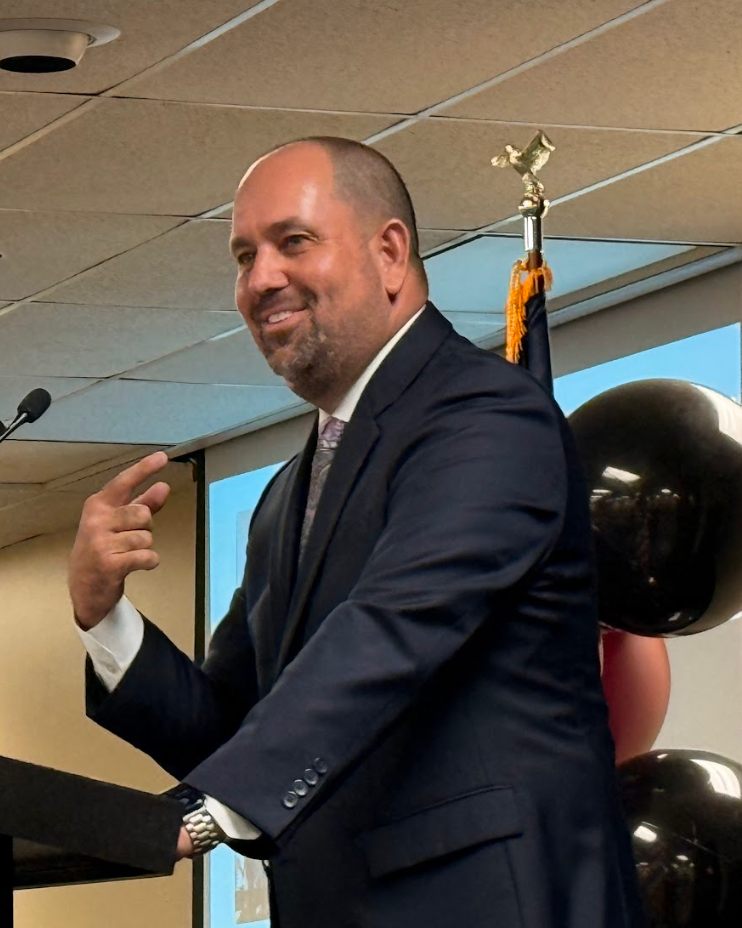
Incumbent Reagan Taylor is in his 12th year as the judge executive of Madison County. In this podcast, he shares what he believes are his accomplishments so far, and well as spars with me about whether a Kentucky Transportation Cabinet project that the County received $9 million dollars to develop makes sense. I am pretty adamant it does not. And the question of why the county bought land contiguous to a property Taylor owns, and which the new KYTC road project will serve however directly or indirectly, is at issue.
We also discuss how 911 is run, and whether a new fire station is necessary in northern end of the County.
I want to thank Reagan for coming on the podcast and taking the heat from my questions. He promised some data on fire station call outs in the north of the County, and I will share it when I get it.
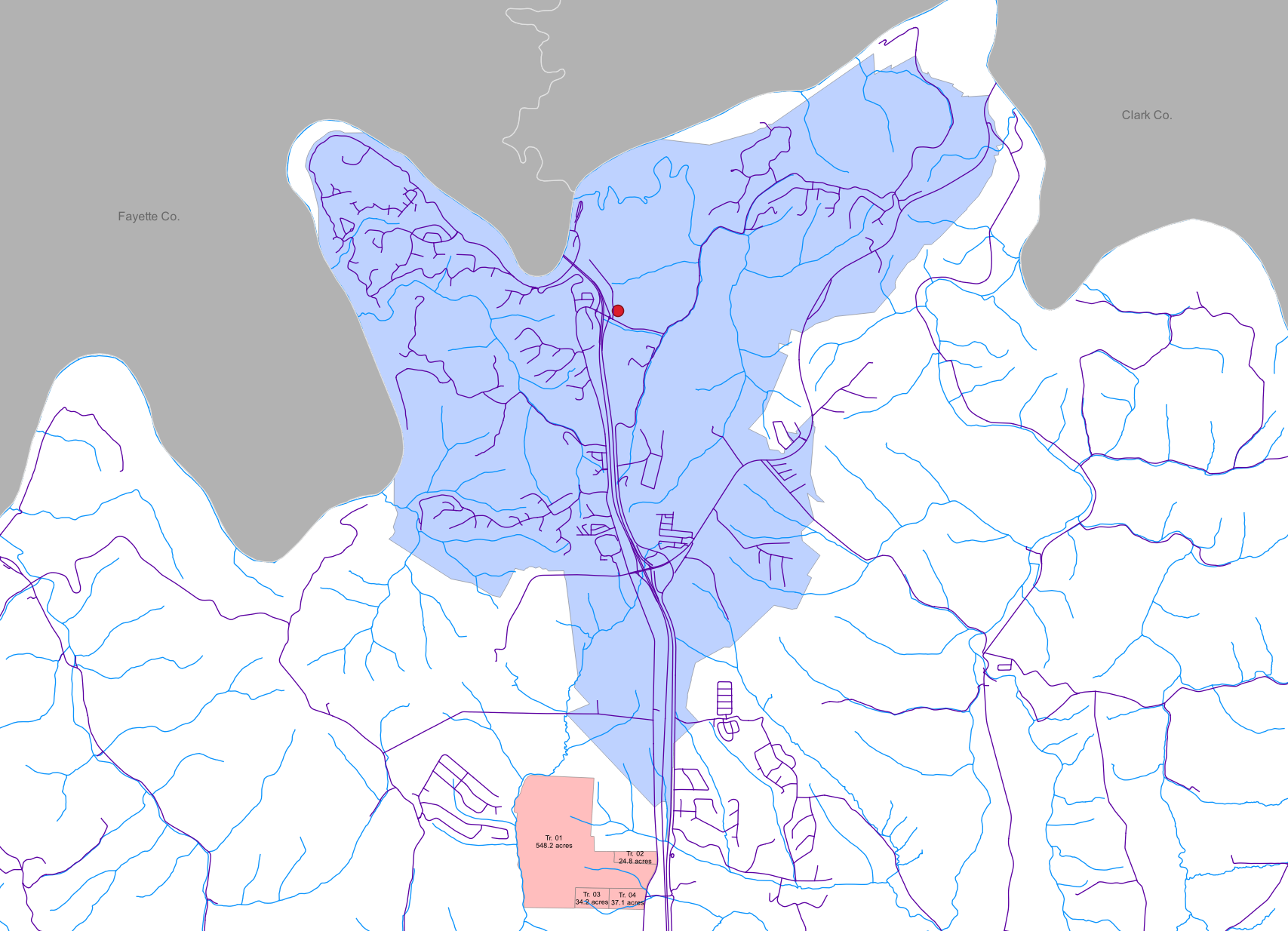
Per our discussion about the new fire station, I referenced a map, which is below. The blue portion of the map is the new fire station's district.
In our discussion, I shared some documents with Taylor about the KYTC project at Goggins Lane. I do not understand the logic behind it, and asked Taylor to look at the data and documents I provided and please tell the story so it makes sense. You can follow along with our discussion with the documents below.
1) The SUA Study was a project conceived by the County, but took place within Richmond City limits. Why?
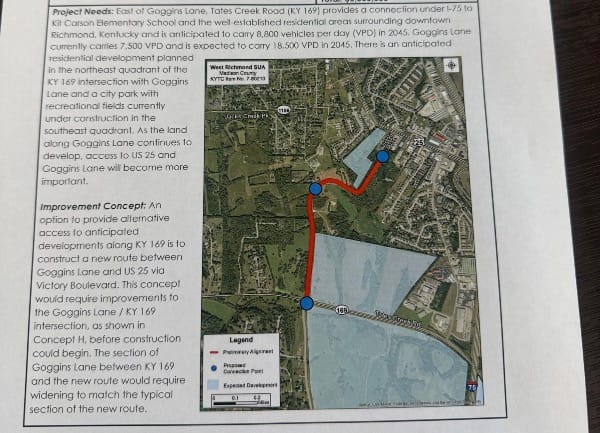
2) A map from the study that shows the location for the proposed extension of Victory Road, Lane, or Boulevard. It is unclear which is the correct name, as noted in the podcast.
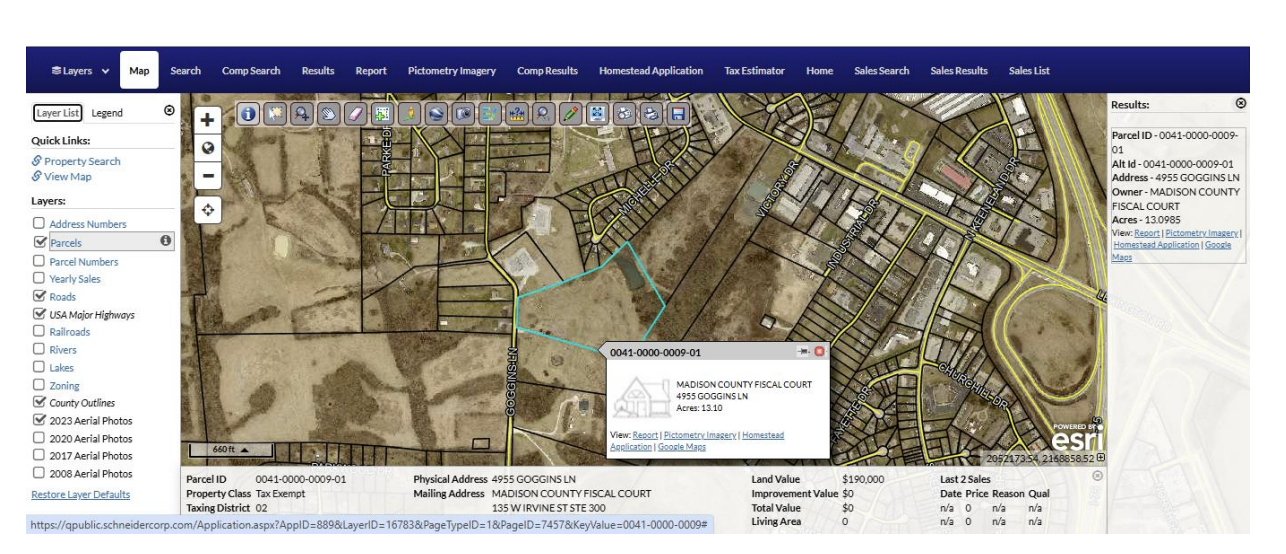
3) The piece of property in Richmond City in the traffic study area, outlined in green, purchased by the County in December 2024, allegedly as part of the plan to alleviate traffic by way of the new Victory project.
4) The resolution by the Fiscal Court allowing the purchase of the property for $190,000.
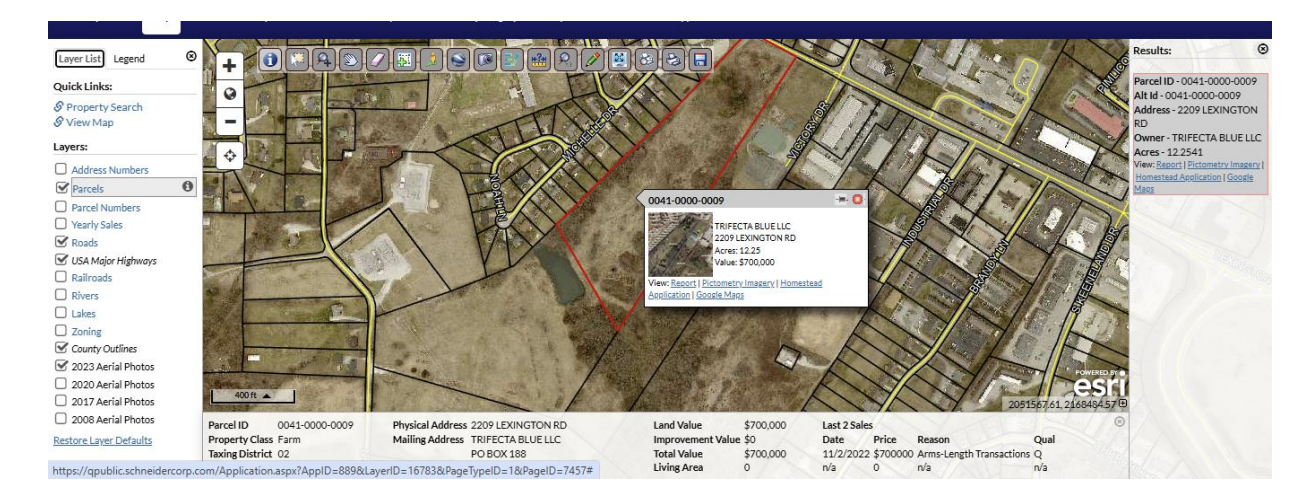
5) Map of traffic study area with a property that Taylor signed the deed of as an officer of the private business, Trifecta Blue, LLC, outlined in red. The property, at 2209 Lexington Road, abuts the property purchased by the County. Trifecta Blue paid $700,000 for the property in November of 2022.
Current Trifecta Blue officers are Jason Taylor (Reagan's cousin) and Jaron Blandford. Reagan Taylor is no longer listed with the Secretary of State as an officer of the company.
6) Deed for the property at 2209 Lexington Road:
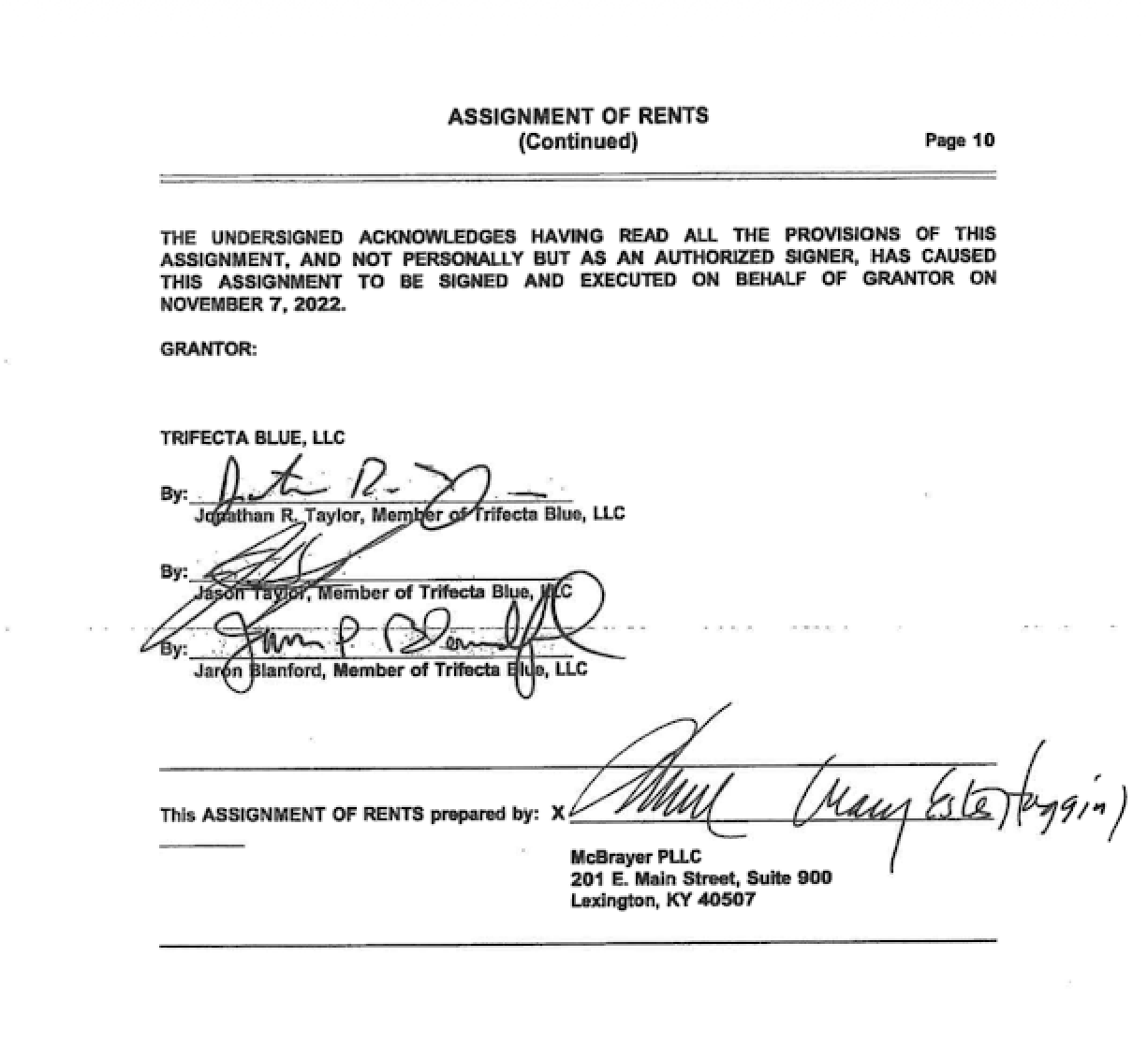
7) Trifecta Blue attempted to change the zoning of the property at Lexington Road in August of 2022, but the Richmond City Planning and Zoning Commission rejected their proposal. Trifecta Blue had wanted to change it to accommodate affordable housing the company intended to develop. Here is Trifecta Blue's presentation, and the P&Z minutes:
8) As to the question of whether the portion of Goggins Lane that is discussed in this interview belongs to the County, as Taylor claimed, here is the 2011 ordinance that acknowledges the road, having been annexed, is now a Richmond City road (see p. 4).
Here is the unedited transcript:
Whitney McKnight: 00:00
Reagan Taylor, current judge executive for Madison County. You are on the edge. Thank you so much for being with me.
Taylor: 00:07
Glad to be here with you, McKnight. Appreciate you.
McKnight: 00:09
Let's start with your campaign itself. You've been an incumbent 12 years. Is that correct?
Taylor: 00:13
I'm in my 12th year.
McKnight: 00:15
What are the things you are the most proud of having accomplished in the 12 years that you've been judge executive?
Taylor: 00:22
Uh there's a lot of accomplishments, uh, McKnight. I I don't there's so many, it'd be hard to probably go through all of them, but well, let's talk about taxing.
McKnight: 00:31
How have you approached taxing strategy?
Taylor: 00:34
Um, I think uh from the beginning, we've had to get our internal house in order. Um, you know, when we first came into office, uh, we really had to, and this is something I'm proud of, that we really had to change the culture and the structure, uh, really dive in just to the day-to-day administrative policies and procedures and creating an environment where our teams bought in. You know, when you elect uh somebody, you're not just electing them, you're electing a culture, you're electing a team that you surround yourself with. I'm very proud of the team that I've surrounded myself with over the last 12 years uh and the work that we've done. Uh we face a lot of challenges in Madison County, especially in the beginning of our financial position, a lot of state-mandated functionalities that we're the fiscal courts required to pay for. Uh, and uh, and we had to be real about the position and in our direction and future. Um my past experience in business, I think, really set me up for success here in putting good business practices in place, PO systems, uh allowing us to build relationships at the state level and federal level for opportunities for for uh state and federal tax dollars to be brought down here so that it's uh keeping uh keeping our local, I know it's all tax dollars, but I say anytime we can tap into four and a half million people's tax dollars in Massett County versus our hundred thousand uh population or three hundred million people in the United States, it's better, it's better to tap into those resources than it is to pay it out of our own pockets.
McKnight: 02:11
Can you give me an example of that kind of I guess did you have to write grants in order to get those money?
Taylor: 02:18
We did a lot of it, like our courthouse is a perfect example. Uh, you know, we worked we started working on that in 2017. Um we preserved our historic courthouse, but also updated, modernized it. Uh, you know, as our community grows, the judicial system grows, and uh we were able to work for a capital project on that.
McKnight: 02:37
Um we rented was that state money that you got?
Taylor: 02:40
It was, yes, state legislative money. Yes, ma'am.
McKnight: 02:43
So what about um projects that you've been able to achieve through federal grants, like maybe a block grant, a federal block grant?
Taylor: 02:51
Um, yeah, we've had several CDBGs. Uh there's been uh uh the C SEP program, obviously it was a grant that uh we've been managing for a long time. Uh we closed it out. Uh that brought a lot of opportunity to Madison County, not only to the fiscal court, but also to both of our cities, um, which led to uh I think one of your questions will be about 911, but uh, you know, led to our 800 megahertz radio system and preparedness and keeping our community safe.
McKnight: 03:19
Well, okay, so let's start there. You guys, as I have done with every candidate, I have asked them, do they have a particular issue that they would like to address? And then I send them questions and say, these are the top, well, not really direct questions, but like these are the topics that I would like to discuss with you. And I did the same with your office. Um, and what I said I was gonna address were Victory Lane, the fire station, and 911. I've read the budget, I have some questions, and then I've got a lot of feedback from the community. I would say that there is an uneven acceptance of the way that the 911 is run currently in the county. Um there are a lot of people. Some of them are in high positions, some of them are just people who read the edge and they say the budget is too rich, and that there should have been a way with CSEPP that we downsized so that we were not stuck with what we currently have, which is probably one of the best 911 centers, maybe even in the country. I mean, it is it's top of the line. So some of the criticism has been why didn't we prepare to downsize to what we actually need now that we don't have a nerve gas uh situation like we did when the before the weapons at the depot were decommissioned. So that's enough. Let's start there.
Taylor: 04:30
All right. So, so I think I think we have, we did downsize. Um, I think that we had a a great plan from before CSAP was over with. You know, uh those were federal dollars that paid for the upgrade to the system, and we held out as long uh as we could uh to still be able to get the the upgrade, which prolongs the replacement of our 800 megahertz radio system, you know, 20 years down the road. So uh CSAP wanted us to replace it probably, and and and I might be off on these dates, but you know, five or six years ago, ten years ago, they wanted us to replace it, but we kept prolonging it so that we could get closer to the end, replace it and have a newer system for longer, if that makes sense.
McKnight: 05:17
Um we did was that a big expense? Is that why you bring that up?
Taylor: 05:21
It was, yeah. The the total replacement was like $22 million.
McKnight: 05:25
Wow.
Taylor: 05:26
Um That's a lot.
McKnight: 05:27
Why why was it so expensive?
Taylor: 05:29
Well, I mean, you radios, um, all the technology that goes on the nine uh satellite towers. I mean, these are handheld radios, I think at the time, I can't remember exactly how much they are, but every first responder, your school bus drivers, uh your volunteer firefighters, your law enforcement agencies, EMS, they all have they're all on the same radio communication. Well, they're not maybe the same channel, but they all use the same system and device, you know.
McKnight: 05:57
And my mystery that's unusual, isn't it?
Taylor: 06:00
I don't I don't think that it's unusual if you're gonna be able to communicate in an emergency that everybody's on the same system. When CSEP designed our system uh in the beginning of preparing the community for for safety uh in case there was emergencies that happened, uh Madison County went on a what you call 800 megahertz radio system. So there was nine satellite towers that were stationed, you know, all throughout the county so that you could have over 90% coverage of any place you were in the county in case there was an emergency. And then all of our our uh uh public service folks went on the same system. So uh your public works departments, road departments, they have radios for communication, uh law enforcement, um uh uh EMS, uh EMA, uh your school bus drivers, everybody had uh is on the same system.
McKnight: 06:53
I could be wrong. I have only looked at a couple of other counties' 911 budgets. I didn't see a radio communication line item that was in the that was as rich as 22 million. So I don't know, but is this unusual?
Taylor: 07:04
Um I think I think in probably if you're comparing us to other com communities, it it probably is. But uh I think that Madison County had the benefit of having the federal government footprint here and having a CSAP program that really sets us up to be a safe community. Uh I think it's perfect. Uh well, it's never perfect timing for the tragedy tragedy that happened uh la last week in our community. Um and my heart the bank killings here in Berea. Yeah, and and for our law enforcement agencies, for all of our first responders um to be able to act as quick as they did um and be able to communicate with one another through uh our our radio system that we have in place. Um, I mean, you you could you can coulda, woulda, shoulda thanks to death. But uh when we're prepared for emergencies, when we all team together and have exercises and prepare uh for these disasters, you can't prov you can't you can't prepare for a disaster after it's already happened. And and you know, you go back 30 years when you know CSAP came and you know they prepared for all all the safety of our community and whoever made the decisions to have an 800 megahertz radio system then, uh uh you know, I I I wasn't here. Um and so uh we tried to make the decision best decisions we could. I think uh it goes back to our our sirens uh that we have, our emergency sirens. Uh when when they had them out, we had over 90. Uh I think now we're somewhere at 65 to 70. Um, so in preparing for the end and the cost that our that our citizens will have to take on when it comes to emergency response, uh I think we did scale scale it back. So we put together a task force made up of all three governments to sort of create this plan and financial model of the 911 fee and how and and how we needed to prepare for it. Uh you know, a lot a lot of comments I've heard was is that well, we didn't prepare soon enough. We did prepare soon enough, but you're not gonna put a fee on anybody uh until you need it. We were lucky to have CSAP paying for a lot of the functionality of 911 and our radio communication system. Uh and so, and so once CSEP was going away, that's why all three governments put two members representing each government on a task force that sort of created the the the model and and the financial budget. Um and in that budget, it's also preparing for the replacement of the system, you know, in 15, 20 years.
McKnight: 09:54
So how much will do you have a projected cost to the taxpayer here in the county of how much that will be?
Taylor: 10:00
Um well, it's included in their in their monthly fee on their water bills now. Um I don't I don't know.
McKnight: 10:09
Is it projected to go up?
Taylor: 10:10
It will not go up because in the financial model, uh it it it captures a certain amount of money every year that goes into an investment. Uh, it's based on a 3% return uh in that investment that's calculated in what our estimate will be in 15, 20 years uh when we have to replace it. And I and my my hope and my goal as judge executive, as long as I'm here, um, is that that we continue to increase our revenues in other ways uh so that we can reduce some of these costs. Um, you know, that we could lower the 911 fee at some point because we've generated jobs, we're collecting more revenue through occupational tax, um, and so that we could start reducing some of it, some, some of our costs.
McKnight: 11:03
Okay. It's my understanding that morale is actually pretty low in the communication center. It's an extremely stressful job, no matter where you're a 911 operator. And I believe that the payment that they make per hour, it's an it's a wage job. It's pretty close to being in a fast food restaurant. So, what is your take on how these people should be paid and what other benefits that they should be given in order to continue to be mentally mentally resilient enough to do their job?
Taylor: 11:31
Yeah, well, so so the 911 um budget is under the county budget, uh, but the 911 board is who kind of guides and directs that's made up of many different community leaders, whether it be elected officials or chiefs of police, chiefs of fire departments. Um, and so uh a lot of that, a lot of what you're asking would would go through that board based on the our directors um giving feedback on what the needs of our employees needs are.
McKnight: 12:05
I mean so you think the board has not decided to raise the pay?
Taylor: 12:09
I don't think, no, not yet. I mean not not at this moment. Now we're right in the middle of budget season. So I I don't I don't want to um I don't want for this to go out when those things haven't been decided yet or paint a picture that 911 employees are not gonna get a raise. Um, you know, all county employees will get will get a raise. I'm not sure when this podcast is gonna be going out, but this week we we've gotta have we've gotta have a first reading. Uh we've got to have a first reading of our budget. Um we gotta get it all finalized, and then our second reading of our budget uh will be done before July 1st. So we need those.
McKnight: 12:48
Is there anything about a raise for 911 operations?
Taylor: 12:50
Yeah, oh absolutely. Well, there's there's it's on the table for all county employees to get it to get a raise. I mean, uh Well, but I'm I'm singling them out.
McKnight: 12:59
I'm singling them out. Is that something that the county can do? You can, right? You can you can you can appraise a person's work according to a certain level, right?
Taylor: 13:08
Absolutely, and I think and I think some of that comes with with the market, right? I mean, you know, we we don't just pull a number out of thin air, you know, uh there there's job analysis and pay payroll analysis out in across the country that say, you know, the the market rate for this position or that position is X, right? Um and so, you know, I think the healthy government I think a healthy Sorry. No, go ahead.
McKnight: 13:34
I just I wanted to be clear. So you're saying that the the pay that you offer the 911 operators is within the market range?
Taylor: 13:40
I I'm I'm not sure. I can't answer that without having to see it. Um I think that uh when you're a healthy government and you're a thriving government, that you you want you want your employees to feel appreciated and you want to compensate them. I want to compensate them accordingly. Um and I think uh my first years in office it was hard because we were way behind. Funds were tight. Uh I think the fiscal court uh uh in making good sound decisions, uh making hard decisions, being realistic, um has put us in a position um to to where we can continue to thrive and do good things, not only for our citizens, but also for our employees. And I look forward to the future.
McKnight: 14:24
Okay, well, thank you for addressing that. I'm gonna move on to the fire station. Um I think this is a really thorny issue. And personally, as much as I have studied the fire station coverage area, uh all the maps that I could find, I don't understand. So I'm gonna lay it out the way I do understand it, and then correct me if I'm wrong, maybe answer some questions. But my bottom line is to me, it doesn't make sense. Here's why. The current station on Keeneland by the communication center at the you know, where 911 is and everything.
Taylor: 14:59
EO EOC, Emergency Operations Center, yes, why am I?
McKnight: 15:02
That has a pretty good response time for the area that it has. And it's usually five miles, right? It's a five mile radius. Okay, because I'm brand new to understanding how fire departments work. I had to do the research before our interview here. But the question that I had was when you move the the station, which is fairly new, right? Isn't it like only 10 years old? The station that's at the EOC.
Taylor: 15:26
No, the the you might be referring to a renovation that was done through the C SEP program to that building. Yeah, but that building, I I don't know when they built it. It it's been a fire station since that building was built, which probably goes back to the early 2000s. But they did a renovation. Uh I I was kind of I came in in 2015 right in the middle of the renovation.
McKnight: 15:48
But that's still like a decade. So you have a fairly modern facility there. When you move to Car Lane, which is up pretty much near the river, it's the old truck stop, right? It's going in. Yeah. Very little radius above because you've got the river. And it also comes down almost to kind of where you would have had should you have stayed on Keeneland. But it makes it easier for Boom Trace. I'm looking at the map in my mind here. So it makes it easier for Boom Trace to have a quicker response time, which I'm sure is going to lower their insurance rates. But it ends up making a response time that includes having to get on the highway to go out towards Poosie Ridge. That's my understanding of the map. Now, the other thing is that within about within the five mile radius of where the new station will be, you have a brand new station in Whitehall at the volunteer fire department there. I heard this. I did not talk to the people who were who would have been involved if this is true. You can tell me it's not true. I don't know. But that there was an offer to absorb the White House Volunteer Fire Department because the station is brand new as of last week or two weeks ago, and you could employ those people and absorb them into the county fire department. What do you say to all of the stuff that I just put out there?
Taylor: 17:08
Uh well, that's a lot. So let me uh uh so I I'm not sure what you're referring to with bringing in Whitehall volunteer to the fire department. So so I I'm gonna go back to um I think there's a misconception that we're going to move and not have a fire station on Keeneland Drive.
McKnight: 17:35
So you will still operate one?
Taylor: 17:37
Yes, in some capacity. All right.
McKnight: 17:41
McKnight County will have three fire stations.
Taylor: 17:44
No. So so McKnight, will you let me explain?
McKnight: 17:48
I would like you to explain.
Taylor: 17:50
Okay. All right. So so some of that has not been determined as far as who will operate there. That is partnerships that that you have and that you continue to cultivate to make sure that you're being efficient with taxpayer money and you're providing great services. In Madison County and Richmond and Brea, we duplicate a lot of services.
McKnight: 18:16
What do you mean by the way?
Taylor: 18:18
Well, we have three fire departments. You have three law enforcement agencies, you have three codes and planning, you have three governments. It's three, three, three.
McKnight: 18:26
You do they are but they are assigned specific things that the other two wouldn't be assigned.
Taylor: 18:33
Unless you have automatic aids. Unless you have good partnerships, which means that one jurisdiction, because of their proximity, covers a portion of the county. So or or vice versa, the county fire department uh supports and covers part of the city jurisdiction. So for instance, a good example is Madison County Fire Department Station 2 has an automatic aid with the city of Richmond where we cover Duncan Lane, Goldenleaf, Buckeys, the industrial park, right? So instead of so instead of the City of Richmond spending taxpayer dollars to build a new fire station out on Duncan when our county fire station is in close proximity, then they cover that. That saves tax dollars. That's not duplicating services. So we cover that area. For for the city of Richmond, the EKU fire station covers out Lancaster Road. It covers out Barnes Mill. It takes that five mile, uh and it's not a five mile radius, it's a five mile drive distance, um, which is what does lower ISO ratings.
McKnight: 19:39
Oh, yeah. So for the audience, it's just that's the insurance rating scale. So I'll just further say that that that scale is based on the response time and the amount of water and how and I something to do with how dispatch works, but that is what in what determines your house insurance rate for fire, fire insurance.
Taylor: 19:55
That's right. It's all based on risk, right?
McKnight: 19:58
Right, correct. Yeah, but those are the three factors.
Taylor: 20:01
So so that so that same concept that's already in place um in those same agreements, uh, you know, I I foresee that that could be something that could be right there as well. You know, you have a Richmond station, city station on North Kingland, and then you have a county station within a quarter of a mile or so. Um, and so uh, and and our first responders, you know, bring ideas and concepts to us. You know, our chief, our fire team, um several years ago brought that uh about our northern station. Uh and the location of that station was determined based on that five-mile drive distance. And the fiscal court was not going to put a fire station in if we're not covering the most northern point of our county. Um, and and people think because our fire station is located right on the Clays Ferry Bridge there on the Kentucky River, that that's the most northern point. That is not the most northern point of our county. Uh you've got a more northern point that's east of our fire station, and you have a more northern point that is west.
McKnight: 21:11
I do have a map, and you're right. The the northern part kind of jags up on the eastern part of where Clays Ferry is.
Taylor: 21:18
And and the and nothing to do with Waihaw Volunteer Fire Department is taking away from our fire station. We appreciate our volunteer fire departments uh and their coverage, their coverage areas. Um I'm not I've not been involved in any kind of conversations of them not being in existence because they serve a great a great purpose.
McKnight: 21:39
Well, that's not that's not quite what I was saying. Um and I also want to back up, I I want to make sure I understand what you did say. What I was saying is is that currently the the Whitehall Fire Volunteer Fire Department manages the northern part of the county, well, the northwestern part of the county. So they're already in that. Fire district, I guess you call it. What I was told, and as I said, I didn't verify it, so take it for what it's worth. Um the Whitehall Volunteer Fire Department is brand new. They just built it. Paint's still drying.
Taylor: 22:17
Well, they built they built their base.
McKnight: 22:20
Yeah, in order but so the point is that the offer was made to the county rather than you having to spend, what is it, four million for something around that for a new fire station, that they would take care of it, that they would take care of because it would still be in the five mile response time, if I understand this correctly. And it would save taxpayer dollars. So that's that's what I was told.
Taylor: 22:41
Oh yeah, I'm not I'm not aware of any of that. I I don't I have no idea. But but I but I think again, we got to be realistic. You're you're using a key word that I I want that that that I I think is critical here. And it's and it's volunteer.
McKnight: 22:58
What do you so what is your point?
Taylor: 22:60
My point is is do you want to build a emergency response plan around volunteers in a community like ours? I appreciate the volunteers, and I'm glad that we have volunteers that are willing to do that. But that's exactly what they are, they're volunteers. And when a growing part of our county, um, we we can't rely on people's lives and safety built around a plan of just volunteers.
McKnight: 23:28
Let me make sure that I clarify that part of what I was told was then you could hire as part of the county fire department the White Hall volunteers or yeah, white White House volunteers.
Taylor: 23:39
Um White Hall, yeah, Whitehall.
McKnight: 23:41
Whitehall. Yeah, so but White House is in is burned on my brain.
Taylor: 23:45
Yeah, you were in Washington. You were in DC for a long time, McKnight.
McKnight: 23:49
I was, and yeah, I'm still detoxing. Um but um I do want to address you saying that they're volunteers. I mean, there is some you could look at this two ways. That could be seen as insulting because the two that we have five volunteer fire departments in the county, and they cover, I think Whitehall has double the number of call-outs than the county station in the north. So they they and they pay for all their own equipment, they raise bingo money, they are busting their butts, and it's all on them individually, personally. They save lives by choice. That's not their job. So I do want to commemorate them. The other side of it is if they can't stay in business because they can't raise enough money through bingo or litter pickup that you pay them to do or whatever, they can go out of business and they can just say, peace out, baby, it's on you. You figure out how to take care of all the fires on this side of wherever it is that they have their fire district. And they just walk away, and there's no mechanism to compel them to stay in business because they're contractors to the county, they're not actually part of public infrastructure. You don't pay them unless they sign a contract with you. So that could be a precarious situation.
Taylor: 25:05
Yeah, so I mean, my comments if if you go back and watch this, is is I appreciate our volunteers. This was no ding on our volunteers and what they what they do. Um, and I think it is in data. I think the run numbers and and uh and and how many runs they're making and all that, but we don't have a contract with them. We the we don't have a contract with them. Well I've never signed a contract. The county, the can the fiscal court uh gives them so much money a year. 20,000 um and and when I came in, I can't remember how much it is, but we've increased that sum. And and my hope is that we could continue to make increases and we can to continue to collaborate. You know, the the the goal here for me as an elected official is to provide the very best service that we can to our community. Um and it and it's and it's us all working together and to have that long-term vision and long-term plan. Uh, and the and the new the new station is part of that in a growing area. Um when when call when call volumes are going up, when call volumes are going up, I mean you just said it, Whitehall call volume is going up, that's because that part of the county is a growing part of the county. You know, our chief, I think, has a meeting, has meetings maybe monthly or every other month with all the volunteer chiefs so that you could keep that uh so that you could keep that relationship.
McKnight: 26:29
There's a lot of undeveloped land up there. Really, the only population you have up there, you have people who've been there for a long time. And so it's not developments, it's just individual houses. And then you have Boom Trace, and Boom Trace was already served. Their their response time is gonna go down with this fire station. So they will save on insurance. But other than that, it's mostly undeveloped land. So where are the numbers that you're referring to coming from? Boom Boom Trace?
Taylor: 26:55
I think the interstate. Um, that's true. Yeah, yeah, that'd be good. Yeah, I mean, I think the interstate there, you know, with with emergencies. Um, I mean, I the the numbers are the numbers. You know, when when we were planning this, we looked at all the numbers. We looked at the at the our GIS mapping. Um, it pointed out the service boundaries. I mean, this came from our uh uh uh team leadership team uh looking at our population. I know at one time, if you if you kind of looked at the northern end, I know at one time there's I can't remember the population, but um, but but some of that stuff we could come back to you, McKnight on to give you the actual numbers and the facts.
Taylor2: 27:37
Yeah, that'd be great.
Taylor: 27:38
Maybe maybe it'd be great for us to have a in-person podcast and and bring the chief. Bring the chief to it. Uh bring our GIS it folks, um, that where we could really sit down and not have a lot of speculation or maybe not have a lot answers right here on this on on the on this interview, uh, that we would have have all that at real time so that we could really share that. Yeah.
McKnight: 28:04
All right, well, so so one thing that you said when you you first began to address the question of the fire station was that I'm not really sure I understood if you finished the point. So I'm gonna make sure that I understand it. You started to talk about duplicating services. Uh okay. So my question is, is that what you were trying to achieve was minimizing the amount of duplication? And if so, was this a joint effort with Richmond?
Taylor: 28:31
Yeah, so we're in early stages of conversations uh with uh Richmond having the opportunity uh to move their fire station that's on North Kingland to this station.
McKnight: 28:44
Well, what do they look like? What are these early conversations looking like? Do they want to do that?
Taylor: 28:50
They are we're in the conversations of it right now, and that I think it is a very good possibility. Uh uh, I can't guarantee anything until until we sit down and have those uh formal conversations uh with city leadership, but I think that it is a good possibility that that would be great for our community. Uh the fiscal court, uh, or or I'm not gonna speak on behalf of the fiscal court, but for me, if if that is not something that the city of Richmond wants to do, then our county, we will be adding a station, not taking away.
McKnight: 29:24
So how will you afford three stations? That's what it was. I had said, are you gonna have three stations? And you said no. So what does that mean?
Taylor: 29:34
Well, if we have to have three stations, I mean we have enough equipment, we have enough fire trucks in previous decisions we made to be able to still cover and man and man that. Um so we don't have to go buy fire engines. Uh so you could end up with three stations.
McKnight: 29:51
You're saying that you could end up with three stuff.
Taylor: 29:53
Yeah, we could.
McKnight: 29:55
Okay. I don't want to beat this into the ground because the next question I would have is, did you really need it? And I know your answer is gonna be yeah, otherwise we wouldn't do it. But I do I I my in my mind the question is actually still open if in fact, having not confirmed it, but if in fact Whitehall offered to combine itself with the county and therefore covering more of the north, including the highway. So that's where I stand with it anyways. Just I still have more questions, more questions on it. Um, okay, well, the the third topic uh is actually interesting to me because of a conversation we had about two weeks ago. I came in and spoke with you and deputy executive, deputy judge executive Jill Williams asking you about your role in the state's decision to put a road through Scott Gabbard's farm. So I don't want to go over that again. We we have spent a lot of time talking about that, but there was something that you and Jill both said that I just kept thinking about it. Um you said it was well, and it was Jill. Jill said it was hilarious to think that you would have the power to tell KYTC, put the road here, put the road there. Am I remembering it right?
Taylor: 31:12
Yes.
McKnight: 31:13
Okay. The reason why I kept thinking about that is because, you know, I know you know this. I've been over every single document I could find around what happened with Scott Gabbard's farm. One of those documents was the shift. So honestly, I can never remember what shift stands for. Every time I look it up, I immediately forget. But it is the um transportation cabinet's plan for what roads take precedence over other well, other road projects. And I had remembered seeing that the road from the airport that will eventually it ended up being decided will go through the Gabbard farm, had a 36 rating out of 100. But it's getting done before traffic alleviation at Barnes Mill at exit 87, and that has a rating of 69. So it's more important. And I thought, well, that's interesting. Why is that happening? I don't know. I don't have the answer to that. I looked at a study that Rich that are sorry, that the KYTC did. This is what I looked at. So you and I are both looking now at the West Richmond Small Urban Area Study Done in Madison County. Okay. This is why when I started when I started to read this, I thought, okay, maybe Reagan has more power than either he thinks he does or that has been revealed. Because this was so confusing to me. And eventually I ended up finding a whole bunch of documents that made it make more sense. But honestly, Reagan, I need you to explain it to me.
unknown: 32:40
Okay.
McKnight: 32:41
So so that the audience understands what we're talking about here. The West Richmond Small Urban Area Study was conducted and published in April of 2024 by KYTC. It studied traffic alleviation kind of to the west of the 87 exit. And it seemed to suggest that the problem was closer to Goggins, or as much of a problem was at Goggins Lane. That's in the city of Richmond. So my first question to you is I guess the state said let's build Victory Lane off of Goggins, that'll help relieve traffic. But you guys are the ones who did the study. It's in the city. So that was my first question is why would the county be doing a study with the state in the city? So that's the first question.
Taylor: 33:27
Okay, so so if you go back to 2022 legislative session, um and if you put some of the things that were being talked about in the community at the time, some of the um possibly zone changes that were happening, uh plans that that uh different entities were planning for. Um there was gonna be a lot of potential growth there. You had the school system, school board talking about Mass and Middle, you had the Ramsey farm on uh the corner of Barnes Mill and Goggins, I think, going through some zone changes there at a time, planning for a development. You had the city of Richmond planning for a park. Uh and so uh there was a a couple of uh maybe zone changes, I think, at the time, maybe out more out in the county. Uh and if you if you're familiar with Madison County like years ago, you know, Goggins Lane, uh, which used to be a county road uh from Barnes Mill to Tate's Creek, uh was built kind of what you would say before its time. It was unusual, right?
McKnight: 34:37
What made it unusual?
Taylor: 34:38
Well, that it was built before its time.
McKnight: 34:41
What does that mean? I don't know.
Taylor: 34:43
Well, it means it means it's it's been widened, it's been up upgraded prior to a need.
McKnight: 34:48
Okay, right?
Taylor: 34:49
It was being proactive with a transportation corridor versus reactive, right?
McKnight: 34:54
Most of all that was when it was in the county.
Taylor: 34:57
Yeah, that goes way, it goes way back. I can't remember. I mean, it probably early 2000s, maybe I was in high school. I I can't remember. I mean, it's it's been a long time ago. And so with all that and seeing all that future growth there, uh the community went to and got a 2022 in that legislative session, a traffic study to be done, basically from exit 87 that had some congestion with the Richmond Center out to Curtis Pike, across to Tate's Creek, took in Goggins, and then over, you know, the the Victory Drive piece was kind of added once uh Is it Victory Drive or Victory Lane? Uh Victory Lane, Victory Drive. I'm not sure.
McKnight: 35:38
Uh there's there is already a victory drive, and so I wanted to be sure because I'm gonna show you the map in a second, but I wasn't sure.
Taylor: 35:45
So so the state, so the legislature, Deanna and Jared, our state representative and our senator uh and and other state representatives at that time, I'm sure they they got that traffic study approved uh and funded to be done. So then the state hired a consulting firm that came out with this report that you're referring to.
McKnight: 36:04
But it didn't actually look at 87 and Barnes Mill. It was very specific to Goggins.
Taylor: 36:10
No, it that's that's not true. I have the report. I have the report in my office that that shows um long-term fixes and short-term fixes. Uh and it it uh it even identified uh what they call a SPUI. Now, please, McKnight, don't ask me what a SPUE stands for, but it's a it's a form of a pathway of a roadway at like a big intersection like the interstate where you have an exchange, the lanes kind of cross over. Um there was more long-term fixes to that area and short-term fixes identified. It actually identified new pathways across potential farm uh farmlands um that are future developments. Um, it identified the victory drive pathway.
McKnight: 36:57
Yeah, but it doesn't seem like that's gonna really absorb the traffic problem right off of 87. I mean, if that's what they say it's gonna do, then they're wrong. They're just wrong. That's that is not gonna help the situation right there at the exit. This is too far down from that. It'll make an impact, it'll have an impact, but it's not gonna change it. I'm looking at the map right now, and it just doesn't make any sense to me that it would be that far away from the actual exit that they focus on. And this is a small study, so I would have to think that they would have to do a bigger study because this doesn't really include traffic on and off the the on-ramps to the uh to the highway. I don't know. I'm still confused.
Taylor: 37:35
I I'm not I'm not sure, you know, what you're seeing there, but it just it did. It there it did it, but it did, McKnight. It did. There there's I could show you and send you the documents that it showed, you know, putting two turning lanes off the exit to turn right in both directions. Um it had more of a long-term fix of uh what they call a spewy there on exit 87.
Taylor2: 37:58
Um you want for the day you're still it's it's not new, but I'm having to use it right now.
Taylor: 38:06
Um it it showed the roundabouts at Goggins and Barnes Mill. Um it it had it had other pathways that had connectivity more west between Goggins Lane and Crutcher Pike. Um Yeah, I'm looking at that.
McKnight: 38:19
I'm trying to pull it up so you can see it too. But the um it doesn't seem to me it's gonna be addressing traffic that's coming from the west, correct?
Taylor: 38:29
What what traffic what what is like what are you referring to? You referring to 87? You referring to Victory Drive?
McKnight: 38:36
I'm I'm referring to Victory Lane, and I'm I'm trying to pull this up so we can talk about it by looking at it. So I just don't know what happened to it. Oh, here it is. Okay. Can you see this? Is the report can you see it? Victory, I guess this is what gets right here. This gets built out. Right? That doesn't, I mean that doesn't do anything. That just makes people turn left at Victory Lane down to or if they're coming from Lexington, uh Lexington Road, they're gonna turn onto Victory Lane down to get to Goggins, or they'll reverse from Goggins to get out to Lexington right now.
Taylor: 39:13
And so how how does that not help? Because the training are coming here to a park for a for a game that are coming out of the north.
McKnight: 39:23
Well, that's not even a problem we're addressing yet. That problem hasn't even begun. That hasn't been built and opened yet. It's being built, but no, the real issue is still constantly at where the highway attaches to Barnes Mill Road. So I'm gonna go back to that, Matt, because I want to ask you a question about the property that the city or that the county bought. Because this is the part where I'm confused. First of all, this is in the city.
Taylor: 39:45
It's not in the city. Victory, the the Goggins Lane from from uh Tate's Creek to Jacks Creek is a county road. Okay, it is it is our county road. It is our responsibility. Everything on the left uh west of Goggins Lane is in the county, and then uh things on the right are are in the city because they annexed.
McKnight: 40:09
Right. They yeah. Okay, somebody repeat that. So on the west is the county. Okay, let me show you the road.
Taylor: 40:18
But Goggins Lane is the county road. That it goes from Tays Creek to Jacks Creek. It is a CR. I don't know the number, but Okay.
McKnight: 40:27
All right, okay, that could explain that's part of why I'm confused. But then the other the other question I had was why did the city or sorry, the county buy land in the city? So there I'm what I'm looking at is the fiscal court resolution to purchase land, I think, in the city of Richmond. Um, which is strange. So it's the same area that the Richmond, you know, West Richmond small study was done. And the other thing about this small study is it looked like that it was done by the county and the state. And then the city was asked a few questions, but they didn't ask for it. So I don't know what that means. But all right, so I'm looking at, I mean, but it I do think it stands out that this was really driven by the county, which is why I was thinking about it when you said I don't have any power with the KYTC. And I thought, okay, well, maybe you are correct and you don't, but then you've already mentioned our state delegate or state delegation, you know, Deanna Gordon and Jared Carpenter. Why would they have lobbied for this? Anyway, here we have the resolution, and you guys bought the county bought property in the city. I thought that was unusual. I I don't know, is it unusual? Tell me.
Taylor: 41:48
Why why is that unusual?
McKnight: 41:50
Well, if it was to the way I was I'm looking at it, and you can correct me if I'm wrong, but just from common sense looking at a problem that has to do with traffic alleviation, primarily in Richmond, so in a city, the project that gets funded was a study done by the county within the city, and then the county buys land in the city. Why isn't the city just solving its own problems?
Taylor: 42:16
I think, uh, well, for me, I think, you know, as a leader of this community, uh and being judge executive inside the city limits of Richmond, uh, you know, I'm judge executive everywhere, right? The magistrate is a magistrate in their district, which includes the city limits. Uh, I think that when we we don't look at it just as a uh unincorporated limits, uh, because a lot of our residents have to commute into the city. They come to the grocery stores. And so anytime that we can do our part in trying to be proactive versus reactive, I think we will. Um I I don't think it's unusual at all that we bought uh uh a piece of land that was for sale that was that was gonna be sold. Um uh I don't think it's unusual at all that we would do that to preserve the only pathway to be able to connect over to 25 to be able to uh have Lexington Road, yeah. Yes, Lexington Road to be able to divert traffic flows to two exits instead of trying to push it all to one that is already traffic congested.
McKnight: 43:26
Um, I do have a data point for this. The traffic conjection c uh the traffic congestion coming from the West is about 9,000 drivers a day, which is significant, but it's not at all like the 24,000 that are coming back and forth off the exit. Those are data points. That to me is a poor solution by the state to solve a very annoying problem for anybody in the county who ever has to take that exit. So, I mean, I'm still not convinced this was the state acting in the best interests of the citizens. I could be wrong. Uh, this is what I'm seeing. I don't See that it makes sense. But what I'm also hearing is that this was a Jared Carpenter and Deanna Gordon decision.
Taylor: 44:07
What was their decision?
McKnight: 44:09
To lobby. Well, I think if I heard you right, the they lobbied for the study.
Taylor: 44:16
Yeah, well, I mean, I think the county, I mean, I lobbied for the study. And then and then and then they they work, you know, with their delegation to see if it's a viable project or not.
McKnight: 44:28
And well here's the point then that I really don't get. You got money for it. You got nine point nine point one two.
Taylor: 44:35
Nine point eight.
McKnight: 44:36
No, okay, over nine million dollars. The traffic circle that the city of Richmond has been talking about doing, and again, I I don't cover Richmond, so this is just talk. But it's still it's their problem to solve. If you look at the KYTC money distribution for the projects, they got $1.8 million to build a traffic circle at exit 87. There's no way a traffic circle can be completed at less than $2 million. Was that a Jared slash Deanna decision, too? Because they would have been the ones to help lobby for the budgets that are given to the county and to the city. That doesn't make any sense to me at all.
Taylor: 45:19
Yeah, I I don't know. I I do not know the answers to that, McKnight. I mean, that would be uh podcast or an interview with those individuals or the city of Richmond. Uh, you know, I I have learned in this job is that uh fiscal court, what we can advocate and do what we can control. Goggins Lane uh from Tate's Creek to Jacks Creek is a county road. So we advocated to try to do our part to help relieve congestion from a traffic study that was done and started in 20, funded in 22, started in 23, finished in 24. And again, it goes back to do you want to be proactive or reactive? Um I want to be proactive. That's that's what we've been working towards for 12 years, um, is to be able to uh uh save money, be efficient, and be proactive. And any time that I think the fiscal court can do our part um to help relieve issues in the future, I think it's it's great. Um and and I'm here with the city of Richmond and their leadership to advocate with them if I if if we're asked. Um uh I think things are gonna be getting done, uh, is my understanding from the Transportation Cabinet. Uh some temporary fixes uh with two turning lanes on the exit, with a roundabout at Goggins and Barnes Mill. I think those things are are in the works uh and and that there's fun funding for for that. I I don't know about the one point whatever million you said is all they have to do the a roundabout at 87 at XA 87, but I I don't know of a roundabout at XA 87.
McKnight: 47:04
Um that's what they asked for. I don't know that I mean the specific solution I don't recall seeing in the shift, the transportation's priority listing. But the traffic problem at 87 on Barnes Mill Road was ranked at almost 70 out of 100. And I think this one was ranked at like four. Number four, I'll have to go back and look at the shift. But this project did not supersede the exit at 87. Okay.
Taylor: 47:33
I'm gonna try and but some projects though that are already funded, and you could reach out to the transportation cabinet, interview them as well. But I think with the shift program, that some projects if they have funding, that they they don't you don't see them on a shift program on the shift report if they've already got funding.
McKnight: 47:58
So you already had funding for this? You you got the money for this? Well then that doesn't make sense.
Taylor: 48:06
If I get it, well you said you have funding for this. I don't have funding for a transportation cabinet uh priority or roadways. They have funding for that for that.
McKnight: 48:18
I've I've pulled up here, um, so this is still I'm still bothered by this. So here's the piece of property that the county bought. Uh let me look at my notes. I think you guys bought it in December of 2024. So this is 49.55 Goggins Lane, and you bought it from Jason Vaughn for 190,000. Okay. So when I was looking at why this road because I still don't agree that this road will actually make as much of a I mean it will make some of an impact on the traffic, but it is not going to make the most impact. And in my view, it's not the best spending, it's not the best choice to spend the state transportation money. But okay, I'm not the cabinet. But here's what I noticed, and I really need your explanation for this. So here's the piece of property that the county bought. And it is it borders a piece of property that your company bought, Trifecta Blue. Um, and that property that so that's a piece of property also in Richmond. So here's the deed with your name on it for that piece of property that abuts the one the county bought. Those are two pieces of property that Trifecta Blue, and I don't know if you're still a uh one of the agents of that, but you you were the one to sign the deed. You could somebody from Trifecta Blue went to Richmond and said, could we build affordable housing? And then the church that's there flipped out and you were denied. Would that road help that? I mean, what what is happening here is that it looks to me not good that these two pieces of property that have your name on it are now gonna benefit from this road that, as I've already explained, I don't understand why the state would do it.
Taylor: 50:06
Yeah. Well, so so uh and I hope that uh that McKnight, you're not referring to uh any anything negative uh to me that I will do anything.
McKnight: 50:18
No, I'm asking I'm showing you data and I'm asking you to tell the story.
Taylor: 50:22
First and foremost, um, you've thrown out a lot of dates. Uh you've thrown out you you've thrown out a lot of dates of when all this has happened, but you you and you talked about me signing a deed.
McKnight: 50:34
I just showed it to you.
Taylor: 50:35
You did, but you didn't throw out a date of when we bought that property.
McKnight: 50:40
November uh 7th or 12th. Hold on, I'll go back and look. 2022.
Taylor: 50:44
So so I'll put my personal business out there. November 7th. I come from the real estate business. Um we uh we we sold some duplexes and did a like exchange on that property. Uh and that access to that property is on Lexington Road.
McKnight: 50:59
Okay.
Taylor: 51:00
Um, and if anybody would ever think that I would do anything to benefit personally in my position, they are way wrong. These are the documents I found, and McKnight to tell the story. I'm trying to tell, but you continue to interrupt me.
McKnight: 51:15
I'll stop.
Taylor: 51:16
All right. So, so so this road has nothing to do with our property. This road that comes in will never touch property that I own. I will not let that happen.
McKnight: 51:27
But the map shows it there.
Taylor: 51:28
No, it doesn't. It does not show the road there. It does not show the road. You're not showing you're you're not showing anything that has to do with the uh the uh transportation consultants and where they're where they identified the road to go.
McKnight: 51:43
Can you send that to me, please?
Taylor: 51:44
Absolutely, I can send it to you. Um which is the same documents, which is the same documents that uh that we advocated for that WSP, our engineering consultant, uh produced, which came from a different engineering firm that produced the the West Richmond traffic study.
McKnight: 52:04
Uh yeah, sector or something like that.
Taylor: 52:06
Yeah, I I don't know who that was. That was hired by the state. They were at a and so and and so for anybody to refer uh that that that that's not my character. Um and I will protect that all day long.
McKnight: 52:19
Well, I understand you being upset about it, but when I noticed all of the overlapping details, uh I would be not I would not be doing my job, and I would be derelict in my duty to not put it to you and ask you to explain it. That's why I'm saying, look, these are just data points. I am not telling a story. I am telling you, I don't think it looks good. Please explain, and you've just told me what you've told me.
Taylor: 52:38
So yeah. I'll be glad to show, I'll be glad to send you where that road's going. And it should be in the West Richmond study that you showed.
McKnight: 52:46
I was just gonna say, I'll go back and look at that. I can put it in.
Taylor: 52:48
It is. It comes across that 12-acre track that Jason Vaughn sold us, which which again, we were trying to be proactive. The fiscal court uh was very well aware of me owning property that touched this. The senators and and uh leadership at the state are very well uh because because I'm protective of that. I would never want uh anybody to not have all the truth and the facts when they're making the decision. Um and so and and so, you know, obviously in a political season, rumors get spread. You know, your opponents attack and criticize, but but and I and I'm not I'm I'm I turn the other cheek, McKnight, and we're gonna continue to promote the job we've done. Uh and in this campaign season, we're not gonna bash and talk about our other opponents. We're gonna continue to make good decisions for the taxpayers of Madison County.
McKnight: 53:41
If I could ask you one more question, because I'm not sure if it was to do with this the transportation cabinet or something else. In the ethics board, there's you can find out who has a lobbyist. Madison County hired Stephen Huffman for $20,000. $20,000 does not rise to the level of you having to report it in the county. I understand that. But it is unusual to have the highest price lobbyist in the state working for a county when you could use CACO. So I was curious what I thought maybe he was working with you on transportation, but maybe it was the jail. I don't know. Could you just because I don't have a record, I don't know what he could do.
Taylor: 54:18
Caico doesn't lobby for specific. Keiko doesn't lobby for specific counties. They're lobbying for the agenda that the legislative body puts out. They're not lobbying for specific needs of Madison County.
McKnight: 54:32
So that's not enough, usually. That's not enough for them to represent. Because I thought it was pretty much they get their dues so that they can do that for all the counties.
Taylor: 54:40
They do it on on statewide, statewide needs, but not specific things for Madison County, like a roadway or our Central Kentucky Business Park Authority, or you know, um Oh, is that what he was is that what he was hired for?
McKnight: 54:53
Was the business park?
Taylor: 54:54
No, he was not hired for that, but he's hired by the fiscal court to uh advocate on our behalf. I mean, it could include Central Kentucky Business Park Authority.
McKnight: 55:05
Um, it's the most expensive. I mean, 20,000 in the scheme of things, I don't know, maybe that's not a lot of money in the budget. I'm sure that there are lots of line item people who would like that money, but but he is still, I mean, he is a really expensive lobbyist, which means he's really good. So great. The con the county had great representation. But I I didn't I I saw that and I was really curious what he needed to be brought in for.
Taylor: 55:31
As far as being the most expensive, I I I I'm not sure. I know he's a good lobbyist, and we're glad to have him on our team. I think the fiscal court is glad to have him on our team. I mean, it's a fiscal court decision um to do these things, and when we can have a voice at the state and advocate on uh for Madison County, uh, then I mean I I think that's a win-win. Again, I think it goes back to being proactive and reactive, and Madison County Fiscal Court really wants to focus on being proactive so that we don't have uh congestion nightmares. We want to continue to work with Richmond and Berea um to be able to be focused for the future and not wait till something um is is causing chaos. Um and I I think that's what we're gonna do, but it takes but it takes time.
McKnight: 56:16
Are you responding to the question about the lobbyist, or are you just speaking in general?
Taylor: 56:20
I I mean I'm still I'm speaking in general because having a having a lobbyist, having a lobbyist allows us um to be able to advocate for for funding opportunities, uh allows us to have opportunities to be in situations where we can have convocate conversations with leadership and to tell the Madison County story. And uh, I mean that's that's you've been around this a long time, McKnight. You know uh you know, we have and that's all legitimate. If you're not having opportunities to be in front of the audience that makes the decision, uh then you can't tell your story.
McKnight: 56:55
We also have commerce lex. You guys, the county, Berea I don't I don't think I don't know about Richmond. I can't speak to Richmond because I don't know, but I know that Berea and the county are members of Commerce Lex.
Taylor: 57:07
The dues to be a part of Commerce Lex is well we're we're members of Bluegrass Alliance, which is is probably I was talking about Commerce Lex because that's the job they do.
McKnight: 57:16
They tell the story, they do the marketing. And yes, a lobbyist can do that. What struck me as unusual is that lobbyists get hired by metropolitans all the time. Louisville probably has a lobbyist. I have no idea, but I would imagine. Same thing with Lexington, although Lexington also is part of Commerce Lex, so they're telling their story a lot. But what is unusual is to have a person at the county level, because usually the the state's county organization, so Caico in our case, Kentucky Association of Counties, um, they will do all of that kind of stuff for you. So if it's for storytelling, then we already have Commerce Lex. If it's for something else, ordinarily I would think Caico would be a part of that, but maybe it's for something that those two organizations are not touching.
Taylor: 57:58
I would disagree with that. I mean, there are many other counties that have across the state uh that that hire lobbyists to tell their story. Uh Commerce Lex is telling their story. They're also telling our region's story, um, but they're not telling Madison County story. They help uh they help us tell the story, absolutely. They advocate you know, okay.
McKnight: 58:20
So you're telling the story to people in Frankfurt? Is that where you're going with them?
Taylor: 58:22
Yeah, absolutely. When there's needs that the fiscal court directs me to go after and there's decisions made, uh, you know, then yeah.
McKnight: 58:31
I appreciate you sitting through the heat. I know some of these questions were tough.
Taylor: 58:34
Oh no, I'm good. I've got a I got another meeting to head to.
McKnight: 58:37
Okay. Well, thank you so much, Reagan. I really appreciate it.
Taylor: 58:40
Bye bye. Appreciate it. Bye bye.