Donna Agee (R) is On the Edge
The former nurse and healthcare executive makes a run at Judge Executive
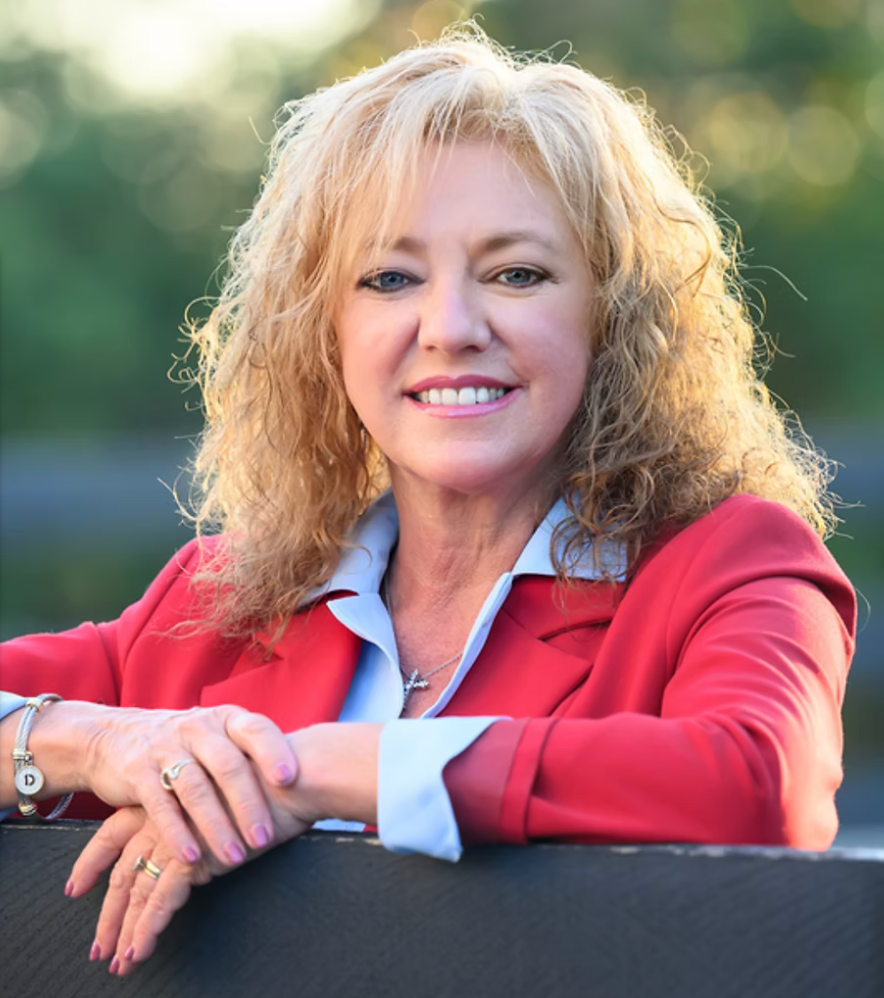
Donna Agee makes her first bid for elected office as she runs for Madison County Judge Executive. A former healthcare industry executive, County Department of Health administrator, and visiting nurse, Agee says she can apply her experiences from each of her previous roles to helping create a better life of the citizens of Madison County. Originally from Winchester and one of 11 children, Agee was the first in her family to attend college.
In this podcast interview, Agee and I discuss traffic, the county animal shelter, and her view of how the Fiscal Court should be run.
Transcript is below.
Sign up for The Edge, our free email newsletter.
Get the latest stories right in your inbox.
THIS IS AN UNEDITED TRANSCRIPT
Speaker: 00:00
Hello, Donna A. G. It's nice to see you. You are on the edge with me, Whitney McKnight. Hi, Whitney. I'm so happy to see you. And thank you for having me. And thank you for all your listeners for being engaged and participating in this exciting process of Madison County Judge Executive Race.
I have a whole bunch of questions, same as what I've done for every candidate. I sent them to you ahead of time, sent you the topics, and gave you a chance to think about it. So I'm going to start with probably the most important question for your family anyway. And why in the heck are you doing this?
Speaker 2: 00:30
Well, that's the number one question I get asked. Um, I have been a community uh servant of Madison County for 33 years. I started my nursing career uh for the Madison County Health Department at MEPCO Home Health. I was a home health nurse. So I traveled the county over from the poorest of the poor to the richest of the rich, every socioeconomic uh path that you can imagine. So truly understanding the landscape of our county, the citizens that live here, and the needs they face every day, not just about health care. When you're a home health nurse, you're looking at what they can afford, their groceries, their bills. Are they, is their water bill more than they can pay because they're deciding between that and their blood pressure medicine? So truly navigating people through life struggles is what home health nurses do. I became an administrator in Berea at the Madison County Health Department there. And until uh the government changed, the governor changed and uh they laid off the health departments, laid off the home health portion. And I took a position with EKU and became went to work as a clinic director for Bluegrass Unity Health Center. Again, as my career progressed there, I became the chief operating officer serving Madison County, uh serving eight counties total, but still finger on the pulse of Madison County, the needs of the farm worker, those with substance use disorder, and facilitating grants for from Hursa, from SAMHSA, uh state dollars, federal dollars, and I can speak to that later. But all of those experiences, I have been in the weeds, in the trenches with everyday people, everyday struggles and challenges. And I've been able to come up with ideas and and problem solve and figure out how to boots on the ground to being an administrator, which is a higher level of figuring out how to solve problems, but the impact is equally as satisfying at that level.
Speaker: 02:28
So you wanted to do that again? I mean, I'm trying to um put together. So you have you have experience working with people at all levels of the socio and economic ladder, you've seen people at their worst, you've been there with people when they're in pain, but you've also, it sounds like you've worked with executives and you've had to negotiate over money with grants and that kind of stuff. So why are you doing this?
Speaker 1: 02:50
And the reason is because I still feel like I can make an impact for everyday people. My family knows my friends that people that know me well know I am the person that will go to bat. I'm here for the, for lack of a better term, a lot of times, the the underdog, the person who doesn't have a voice. And sometimes we see ourselves as that when we're working every day, you're working 40 hours a week, you're stuck in traffic, you're getting your kids to to work, or whatever the challenges are, or you can't pay your bills and you can't figure out what I can do. And we're counting on our local leaders to to make those decisions for us. So I have felt, you know, people use that a lot. I've I was called to do this. I truly feel like my experiences have led me to the place at this season of my life that is the perfect time to say, I believe I can make a difference in the lives of every uh citizen of Madison County.
Speaker: 03:42
Okay, so a couple of things come from that. Uh, maybe four. So what I just heard you say makes me think you're accustomed to actually touching people's lives. So maybe, and I I think you told me you just retired. Yes. So you have the time. Okay, so you have the time to do this, but your your career, the way you've just described it, has been about helping people who are in some ways suffering solve a problem. Is that accurate?
Speaker 1: 04:06
That's that's accurate, yes. Okay.
Speaker: 04:08
All right. So it sounds like you want to just keep doing that, even though you're retired. I just can't stop. Well, I mean, I was kind of wondering that. So so it was in your nature, really, is what I'm thinking.
Speaker 1: 04:18
That's maybe yes, that's a fair assessment.
Speaker: 04:21
Okay. Well, so the other thing I was thinking as you were describing your experience is that, you know, I heard of I've heard criticisms of your campaign, and one of them is that you're not experienced in politics. Yeah, okay. Well, I'm a former Capitol Hill reporter and I've been, you know, a Washington creature. And I did hear a lot of the things that you just said were your skills that are essential to be able to exec, you know, be an executive of some kind. So I I don't know that that really is gonna hold you back, but this is where the rubber meets the road, and that is what do you see as the problems? You said, you know, you didn't like, I don't remember how you worded it, but you you're you were unhappy with the way the county was going. So why? What's the problem?
Speaker 1: 05:08
Well, I I think when I I started paying, everyone started paying close attention uh with just planning infrastructure, traffic. You know, early on in I think it was 2019, uh, the citizens had to petition because of the tax increases. And then, you know, fast forward, you you start paying attention. The 911, when the fees came out, there was an assessment of properties that that information was not accurate. So we, you know, in my mind, I'm like, you we shouldn't have to a do-over of that, but we did. And so now it's on the water bills. And it seems like it's not a lot of money to a lot of some people, but I can tell you right now, all money is a lot of money to people right now. People are not making great money in this county. There, there's a great disparity in that. We have to bring jobs into this county, but from what I'm seeing from the from the 911, the the water bill, we've got taxes. And then you're just it was just one thing after another. The animal shelter. You know, people it was just an outcry in this community, and it was an easy read. There was money donated to the animal shelter, but it was not utilized. It was it was $190,000. Everyone's read this. This is yeah, no, okay.
Speaker: 06:18
So I remember I I I know about this because I reported on it, but I met with um both the executive and the deputy uh judge executives, so Reagan and and Reagan Taylor and Jill Williams, and they showed me the statement of where the money is parked in an investment fund. So it's basically and I and I I'm re I'm remembering from my own story. So if anybody wonders if I remember correctly, just go read my story. So it's from August of 2025. I wrote about this money that was given to the animal shelter. It has not been, to my knowledge, anyway, nothing has changed since last year when it was allocated to it was it was left in someone's uh legacy to the animal shelter. It was about like $200,000 or close to that, something like that.
Speaker 1: 07:03
$190,000. Yes, it was an estate of Tony of a showman. Yeah.
Speaker: 07:07
They put the money in an investment account in order to accrue interest to be used on building a new animal shelter. That's what I remember.
Speaker 1: 07:14
Yes, and and that's what I remember. That's what I've read. But but to that point, you know, it's just you're we're raising questions. It raised questions for me, you know. We put it in a high interest or or or whatever that is. I'm I can't speak to what it was a Charles Swab account.
Speaker: 07:27
I did see the um the statement I was shown that I'm pretty sure it's Charles Swab. So it's just you know, like a like a Vanguard account or something like that.
Speaker 1: 07:34
Sure, sure. And you know, again, it's the decision making. I'm you know, that was their decision. The animal shelter is just a a passionate piece for me. Again, the money's there. I'm not c I'm not saying there's any property. I'm just what would you do differently about the the animal shelter? Well, I would have to be back in time with when they got that money. I would have a seat at the table with the fiscal court. We have this money. What's the best way to approach this? Do we have a line item in the budget? Has there been a line item in the budget? Again, we're not talking about a moment time. We've had 12, you know. That was what year did you say? It was your story.
Speaker: 08:08
Whatever year they got that. I think it was last year. But the money had been given prior to last year. Yeah. And and this is so, you know, I don't, this is just by memory. I think the money had come in in 21. Yeah. So, you know, but um again, look at my story, people, because I don't remember for sure.
Speaker 1: 08:24
Well, again, I I don't want to, I'm not gonna say anything that, you know, I want to I don't want to say something that a date that's not true. So anyway, the money was there. Okay, so you're sitting there. Let's have a conversation. How what is the best use of this gift? And how do we get the citizens involved? Everybody loves their animals. It is, you know, it has been an outcry in this community. So what a perfect time to say, hey, let's have a town hall meeting. We're gonna have a special meeting, we're gonna do it when everyone can come. We want, or even if it's an email, sorry, whatever it could look like to include as many people as you can and say, What can we do? We've been given this gift, just like you would go home to your family and say, we've been given a gift, guys. What's the thing that we need urgently for our home? And I think that's the takeaway for every decision. You have to look at every citizen as in this county and look at running this county like you do your home. If you don't have the money, you can't spend it. If you've if it's something's broke, you have to fix that before you go get the next new shiny thing. So that's what I would do differently. I would have come to the table, gotten input. You know, who knows what gift would have come out of that? You know, maybe someone would have donated property. You know, now we've had fundraisers. So I don't understand that. I think, and people want to donate, they want to, they want to give back. I go, I've gone to the animal shelter several times. I've donated. People would have gotten on board to say, hey, what if we all did something grand? That would be a wonderful thing for our animals.
Speaker: 09:54
Okay, I there's a lot there. Just make sure that I kind of understand the direction you're going in. So you're saying that instead of banking the money, it could have been an opportunity for the fiscal court to invite the community to come in, celebrate all of this money that had been given to the animal shelter and ask them to participate in brainstorming the best way to apply it. Okay. So, but then you're saying it might have really resulted in somebody donating property. Okay. Well, that makes me wonder. I mean, I know it's theoretical or it's just hypothetical.
Speaker 1: 10:25
Yeah, it's theoretical. So, yeah. And I'm not just gonna say we would ask for that.
Speaker: 10:28
I'm just saying, not yeah, yeah. It's it's kind of like these were the possibilities we don't even know. We we might have been presented. Okay, so my question, my question then becomes well then, what do you think of this particular action that was taken? So this particular direction was put the money aside because one day we're gonna build a new shelter. So, what are your thoughts on saving that money for a new shelter? What should be happening as a shelter goes?
Speaker 1: 10:53
Well, of course, when you're given the money, you you have to put it somewhere in the beginning. But I think you can't have that plan without input from the citizens, you know, and and because there's been a whole family that lives in an area with a business. They were gonna put the new animal shelter in their backyard of their property and and their business. And they they came and petitioned the court and said, please don't do this. They and this the reason I say it would ignite something, I will I watched that whole meeting of from this family, and they said, We will give you a hundred thousand dollars ourselves to go towards an animal shelter. So that's when my mind started going, wow, people are passionate, and this is a big deal. You know, so what if if the way the conversation starts is to have to come into the fiscal court meeting and be to tears, the fiscal court appears to be frustrated by that event, that doesn't set well with who I am.
Speaker: 11:46
So, how would you run the court differently? Are you it sounds to me like what you're saying is the and tell me if I'm wrong, but it sounds like you're saying the citizens are shut out of decision making. Is that too is is that too sweeping a statement?
Speaker 1: 11:59
I think that's likely too sweeping of a statement, but I what what I do believe, and from the fiscal court meetings that I have watched, um and the fact that when I watch, I can't make a comment and people have been blocked from being able to make statements. I I know there's all kinds of regulatory guidelines, but I'm not gonna tap my toes in that. I but there is a sense and there is a pressure in this community that there is not transparency. And everybody's throwing that word around, but we know transparent means to see through, right? So what we know is if you can't come to the meeting, you can watch it on YouTube, you can't make comments, you can email, you can call, and then you'll see, you know, whatever what is the outcome of that? If you want to have a healthy conversation and to truly have a moment where it's a game changer in my history, it hasn't been through email. It typically has been through someone with their passion and sharing their concern and being able to say, Well, tell me more about that. Or you said this, just like this interview's going. If someone comes before the fiscal court and the meeting should be when they can come, you can change, you know, the times can vary. And I've heard, I know they say, well, there's a third shift. But if you have them in the evening, that's when all the traffic, everybody's out in traffic for a reason because they're getting off work, but you can have you they have two a month, you could do one early, one later, you know, that kind of thing. I actually have never thought about that.
Speaker: 13:22
That's actually not a bad idea.
Speaker 1: 13:23
Yeah. Uh, and I think just being able to have that conversation and back and forth, and we we have to we have to be realistic. You can't allow every person to come in and you know, we can't if everybody talked for an hour, like myself, if I got was passionate, I would probably go too long.
Speaker: 13:42
But uh there's I mean, I've gone to a couple of fiscal court meetings recently where there has been um there's been public comment and and you know, there are rules and they follow the rules. You know, you can speak for this this long, and if you can't get it all in, at least in Berea, if you can't get it in in the three minutes, then you have to make a presentation and they're happy to have you do that. At the fiscal court, I actually don't know if there is a time limit that I know there's a time limit, I don't remember what it is.
Speaker 1: 14:04
I I'm not sure. I've heard them mention that, but I think the the point is not the time limit or one person. I think if it's a when you have a culture and you have several people present, maybe you can even again. I'm this is I'm not in office, but you can say you've got the agenda. Next Tuesday, we're gonna be talking about a gift given for an animal shelter or a proposition for whatever it may be. If you please come with your ideas, come prepared, have them written down, have a you know, have a voice. You know, I think there's a way, I think our citizens are a lot smarter than we think. They can, you know, people can come in an organized fashion. And I've watched that they come, they've got their notes written down, and I think you have to have that because you, you know, things can't be chaotic, right?
Speaker: 14:48
I I have to agree with you. I I don't think it's true for the entire citizenry. There are plenty of citizens who just don't pay attention, but that is not everybody, and then of the people who do pay attention, they pay attention at different level levels, right? And and I can tell you as somebody who's publishing a newspaper online, but with somebody who has a news outlet, I pay attention to when people contact me because some of the best stories that I have reported on came from somebody giving me a news tip. I I think those news tips come from people who are watching closely.
Speaker 1: 15:23
Right. Absolutely. And I've done that again my entire career. There's a reason when when I have every team meeting, staff meeting, I say at the end, tell uh questions, do you have the tools to your to do your job? Question, what what can you are the experts, your boots on the ground? What can we do to improve your what's going on, the outcome? All quality improves by having meetings where people bring issues to the table. Sure, bring an issue. And I love this uh mentality. If you have bring an issue, bring a resolution. When you bring people to the table, bring your issue and bring a resolution. And out of those, man, that's how you come up with the best ideas. That's how I've been successful in my career. That's how, you know, throughout my career as administrator, chief operating officer, and then executive director, when you're in charge of the executive director, you want to talk to every housekeeper, every cook, every nurse, every whatever their role is. And at the end of the day, our passion is what drives us and our personal stories, what our history is, our brokenness.
Speaker: 16:26
What's the first day in office gonna look like for you?
Speaker 1: 16:30
Day one, uh, I'll be uh so thankful. And you know, put together it's start thinking about a team because you don't take office until January, right? So uh just really putting a team together, working with reaching out to CACO, reaching out to uh Frankfurt and saying, you know, and and researching every line of the job description, which I have read, uh, but knowing going through that and seeing what and assessing every person, every team member, every board appointee, and you know, you're gonna have new fiscal court members, maybe. So you have to think about what is that gonna look like. So really analyzing who your leaders are, what their roles are, and then assessments of where, as you look at the budget, what what what's gonna come up next year, what board appointments are gonna come up next year. So I have like my brain, I am already thinking ahead of what that would look like.
Speaker: 17:23
There is an orientation process, there's trainings, there's uh you there's nothing so for new new newly elected people, you get to go to training. Okay, good.
Speaker 1: 17:32
Great, yeah, great. Yeah, so there's nothing that I won't attend or won't read to be fully prepared uh because I am driven and I've had four jobs in 33 years, and uh I like to be successful.
Speaker: 17:44
I want to go back to that question of money and and affordability. That was kind of one of the first things I was thinking about when you answered my first question. This is really an election about money. It's about money. We're not having moral issues on the this is you know, this is not a really um complicated election in terms of the issues that people are thinking about. Now, federal issues are really where inflation and affordability start. You know, it's kind of starts with our economic policies federally, but there are ways that local leaders can impact people's pocketbooks. So I I was just making that observation that this is really about money. And I wanted to give you an opportunity to just kind of give me your thoughts on that, and then we're gonna talk about something else.
Speaker 1: 18:30
Sure. Dollars that have come to our county. How do we advocate for the citizens? And how do we decide what those issues are that we find worthy of advocating for? The roads, emergency, water, fire. You know, when you advocate with legislators in in Frankfurt and you know there's money on the table, man, you know, that's that's powerful. So you want to make sure that you know where the greatest need is, and that's that's what you go for. I mean, there's there's studies that show you what's the highest priority. Of course that's what you would do. You know, where's the highest traffic spots? Of course that's what you would do.
Speaker: 19:08
That's weird that okay, so you just brought up um traffic and roads and things like that. Well, that's actually the direction I was going in because something happened this week where you ran an ad on Facebook. That's where I saw it anyway, um, and you were alluding to the state department, whatever, the um the state transportation cabinet not allowing or not not funding better traffic solutions for exit 87 off of I-80 I-75. About fell off my chair because I was preparing to interview Judge Executive Reagan Taylor and ask him about that. So I thought, why is she? I mean, I really I just want to know why. Like that was just a weird coincidence, and I was taken aback because I was coming at, I want to know how you got to that. I'm gonna ask you that. Because the way I came to it was I've been very frustrated as somebody who is a land use reporter and seeing how eminent domain is being used across the state. And there are more things happening than just in Madison County, but I was coming at it from having looked at every single solitary document that has ever been created around the Scott Gabbard Scott Gabbard and his family's phone. And it was through that that I got to where I did. So tell me how you got there.
Speaker 1: 20:30
Well, to your point, I fell out of my chair yesterday when I watched your watched the interview uh that you did. I like, what in the world? Uh so I don't know if you got to watch the forum, uh, the county judge forum. You called me out. No, I didn't mean to call you out. I just said if you were, I you would have you probably would have thought, then what's she doing? You you might have called me then.
Speaker: 20:53
Um no, because I wonder if you talked about it at the candidate forum, okay. Why were you talking about it then?
Speaker 1: 20:58
Because I hadn't made the connections in my mind yet by the time your forum was they had just voted at midnight the night before the forum to the state legislature house. Yeah, yeah, to to allocate money. And you know, everyone's been talking about development and what's going on and uh what we're getting and the traffic at Goggins Lane and the traffic, you know, on by I70 by 87. I couldn't believe what I heard. I couldn't believe what I read. So I said it that night at the forum in my closing statement. Actually, I I was responding because the current administration made a comment, you know, we we we just brought in nine million dollars to our accounting, and and I was just really just responding from that because yes, that's a great thing, but how is the priority for the West End when you know the expectation was we're gonna address traffic?
Speaker: 21:48
The argument is they are still gonna address traffic, but I have two problems with it and one you just pointed to. And the what the first problem is yes, that's nine point whatever it is, just about $10 million to fix a problem that's actually in the city of Richmond. Okay. So that's problem one I had with it. And I still don't believe I understand it. And the second thing is that it is not really the best solution for the traffic problem that exists. That's my opinion. That's also the opinion of the Department of Transportation to begin with, or the Kentucky Cabinet for Transportation, because in their own documents, they don't list that very high as a priority. I still do not understand that.
Speaker 1: 22:23
I do not either, because the data world that I come from, if something is top priority, that gets the attention.
Speaker: 22:30
If you're the this was so close to the bottom of their prior priority list, right? But that nine plus whatever million dollars applied to the exit 87, that's a lot of money to help solve a problem that was in the top third of their so of their priorities and is a lot of people's number one priority in the county.
Speaker 1: 22:48
Yeah. Everybody's sitting in traffic, probably when as we speak right now, trying to get to graduations at EKU and at a standstill. Yes. Uh so you know that's the reason I raised that question because I'm paying attention. I'm doing my homework. And to put and I didn't really understand the gravity of that until your podcast.
Speaker: 23:05
I Well, you probably hadn't you probably hadn't seen the the rankings.
Speaker 1: 23:08
Yeah. Well, no, actually, I had I had I had seen that because that was a fair thing. I just didn't understand all the other nuances that you all discussed. But the the rationale, the the the thing for me is the fact that we have a top priority road problem. We yay, we got money. And I was ready, waiting for that next sentence to be we are gonna add a lane, do the round, whatever it's gonna be, we're gonna be able to get on and off the interstate in front of Meyer, I'm gonna be able to, because I have been exiting Dominions in your living for the last four almost five years.
Speaker: 23:43
Yeah, every time you wanted to go home, you had to sit there for half an hour.
Speaker 1: 23:46
As I'm sitting there trying to get home or trying to get there, you know, it's like, oh my goodness, or some heaven forbid, if someone's broken down at that exit, you're you know, it's it's you're just sitting there hoping that someone doesn't rear-end you, you know, as you sit on the interstate and they a truck's coming and you know, they can't see that you're at a standstill. So it's just a public safety issue. I don't know how that happened. And that's that's a hot button for me. Public safety is a hot button. So the fact that how how in the world the decision was made to take that much money to the other end of the road where there's no traffic yet. And I know there's traffic studies out there. I don't, I can't quote them and I haven't seen all of those versus the traffic at the very area I'm talking where I've been sitting, and it affected my life. So of course it was my issue, right? Uh, and everyone else is around me, I have to say, and all my employees, workers trying to get home to their kids, trying to get anywhere or trying to get to work. How many calls, you know, they were supposed to be there too, and you know, they couldn't get there on time to take care of your family because they're sitting waiting for a light.
Speaker: 24:45
Yeah, here you say you said whoever was the ones to make that go through. Okay, it's our it's our state delegation. Well, right, I understand that. I'm just saying, so why? That's the and you probably can't adjudicate that and and we should probably move on to something else, but it's an issue. It doesn't make sense, it does not make sense, and somebody needs to make the story clear.
Speaker 1: 25:08
Yes, I would agree with that.
Speaker: 25:09
What if you were elected, what are your tangible goals? What do you want to achieve first, second, and third?
Speaker 1: 25:17
Transparency, again, using overuse of that word, but truly having a welcoming environment with a fiscal court, a cohesiveness. Everyone wants to hear that their concerns are being heard. And by that, I mean I don't mean people need to, you know, show there there shouldn't be have to be a rallying. They're voting for magistrates. The magistrates, they should hear their magistrates saying, hey, that's a good idea, but that doesn't really apply to Red Lick. Or, you know, out here in Pussy Ridge, here's what's happening, or here's what's happening on the north end. Yeah, that's incredible, but here's what's happening down here at at Barwalla or Long Cabin Road, or and you know, if people hear and see that the people they've elected are coming to the table and saying, I can't vote for that because it that's not what I stood for. I can't vote for that because that's going to affect there's gonna be a negative outcome here. And then if that's something that doesn't happen, a resolution doesn't happen, and you go back to the table and come up with a resolution that works, that's the first thing.
Speaker: 26:18
Well, what kind of example, what what's an example of how that's not happening?
Speaker 1: 26:23
Well, this road for one thing.
Speaker: 26:26
Okay, so the first thing you said that you would seek to achieve should you get into office is elevating the various voices from around the county. I guess that's how I would put it.
Speaker 1: 26:37
Yeah, yes, and and that was just an example. If it is my whether this road is wherever it is, we need to address or work with the cities and say this is going on over here. Uh, before, you know, I just see decisions being made that we're putting down uh roads to whatever, if it's new development, I know developers participate in that, but there are still county dollars that go to those things. And I think that's where the first goal should be let's take care of what we have before we we do anything else. So that's the first goal, transparency and and and participation, I guess is a good answer. I do think we have to evaluate the animal shelter. What does that look like? This there's been an outcry about that. We have to address that. And how do we looking at our budget? I mean, it's an and that's just pretty much a no-brainer going through the line item and saying, where where can we, what can what is in the line items, where do we allocate dollars that's gonna affect the most people or that's that's gonna make sure that it's equal service for everyone and public safety from uh you know, your fire departments, your uh, your volunteers, yeah, certainly the fire departments. What does that look like? What where do we need do we need to allocate more dollars for that? Is that a priority over a road? You know, if we need a new fire station, do it. Building, builders are gonna build. I'm not anti-builder, I've heard that as well. That is not true, but I think the county dollars need to be fixing what we need to fix without lobbying for for things that haven't been built yet.
Speaker: 28:06
You mean like, okay, so you mentioned the fire station. Is that one of the things? Are you saying that maybe we needed a better evaluation of where to spend money? There really wasn't any public discussion that I could find about the fire, the new fire station. So, whatever the conversations were about the fire station, the public didn't hear them. If I'm right. No, I can't say that definitively, but I couldn't find much.
Speaker 1: 28:29
Well, I asked my magistrate, I did what every citizen should do. I asked my magistrate, are you closing the fire station on Keeneland? I don't know. I said, Well, I'm gonna be watching next Tuesday and I want an answer. This was a while back, and this was a couple of months ago. No, this is yeah, and I really I heard, well, we're we're gonna still gonna have a a presence. So if if we knew, if if that uh magistrate for whichever area, again, I don't care which area that county it's on, if they said we have had these the response time, it's not the water, whatever is going on, we need to find a way to to get the money to have a new fire station here. Of course, what that would be, of course, that's what we need to do. Instead of, hey, we need to find a way to lobby to get money for a new road. See what I'm saying? And every magistrate should have a voice at that table. I they need to be the advocate for their constituents because one community won't know what the other community's needs are. They go, oh, well, that is a like I've heard that. Well, I I didn't know they were going to close that fire station. You know, no one wants, we our community is amazing. We are neighbors, we are family, we love one another. No one wants to take something like a fire department from someone else. And and you know, and they certainly don't want houses burning down in any community. We want to make sure everyone is safe. But when you see money going out the window or going, but not going being spent for other things for traffic problems that haven't occurred yet, that doesn't make sense to me. Is that fair?
Speaker: 30:04
Yeah, that's fair. I just want to clarify two points. So when you said the fire, no one wants the fire station closing, we don't know what's gonna happen with it yet. So that may or may not happen. Okay, I just want to clarify that.
Speaker 1: 30:13
That's what I'm saying. We don't know. So I'm sure I can't imagine that anyone would think, even the, you know, the powers that be, I can't imagine that that would be okay.
Speaker: 30:24
Be sure. We don't know what's happening there. And then the point that you made about traffic that we don't know is happening yet. So just to make sure people who are listening who maybe haven't heard the previous conversation that I had with Judge Taylor is that um that money we were talking about, the nine plus million, is going to solve a traffic problem that uh is expected to become actually immediate in 2000 or 2035. So that's not that's a decade away. And then if it were to happen, if this road were to happen and divert traffic now, and of course no road is built overnight, then the the traffic is like 9,000 versus 25,000 at the exit per day.
Speaker 1: 31:03
Yeah, I think it's pretty that's some pretty easy data to understand, isn't it?
Speaker: 31:06
Yeah, I I agree with you on that, and but I just wanted to make clear the story that you were referring to on yes.
Speaker 1: 31:11
Yes, thank you.
Speaker: 31:12
Yeah, um, yeah, okay. Well, I don't these local interviews are going longer than my federal ones. No, no, it's it's me. I'm asking the questions because I, you know, I get a lot of reader feedback. What people want to know, people send me tips, people ask me questions. So that's exciting.
Speaker 1: 31:30
That is so exciting. And I the participation, all participation, you know, and again, you can't be upset. I've I've had to ask the tough questions in my years of administration. I have had to be that leader. This is not going to work, this is not happening. But not one time have I ever stopped someone from giving me their opinion. And it's not personal, it is business. You know, I can you can't walk into work, and certainly in healthcare, you cannot be the person that says, Well, that hurts me that you're asking me that question. That it doesn't hurt me. I value every opinion. So the idea that this is promoting feedback, this is promoting uh participation. I applaud that and I thank you for that.
Speaker: 32:10
Yeah, it's my pleasure. That's this is exactly the service that I want to provide is community-centered journalism.
Speaker 1: 32:17
Well, you know, I've been a community, I've been a community centered, uh patient centered, uh and servant centered and community centered has been in my job top job title for 33 years. So that's the reason I feel like I am actually the candidate for county judge executive on May 19th.
Speaker: 32:33
This has been a great conversation and I've really enjoyed it. So thank you very much.