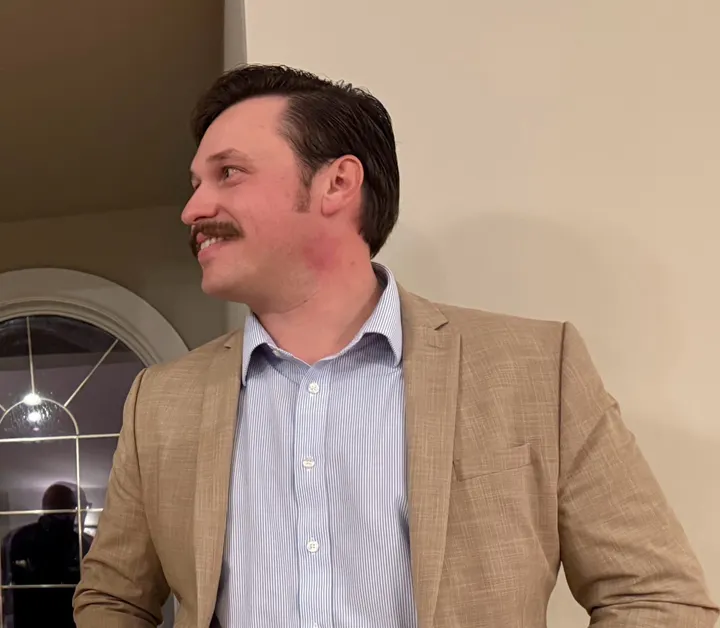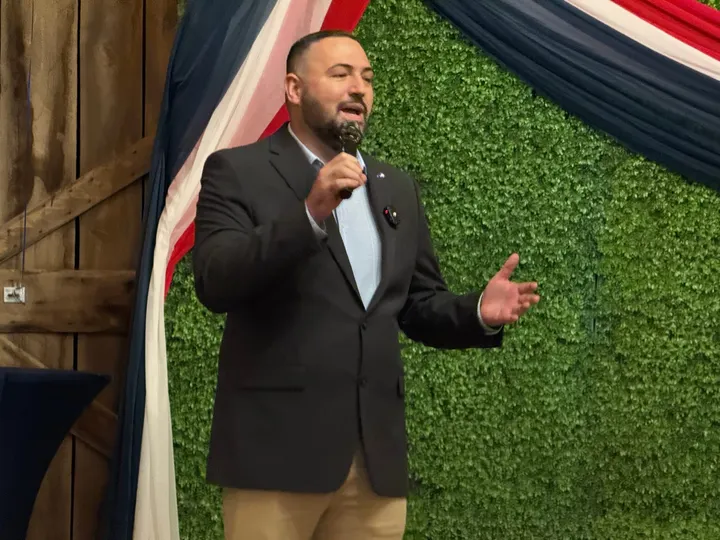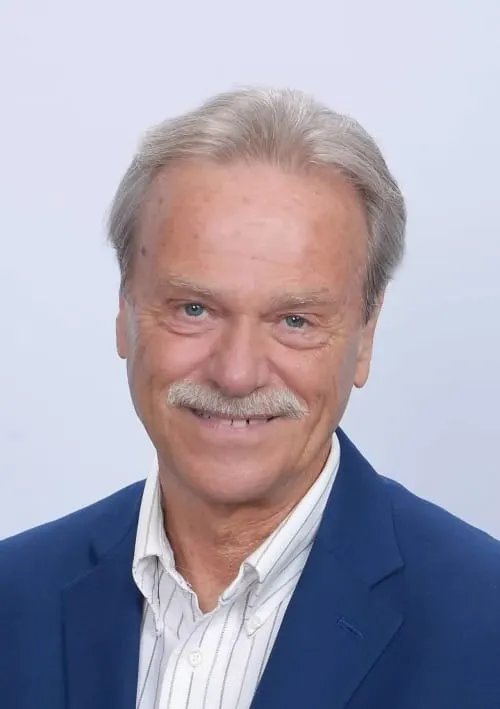
Ryan Dotson (R), candidate for Ky 6th Congressional District is on The Edge
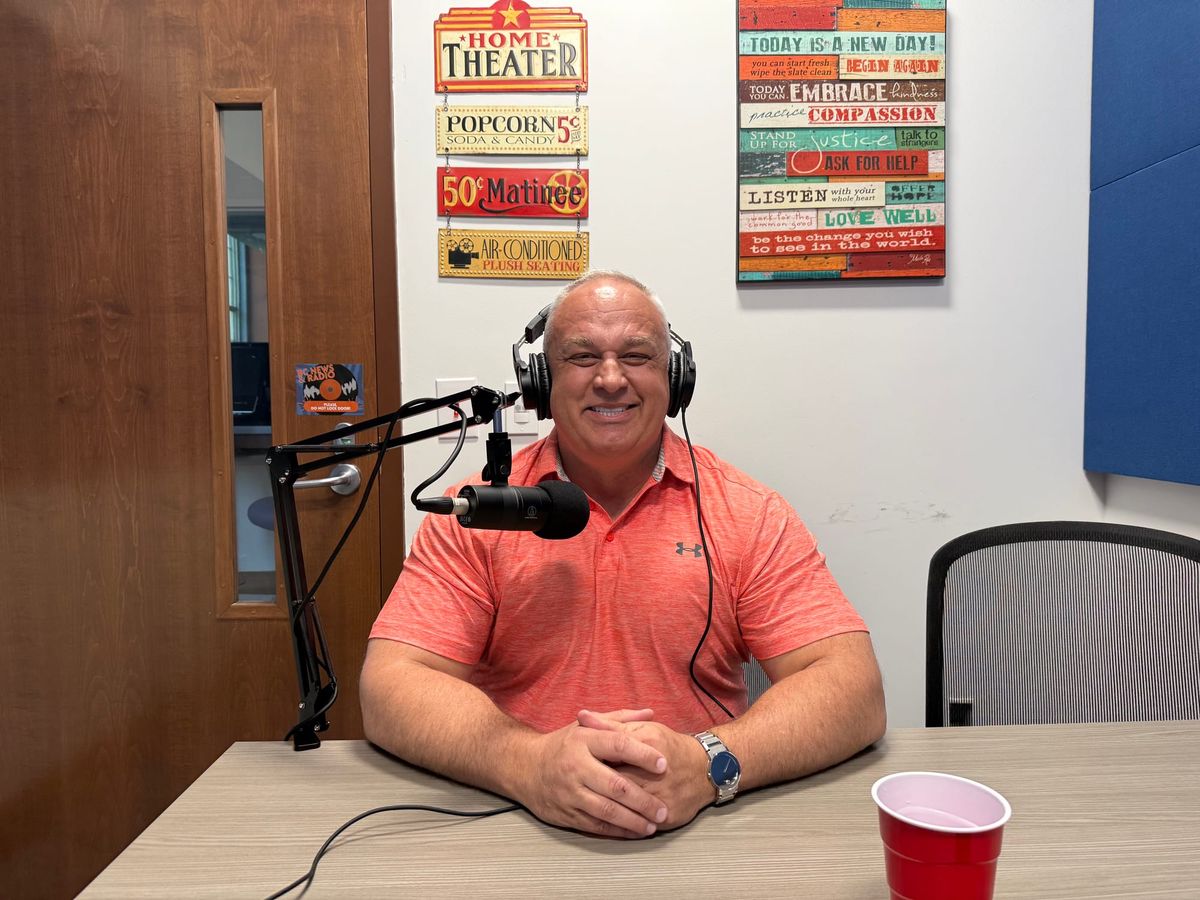
Ryan Dotson (R) is a former Kentucky state representative whose number one goal when in office was to impeach Gov. Andy Beshear. That initiative failed, but Dotson's other mission, to forbid mixed-sex athletics in the Commonwealth is now state law. Building on these and other experiences in Frankfort, Dotson is now seeking to represent Kentucky in the US House of Representatives by winning the 6th District seat now up for grabs as the current occupant, Andy Barr (R), runs for the Senate, hoping to replace the outgoing Mitch McConnell (R).
In this episode of On the Edge, Dotson discusses what led him away from his roots in Eastern Kentucky, why he became an Evangelical-Pentecostal pastor, what he thinks might happen before the actualization of a popular American Evangelical perspective that a war in Iran is among the final steps preceding the second coming of Christ, and what matters most to him about US relations with Israel. Plus, he counters a current controversy that has been attached to his name.
It's a conversation you won't want to miss. The unedited transcript can be found below.
Sign up for The Edge, our free email newsletter.
Get the latest stories right in your inbox.
Ryan Dotson On the Edge with Whitney McKnight
Whitney McKnight: 00:00
Ryan Dotson, very nice to see you. You are on the edge with me, Whitney McKnight, and welcome.
Ryan Dotson: 00:05
Well, I would appreciate the opportunity to be here with you, Whitney.
WM: 00:07
You are running for Andy Barr's seat, the 6th Congressional District, and uh here in Kentucky. So why are you running? Why are you doing this to yourself and your family?
RD: 00:16
Well, uh if you if you wasn't felt called to do it, you wouldn't do it because um you know it takes a lot of work, it's a lot of effort, a lot of fundraising, things of that that go into it. It's hard. It is, it's very hard. But um I felt a mandate to be involved. And a few couple years ago, we we looked into possibly uh jumping in a race if Andy Barr had had would pursue the Senate seat. And so we looked at it and the wife and I talked about it, and sure enough, it kind of fell into place. And it felt like a sign for to us to get involved. And so thirty minutes after Andy Barr jumped into the Senate race, I came out and uh jumped into the congressional race. And so I've been campaigning for a little over a year now.
WM: 00:58
Were you already with fundraising and things like that? In other words, you had things in place?
RD: 01:02
No, not necessarily. We just knew that we had a good base to launch from, and we did that, and we had our kickoff not long after that, and we had probably close to four hundred people there in Winchester that came out to our kickoff for Congress. So it was a huge launch. Uh it has been going really great. And there's five of us that are currently in this Republican primary, and I'm the only one that's been in this race for as long as I have.
WM: 01:28
Well, let's see, you said you're from Winchester, and we also have Ralph Alvarado running for the same seat, also a Republican, uh, also from Winchester. So is the uh is the electorate divided there?
RD: 01:39
No, actually, it's uh been in my favor. Um when Dr. Alvarado decided to leave. Uh he left after winning his re-election to the state Senate seat.
WM: 01:50
Just to explain to the audience, he left to go to Tennessee as the health commissioner.
RD: 01:54
Yeah, and we all we didn't know it was going to happen. Um we we've all worked together in the local party, and it was just a few days after he goes to Tennessee. And we found out through the news, like everybody else did, and we were all pretty tight at one time, and so the local party didn't even know. So, you know, he made his decision to go to Tennessee, God bless him. And then, you know, two and a half, three years later, he's looking to come back and run for this potenti for this seat. So the local people there had already built a firewall around me, and they said, Ryan, we're gonna stick with you. And that was very big for me early on because Ralph had a good name or a big name at the time, and he decided to come back, and our local people said, Listen, we're gonna stand with Ryan. And so our community has been pretty strong with me, and outlying communities as well. So it's been very um telling that uh, you know, as he came back, um people have mixed feelings about him returning.
WM: 02:51
You also have a career that puts you in front of people. You are a pastor, um, and I bring that up because your your platform is primarily faith and family. Um just kind of describe that for us.
RD: 03:03
Well, I can't um detach myself for who I am. It's not what I do, it's who I am. Um just to give you a little contextual background. I'm a I'm originally from Pike County. I'm an eastern Kentucky boy. And so it was either going to the coal mines. My I'm a son of a sixth-generation coal miner. So it was either going to a coal mines or go into the military. So um I was newlywed, and I didn't want to go and live the lifestyle that my forefathers lived being a coal miner. And so going into the military, I scored high enough on the ASFAB test to be able to go to x-ray school. So that was a great opportunity to get an education while all the while serving the cu my country. And so doing that, I went in and went to basic training and done went to AIT in Fort St. Houston, then went to Germany for a while. And then when I came back out of the military, I got a job at the University of Kentucky Hospital. So I relocated from Eastern Kentucky to Central Kentucky in Winchester, and I've been there for 34 years. And all the while I was working at the hospital, God had begin to begin to deal with me about opening a church, uh, uh a mission really, because working in the hospital, I seen a lot of brokenness, I seen a lot of pain, I seen a lot of suffering and death. And when you were working in an emergency room environment, we were a level one trauma center. I was there when all the traumas were coming in. So spiritually, you know, I wanted to open a spiritual hospital. And so that's what we did. We launched, didn't really know anybody. We were we took 12 people uh in a little storefront building down by the railroad track there in Winchester, and we grew. And we grew from twelve to a hundred and twenty people the first year. The next year we grew to over three hundred plus people. So um I've been pastoring now for twenty-nine years.
WM: 04:42
When you say God was dealing with you, I think that's what you said. What's that feel like? What is that?
RD: 04:45
Explain what that's it's a feeling you can't shake. You know, there's there's this feeling you you you have to do something. And here's the thing is that feelings come and go, right? But when something persists on a continual basis, you have to question, God, are you dealing with me? And I had been wrestling with that for a year and a half. And it wasn't something I just woke up one morning and decided to do. And it was a feeling that never left me. And so, and that you know, gave me the wherewithal, if you will, to do it and step out on faith. Um and that's what faith is all about. It's a journey, and you feel that leading. And so I, you know, that's exactly what I did uh 29 years ago.
WM: 05:26
Was there a moment where you you had a sign like, okay, this is exactly what I was supposed to be doing?
RD: 05:32
Yes. I mean, it it it all fell into place. We we rented the little storefront building and uh people started flooding in. I mean, the finances, I didn't know what we were going to do or how we were gonna do it, but it just seemed like God had somebody. Um things began to fell fall in place continually, week after week, and it really grew our ministry rapidly. And so and it was just a faith walk.
WM: 05:55
It's really interesting to me because what you've described is very different than the clergy, for example, that I would know, which would, you know, they'd have all gone to seminary, maybe been from a monastery. So how do you prepare for that responsibility without the academic background? It's curious to me.
RD: 06:14
Well, uh I grew up in church. Church was my whole life, uh, even as a youngster. I gave my life to Christ many years ago. And raised up in a spirit-filled church, raised up being taught the Bible. It was second nature to me. And so the calling, I had already been in ministry for several years before I became a pastor.
WM: 06:33
What do you mean? You mean like you were working some kind of a charity?
RD: 06:36
I was evangelizing. I was doing mission work. I was evangelizing. I had a gospel group. I I'm a singer as well. So I traveled and sang for a name of your group. Pure in Heart. And so we were on television a lot. So that really helped us launch the church as well, is that our recognition from TV.
WM: 06:52
So what is it a Pentecostal church then?
RD: 06:55
Yes. Well, you know, we're non-denominational in name, but we have people that are Bath Baptist, Catholic, Methodist that come from all and we're very lively. Our worship is very lively.
WM: 07:05
Our uh That's what it sounded like that's I was thinking Pentecostal because it just sounded like a lot of spirit was bouncing around.
RD: 07:11
I'm a very animated preacher, you know, and so uh unashamed about that, but uh that's who I am. That's what God's called me to be. And and you know, and uh through the course of our ministry, we've been able to see, you know, lead people through addiction, lead people out of crazy lifestyles and into the light of Christ, and it's just been a wonderful journey. Now, there's been some heartaches along the way. We've had to battle some sneaking deacons and we've had to go through some some turmoil. We it's not always been uh a bed of roses, so to speak, but we went through some dark seasons and we held on. And that it like it goes back to what I said. It's a faith journey. And if you wasn't called to do that, you would quit because there is discouragement, there's a lot of hurt and pain involved in ministry. But you know, you when you're called of you feel called of God to do it, it gives you the strength to follow through.
WM: 07:58
Well, what happens if you win? What will your RD do without you?
RD: 08:03
Well, I will stay the founding member or the pastor of the church. So we founded that church. I will have someone to come in and do, and we've already got people prepared for that, that will take over the senior pastoral duties of the church, the day-to-day activities that will preach. But I'll always stay connected to that church. That's kind of my baby. And uh, you know, and so I will continue to be a part of that church. And when I'm in on the weekend, I'll occasionally minister, but the day-to-day activity will go to someone else.
WM: 08:30
So is that something that you've already prepared them for? Yes. I was like, I couldn't. So let's talk about world events and how, as a member of Congress, you would have to uh legislate around them or at least vote for funding and that sort of thing. Um I think the first thing that is on the mind of a lot of Kentuckians is gas prices are crazy. Yes. They're crazy. And they are crazy because we did not secure the Strait of Hormuz before we decided to go in and blast Iran, which to me seems extremely irresponsible. And I have theories about why it happened, but it's just bad policy. So your take on that and anything that you think you might be able to achieve in Congress around that kind of thing?
RD: 09:10
Well, Iran is is definitely something that should have been dealt with 47 years ago. We're we're seeing now with Obama failing, giving them the $1.5 billion he gave them, the way we withdrew from Afghanistan under Biden, the Middle East is a mess. And so Donald Trump's trying to clean it up.
WM: 09:27
He's trying to deal with things that should be sorry, but he did say we would not no more new wars.
RD: 09:32
Yes, but things arise and things change quickly. We know that. And I believe, and and I said this at a forum, you know, this man I believe he's truly trying to do the right thing. Um at his age and the wealth that he he's amassed, he should be sitting on a beach somewhere and enjoying life. But he's not. He's fighting for America's people. And um, you know, my mother, I don't always agree with her, you know, and so and it goes back to there may be decisions that he makes that maybe, you know, like I you like you just pointed out, you know, maybe maybe there's a question there. But I do believe the overall uh work that he's trying to do is to better America and keep America safe. And so uh and that I won't always look pretty at the time, but I believe given uh more time uh down the road that we'll look back and say, you know what, it was well worth the hiccups that we had to deal with along the way.
WM: 10:24
So so what is in your view, what is the reason this is a good thing for America? You said keep Americans safe. What are we not safe from?
RD: 10:33
Well, it takes China. Um a lot of the oil that comes goes to China from Iran, it goes to Russia. Um we do know that the Strait of Hormuz is that pathway that it needs to be taken care of and secured. And I think Trump being the strong man that he is peace through strength and being strong as he is, Biden couldn't do this. Obama couldn't do this. They cave in under the pressure. And you know, like him or not, he he navigates from a point of strength. And he's he and he's very hard and he takes a hard line on things. And I appreciate that about him. Um but I believe the national security of America and what he'd done in Venezuela, I thought that was that was something that needed to be done and uh with removing Madero and and it takes China out of the Western Hemisphere because that gave China a play against America from Venezuela. So I think strategically and there are conversations that are going on in backrooms that we don't we don't know those backroom conversations, and there's top secret things they're talking about that we don't know. We just have to wait and see. And yeah, the gas prices are very uncomfortable right now. But let's talk about the big beautiful bill that passed, and people are getting record refunds. People are getting, and it's been jet fuel to the economy. So, you know, it's easy to take and and take a cross section and look at something that's negative now, but we're looking at the big beautiful bill and how it's playing out with no cash on tip, I mean no tax on tips, no tax on overtime. We were getting ready to do a function uh a few weeks ago on TV, and and the guy at the uh that was checking us in at security, he says, I'm working overtime tonight for you guys. I said, Well, man, I I I'm sorry about that. He said, Don't be sorry. He said, That big beautiful bill is good for me because we're not getting taxed on our overtime. So, you know, there are some big things that have happened, and just you know, I I want to remind people, he's been in there about a year and four months now, and he's already made a huge difference. And America is being respected on the world stage. And I think that is so powerful. And yes, I don't I don't like forever wars. I don't want to go to war. I don't want to put our troops in jeopardy. But then there are times where if we don't make certain moves, and it's very unfortunate that our allies in NATO aren't supporting us. But if we don't make certain moves, then we're gonna pay for it down the road. And I think Trump is doing the very best he can.
WM: 12:54
I'm gonna r offer two rebuttals to that. And and one is that I don't know that we are seeing respected, uh seen and respected the way that you're describing that around the world. I I don't know, I'm not gonna start name you know name-checking a bunch of countries, but I don't think that that's actually true.
RD: 13:10
Uh you know, well, do you think Biden's respected? Do you think he was more respected?
WM: 13:14
Trevor Burrus, Jr. I really do not have any understanding of that presidency, to be frank with you.
RD: 13:19
I didn't I d I did not know what even under Obama, I mean, he he would kiss the I told his hand, you know, his ring or what have you. I mean, they just was no respect.
WM: 13:29
Um Well, uh and then the second thing I wanted to say is that you know it's possible that NATO is not getting involved because we've spent the last however both administrations for Trump, he's spent telling them how they all are terrible at their jobs, they should be doing other things, they should be taking on I mean, he's basically told them you're a bunch of hangers on and we're you're coasting because we're paying for everything you're doing. So, you know, they may not want to get involved after having been read the Riot Act.
RD: 13:52
Yeah, could be. NATO has not really been paying their fair share. United States have been paying uh astronomical numbers in dollars. American dollars.
WM: 14:01
Yeah, but there is an argument to that.
RD: 14:03
And so and so Trump is just pushing back on that. He wants America to be treated fairly. And I think that is a fair thing that we as Americans should want as well.
WM: 14:12
I'm gonna ask you a question about Israel um and the Bible. There is a televangelist who um is preaching that we need to destroy Iran, let Israel expand in the Middle East, let the war happen.
RD: 14:28
Would it be John Hagee?
WM: 14:30
Yes, you do know.
RD: 14:31
I I've I've seen him.
WM: 14:32
For a lot of evangelists, a lot of American Christians, that's a compelling argument to keep bombing Iran and to keep supporting Israel. But you know, that may be I mean, that's a lot of Americans. I think I read somewhere 94 million uh evangelical Christians in in the United States. They may not all support that John Hage's view, but a lot of them do. So let's say you're in Congress, you have some power to either make a war decision or fund something, and that's what some of your constituents are seeing. And I let's let's just address that worldview because a lot of people have it.
RD: 15:07
Well, first of all, being a pastor, being a Christian, a man of faith, um I've been to Israel. I love Israel. Um, I've been to the Holy Land. Uh I was at the tomb of Christ. I just cried like a baby. And uh, and just the Bible comes alive when you're in the Holy Land. Well, and with that being said, I've always been a staunch supporter of Israel. When it comes to, you know, the Bible says in the book of Genesis, I will bless those that bless you, I will curse those that curse you. And so I've always been a friend to Jews, and but they need salvation too, because many of them don't know Christ. They've not come to the knowledge of salvation through Jesus Christ. So even though I love them, I respect them, they're still not converted into Christianity. So, you know, I always uphold them, and I think they're a strategic partner for us in the Middle East. I mean, when you look at Hamas and you look at Hezbollah and all the other terrorist groups within, you know, and all the other, you know, the Houthis and all those, that they are a strategic partner for us. And we need to be an alliance there to keep that balance, some sort of balance within the Middle East. And so Israel has always been, uh, since they've came back as a nation, has always been a partner with us.
WM: 16:21
They're expecting the rapture to come after Israel can expand. And I don't know why Israel would need to expand before it's time for the end of the world, but I mean the way that I understand it is the rapture is going to come through a war with Iran, Israel becoming strong, and then also as a a footnote, if the Jews do not accept Christ, they end with the rest of the world too. So it's very there's a lot going on with this story, and they are expecting, and they are also voting.
RD: 16:48
Right. Well, you know, I love Bible prophecy, and so there's always a spin, there's always a nuance, but I've studied Bible prophecy for years. But there is nothing really preventing Christ from coming back now. Uh the rapture taking place now. I mean, there is nothing biblically that really other than the gospel being preached around the world and it's being preached right now around the world.
WM: 17:10
Aaron Powell Well, are you saying that he could th you're saying Christ could the the rapture could happen before any of the rest of this stuff happening in the Middle East could even get sorted out?
RD: 17:18
Yes, most definitely. Matthew 24 gives us uh the prophetic timeline of of things to happen. And so we're at a precipice right now where, you know, biblical prophecy can just take place right now. But none of that has to happen in the Middle East before the second coming.
WM: 17:33
Oh, okay. Interesting. So what would you say to I think he has 20 million followers?
RD: 17:38
Believe what you want to. Here's the thing. We're not going to agree on the Bible on 100%, but we are brothers and sisters in Christ if we believe in the virgin birth and the resurrection and the divinity of Christ. That's what makes us brothers and sisters in Christ. Uh there's a lot of things we may not agree on theologically or doctrinally. And those things are are important, but they're not as important as the founding truths. So with that being said, people are free to believe or think or study and whatever they want to believe, they can believe that.
WM: 18:09
Well, let's go back to Congress then. If you are charged with making a decision around money that's going to be spent for a war in the Middle East and so forth, let's hear your your strategic thinking for America in the Middle East.
RD: 18:22
Sure. Every one of those line items when it comes to spending into foreign countries, there has to be a reason and a cause. And I want to know what that is. If it's to America's national interest and protection and security, I will lean with a yes, of course. But if it's just to to fund a war that's going to continue with no end, no, I will not. So I will address each and every um situation that comes up in in Congress, and I will prayerfully think about it. I will put I will have strong people around me that will give me the information. I will work with others before I make that decision.
WM: 19:01
Okay. So most of the things that I've read that you've said or read your website and so forth, you you're approaching everything faith and family through that view, and we've discussed that. But sometimes, you know, things like the Middle East, I don't know, maybe as we've already discussed, maybe it's a religious perspective some people have. But how about things like the economy where it's not really a political perspective that one has. One's just wondering when am I going to be able to afford to put gas in my in my truck again? So what's the first priority you have for affordability should you get to Washington?
RD: 19:34
Well, here, again, when you look at the Biden administration for the last four years and the total mess up of that administration, uh interest rates get out of hand, gas, inflation. You're looking now at Trump trying to deal with all the mess that was left over from the Biden administration.
WM: 19:51
I don't think that tariffs was a response to the Trevor Burrus.
RD: 19:53
No, no, it wasn't. But but again, you have to you have to admit that the gas prices and inflation, interest rates, I mean, they were astronomical.
WM: 20:02
I mean, the price of eggs before Trump every yeah, yeah, but under Biden I was not spending over $4 a gallon. I just wasn't.
RD: 20:08
No, I I hear what you're saying. But when Trump came in initially, gas prices went down. This is a hiccup. This gas prices are up. That's because we're at war. When these things begin to sit begin to cease and things begin those prices will come back down.
WM: 20:22
I hope you're right.
RD: 20:23
Oh, I'm right.
WM: 20:25
So legislatively, what are your priorities? When you get to Washington, what are you going to be looking to do and who will you partner with to do it?
RD: 20:32
Well, you know what a man will do when you look at his track record and look what he's already done. Every man's track record speaks for itself. As a state representative, uh I'm a fighter and I'm known as a fighter in Frankfurt, Kentucky. Um I went in to impeach Andy Brashier my very first year.
WM: 20:48
You were there in 2019?
RD: 20:50
No, I came in uh 2021. I campaigned and won the seat in 20. I came in in twenty-one, really at the height of the pandemic. And after he shut our churches down, he stopped interstate traffic.
WM: 21:01
That's why you wanted to impeach him. Was there a COVID?
RD: 21:03
Well, that was a portion of it. I mean, the way he treated churchgoers and the way he treated churches and and the pastoral community, but left liquor stores open, picking and choosing winners and losers. Uh I and even as a business owner, I mean, I had to shut down my restaurants because and and I had a $7 million worth of debt. So, you know, it left a lot of people in a in a financial strain. And so with those things, I mean, he was worthy of impeachment. I had eight articles of impeachment. I worked with a lawyer, drew them up. So as a junior legislator, I go in to impeach Andy Brashier. And doing so, um, there was an appetite for it. But citizens came in and started their uh impeachment process, because there is a process that citizens can start. And so they stuck they started the impeachment and it took it out of my hands. So we just went with that impeachment, and uh, of course he did not get impeached. Um he never even got out of committee to to be impeached.
WM: 22:00
What do you think that was? Was that a a move to just keep relationships? Yeah, and I was going to say you can't really say that the assembly loves the chair, but I wonder if there was something.
RD: 22:13
But I got a lot of resistance, even with them all parties. I was like, no, I didn't come to Frankfurt to be a button pusher. I came to Frankfurt to to be somebody who is a voice for the people. Trevor Burrus, Jr.
WM: 22:24
So let's unpack that then. You're saying that the keeping the status quo, not impeaching the governor, was possibly a you know a sort of let's just keep the relationship smooth enough kind of a move? What are you saying?
RD: 22:43
Trevor Burrus, Jr.
WM: 22:43
They might have had a will to do it in that case.
RD: 22:45
They may have, yes. And the people that were on committee are very good people. Um but the thing is that I didn't get it. I didn't we didn't get that impeachment going. But the next year I came back, I took on another big fight. And and that fight was uh I worked on it during the interim the summer before, was save women's sports and not allowing biological boys and to play in girls' sports. So with that came a lot of pressure. It came a lot of attacks.
WM: 23:11
Well that's one of the key that that's one of Andy Bashir's pet.
RD: 23:15
Well, he's for that. He's for boys playing girl sports. He vetoed it and we overrode his veto. So I came back uh the next year and passed Save Women's Sports. Like I said, it was a lot of pressure. A lot of uh outside groups, even out of Kentucky, the LGBT community came against me pretty hard. The Fairness Came camp campaign came against us, and they even came to Frankfurt to protest during committee and to protest on the House floor when I took up this bill on the House floor. So, but we got across the finish line. And for the last four years, we've not had one biological male playing in a girl's sports.
WM: 23:47
Yeah, because it is law in the state.
RD: 23:49
It is law. And now Kentucky leads the nation. And you know, Trump wants to get that accomplished on a national level.
WM: 23:56
What was the level as well? What was your um your basis for going after this and making this law?
RD: 24:02
Because the science is there, and I did not approach it from a biblical or you know, a spiritual standpoint. It was the biological. When you go back, you can look at uh my speech on the House floor. It was about the mechanics, it was about the body structure, the bone density, it was about, you know, this hormone replacement therapy that that even with that males are three times as strong as women.
WM: 24:28
It just it changes the odds of yes, it does.
RD: 24:31
It it enhances it. So I approached it clearly from a scientific point of view.
WM: 24:35
And and what has been the benef excuse me. What has been the benefit? Have you measured any benefits or or you know, oh yeah, you can the the benefits.
RD: 24:44
Um when you look at and what we were able to do, we we changed it initially it was for every sport from K through twelve, but the differences really didn't begin until about the fifth grade. And so that we went when the boys and girls began to separate. And so we went from fifth grade all the way through college. And then when you look at Leah Thomas, and it's ironic that the very day that I passed it on the House floor was the day that Leah Thomas won a gold medal, which is a biological male swimmer, and it affected Riley Gaines. And so Riley Gaines, you know, because of our law, she was able to uh have something to stand on as well. And so it it really hit it set a precedence in the United States, and we were one of the very first states to do it. And so And I took on that and and it wasn't easy. It was hard. Um there was a lot of pressure, even within the Republican Party, that's like, let's just kick this to can down the road. We don't want to deal with this a little controversial right now. We're just coming out of COVID. I was like, no, this is something that is important. Trevor Burrus, Jr.
WM: 25:46
Well, that is really interesting to me, actually, that you would constantly the two legislative items that you wanted to push forward. I don't know that impeachment's really legislative, but um your peers and your fellow Republicans did not have the temperature that you had.
RD: 26:04
Well the majority did. But there was some but there was some that didn't. I wouldn't have got the bill passed if they didn't. Trevor Burrus, Jr.
WM: 26:08
Well, yeah, because what I'm wondering is are they too comfortable? That's all.
RD: 26:11
Well, I think sometimes people are in districts that are, you know, a little a little wonky when it comes to, you know, maybe this issue might cost them the election. You know what I'm saying? So so some people approach it from different for different reasons. Trevor Burrus, Jr.
WM: 26:25
Well, in a way, that's kind of what I'm saying, though. That they're too comfortable. They like being in power.
RD: 26:29
Yeah. And I'm like this. Vote me out. If you don't like what I'm doing, you know what who I am, what I do before you elected me. So if you don't like it, you know, next election cycle, vote somebody else in. But I'm gonna do what I feel is right and correct for the people as a whole. Aaron Ross Powell, Jr.
WM: 26:45
Well, I'm not hearing that you have a real agenda that you want to accomplish. I I'm not hearing that. I'm hearing more that you are looking to represent Kentucky and and having a conservative voice in Washington. Am I wrong?
RD: 26:58
No, I do have an agenda. I mean, I'm just giving you a background.
WM: 27:01
So let's hear your agenda.
RD: 27:03
Okay. Well, when when I get elected, I want to go to the uh take the fight I've taken to Frankfurt to D.C. and that looks like a lot of different things. And so I'll break it down just a little bit. I think because here's the thing, a lot of these people who are running for this office are the are the big Trump guys. Everybody wants to be the big Trump guy. Now I am a Trump guy. I support Trump, but I want to campaign on what I am and what I'm going to do, not just uh s align myself and ride the coattails of Donald Trump into office. So with that being said, because in two years, three years, we may have somebody else, may have a Democrat in the White House, may be uh in the minority. The thing is, can you be a strong conservative then? It's easy to be a strong conservative when you've got the free the leader of the free world as uh as your president. It's easy to take that big stand. But can you push back against Ilion Omar? Can you put push back against Hakeem Jeffries and the Chuck Schumers? Can you be a voice for the people? And so when I get to D.C., I want to be that voice. I I want to take on things that uh I think defunding Planned Parenthood, that was one of the initial things that I wanted to do. Um since then, that was something that that Congress has taken up. That was, you know, I protect life. And I am the only one hundred percent pro-life candidate in this Republican primary. Uh that is proven in you were in Madison County when uh uh during the forum when it took place.
WM: 28:24
So, you know, a lot of people I would let's see, let's just kind of qualify that. I think if I can remember Plusinski, I I don't remember that it was I don't remember his response.
RD: 28:33
His response was that he's for exceptions.
WM: 28:35
Okay.
unknown: 28:36
Okay.
WM: 28:36
Because I didn't remember. I think there was a question where he had he didn't understand the question or something.
RD: 28:40
There was a couple of them like that for him.
WM: 28:42
Um and then Alvarado was um He was for exceptions. He was for exceptions. He's a doctor, so I was thinking it looked to me like he was looking at it from the perspective of medicine.
RD: 28:50
Well when you look at the video, it's very clear he didn't know what to say or do. But I'm very decisive. I know exactly who I am, and there's no pause in trying to think what's politically correct.
WM: 29:01
So is there anything left in the anti-abortion agenda that you want to accomplish? Should you go to Washington?
RD: 29:06
Well, I think those things, those decisions will eventually just come down to the States, and they'll let the States decide those for themselves. Um but I am a staunch supporter of life and the sanctity of life, and I always will be.
WM: 29:18
Are there any other uh agenda items that you want to make sure? Sure.
RD: 29:22
I think I think uh one of the things that I would like to see accomplished is I'm tired of all the grooming and the indoctrination of our children in schools, on television. I would like to propose a uh a ban or propose a law to ban the LGBT things in cartoons, in media, because it's just uh another form of grooming that I don't think that our children should be exposed to.
WM: 29:46
How would you make that happen? I mean, you would be going up against the art world, Hollywood. I mean, that does okay. Do you have a strategy in mind for that?
RD: 29:56
I don't know about a strategy. I just know that this is something that needs to be done. I don't necessarily have a strategy on all the bills I've passed. I just know it's the right thing to do. And you've got to be able to work well with others because the sausage is really made behind the scenes. You know, you can propose a lot of great things, but if you don't have great networks and great relationships with people who side with you, then you'll get nothing accomplished. So one of the things that you've got to do initially when you get to DC is to build uh build relationships.
WM: 30:25
That was my next question, actually. I was thinking if you were going to tackle something as pervasive and generally I think accepted. Maybe people don't think to themselves consciously, oh, I accept this, but I think people are comfortable that it's just part of the you know, it's part of the atmosphere. Um so since something is that pervasive, how who do you team up with and how do you set the stage for some fight as big as that?
RD: 30:53
Well, there is some appetite for it. I mean, you've got people who are in the Freedom Caucus who is a conservative arm of of Congress. Um there's there's an appetite among the people for stuff like that. Uh but you're talking about the agenda. Um I do have an agenda. I want to bring back record funding. I want to, I want this because we're an uh agricultural community in the 6th district. I want to help our farmers. I want to be a voice because I'm not just a social issue guy. I am a guy that uh has business background. I used to own a chain of restaurants and I sold them. Um I currently have several businesses. Uh I do a lot of real estate. I flip properties, I I build new construction. So I'm I'm kind of in the real estate, have been doing that for many years. So, but uh my business experience helps me to negotiate. I was able to bring back record funding to my district. We brought back over $200 million last budget cycle for the 73rd district. And I think I'm gonna be able to go to DC and help really help build our infrastructure because growth will come if we have everything in place. For example, even in Clark County, we're hampered with our growth because we don't have the right infrastructure when it comes to sewer. We have great water, but we have sewer that's a big issue. So when a huge cult corporation wants to come in, we can't accommodate because of sewer issues. So we need funding to help fund these projects that really federal funding. Federal funding. We do things on the state level and we can only do so much. But there's things that we can do to really enhance uh growth. And as a congressman from the 6th district, you've got to be the uh a CEO 500 fortune pr president, you know. You've got to go out there and say, listen, come to Central Kentucky. This is what we got to offer, and be able to be a voice for the district. And so those things play well into my wheelhouse, you know, because I'm not just a social issue guy, I'm a business guy, and I want to recruit corporations, Fortune 500 companies to come in and uh see what we have to offer here because like Berea, Berea is such a beautiful community. Madison County is a beautiful community, it's growing uh exponentially. And I just think we have a lot to offer, and sometimes people don't see that. And I want to be able to go and recruit and be able to bring what we need to grow here in the 6th district.
WM: 33:05
Plenty of people fall in love with Kentucky when they see it. Um but that that actually I we're running out of time, and that is um you'll have to come back. I please come back. No, I'll come back. And let's unpack the whole issue of growth and and because that is something my audience is is really interested in. Right.
RD: 33:21
We want good jobs. We want people to come from Berea College, graduate from EKU.
WM: 33:26
And want to stay.
RD: 33:26
And want to stay here. And so that has to be a priority for the next congressman from the school.
WM: 33:31
I look forward to when you come back and we talk about that. I do want to um I want to throw something in there last minute here. We don't have a lot of time, but um you have been targeted, I guess would be one way to put it, and that is there has been um well, I haven't seen any evidence that it's real, but there's the an Ashley Madison account that has been said was yours. Ashley Madison is a kind of very expensive dating app. Um, and the expense is to keep it elite, kind of a thing. But a lot of people in Washington, especially men, use it. And there was a data breach in 2015 of the Ashley Madison um client role. And somebody is saying nobody knows who. At least I I wasn't able to find out who's the one who actually you say you may know. Okay. Um I don't know who who put this out there, but I've heard from I heard from another campaign, and of course I understand that that happens. But I did hear from other friends in Washington. I was a Washington reporter, I have folks that I still talk to there. Um let's address this. Do did you ever have an Ashley Madison uh, you know, hookup?
RD: 34:32
No, ma'am. I've never in my life. Um, you know, when when a campaign can't win on merit or message, they resort to character assassination. And this is basically what it is. It's fake news. Um when I first heard about it, I was like, what does this even mean? So I talked to my team, and so they got on it, they researched it, and come to find out at the at the breach in the website um is that there is no verification process to begin with, and then it it even denotes that anyone could put the email in. So my email's public. I've had the same AOL email for 28 years, 27, 28 years. So anybody could have done it. I've been in politics long enough and I've got enough people who oppose me. And this is not the first thing I've ever been through. I've been through all kinds of smear campaigns. But the people who know me, and you're the first person really to actually ask about that, and I appreciate it. I have nothing to hide. But I've had there's 860,000 uh people that live in the 6th district, and that's the first time I've been asked, and not the even the local news hasn't even picked it up, you know, because it is so unreal. Um there's nothing verifiable. I mean, it is and it's something that I've never done.
WM: 35:38
And so I apply I appreciate you tolerating me asking.
RD: 35:41
No, and and and it's an honest question. I mean, I have to do my job. No, no, I appreciate it, and and I hope that I answered it well. Um, you know, it was it was just something that, you know, they're trying to throw and see what sticks.
WM: 35:52
Well, I I and I appreciate that too. I mean, this is an era with digital tools that people can make anyone they want to learn about. Oh, yeah.
RD: 36:01
But it's and and again and to this point is that, you know, I'm known as a faith and family guy. Why not attack that? Because that is a strong suit, it's a building block of who I am. And that's exactly why the enemy, I'm talking about spiritually and physically, would want to attack that because it's who I am. So but people who know me, that's not even a question to them.
WM: 36:22
Well, it's been really a f a pleasure to get to know you, to speak with you. And you are welcome to come anytime.
RD: 36:27
I appreciate it.
WM: 36:28
And uh and I wish you all the best. So thank you, Ryan Dotson.
RD: 36:30
Thank you, Whitney. Appreciate it. You have a great day.