As Fiscal Court moves to rezone 1,200 farmland acres for development, builders mount united front
Lawyer for newly formed pro-growth group asks, What's the alternative?

FISCAL COURT--On Tuesday, as the Fiscal Court heard the first reading for three out of six recommended zone changes that together will turn 1,200 acres of agricultural land into residential and industrial development, a new voice emerged in support of the industries that will benefit from the measures.
Madison County Forward is the united front for area builders, developers, and related construction industries, who argue they are job creators who don't deserve the shellacking they've been taking in the court of public opinion of late.
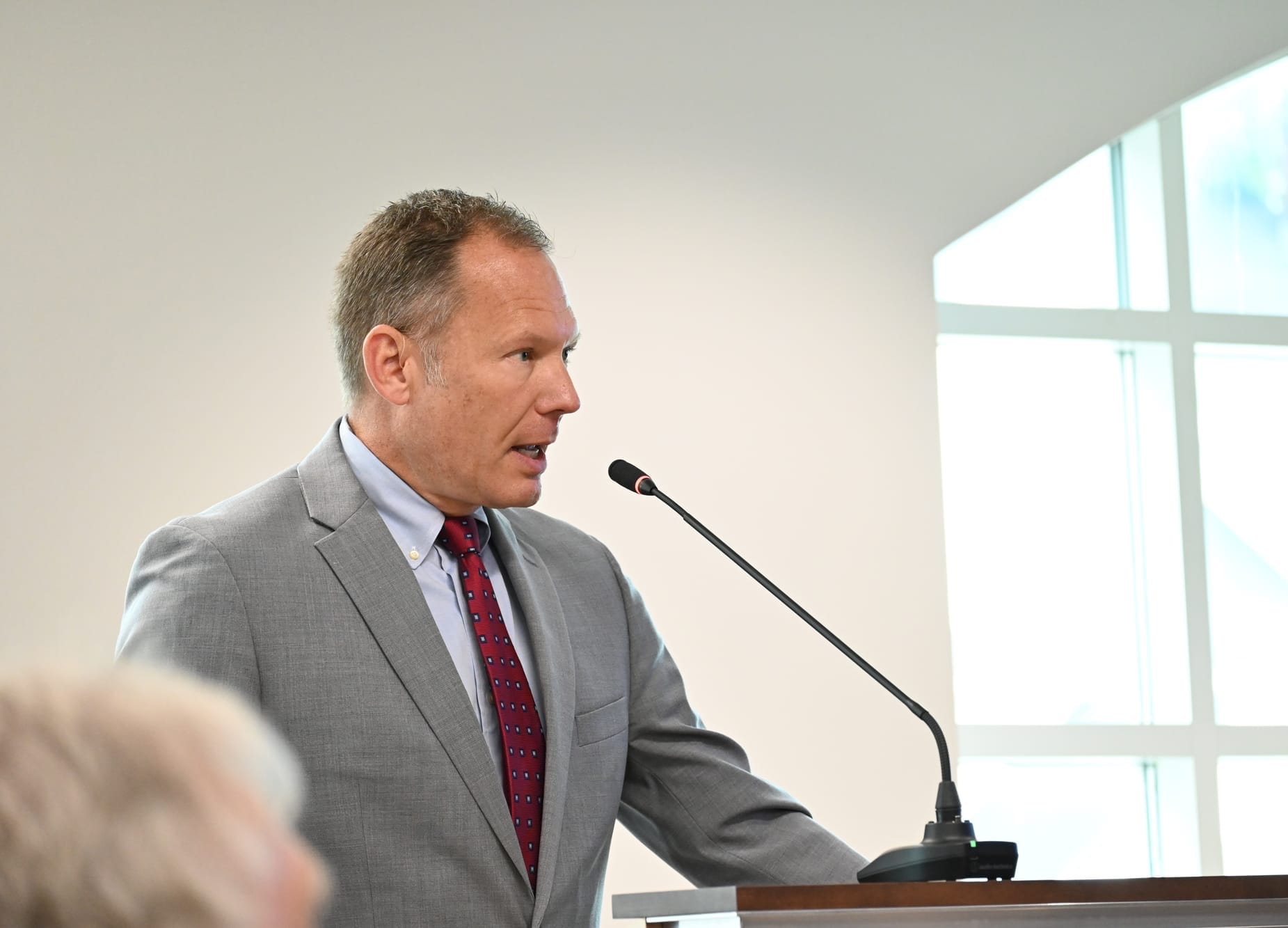
"This group ... has decided that it's important for them to come and begin speaking publicly as well, instead of taking a social media brow beating time and time again, because they provide jobs and they do the building that is supporting Madison County," Nathan Billings, the group's spokesperson, told the Fiscal Court during the public comment section of the second regularly scheduled meeting this month. Billings told the Magistrates he is a Lexington-based land use lawyer.
Billings said his group was responsible for what he claimed was likely a "record-breaking" crowd at last week's Planning Commission meeting. That's when the Commissioners voted unanimously to recommend the six zoning changes on mostly agricultural properties, saying that all of them met the criteria set forth by the County's current Comprehensive Plan.
Magistrate Billy Ray Hughes (Dist. 3) told The Edge in an interview that he'd never seen so many properties come up for re-zoning at one time.
Billings characterized the group as pushing back on any "smart growth" platitudes offered by members of Preserve Madison County, the main voice of opposition to unfettered development in the County.
"People who say they are for smart growth need to actually start making proposals about what that means," Billings said. "Instead of saying 'don't do this, don't do that,' they need to begin proposing how to solve these problems so development can move forward."
Preserve Madison County is a nonprofit citizens action group formed to call attention to what they say are the adverse impacts of rapid growth countywide. The group has had an active social media presence since its formation in 2024. Members advocate what they call "smart growth" and specify "infill and revitalization" as their preferred approach to development.
Billings claimed he was not there to parse the "nuances" of the many zone changes before the Fiscal Court, but was there to urge the Fiscal Court "to hear the other people in Madison County who don't always come to these meetings and speak up." He instructed the magistrates to ask around when they go to church on Sundays, and see how often someone's "husband, son, daughter, parents" work in the local construction industry.
With about 2,200 employees, the largest employer in Madison County, outside of the Army Depot, reportedly is the Madison County Public School District.
Billings also reminded the Fiscal Court that by tabling any recommended zone changes, as was suggested by opponents of the measures, there is only a 90 day window before the changes take effect on their own, according to state statute.
"Kentucky's General Assembly has decided that there is a process for development in Kentucky," Billings told the Fiscal Court. "The process is not a democratic vote. It's not who shows up at a meeting. It's not who is the loudest, it's not who has the most show up in attendance. It's not who has the most social media posts," Billings went on.
But as about a dozen speakers came to the microphone with specific examples of how the proposed zone changes would adversely impact their property and local communities, it was unclear where in the process it is appropriate for the public to ask questions about how to mitigate potential flooding, traffic, and other impacts on farms and infrastructure, especially as the shortcomings of the County's current Comprehensive Plan, which is supposed to anticipate such concerns and have remedies in place to address them, came into focus.
Most speakers noted they were not against growth, but that they wanted the Fiscal Court to, "Count the cost," as County resident Owen Barnes put it during the public comment section of the Fiscal Court meeting.
Multiple attempts by The Edge to reach Billings to discuss what potential remedies to traffic and flooding concerns Madison County Forward might suggest, and to learn more about the group's ultimate goal beyond reputation management, were unsuccessful.
'Where will the water go?'
The first of three zone changes presented at the Fiscal Court this week was for the 722 acres of the Carr farm at 2494 Lexington Road. The property is owned by Carr Acres, LLC, and is thought to have been in continuous operation as a farm since 1775. The Carr family, who currently lease the land to a large calf/cow operator, wishes to re-zone the land as industrial so that a regional business park may be built there. Questions about future traffic issues created by the development have not yet been addressed publicly.
Next was a zone change for a former 66.6 acre cattle farm at 2747 Lancaster Road now set to be developed into a residential subdivision by Jim Carr of Indigo Run, LLC, and Parrish Bros., LLC. The applicants for this zone change refer to the 3,120 houses the County expects will be built this decade along the urban corridor on Lancaster Road, but does not specify how many of those units they will build on the tract.
Planning and zoning laws in the state do not require applicants at this point in the process to specify the number of structures they plan to build.
Following that was the recommended zone change for a 45.64 acre property at 2775 Lancaster Road, to be developed by Berea Property Development, LLC, owned by Patrick Sowers. The number of homes planned for the tract has also not yet been specified.
Whatever the number, when combined with upcoming recommended zone changes for the nearby 352.33 acres to be developed at 200 Moran Mills Road by Elk Garden, LLC, owned by James Macklin Cox and the Epps family, and those in another subdivision planned on 4.6 acre parcel at 2401 Duncannon Lane, also belonging to the Indigo Run, LLC., a total of 469.17 acres in that area will go from all soil to mostly paved.
The loss of land that can absorb rain is a cause for concern among residents who worry about flooding.
"That's a lot of concrete, a lot of black top," Barnes said. "I've also heard that over on Duncannon, they're looking at over 400 units." Barnes, who lives off Duncannon Lane near the proposed developments, also referenced an additional 500 homes planned for the combined tracts off Lancaster Road. He also voiced his concerns over the congestion created by local school traffic. The Edge was unable to confirm Barnes's claims on the number of units proposed.
Barnes spoke about how Silver Creek wraps around the land near the parcels in question, and referenced recent deadly floods in the region in light of the rumored plans to build nearly 1,000 new units in the area. "All that water shed empties into Silver Creek," he said. "Can you imagine how much more flooding we're gonna have on Silver Creek when all that water is dumped into [it]? Count the cost of what you are considering," he told Fiscal Court members.
The least controversial project recommended by the Planning Commission seems to be Jack VanWinkle's 46.84 acres in the Boone's Trace development on Avawam Drive atop the southern palisade overlooking the Kentucky River. VanWinkle wants the parcel's current zoning to go from single-family residential to multi-family residential in order to build a 55 and over community.
The remaining three zone change recommendations are expected to be heard at the next regularly scheduled Fiscal Court meeting on August 13.
Dramatic loss of farmland
Chief among the concerns cited by residents is the County's dramatic loss of farmland in recent years. Between 2017 and 2022, the percentage of land that is farmed in Madison County dropped from 82% to 69%, according to recent data from the state department of agriculture. Further, the Commonwealth is losing 12 acres of farm land per hour, or over 100,000 acres per year, according to the state's farm bureau.
"The last few years in Madison County have alarmed me as a farmer and as a citizen," Nick Marcum, who farms cattle near where there is a zoning change recommendation, told the Fiscal Court during the public comment section of the meeting. "That strikes me as a large loss in just a short five years," Marcum said. "We all know we haven't slowed down much since 2022, if at all."
Marcum and his wife, Joanna Jones, who is also a farmer, both spoke about their fears over the loss of productive farm land that has produced food and beef for the region for generations.
Young farmers priced out
The County is under immense pressure to develop thanks to a number of factors partially beyond the control of the Fiscal Court. These include the decision by Fayette County leaders more than three decades ago to preserve 50,000 acres of farm land within the County limits, forcing development to occur in surrounding counties instead.
"One of the things I recommend is, call the mayor of Lexington and City Council up there and complain to them that what they've done is negatively impacting you all," Billings counseled the audience at Tuesday's Fiscal Court meeting.
Then there is a statewide push by Governor Andy Beshear to bring more manufacturing jobs to Kentucky, where the rolling hills that have been farmed for generations now attract industrial developers incentivized by Beshear's economic development cabinet, especially in areas such as ours where there is an Interstate.
The pace of growth also has accelerated in the County as older generations of farmers see a profitable way out of a way of life they no longer can or wish to sustain, by selling to area land speculators. Because the land is still zoned as agriculture at that stage, the speculators pay far less per acre than they would if the land had already been rezoned, but more than most young farmers who might have an interest in the farm, can afford.
During his public comments, Marcum shared the anecdote that vocational-agriculture teachers in County schools have told him more than half of their students say they will have to leave the county if they want to farm, because they can't compete on price with local land speculators.
Once they've obtained the farms, the speculators, many of them now represented by Madison County Forward, then leverage the current Fiscal Court's pro-growth sympathies to obtain zone changes in order to then build what they deem most profitable, rather than develop what the public agrees would be most beneficial to the community as a whole. Subdivisions for medium to higher priced homes have been the most common development in the County since covid.
The mechanisms to help control growth that are within the Fiscal Court's direct control include how property is valued and taxed, and how zoning is applied in the County. These decisions are reflected in the County's Comprehensive Plan, which specifies where the County's urban corridor for growth is located.
The most recent spate of zone change applications cite the respective properties' location within the County's urban corridor as justification for turning them into a host of residential and industrial developments, never again to be farms, to the consternation of farmers nearby.
"We are far closer to Garrard County than we are to Richmond, and it is beyond my understanding how a farming community so far from any town can be labeled for any development," Marcum said. "Who drew these lines?"
The County's last Comprehensive Plan was completed during covid when there was less public input than is typical for the public portion of the planning process. The County is currently updating the Plan, as it does every five years, per state statute.

Carr farm purchase 'unnecessary'
Questions about what happens if an "unnecessary" deal goes through were also on the minds of some during the Fiscal Court meeting.
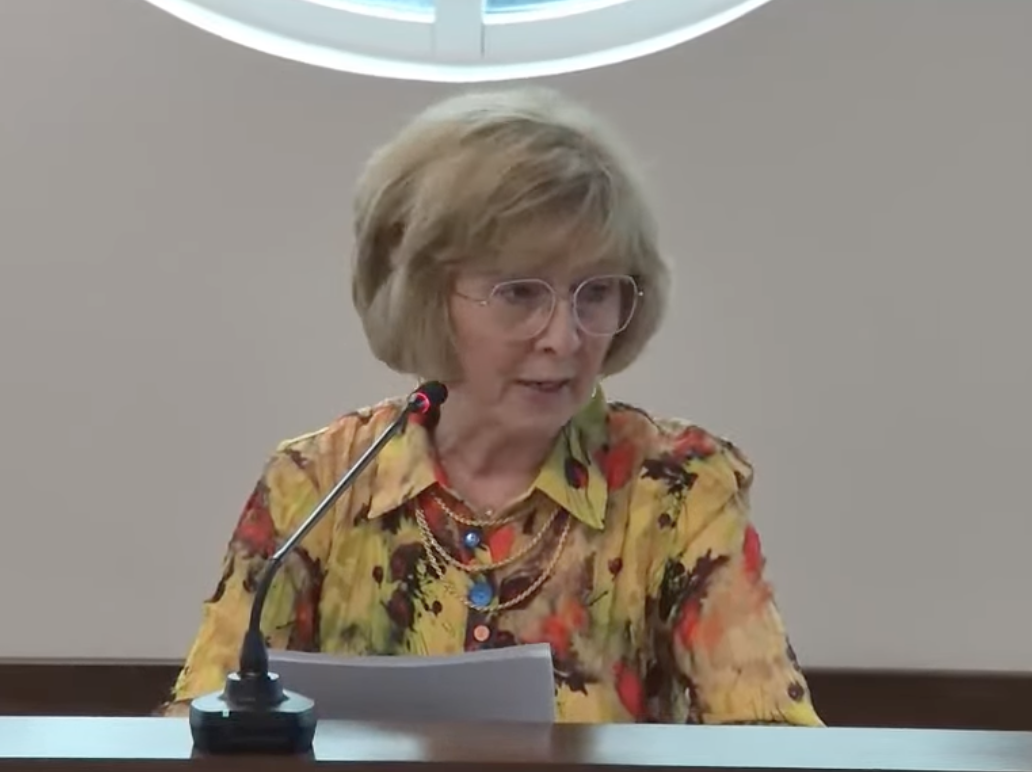
"These decisions carry long-term financial, environmental, and quality of life consequences, and the public deserves clarification answers before any action is taken," county resident Mary MacMahan said during public comment.
Using $20 million in state funds, the Fiscal Court seeks to purchase the Carr farm on behalf of the Central Kentucky Business Park Authority, an interlocal agency comprised of Scott, Madison, and Lafayette counties, and the City of Berea. The deal is also meant to receive $2 million in federal funds.
The plan was to turn it into a regional business park that will attract enough jobs to cover the gap in occupational licensing fees it was thought would be created by the reductions in force at the Blue Grass Army Depot now that the chemical weapons decommissioning project is through. Things have changed since that plan was devised, however.
“What started this was we didn’t know what was gonna happen at the Army Depot,” Hughes said during the Fiscal Court meeting. “We thought we were gonna lose all them jobs so we were planning for that. But what’s happened in the past few months is a billion dollars has been committed out there for several different projects.”
Earlier this year, Sen. Mitch McConnell (R, Ky.) announced he'd helped secure over $1 billion in defense projects, including a drone technology innovation center at the Depot, and a shipping container manufacturing project.
Hughes told his colleagues on the Fiscal Court that he'd done a little math, taking into consideration the projected $63 million in excavation costs necessary to make the Carr farm shovel ready, as reported last week. That puts the Carr farm business park project at about $82 million, Hughes said, not including necessary infrastructure costs outside the property boundary such as roads and sewer.
Hughes said even if 1,000 employees earned an average of $75,000 a year with annual payroll taxes at 1%, the County would only take in $750,000 annually, meaning it would take 109 years to pay off the property.
“It seems to me that we’ve got this unreasonable obsession with acquiring this piece of property,” Hughes said. “If I’m wrong, somebody tell me, but I’m looking at a 100-year payback.”
MacMahan asked the Fiscal Court who, if not Madison County taxpayers, would pay for the costs of the business park not covered by public grants. Taylor told her it was unknown.
'Zoning inappropriate'
Margaret Kelly Yaeger and her husband Dorian are cattle farmers whose property on Lancaster Road in the County abuts a nearly 67 acre parcel that is up for rezoning at 2747 Lancaster Road. Mrs. Yaeger listed several reasons why she thought the requested zone change was problematic, beginning with the Parrish Bros.'s claim that the neighboring farm already is situated in a residential "appropriate" zone.
"We're the closest property to this one. We have cattle on our farm. For as long as I've lived next door, it's been a cattle farm," she said, noting how often a stray cow that needs to be returned to its rightful owner turns up on her own farm. "When I think that this application says the UC-7 agriculture zone classification is inappropriate, I think it seems like it's the other way around. Actually the UC-1 single family residential classification is inappropriate."
Farmer Marcum's wife Joanna Jones explained how turning just one farm into a residential development negatively impacts all surrounding farms. "When farmland is gradually surrounded by residential development, farmers often face complaints about normal agricultural activities," she said, listing "nuisances" such as tractors on the local roads, livestock smells, and dust. She also posed the question of liability when a neighborhood kid trespasses and ends up hurt by "a 900 pound animal."
'Why not wait?'
MacMahan has repeatedly opined that the incoming Fiscal Court should be given the opportunity to weigh in on current development in the County, as she did during this week's Fiscal Court meeting. She said residents were "alarmed by the sheer scale of the proposed zoning changes" and asked, "Why is there such a rush to move forward when the public is asking you to slow down?"
The public comment section of the meeting is not ordinarily a time for dialogue between the public and the Fiscal Court, but Taylor acquiesced and answered that he had no control over when developers decide to apply for their zoning changes. 'We as a governing body, we have to follow the law. If you have an applicant who comes and wants a zone change, we have to see it through," he said.
County attorney Jennie Haymond told MacMahan, who asked what would happen if the Fiscal Court were to table the purchase of the Carr property pending a traffic study that would go beyond the 90 day window before a Planning Commission recommendation becomes law, that the magistrates would first have to have a majority vote to overrule the recommendations of the Planning Commission.
Other legalities brought up for question by the public included whether the zone change applications for 2401 Duncannon Lane and 2747 Lancaster Road should be denied because they were signed by an attorney or developer.
“The statute says three people can apply for a zoning change. The Planning & Zoning can apply, the Fiscal Court can apply, or the property owner. Not somebody who has a contract to purchase it if they can get a change approved,” Scott Collins, an attorney, said during public comment.
The second and final reading of the first three zone change recommendations will happen at the next regularly scheduled Fiscal Court meeting on August 13. That is when the next three zone change recommendations will receive their first reading.
For more information, including links to all streamed public meetings, visit the County's website.
Jemi Chew contributed to this report.
Sign up for The Edge, our free email newsletter.
Get the latest stories right in your inbox.