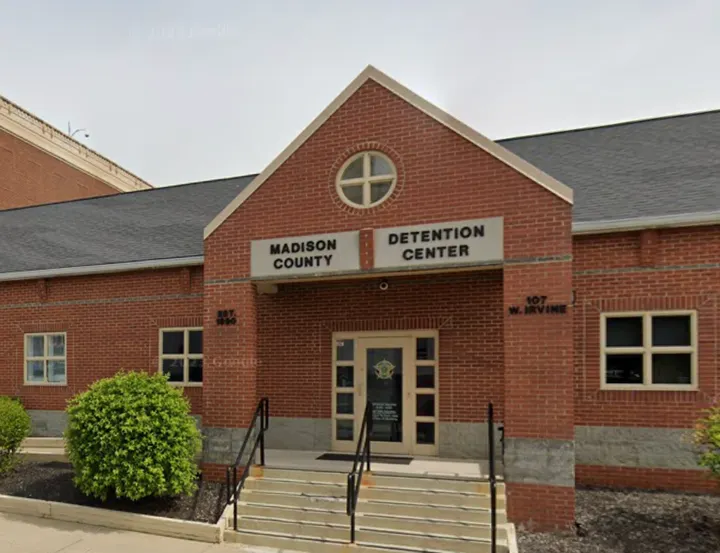
Data center moratorium study announced by Fiscal Court
Lobbyist at meeting harangues anti-data center activists for their 'hysteria'
FISCAL COURT--The county government will explore the legalities of placing a moratorium on data center development, it was announced Tuesday.
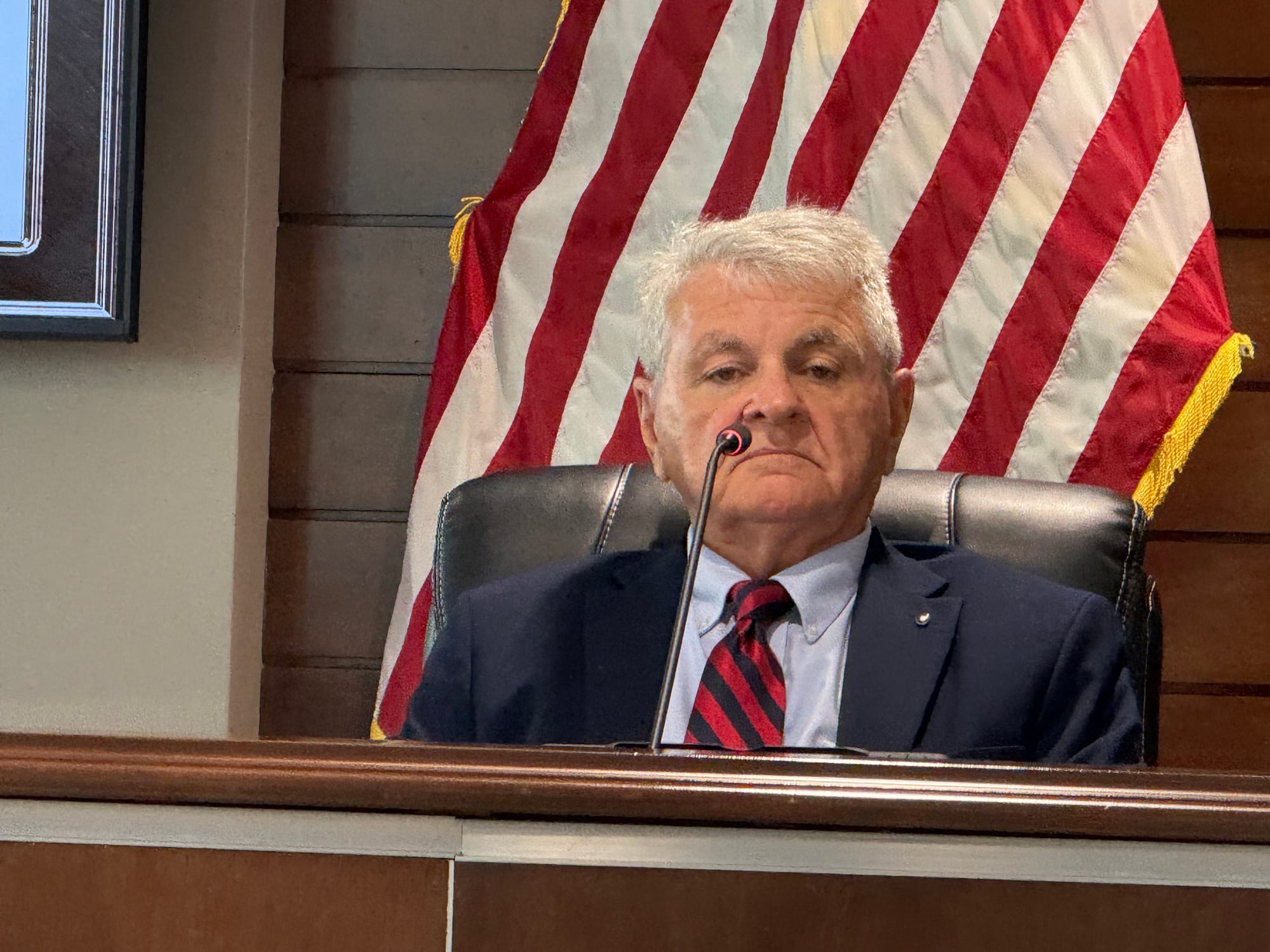
During the Fiscal Court's second regularly scheduled meeting of June, Magistrate Billy Ray Hughes (Dist. 3) said during the Magistrate comment section that having just returned from a conference where regulation of data centers statewide was the "hot topic", he would like to "calm the nerves" of constituents by placing a moratorium on them in Madison County.
Judge Executive Regan Taylor agreed that it was something the Fiscal Court could look into doing, which elicited verbal support from the other three magistrates, Brian Combs (Dist. 1), Stephen Lochmueller (Dist. 2), and Tom Botkin (Dist. 4). It was a reversal of course from Taylor's previous stance that the County did not need a moratorium as current zoning laws already would make it difficult for a data center developer to build on any county properties, he told The Edge back in April.
Taylor said in the meeting his concern was that a tight lid on data center development has also led some jurisdictions across the Commonwealth to be sued by developers for various reasons, and asked the County attorney's office and Deputy Judge Executive Jill Williams to do more research into the most effective way to minimize legal risks before the Fiscal Court moves forward on a moratorium.
"The Judge has always said data centers are not a good fit for the County," Williams told The Edge in an interview following the meeting. "I think there's been resistance [to codifying data center policies] because it creates a lot of extra red tape, but I think we're at the point now that creating a moratorium is the only way people are going to hear us say, 'No, we don't want them.'"
The news that the Fiscal Court would be willing to pass a moratorium was met with cheers from a large portion of the sizable audience in attendance at the meeting. But not from County resident Michael Frazier, who used the public comment section of the meeting to decry a portion of the citizenry he characterized as reactive to data centers, and by extension, to growth.
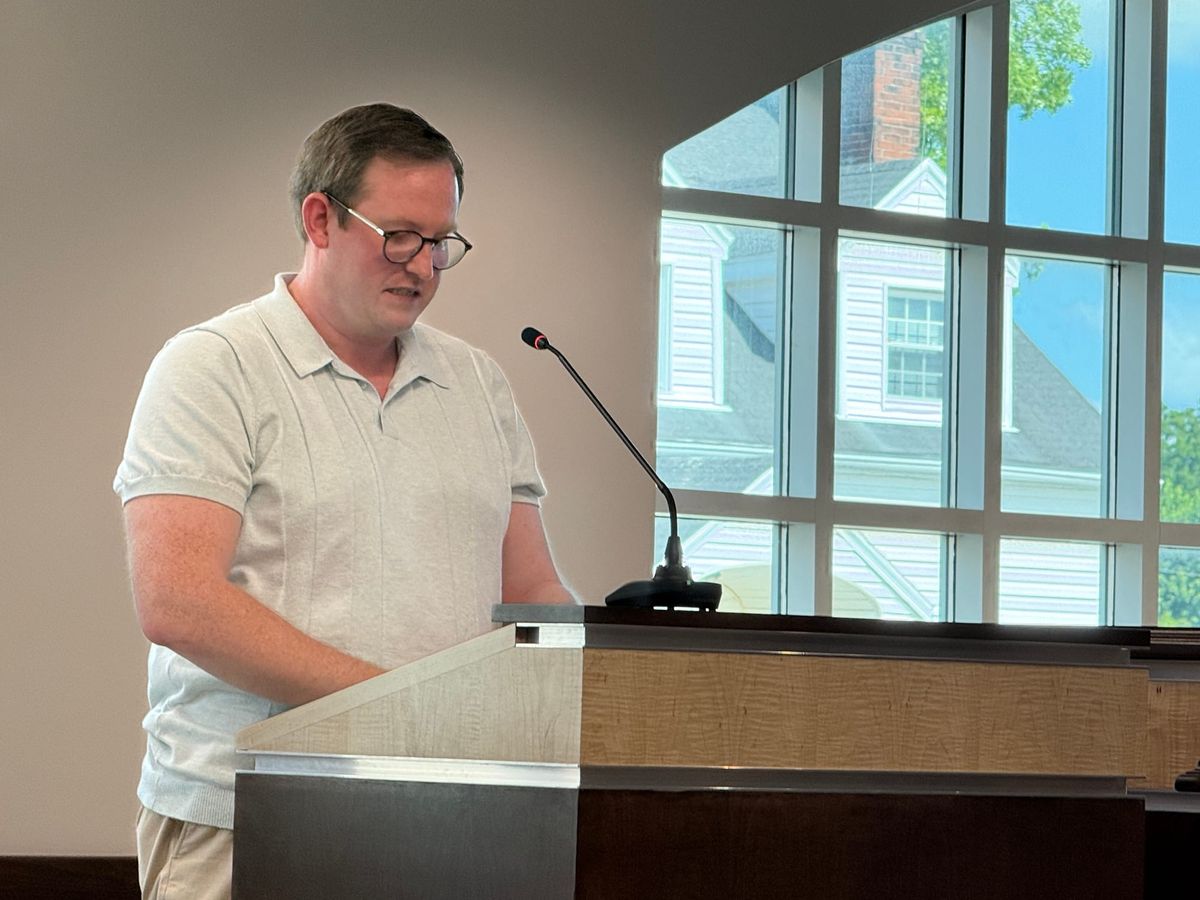
"Here we are having conversations about moratoriums on data centers that's led by hysteria and feelings," Frazier read from a prepared statement. "Over the last several months, social media has been flooded with speculation, rumors and worst case scenarios...The question is not whether Madison County will grow. The question is whether we can manage the growth intelligently, transparently, in a way that protects taxpayers and respect property rights."
Frazier later posted his comments on his Facebook page, which describes him as a lobbyist for the Libertarian think tank, the Goldwater Institute, which is pro data centers. Until recently, Frazier served as the grassroots director for Americans for Prosperity in Eastern Kentucky.
AFP was founded by the libertarian Koch Brothers, Charles and the late David, and is a sister organization to the Charles Koch-founded nonprofit, Stand Together, which is pro-data center development. Charles Koch is a major investor in several data center-related companies, including the data analysis firm, i360, which uses AI to build complete profiles of potential and current Republican and Libertarian voters for targeted advertising.
While at the podium, Frazier identified himself as a First Amendment advocate and reminded the Fiscal Court members he had been the moderator during the magistrate and judge executive debates prior to the primary election in May. AFP sponsored the Republican Party of Madison County's election season events. After making his public comments at the meeting on Tuesday, Frazier told The Edge that he had done so as a private citizen.
The Fiscal Court has maintained for months that no data center developers have approached the County. Williams said in the interview that has not changed.
Across the Commonwealth, fiscal courts have been engaged in fights with citizens around hyper scale data centers in particular, primarily because of their outsized footprints, an their reputation for noise disruption, water depletion, and higher utility costs. Also, in some cases, because of nondisclosure agreements elected officials sign with the developers. Hyper scale data centers are primarily dedicated to churning the necessary AI for surveillance and other military activities.
Smaller data centers meanwhile, are far less resource intensive and are typically used to house cloud servers that store data for private, government, and corporate users. There are several smaller data center cloud computing facilities in Lexington and elsewhere in Kentucky that did not draw much controversy when they were built.
Were a data center developer to approach Berea or Richmond City, the County's moratorium would have no effect.
Budget ordinance
The meeting also featured the second reading of Ordinance 2026-003 to adopt the FY26-27 budget. Hughes was the sole dissenting vote and the budget passed by a 4 to 1 roll call voice vote. Hughes said he objected to the raises many County employees were given in this budget.
In an interview that followed the meeting, Hughes told The Edge that the raises in some cases were as much as 18%, which would also mean larger payments into the state's pension system.
"The County has to pay 30% of the pension for County employees, and 50% for hazardous duty employees [police and fire fighters]. These are estimates, but it's still a lot of money that County tax payers will be on the hook for," Hughes said in the interview.
Williams explained during the meeting that per statute, the County did a market assessment of its employee salaries as compared with similar counties such as Warren, Franklin, and Jessamine, and found Madison County employees were drastically under-paid.
In the interview following the meeting, Williams said that emergency communication dispatchers (911 operators) were among those to receive the biggest bump in pay—between 15% and 18%. Williams added that by incentivizing County employees to stay in their positions, the hope was that it would help ease the transition from the current administration to the new incoming Fiscal Court that will take office in January 2027.
Williams also said that in order to give incoming Judge Executive Donna Agee more flexibility when she takes office in the middle of FY26-27, she and Taylor removed all special projects from the budget, including the animal shelter, equipment purchases, and items in the road department. "Everything that was a capital expenditure, we pulled back because we felt like it was only fair for the new administration to make those decisions," Williams said in the interview. "It was hundreds of thousands of dollars that we didn't include."
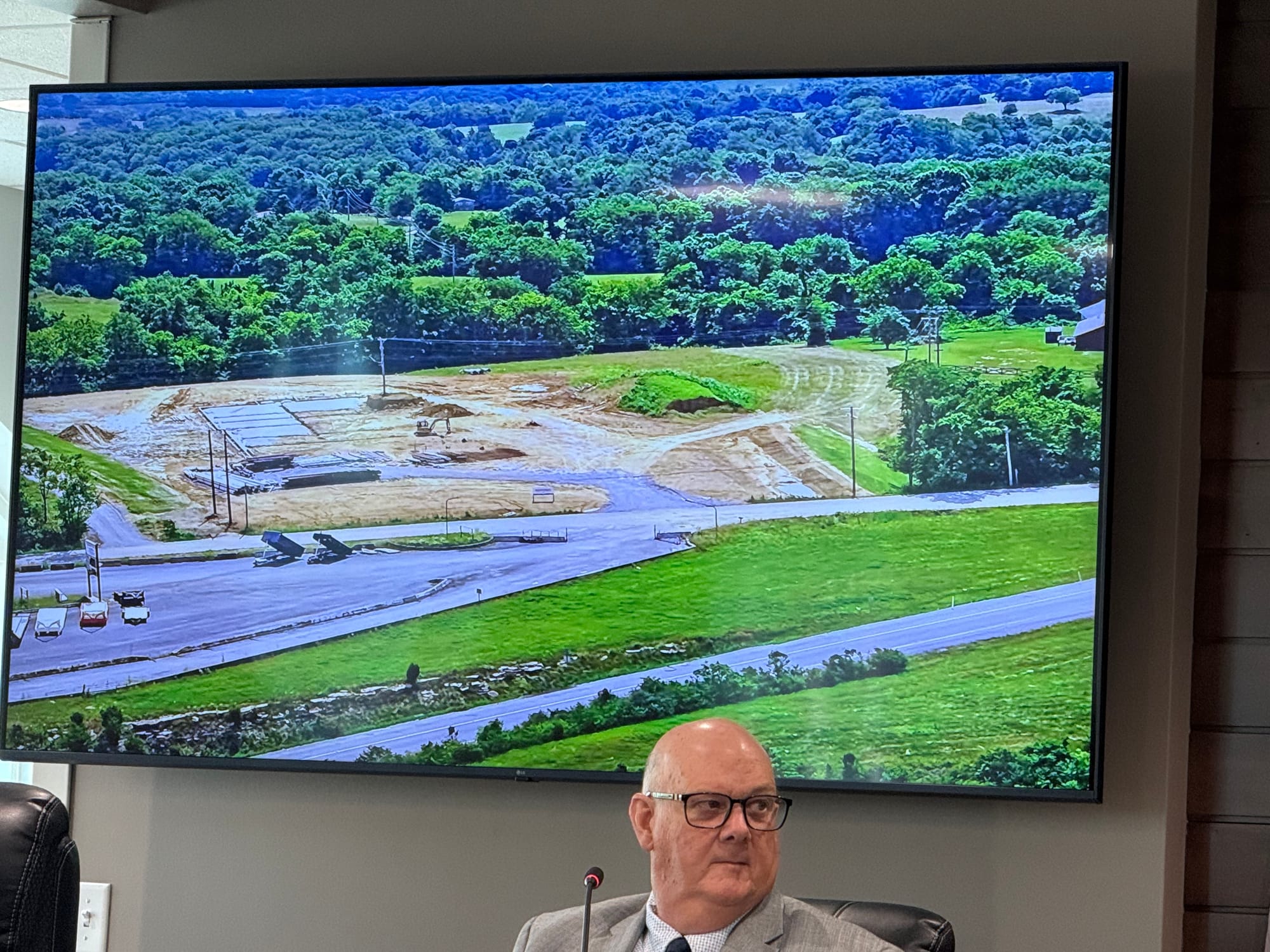
Hughes also said he objected to the future monies that will be spent to man the new fire station currently under construction in the northern end of the County, and asked to have a work session on it, which did not happen before ground was broken. Lochmeuller objected. "The time to have a work session is before we vote," he said.
Resolutions
Multiple resolutions were passed at the meeting, including Resolution 2026-057 which passed 4 to 1 in a roll call voice vote with Hughes as the dissenting voice. The resolution allows the Fiscal Court to apply for $2 million from the state through its Kentucky Product Development Initiative (KPDI) program which rewards industrial regionalism such as Berea's Central Kentucky Business Park. Also called the Triple Crown Business Park, it is a joint project between multiple jurisdictions in the Lexington area, including Madison County.
If awarded, the $2 million will be applied to the approximately $19 million purchase of 722 acres of agricultural land on Lexington Road near the river, and ceded to the Central Kentucky Business Industrial Authority, which will manage the property as another regional business park.
Hughes also requested a work session for the entirety of the land purchase, and said that the geo-technical report on the land recommended further study for the archaeological importance of the farm which currently belongs to the Carr family. During public comments, Mary Lois Kearns, whose family tenant farms the property, also asked for more specifics on what industries were planned, how many jobs would be created, and would there be enough money to improve the land and she wanted to know where would the money come from.
Partnership with Richmond
The Fiscal Court also voted to share the cost burden with the Richmond City government to pay the housing costs for two nonprofit homeless shelters Enrich One Stop and Haven of Hope. The cost will be $163,598.96 for Enrich, and $22,500 for Haven of Hope. In the interview following the meeting, Williams said that the payments will be made to Richmond City, not to the nonprofit organizations, and that the Fiscal Court will keep an eye on how the money is spent.
During his public comments, Frazier said that the County already had such an organization and that tax payers didn't need to pay for it. "It's called Good Will," he said. "I hope we can work in tandem because we need both. The need is great," Frazier said.
Here is the meeting's full agenda, and here is the link to watch the meeting in its entirety. Note, this week's video is misdated as June 9, and due to technical difficulties announced by Chris Iseral, the County's IT director, the video cuts in about 20 minutes after the meeting started.
Sign up for The Edge, our free email newsletter.
Get the latest stories right in your inbox.