The County’s jail, Frankfort's felons, and lots of your tax dollars
As inmate healthcare costs soar, MadCo is on the hook for more correctional facility spending than ever
Currently across the Commonwealth, nearly all counties with jails are paying at least half of all costs to house felons convicted by the state. In Madison County, that cost burden essentially matches what the County collects annually in property tax receipts, roughly $5.5 million. put another way, that’s nearly 15% of the county's entire budget.
It is a point of contention for the Fiscal Court.
"This one issue will single-handedly break the County," Magistrate Tom Botkin (Dist. 4) said during the Fiscal Court's first regularly scheduled meeting of April. "It would have already done so if we'd not put an insurance premium in place several years ago."
Statutory use of county jails
According to the Prison Policy Initiative, to avoid overcrowding in Kentucky state prisons as crime escalated in the mid-1970s and early 1980s, the state's corrections department began housing criminals charged with the least serious felonies in county jails. As crime in the Commonwealth continued to trend upward, Frankfort created a statute formalizing this practice in 1984.
Any person arrested within a county's jurisdiction automatically is held in that county's detention center while justice takes its course. But the statute says that when persons charged with a crime anywhere in the state await their trial and sentencing, they are to be housed in county facilities. After conviction, Class C and Class D felons remain in county jails, while the more dangerous classes of criminals are relocated to state prisons.
In 2024, the average weekly county inmate population across the Kentucky's 77 county jails was 10,304, or more than half (52%) of all inmates, according to the state. The remaining 48% were state and federal inmates, or about 7,500 non-county inmates in county jails on a weekly basis.
Due in large part to the covid shutdown, crime trended sharply downwards beginning in 2020, with a state low of 9,111 inmates statewide in late 2024. But by early 2025, the state reported that number had spiked by nearly 10% to 9,936 inmates. While crime is generally down in the Commonwealth, according to recent state police data, the number of inmates in county jails continues to climb.
Jails not roads
For their trouble, the state currently pays counties about a $35 per diem per prisoner. That is expected to cover housing, food, and healthcare, according to County Deputy Judge Executive Jill Williams, who said the actual cost to house and care for a prisoner on a daily basis is double that amount. "It costs more like $65 or $70 a day," Williams told The Edge in a phone interview.
That per diem was even less until 2022 when state legislators upped it from $31 to where it is now. Prior to that, the per diem had not been raised in 15 years.
The gap between the state per diem and rising costs is straining counties, according to Brenna Angel, communications director for the Kentucky Association of Counties, based in Frankfort. "We're seeing a big increase year over year where counties are having to take from the general fund and move that over to their jail budget. So money that would be going towards roads, parks and recreation, economic development opportunities—instead of it going to quality of life or economic development initiatives, it's going to the jail." Angel told The Edge in a phone interview.
Overcrowded detention center
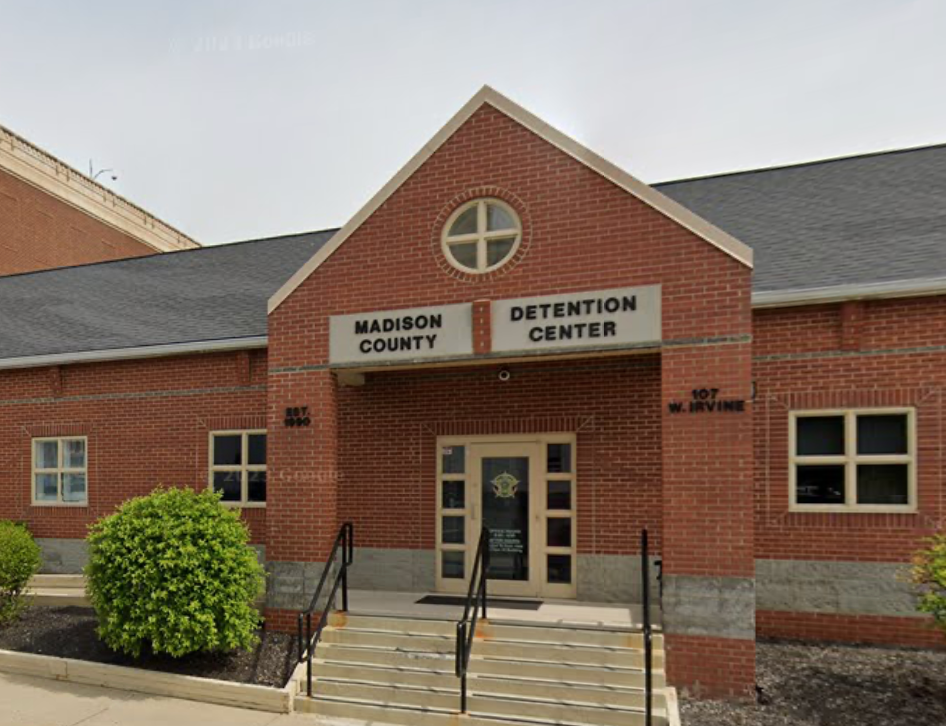
When the Madison County Detention Center was designed over three decades ago, it was intended to hold no more than 184 inmates, according to Williams. Now the jail is routinely overcrowded, with weekly inmate totals averaging about 250, with anywhere between 20 to 40 of them held there on behalf of the state. Williams said that were the facility larger, the state would expect the County to house even more inmates.
"County jails were not designed for this," she said. "There's been study after study done by the LRC [Legislative Research Commission] that shows that."
This overcrowding has meant that an additional 146 inmates assigned to the Madison County jail are instead being housed in whichever county correctional facilities across the Commonwealth have enough space to keep them. The County is still responsible for the cost of transferred inmates' care, however.
"All of that is outside of the county's control, yet they are responsible for paying those bills," Angel said. In Hardin County, she said, the Fiscal Court decided to raise property taxes in order to keep up with the costs of running the county jail.
Unhealthy, expensive
This week during its regularly scheduled meeting, the Fiscal Court learned that healthcare for all county detention center inmates will rise by nearly 20% in the next fiscal year. By this fiscal year's end (July 1, 2025-June 30, 2026), the County will have spent $902,552 on inmate healthcare. County Judge Executive Reagan Taylor said during the meeting that the County is providing healthcare to inmates to help protect the County from lawsuits. Both federal and private health insurers stop covering persons convicted of felonies. Once released from prison, former inmates are eligible for coverage again.
The Fiscal Court also heard from Jailer Larry Brock that for the same levels of inmate coverage as this fiscal year, the County will be on the hook for $1,060,966 in the coming fiscal year, a rise of %18.3.
The spike in healthcare costs is due to multiple factors, according to Blake Wiseman, co-founder and CEO of Comprehensive Correctional Care, LLC (also known as C3), a Benton, Ky.-based firm that provides and insures primary care teams within correctional facilities.
Wiseman told the Fiscal Court during the meeting that the top two drivers of rising costs are liability insurance rate hikes and higher wages for nursing staff. Other factors he said, include federal mandates to cover treatments for substance abuse disorder, and the overall poor health of the prison population. The County has contracted with C3 since 2022.
Legislative failure
For a while during the legislative session which ended this week, it looked as though House Bill 557 might at last bring relief to counties stretching their budgets in order to care for state convicted felons.
Angel said her organization has brought the cost of jails to Frankfort's attention plenty of times over the years, but that this year, "[It] was our top legislative priority." She added that HB557 had unanimous support from county officials across the state, as well as 52 sponsors in the General Assembly.
Language in the bill in both the state House and Senate would have raised the per diem another $4, along with other reforms such as allowing counties to negotiate directly with the Department of Corrections.
The bill never got a hearing.
"We'll continue to fight," said Angel.
County will pay
At the Fiscal Court meeting, Resolution 22-2026 giving Taylor power to negotiate with C3 on behalf of the County for inmate healthcare, passed 4 to 1, in a roll call voice vote. After thanking Wiseman for his service to the County and commenting that he is not happy about the cost, Botkin voted no.
Sign up for The Edge, our free email newsletter.
Get the latest stories right in your inbox.