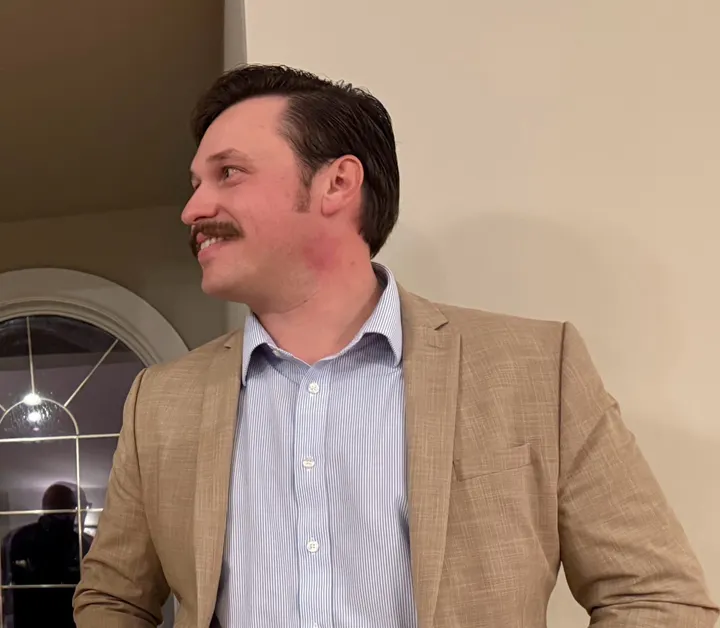
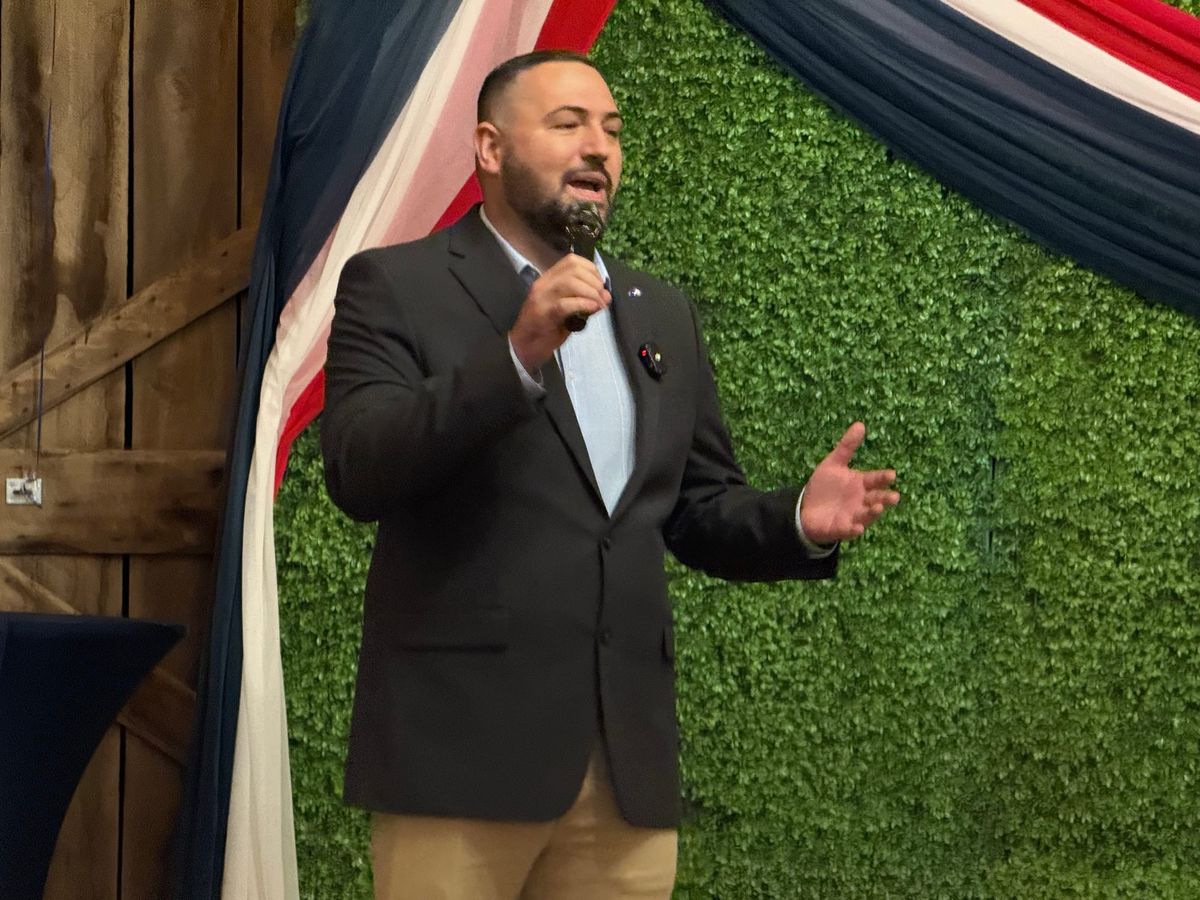
Anthony Looney (D), candidate for State Representative, Dist. 81, is On the Edge. Originally from Pike County, Looney describes the hardships he faced in order to go to and finish college, raise his standard of living, and move to Richmond where he says he loves living. In the interview, we discuss the political divisions in the state, and whether they are real or imposed. We also address smart growth--what does it mean? We also talk about Looney's platform: more funding for healthcare, higher education, primary education, and inspiring people to want to lead by volunteering and running for office. The unedited transcript is below.
Sign up for The Edge, our free email newsletter.
Get the latest stories right in your inbox.
UNEDITED TRANSCRIPT
Speaker 1: 00:00
Hello everyone, I'm Whitney McKnight, host and producer of On the Edge. And with me today I have the 81st State District candidate, Anthony Looney. Hello, welcome.
Speaker: 00:11
Hey Whitney, thank you so much for having me here on the edge.
Speaker 1: 00:15
Thank you.
Speaker: 00:15
This is my first podcast ever, so I'm really excited to go back and forth with you and answer all your questions.
Speaker 1: 00:20
Wonderful. Well, let's just start with who are you?
Speaker: 00:23
Well, my name is Anthony Looney. Uh I'm a nurse practitioner. Um, I practice in Lexington. I live in Richmond. And uh yeah, now I'm running for the state house in the 81st district that runs through Richmond and Berea here in Manis County.
Speaker 1: 00:38
Where'd you grow up? Did you grow up in Richmond?
Speaker: 00:40
I grew up in Pike County, Kentucky, the main eastern tip of our state, and uh a small town called Elkorn City, and actually so pretty there. Yeah, actually, even outside of Elkorn City because I was on Elkorn Creek, so I was way out there. People always joke when I tell them I'm from Pike County because they say, Oh, you're from Pikeville. And I'm like, no, no, no, no, no. We're from 40 minutes away out in the county, but uh beautiful place, beautiful people, wonderful, giving people. Um, I'm really proud to be from Pike County. Um, I've always just been a dutiful voter and kind of thought that was gonna be enough for my adult life. And um the 2024 election happened, and in several areas I was unhappy. Um, and so whenever I went and started looking at my local government and where I felt like that I could really stick out, this was the seat. And the reason being is because a Democratic candidate has not been on the ballot for this seat since 2020. And to me, that means that the people of Madison County haven't been given choices, and so um not even primary candidates for the Republican um have been running. And so I really think that our democracy as a whole is stronger when we have choices, and I plan on giving the people of Madison County that choice. I'm a nurse practitioner, I take care of people every day. What called me to be a nurse was that I wanted to help people, um elderly people, um, the poor, disenfranchised people, and we have plenty of that happening in Kentucky, right? And so as I have built my career in nursing and as I have been at the bedside with people during their worst moments, um, something that's very clear to me is that um healthcare is not working for them. And uh whether that be that people don't go seek preventative medicine from the get-go, um lots of times people will come into the hospital and you'll say, What's your medical history? And they'll say, Nothing. And you're like, Well, here's 14 diagnoses that I know that you have. Um and so we've got to do better because we preventative medicine is what keeps people from being hospitalized and driving up those bills and keeping uh their own financial situation safe because you know, we're all one diagnosis away from being poor, broke.
Speaker 1: 03:13
Well, generally health care and in the way that you're talking about it, having enough money to have health insurance, that's usually a federal issue. So at the state level, what can you do to to improve it?
Speaker: 03:24
It's kind of interesting to answer this question in this way, but um, you know, there's 80 Republicans in our state house. There's 20 Democrats. They can steamroll us and do whatever it is that they want to do. And so really um electing another Democratic voice uh to be amongst those is saying that we don't like the direction that our state is going in or even countries going in. And um, so we need to start figuring out how we can get more democratic voices there. And that sends a clear message to Republicans that um Kentuckians and Americans don't like the direction that their politics are going in, which also, you know, fizzles down to they don't like the way that healthcare is going for them. Um and uh so there's subsidies, there's you know, money places, figuring out where you want your taxes to go, are we lowering taxes again? You know, all this is um lots of options that we have at our fingertips. But to just to be clear, it is largely symbolic at this point because 80 people versus 20, like I said, they can steamroll whatever legislation that they want, and they have been.
Speaker 1: 04:39
Well, okay, so a couple of questions from that. If you add yourself and you then become the 21st Democrat, assuming that everybody wins their their seats, um how does that I mean that doesn't really make much of a change.
Speaker: 04:53
Yeah, so I mean, w what the first thing that 2026 is gonna do is give us opportunities to work to bust up the supermajority. And then 2028, I mean, you really have the opportunity to overturn um the supermajority to where they don't have that. And and I see the implications of a supermajority, I don't think that you know, the common person know is that um they can override even vetoes from our executive branch, which means they're governor.
Speaker 1: 05:23
And they do all the time. In fact, let's talk about a bill that um you have it on your website, and it basically it changes the way that Medicaid is applied to in Kentucky. And the governor had vetoed it and they overruled it.
Speaker: 05:36
Yeah. And so unfortunately, um what we're trying to do is we're trying to make sure that um people who are um disenfranchised from health care, like the poor, like the disabled, that those state dollars are still there to support them because it's likely that these federal dollars are going to go away and they're gonna go away in chunks of time, and they've timed that out purposely so that you don't stay super aware of it.
Speaker 1: 06:02
Are you talking about the big beautiful bill? Yes. Whatever it was, HB1.
Speaker: 06:06
Yeah. Not not my descriptor. Um but yeah, so at the federal level, they've made huge cuts. And what ultimately what that means is that um people who are not affluent, people who that just don't have um money, they're um they rely on a system that uh helps them cover their health care. And those are also people who are going to be more likely to have poor health because, like I said before, they have not been in a system, maybe they don't have a car to get to their appointments and et cetera. And then for the for the broader community of the entire state, I mean, we have healthcare deserts throughout our entire state. There's places where women have to drive through like multiple county lines to go and deliver a baby. And OBGYNs are choosing not to practice in the state of Kentucky because of multiple reasons and Medicaid um being one of them, also our super strict abortion rights that limit a mother's uh ability to take care of herself if she was to have a um miscarriage.
Speaker 1: 07:16
Well, why so the second thing I was gonna ask you is why do you think the Republicans are structuring health care in the state? And you can elaborate if you wouldn't mind on what they've changed in Medicaid for the state, but w wh what is their rationale that you maybe take exception with?
Speaker: 07:34
Yeah, honestly, so I I like to differentiate Republicans from Republican-elected officials, like the leadership that has found itself in the party and elected into those roles, because I know good Republicans and I know good Republicans who don't believe in what's going on and don't believe, you know, what the leadership of their party's doing. Um, but I'll say that a lot of it is a place of fear with the social issues. Um, a lot of it is a place of um, I don't know why, but there is not um sometimes a lot of empathy or compassion um when it comes to the leaders in their party. And so it's almost as if that they can't take their self out of their um nice loafers and put themselves into uh someone else's shoes and see that there's so many um ways that life is thrown at people and that it's not always just a matter of moving money from this account and this account and it'll be fine, or that you can grab a couple grand from your rich daddy and do what you need to with. Some people are hanging on by that thread, and um it's just like that they can't fathom it, they can't think about it, they can't put themselves in that person's shoes.
Speaker 1: 08:53
So is that what you're saying? Is the reason that they've cut Medicaid back so much? But I mean Medicaid is is federal, but it's the way that they're gonna apply it that they're changing. And yeah, please go ahead.
Speaker: 09:04
So it's very it's almost more so not like the actuality of the bill, but like the uh pull yourself up by your bootstraps mentality. If I could survive this, then you can survive that. And um that types of things. I will say that um the perspective of money, it's they don't like social programs because social programs take money, you know, and so they pride themselves on being the fiscally conservative and well, yeah.
Speaker 1: 09:34
I mean to that point, one of the things that they're doing is kind of anticipating what will happen with the HB1 or um with the big beautiful bill, which you disagree with the way that it is described in Congress. But um, they're insisting ahead of time, they're insisting that people who are on Medicaid work. And I don't know if there's fine print to that. I haven't read it. There are occasions that people are on Medicaid because they are incapacitated to the point that they wouldn't be able to work. So I don't know if that is taken into consideration. I don't know if there are any thresholds that people have to meet.
Speaker: 10:07
Yeah, and so that's what's really frustrating is that um you they're like, well, it's because they don't work. And then you're like, well, you know, there is a significant portion of people who are on these services that do work, and which kind of lead you into an even bigger conversation about how um huge conglomerate corporations aren't working for the American people either, because you have places like Walmart who don't pay livable wages, and then you have them cutting back their staff's hours so that they don't get benefits, and then you have people who don't make enough money through those um corporations like Walmart, who then are on food stamps, but then they use the majority of their food stamps at Walmart. So it's like this feedback system that benefits these conglomerates.
Speaker 1: 10:56
I agree with the notion that we have kind of the company store mentality all over again. You know, Walmart does have um a lock on the market in terms of everything that you need. You would just go to Walmart and there it is. And there are a lot of antitrust violations that happen anymore, but we have such flaccid antitrustment, antitrust enforcement. But it is a law, it is it is a a branch of the law enforcement uh of the Department of Justice. So um but let's bring that more specifically to how that impacts the way people live their lives and what legislatures can do about it.
Speaker: 11:31
So I mean, the less money you have and the more that you rely on those systems, uh you have uh you want to save that money, you want to make it go further, you want to stretch it, and so then you buy food that isn't as good for you, and you do that for the duration of however long that you need to, and then it becomes an unhealthy way of living and it adds to health care costs because all of a sudden people are developing hypertension because they're eating all these um preservative rich foods. The impact is systemic and systematic, and it goes on and on and on. But um we have lawmakers who seem happy putting themselves first and their own personal interest um at hand instead of what can they do to make the most good for the most people. And so we have lawmakers sitting in Frankfurt who are taking money from me, who are taking money from you in our taxes. That's how they get paid a salary. And then they're sitting up there talking about um trans bathroom bills and stuff that just affects like a micro of the um Kentucky uh makeup. Whenever you have true problems here in Kentucky that you could be working on that affects everybody, housing, healthcare, public education, feeding uh our communities whenever all these snap things are going away. Um it's it's just been super frustrating to see.
Speaker 1: 13:01
I agree with you. You need to focus on what people actually care about.
Speaker: 13:04
I'll be the first to say that if you don't have a healthy critique of your own party, then like really what's going through your head, right? Because if you don't think that the establishment and both sides are really messed up, then I worry for you because you you should see what's happening at the federal level. And even some of it is nuanced and not so easy to catch, but once you do a bit of research, you're like, well, that seems really messed up. And I I see what you're saying from Democrats' perspective. But um, just to anybody who listens to this, this is completely why I urge you to get involved. Because if you look up how a party identifies um and that calls to you, but then you see that that party doesn't seem to be living its values, it's because we need people in the party who are living those values. And so that was one thing that really geared me up to start participating in local politics. I I try to go to all the party stuff that I can because I want to change the face of the Democratic Party. I want it to look more like me. I want it to have more thoughts and ideas like I have, like my friends have, like the people that I love have, and I want to be able to take care of people. And so that is to say that we need to inspire a new generation of people to participate. Um, and I I say that to Republicans too. Like, listen, we've got to get rid of this us versus them. Yeah, I remember when I was young, uh, my dad could talk to my neighbor and they would be parts of different uh parties and they would discuss politics and you know you would say that, okay, like they disagree heavily on like certain topics, but you left that conversation knowing that like these two guys loved their state and they loved their country. And so um I think that Republicans have a really opportune, really large opportunity here, actually, because it just takes one of you. I mean, it just takes one of you to stand up and say what what is going on is wrong. And that that's all the that's all I need to hear. Like I will respect you all and I'll open an ear and hear what you have to say. And we have to do that. I mean, there's gonna be extremism on both sides, and so like I don't think it m necessarily would be like safe or smart to waste your time, you know, listening and trying to change the heart and mind of someone whose heart and mind is made up. But there's plenty of people out there who are just normal humans who it it's all just labels. It's all it's all just labels.
Speaker 1: 15:35
Yeah, and I've also wondered, I mean, this is kind of an aside, but the the um the bifurcation of America is it's almost seemed to me planned or or orchestrated. Um it seemed to have come in 30 years ago, and I know this because I I was pregnant, had given birth, and was staying home with my son and watching this brand new news network. It was Fox News, and it was so different and just so uh bombastic. And then, you know, I am a reporter, I was in was in the same scrums as everybody else. And there was a difference. And and I almost I don't know if it was on purpose, that almost seems conspiratorial, but the the difference in how America actually is presented to itself is that is still different from the way it actually is. The news wants to present it as though we've all taken sides and and that you know it's almost like a poison info stream, and these people become enraged because they've been made enraged. But then you go out in the real world, people are not like that.
Speaker: 16:47
Yeah. So, and highlights the importance of how uh important that media is because uh it is your information stream, and like there's some good documentaries um about misinformation that we can watch, but we're all being fed information regularly through social media, through news sources. And so um I think that you're right, we um have to pay attention to where we're getting our information because um those news sources they're owned by someone and they're on somebody with an interest.
Speaker 1: 17:17
Well, not only that, there's only 14 of them. Yeah, it's somewhere around that number. It's very small, it's less than 20. All all of the media is largely owned by private equity or you know, small family-held stuff like the Murdochs, but uh it's still it's important what you're saying because that means ultimately you keep following the chain, follow the money. What is their real interest? Yeah.
Speaker: 17:38
And so um I would say that independent news sources would be my favorite to listen to because also they're usually way more plugged into the community and they know um their own community and and what um information that people really want to hear. And then also even just like um press releases or like my announcement to say that I was going to run, I try to release that to independent um minded journal journalists because I would rather that go through those streams first and then disseminate it to like the other places that get the word out, I guess, a bit further. But once again, it's it's all a tactic um to get the most buzz, to get the most money for themselves, to g get to the most ears that are going to feed back to them. And uh yeah, you're right, you gotta pay attention to who owns what and and what they're using to get those funds and what they're using them for.
Speaker 1: 18:33
Well, it also makes me wonder how much of their perspective is factored into the the tone that the media outlet actually ends up having and what they think is important. Because I mean, news is really it it is discretionary. I mean, there are things that just seem clearly news, but there are plenty of other things. I mean, I don't cover everything as uh and I I'm only one person, I am independent, but I'm also one person, I have columnists, etc. But I cannot get to everything. Yeah, so I use my discretion. Yeah. So I am choosing what news I am presenting to you, but uh I try to do it from the perspective of this is what's gonna do the greatest good for the whole community. Not all news outlets are gonna think the same way. So yeah, news is still, you can qualify it, you know. Um, you know, when we were talking about healthcare, I something that popped into my head, and I I wanted to explore this with you. When you were saying, you know, people that the current uh leadership in Frankfurt looks at people and says, if I did it, you can do it, pull yourself up by the bootstraps, etc. I I mean, I wasn't alive in the 50s. Maybe that was true in the 50s, but things were more discriminate, you know, or there was more discrimination at that time. So not everybody had that opportunity to pull themselves up by the bootstraps, although people did. It's not the 1950s. Yeah. And and the system, I think, is more apparently skewed to more people than it's ever been. And it's surprising to me that there isn't more of an awareness in Frankfurt of just how hard it actually is because of the system itself.
Speaker: 20:06
Yeah. So I'll kind of get a little bit personal with you. I guess I view myself as someone who appreciates someone that pulls their self up by the bootstraps, right? Because I feel like in certain ways in my life that I've done that. I come from Pike County. I do not come from a lot of money whatsoever. I grew up in a trailer. Um, I had my first car was like 500 bucks. It had a hole in it. When I drove it down the road, you could see the lines going by.
Speaker 1: 20:32
Wait, I had the same kind of car. I had a little dots and the floor had rusted out, and you could go from first to third without using the clutch.
Speaker: 20:39
Yeah. In the winter it would freeze over and you could like see it was terrible. But um, so I had n nobody to guide me through any sort of college situation. Like my parents hadn't been through college. So I went off on my own and uh I started to fail. I mean, not fail um school. Like I've I hate to say, like school has always kind of come a little bit easy to me as far as like standardized testing and stuff, but like failing at showing up, failing at uh understanding the system. Like if I was in a computers class and all of a sudden like I couldn't make it because of work or whatever, well, you have to go to class and you have to keep up with your coursework. So I was trying to get out of that class and I didn't realize that you have to like officially withdraw from a class. Just little tiny things, right? And so um there was a point in time in my um young, young years, I'm 18, 19, 20 years old, and I was um housing insecure. I was bouncing around on people's sofas. Um, I kept on I've had a car repossessed. Um, I think I mentioned at my um event that I had my campaign kickoff that um I have had money taken from my paycheck that uh I owed to um student loans because I couldn't pay them.
Speaker 1: 22:00
Um so if you had your paycheck garnished, then you didn't ask for that.
Speaker: 22:04
No. It can't it just they took it and all of a sudden I was expecting more money for my check and it was gone and it told me where it was gone to, like in my garnishing.
Speaker 1: 22:13
I know, I know I'm sorry to interrupt you, but is that normal?
Speaker: 22:16
Uh yeah, I think if you can't pay back your loans, I think it is normal. I don't think that they need your permission. They just have to I think that there's certain jobs where you can and there's certain jobs where like maybe they can't get to it for whatever reason.
Speaker 1: 22:29
What were you doing that they garnished?
Speaker: 22:30
Um I was a licensed practical nurse at the time and I was working in a nursing home. And um so I think that like being young and trying to get an education and being housing insecure in in that time of my life and also um trying to get a vehicle that worked for me like for a long term, I struggled. I mean, in the in those early years, I probably didn't start um even getting my life together in the least bit until I was 24. And then um it was because I went and stayed with my brother in his spare room. And so I understand how hard life can be, and I understand that p people who um don't have other people to help them through that process, how big of a struggle it could be. And my life could very easily one day could have changed the entire thing, right? Like I could have failed out of a program, I could have um not been able to make it that day because of a car, I could have not got a lift from my buddy, I could have not found a sofa to sleep on. And so I think that that gives me a unique perspective because I I know that that's where people are.
Speaker 1: 23:39
Yeah. How did you keep the faith?
Speaker: 23:42
Um, my family, my fa I knew in the back of my head I was stubborn. I could have never um gone to them. Like I could have gone to them, they could have would have made that easy for me. But personally, it was like almost like a pride thing, like I've got to figure it out thing. Um, but whenever I was 24, I went to stay with my brother, and he was living in Moorhead, Kentucky at the time, because his wife was going to respiratory therapy school at Moorhead. And so I had finished LPN school, I was working as an LPN and uh licensed practical nurse. Sorry. And um I went to stay with him, got a few months under my belt, got my financial situation figured out, um, enrolled at Moorhead State University, and that's really where I began to succeed. Um, and so I finished my associate's degree there from 24 to 26, and then um I moved to Lexington purposefully.
Speaker 1: 24:40
Wait a minute, 24 to 26. We haven't gone to 26 yet?
Speaker: 24:43
Years old.
Speaker 1: 24:44
Oh, oh.
Speaker: 24:44
From from my 24 to 26 years old, sorry. And um then at that point in my life, I met my husband at Moorhead. Um, we moved to Lexington together, and we specifically chose for me to develop a career at the University of Kentucky because it helped you go on to get your education if you wanted to. So they um paid uh in full my um bachelor's degree. So I went back for an associate's to a bachelor's in nursing. And uh then I also went back to Northern Kentucky University after that fact for my master's, and they paid for the majority of that um until I left the University of Kentucky for a short period during COVID to travel I traveled all around like working six days a week, taking care of people who were doing terribly.
Speaker 1: 25:32
Um when you say you travel you mean you were a traveling nurse. Yes.
Speaker: 25:35
Yeah.
Speaker 1: 25:35
Um let me let me stop you there because I also know that in education is another uh it's another issue that you're very passionate about. And what's interesting to me is that you used the state to help you, but you busted your butt to do it.
Speaker: 25:51
Oh yeah.
Speaker 1: 25:52
So is that acceptable to people who are in Frankfurt now?
Speaker: 25:55
I mean, I would like to think that no one looks at me and thinks that I took advantage of a system, right? Like I am 35 years old, I've been a nurse practitioner now three years. Um I've been a nurse now, uh LPN at least since 2010. Um, and then I graduated as a registered nurse since 2017. I'm gonna spend the rest of my life taking care of people. Um, I'm not really sure. There's two ways to think about it. Um, he took advantage of some of some systems that were in place, and he pulled himself up by his bootstraps, and now you are where you are. Or um their worst nightmare, right? Because at the end of the day, I'm going to have um a salary that I want to have. I'm gonna I'm working in a flexible career where I should be able to have a job um without uh being very scared that I might lose it. Um, because in healthcare you can go technically anywhere to work, those types of ideas. But also I know where I came from. I know how hard it was to do what I'd done. Um, and if it's up to me, because I'll be elected, and I will have it will be up to me in a sense, um, I would like to make this world way different for people so that they feel like that they have an opportunity to live the life that they want to live.
Speaker 1: 27:13
Um, I was curious what you got your master's in, because it if you you stayed on this track in nursing and you seemed to do it from the start, did you always know that you were gonna be a caretaker of sorts?
Speaker: 27:23
Yeah, so um I have always cared for people. Um, but whenever I was in high school, I was in the vocational classes to get your certified nursing assistant um certification. And so that's really where sparked the interest. And then um I truly believe it's the only way that I could have made it because it's such a buildable career. You can go from certified nursing assistant to licensed practical nurse, you can go from licensed practical nurse to registered nurse, you can go to registered nurse to nurse anesthesist, nurse practitioner, you know, all these different options. Um, and so honestly, this career choice is probably what saved my life in that respect, you know.
Speaker 1: 28:07
But it seems like you chose it early. So did you choose it? Did it choose you a little of each?
Speaker: 28:12
Yeah, I believe I honestly, um, without being too religious about it, I believe it was a calling. Um sure. I always wanted to help, and I always wanted to do something that fed my mind. And um, if that is something that calls to you, I think that uh nursing is a wonderful career. No two days are the same.
Speaker 1: 28:35
I don't know how you a person could be a nurse without it being a calling, frankly.
Speaker: 28:38
Yeah, um it it's really only um worth it if you care. And so uh, but it feeds your mind every day. No two days are the same, and um you can you can go as deep or as shallow as you want with it, which is kind of interesting because you can like read these in-depth articles that it just furthers your knowledge, or you can um do something really simple and do the same thing every day if you wanted to. So um I I'm really appreciative of my career, and uh I I honestly believe it's the reason why I have the privilege of running for office right now.
Speaker 1: 29:16
So you left Lexington and moved to Richmond recently?
Speaker: 29:20
Um, so in 2022, we bought our house in Richmond. Uh so three years we've lived uh in Richmond, and I love Richmond. I love Madison County um altogether, but um it's j I'm from Pike County, so it's very small, uh really out in the country. And then I moved to Lexington, and to me that's like the big city, right? It's like, oh my gosh, I'm out here, like the traffic's crazy. I'm going to the store, I'm elbowing people out of the way to get. But um I I think that uh Richmond has made me really happy because um there are parts of it that are extremely rural, and there are uh parts of it that they're they have a very cute and working city center and the Berea City. I mean, how proud and cute of a city that this is, because um just the downtown. I I love coming here. I go to Papolina's and just like walk that whole area all the time. But um moved here and have not regretted it whatsoever. Um Richmond specifically, I feel like that you can go out. I know a lot of people complain about the traffic, and we do need to work on infrastructure 100%. But um, I guess my perspective is a little skewed because I left somewhere that had worse traffic and then so but um and when you go out to the stores, like it's like you can greet your neighbors, you can smile at people, you can wave, or you can, you know, uh do have a conversation, but like I felt like in Lexington it was a hustle and bustle a little bit more than than I liked, but still love love both areas. Love that we're such quick driving distance to um a city that we if we want to go and do this or that at. Um, but also understand that um change is coming right here at home, seems like, and and that's a topic we could go off on too.
Speaker 1: 31:08
Yeah, let's do it. What changes are you talking about particularly?
Speaker: 31:11
Yeah, I mean, so uh Richmond is like the first or second fastest growing city in our state right now, um, and Madison County as a whole. I mean, I don't know if you're part of the Facebook group, so I'm assuming so, but uh, you know, everybody's always chiming on there how this needs to be better, that needs to be better, and and what they're grossly talking about is um that lots of uh communities are going up. They're going up really quickly, um, which means that lots of people are going to be moving to those communities and they're already unhappy with um Yeah, let's talk about your perspective on that. Traffic and because yes, you're right.
Speaker 1: 31:46
I see that on Facebook.
Speaker: 31:47
Yeah.
Speaker 1: 31:48
I've reported on a lot of that.
Speaker: 31:49
Um and so I don't know if you're familiar with Preserve Madison County.
Speaker 1: 31:53
I've reported a lot on on their activities, yeah.
Speaker: 31:56
So I I'm almost kind of along the lines that they feel. Um and if you talk to to people within that organization for the most part, it's that they're not anti-growth, but they're um they want smart growth and they want um infrastructure.
Speaker 1: 32:11
Well, what what what do you mean? I mean, I know they've said that too, but what do you mean by smart smart growth? Because I've actually had this conversation with city officials recently, and I don't think everybody has the same definition.
Speaker: 32:22
Oh yeah, and so that's also a problem in and of itself is that your city officials are pointing at your county and your county's pointing at your state, and your state's pointing back to your city, so it gets a little But then just also what is smart?
Speaker 1: 32:32
What does that even mean?
Speaker: 32:33
So for me, what smart growth means is that um I think a lot of these people who own farms and people who are trying to these uh companies are trying to buy these farms, right? They're offering people these large amounts of money to um give up their land and then they're they have an idea for it already, right? They're gonna either put up a they try that distillery.
Speaker 1: 32:54
I think what you're actually what you're touching on is the issue, and that is when you say companies come, they have something in mind, and they get the things they need to have approved, approved, that is where people that's the tension point. People feel um whether it's true or not, they feel that they are excluded from the process. It's confusing to me anyway, and I've actually just now recently started to dig into how this happens for other reasons, stories that I've got in mind. But when the Kentucky uh transportation cabinet plans ahead, now they are supposedly acting at the behest of the legislature, you know, they're not just randomly making decisions because they're a cabinet, they're not elected, but they start decades ahead. So, did this whole you know athletic complex that's uh happening on Goggins Lane in Richmond, which we can do nothing about because it's Richmond, but we may be impacted by the traffic for whatever reason, like if you're going to the river or whatever. Did that happen as part of something that 20 years ago the Kentucky Transportation Cabinet was told by an area development district, hey, we want to eventually like who knows? The whole process is confusing. It's not that it's corrupt, I'm not saying that.
Speaker: 34:04
Yeah.
Speaker 1: 34:04
And I'm not saying that it's deliberately opaque, but it's still opaque.
Speaker: 34:09
Yeah, and it's something, once again, that affects all of the constituents who live in that area, right? And so it's important to almost all of them. It's not this niche little thing.
Speaker 1: 34:19
And that is why they feel excluded.
Speaker: 34:20
Exactly.
Speaker 1: 34:21
But part of it is just the way the system is set up.
Speaker: 34:23
Well, and it's frustrating because as soon as you go to somebody that you think you're that gonna have some sort of idea if if they have the actual information, you go to the county and they tell you, oh, well, this is a city road, or like you'll go to the city and they'll tell you, well, this is a state road. And so, and you're like, Well, you guys can't use your influence, like you guys all took a picture smiling ear to ear together uh the day before. So you're telling me you can't make a phone call to like to really sort this out, and so I think we're lacking that, but also um something that I saw that I really it kind of called to me too is that we have a lot of spaces that are um just sitting around.
Speaker 1: 34:59
You mean abandoned buildings?
Speaker: 35:00
Yes, yeah, and so um or vacant. I think the term that they like to call it right now is like brown spaces, and I don't know why that, but and so same thing like in Richmond City, and this once again it might be like a city thing, but there's plenty of stuff that could go into like Richmond Mall or um downtown towards a what am I trying to say, Richmond Center. And so um there's there's just a smart way to go about it. I think that when you do things too quickly, that people get in a roll about it, and and one like you said, they feel excluded from the process. Um, and I think particularly people who own farms, they're worried about their own property because some of these things that they're wanting to put up is bad for the environment. And so you have like the same waterways, and or your uh state legislature just chose to vote to uh you know allow more pollution into our waters. And uh so I think that people get scared. A data center goes up and all of our utilities go up, and it's all because this one uh data center went up on this one farm that borders my farm.
Speaker 1: 36:12
And so um Are you talking about an actual thing that happened? Are you just being hypothetical?
Speaker: 36:16
Just hypothetical, yeah. Um which is just talks. Like people are worried that that Kentucky is pretty um targeted for data center growth. So that's the reason why I use that hypothetical.
Speaker 1: 36:26
Yeah, it is, it actually is.
Speaker: 36:28
And yeah.
Speaker 1: 36:30
Um it it does happen that people are excluded, but sometimes it's not that they were excluded. This is for example, my observation of what happened with Preserve Madison County's um entreaties to the county, please don't build or please don't allow the um distillery to be built here. That had a lot to do with they did show up at those meetings, but it was more that despite their arguments for why it shouldn't happen, they watched as the county planning or board of approvals um gave the conditional use permits. And that's the real that's the tension is people feel they were not heard.
Speaker: 37:08
And I think too um to that sense, I went to those uh town halls that they hosted for for the county executive and all that stuff, um, which I thought um a lot of the conversation went really good. Um, but part of the problem is that right, it's unofficial and it's just a back and forth. And um, whenever they actually have their like official meetings and stuff, and uh it's at times that people can't participate. It's like Monday at nine or something, you know, nine eight.
Speaker 1: 37:37
Um you know what that actually has come up as an argument from a number of different places, including the judge executive. They have changed it actually. They changed it to 9 30 from the evening, and I don't remember when that was, but because of that same argument. So I I don't know. For that, that's kind of like you can't win in no matter what.
Speaker: 37:54
Yeah. And and same thing, it's like, what's the right answer? Because um, you have people who are like, Well, I didn't even know about this town hall, and it's like, well, they posted it, they put it on social media, it's it's kind of hard.
Speaker 1: 38:06
That that happens to me, and I am the publisher of a newspaper. Yeah, you can't know everything, but if you if you do make an effort, yeah, there's there is information out there. The trick is where do you need to go to find the information that you're looking for? But the information is out there. I don't think we're suffering from a lack of information. Although, um, that is so back to the preserve Madison County, their argument is that all of the information is not made available. Um and that they they made arguments that were not listened to. I don't know.
Speaker: 38:37
And and so all goes to say, like, how your local races matter so much. And if you have even an inkling of ever had wanted to run, or you just know a really good person and that you want to encourage them to run because we need new fresh faces with new fresh ideas, and we need them to be magistrates, and we need them to be judge executives, we need them to be on your city councils and city commissions.
Speaker 1: 39:02
Actually, there are so many boards and so many different committees and commissions, yeah. School boards and all that. Library, even just library um resource boards and things like that.
Speaker: 39:11
There's so many nonprofit boards, everything all that. Um, and so the opportunity to be a leader exists everywhere. Um, so it's kind of interesting. And and I don't think you just wake up and you say, like, that's for me, but um, if it's weighing on you, then definitely I think that every person in my mind has like inherent worth and the ability to go out and make a difference. And if that's it's all it's like um the timing. It's all about the timing. It's like, could I have done what I'm doing 10 years ago? And the answer to that would be no. Um that's a good point.
Speaker 1: 39:47
That's actually a really good point. Well, thank you so much, Anthony. If there's anything else that we haven't touched on but you think is important for voters to know, let me know now.
Speaker: 39:55
Yeah, no, the only thing, you know, healthcare, so important, housing, uh, public education, and uh higher education, those are the platforms I'm running on. And you know, you're not crazy for wanting any of those things to be affordable, but you might be a little bit loony. So please vote loony for District 81 in 2026.
Speaker 1: 40:14
Well, thank you so much, Anthony. It was a pleasure to get to know you better and to and to speak with you on the edge. And that wraps. And thank you, everybody, for listening. Thanks, Whitney. Bye bye. Thanks.