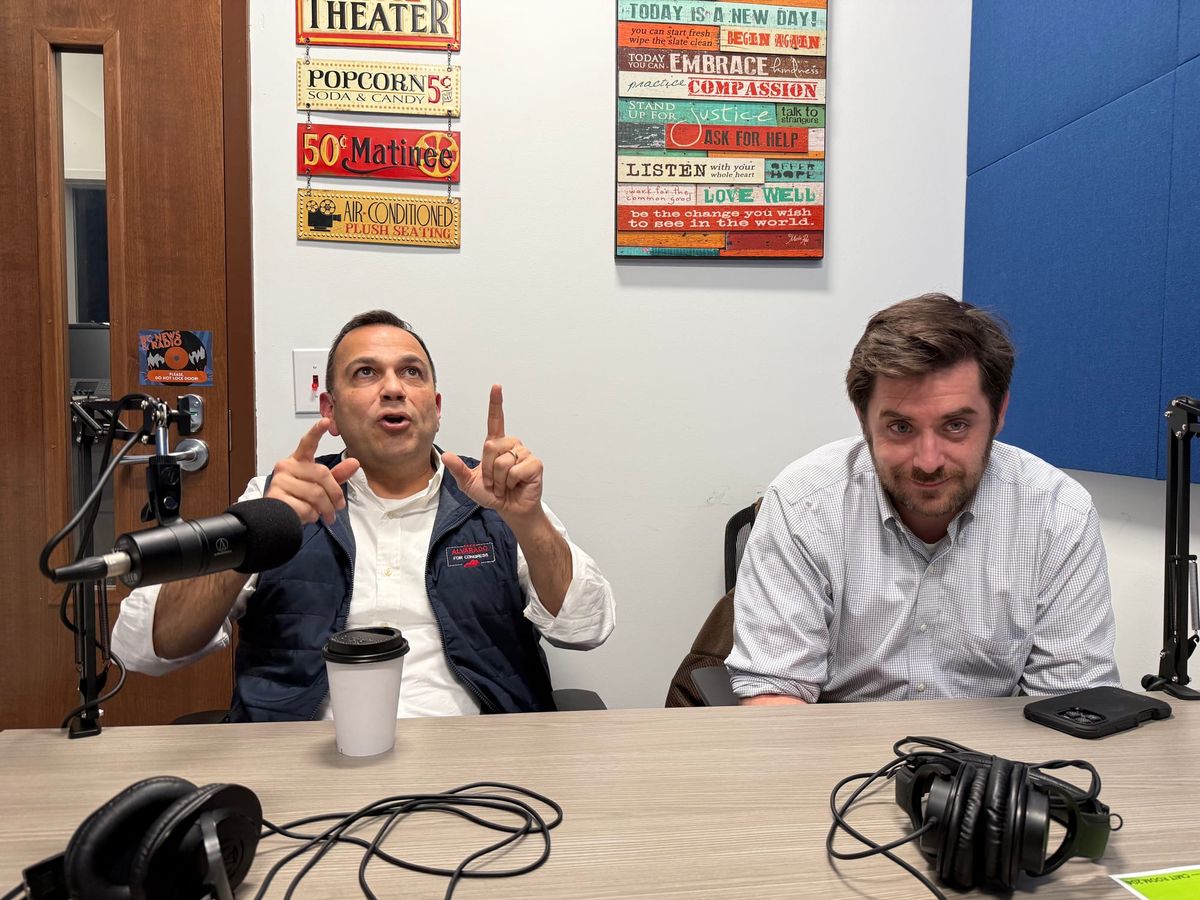
Ralph Alvarado, MD, refers to himself as a "country doctor". Double-boarded as a pediatrician and an internal medicine physician, Alvarado got his start working in politics two decades ago while practicing medicine in Winchester, Ky.
It was his frustration with how things were in Frankfort that eventually led Alvarado there about 10 years ago where he passed multiple bills aimed at improving healthcare costs and delivery in the Commonwealth.
After his recent stint as Tennessee's health commissioner from 2023-2025, Alvarado is now running to represent Kentucky in fellow Republican Andy Barr's current Congressional seat.
Alvarado leads with "America First" but at a time when ratings are dropping over our America First president, how does Alvarado interpret that sentiment? Also, how does the son of Latin and Central American immigrants view this administration's approach to immigration? And what kind of reforms to our healthcare system does Dr. Alvarado believe are necessary at the federal level?
All that, and more on this week's On The Edge! Unedited transcript follows.
Sign up for The Edge, our free email newsletter.
Get the latest stories right in your inbox.
Whitney McKnight: 00:00
Well, welcome to being on the edge with me, Ralph Alvarado. You are the Republican frontrunner right now for Andy Barr's Congressional Sixth State of Kentucky. Welcome.
Ralph Alvarado, MD: 00:10
Thank you for having me on. It's great.
WM: 00:11
I would say that you are probably most known for leading with America First. I'm curious though, for you, does America First align with what Trump says it is, or does it mean something different to you?
RA: 00:23
So for me, America First is typically, I tell a lot of folks, imagine we live in a neighborhood and you have the nicest block in the neighborhood, or that nicest house in the neighborhood on the block, right? You have the nicest house, it's the biggest house, beautiful, looks great from the out, you know, you've got lots of neighbors with different types of homes, but uh your home has a leaky roof, and it's got a broken window, a broken fence. It might have a hole in the floorboard, a sick kid in bed.
RA: 00:47
Um other neighbors are rough. Some of them like you, some of them don't. Do you take money that you have to spend on neighbors first and on other folks, or do you fix your roof, fix your window, fix your fence, heal your kid, and fix the floorboard? I would argue you do that first, right? Those that's your home, your area. It's the nicest house. Everybody says it's the most beautiful home. You know it's the most beautiful home, but you fix your home first.
RA: 01:09
And then afterwards, you have neighbors who might need help, and we're a generous people in America, and you go out and help others with those with those funds. Who do you help first? A lot of it depends. I mean, you've got um, you know, my my father was an immigrant. He often talked about um, you know, always question why do we help people that don't like us? So in other countries, you know, people will smile, they'll hold their hand out, you give them the handout, and as you turn around to walk away, they spit at you and give you the finger and they don't like you. And so it's always for me, you you help friends, you help people that are gonna help you watch the neighborhood, protect the neighborhood, and keep it safe. That's my approach on America First, is that you, and I think most people feel like we we focus sometimes more on our neighbors than on ourselves and our own folks. Now, how much that detail goes into it? I mean, some, you know, again, you can go into a lot of rabbit holes on that, very general analogy. That's how I view it is helping, you know, America first.
RA: 01:58
You start focusing on your people. And there's a lot of things to that, right? So there's things on the health side of it, there's things on uh homelessness, there's lots of things that uh a lot of problems we've had for a long time, but I think there's more uh desire from folks to to focus on the things that we need in our house first, get those things fixed, and then approach others.
WM: 02:16
Well, let me backtrack on some of the things that you said there. So going back to your analogy of the house and taking care of the house, I mean, I guess you've you've derived that analogy in response to something. So I just want to articulate what it is that you don't stand for. It sounds like maybe the Biden administration or just previous Democrat uh administrations that what did something that is not what you just described?
RA: 02:42
Uh yeah, I think there's uh I mean there's been a lot of leaders, I think, on all sides that have probably uh paid attention more to others and sometimes than ourselves. People feel that way. I think that's why the I you're hearing this um, I think, response from the voting uh public and from Americans in general. People, you know, I've had a chance to travel overseas and I've had people from um, you know, other countries ask, you know, how how does a how does President Trump come to power?
RA: 03:04
And I said, well, there's been a dissatisfaction from a lot of folks that leaders didn't listen, that they would provide promises, they'd get into power and just give you reasons why they couldn't fulfill their promises. Um, you know, uh President Trump, I think, is iconic really for us. I mean, he's gonna be something historically. Some people love him, some people hate him. Uh some would say he's a bull in a China shop, but he's effective in that he makes a promise I'm gonna do this, and he goes and gets it done.
WM: 03:30
Most of the time, and I would agree with you. I would also qualify that by saying a lot of people voted for Obama and then voted for Trump for that very reason. They were looking for somebody who was actually gonna do what they said. Yeah. Um I do think, though, that it would not be true to say that Trump this time around has done everything he said he was going to do because the tariffs are not making things affordable. It's actually, it's shown economically that it is having a deleterious effect both on Kentucky at home here and you know across the nation. And if you want to jump in, feel feel free. But I just wanted to correct that.
RA: 03:59
Yeah, so I mean, I'm a uh, you know, for me, my political back, I'm kind of always been a Reagan Republican type of guy, but I've also um supported the president currently in terms in terms of a lot of uh his approach on things. I've always been a free market principled individual, so I've always believed in that. Um I think what he's seeking is, and I I thought, well, if these tariffs go into place, I think you'd see uh uh a detriment to the economy. But um I I'm surprised, frankly, pleasantly surprised that uh he's gotten some deals done.
RA: 04:26
He's gotten Japan recently just came to the table and made an agreement on things. He's got other countries that have agreed. Uh, I think he's pushing, and again, if you talk to the Europeans, even with a lot of what he said and how he's done things in Europe, that he's gotten them to move off of a position where they felt we don't have to do anything. We're only spending one and a half percent on defense.
RA: 04:43
The Americans will be here, they'll handle it. If you talk to the NATO leaders, they recognize that, you know, uh he's moved them off of center and gotten them to start investing in these things themselves. So I think tariffs are his tool and his economic weapon to push a lot of that to get happened.
WM: 04:58
I'm glad you brought that up. It didn't occur to me to ask you this, but now that you've talked about NATO, um you know, I've read both sides. It's good that NATO is restructuring, maybe, maybe it'll actually just go away. Who knows? And you know, historically there are reasons why we would not want that to happen. But when you actually look at the defense spending of these other countries and what they get to spend money on instead, because we are taking care of the defense, yeah. I mean, you can actually take a um a gimlet eye to what's going on with NATO. However, I was alarmed, and I'd be curious what you think of hearing that Germany is now going to build its own army.
RA: 05:35
Um, yeah, so NAT NATO was created but basically to provide a buffer against the Russians and aggression from them, and that still is the focus, I think, of NATO right now. Um but other, I mean, you know, we've had uh, you know, Germany is in a different place than it was, you know, 100 years ago or 80 years ago. Um but either way, I think for a lot of them to be able to, the polls are, you know, they're creating a bigger army, they're investing more in their defense funds, they've got a a bit of a of an approach that's very similar to America's in terms of saying we need to protect ourselves, provide our own defense.
RA: 06:03
Um, I think more of those countries that can do that, uh, you know, the the dependency is right now is that the Americans I think I was listening to the statement from the NATO director saying, look, we are completely dependent on the American nuclear arsenal and America's strength to defend us. Uh and they they also recognize that we need them, right, to be able to provide that buffer. We don't want to fight these fights on our soul. We want to provide them. So it's a mutual you know understanding. I think the Europeans have not been accustomed to having somebody be as blunt as the as the president is and uh gruff, I would say, in his approach on things, and again, uh maybe a bull in a china shop, but has gotten their attention.
RA: 06:37
Uh and with some of his things, they've he's gotten a move uh towards the American position on things and finding ways for them to invest this. I think if he if he hadn't, we've had many presidents prior, and they've just said, oh, you know, he's nice to us and we're gonna keep doing what we're doing, the Americans will fill in the gap. And again, we're fixing up the homes in our neighborhood for others while not spending on our own. And so I think uh the president's just saying, look, we're gonna make you all do this. Uh you need to invest in yourselves. Uh they don't want to hear that, but I think they recognize that they need to.
RA: 07:05
The NATO leadership is almost grateful to some degree, saying, we know, you know, he can say what he wants, um, he can tweet whatever he wants. He's gotten the European leaders to move. And again, it's I think it's we're not Europe, they're not America. There's always gonna be a little bit of tension there, but uh they have to do their part as well, I think. And that's he's achieved that.
WM: 07:24
Well, it's interesting to me that uh it is happening, regardless of the complaining about the fact that it's changing. I wonder what your thoughts are, though, on the argument that it's weakening our ability to stay as pretty much the world leader and that it makes it easier for China or Russia. Trevor Burrus, Jr.
RA: 07:42
The Chinese and the Russians, um, their economies are also uh weakened. Uh Russia is, you know, a lot of their some of the petroleum and things that that's a lot of the economic sanctions have been working against them, I think. So they're in a much more weakened state. The Chinese are still very dependent on the United States, but it's also the president's also working on India, and you've seen him pushing on the tariffs. He's gotten a deal done with them. That's partly to say he will drive more manufacturing from India. That weakens the Chinese. They're very dependent. The Chinese are, you know, I've had a I was had a chance in 2016 to serve on an NCSL uh American legislative delegation to China when there's part of a healthy cities summit. I had to give a talk, a very sensitive talk, um, about how to improve corporate responsibility in manufacturing and healthcare. Chinese don't have a good reputation in that. I had to deliver it and it was well received, fortunately, there. But as part of the prep for that trip, uh we were provided a lot of details of how the Chinese think, um their philosophies on things, and they reminded us that we as Americans are very impatient. We look at things in two to four year increments, we want results right away. If we don't get them right away, the person who's in charge isn't any good. The Chinese look at things in 50 to 100 year increments, and they look at things in the long, you know, long view. Uh they know that, hey, what we're doing now, we're not going to see the impact for five, 10, you know, it'll be 50 years, 100 years. They're gradually using our debt against us, using that to buy assets in Africa, Southeast Asia, Central America, South America, um, and and controlling a lot of those. And again, I think you saw President Trump come in with the Panama Canal. They were buying assets to control that flow, the, you know, the suspender and belt kind of thing they were doing.
RA: 09:16
They went ahead and changed a lot of those things with Panama, with Peru. And again, we haven't had a president flex American might and strength and almost say, you're going to do this because we want you to do this. Um, and people have to respond to that. We haven't seen that in a long time. Um, but you think of Teddy Roosevelt. You speaks, speaks softly, carry a big stick. He speaks loudly, carries a big stick.
RA: 09:37
Um but but but he gets it done. And it's and it's those are things that I think for international security, national security. Um a lot of the things you're seeing is is boxing China in, boxing the Russians in. Um, you know, sometimes some he'll do something, and you'll look back and say, why are we doing that? And then you'll realize, oh my goodness, that has led to these things. Uh and obviously, uh, I think a much broader view and sometimes a lot of a lot of intentionality in getting results. Um, yeah.
WM: 10:04
Well, you say the economies in these other countries may be precarious, but I do wonder about our own, especially since the bubble right now is being driven by AI. I mean, I don't know. I really don't know. But it does seem like there's a lot of value um thought to be in AI, but we don't know because especially the the not the cloud computing so much, but just the the large language models where they're trying to create humans and chips, you know.
RA: 10:28
Yeah, yeah.
WM: 10:29
We don't know how that's gonna turn out.
RA: 10:30
Yeah, I mean there has to be some guardrails, but I think AI is crucial. It keeps our superiority. And, you know, uh I've got some connections, uh, family that work for NVIDIA, and so I know um a lot of the cutting-edge things that are out there are remarkable, is what you're seeing. Um you've got, you know, you take a look at uh things that are being done with agriculture, with AI, in the medical field with AI, uh cancer screenings that are being done with AI. I mean, really cool things that will lead to better outcomes, increased longevity, um, probably ease of lifestyle.
RA: 10:59
You see Elon Musk making the claims that in 10 or 20 years uh saving money will be obsolete because you know you'll have robots and things doing those jobs. You'll have to have somebody repairing the robots, but they might make robots that repair the robots. So it's kind of a and it we have to drive that. I think it maintains military superiority for us as a country, it maintains economic superiority. If we don't allow those things to evolve, uh the Chinese will take over, they'll steal technology, they'll push those technologies. And I think there's an understanding that we have to maintain dominance in that.
RA: 11:28
There's ways of protecting. I mean, it's really cool. I mean, they can develop a technology and embed uh something inside of that that they can detect if it's being stolen. You know, there's piracy being associated with and they can shut it down. Um really advanced things that we've got out there, but we need those things to maintain, I think, superiority. If we give up on AI and are more fearful of it, others will take that and run and push those limits, and then it leaves us chasing them. I think we have to stay in front of it.
WM: 11:54
Well, you've just opened up a little wedge here for me to go into how you would approach a lot of the things that you've already discussed as a congressman. But you were mentioning, you know, that in the future it's possible we won't need to save money. Well, what will we do? Will we have a universal income?
RA: 12:08
No, I don't I don't I'm saying that's what Elon Musk said, right? So that's not my theory, but Elon Musk is talking about those things. And he's he's doing a lot of that work on AI.
WM: 12:16
But then let's talk about the policy policies maybe that we need now. And let's say you're you are elected, you're a congressman, you're looking at the future economy uh that AI will have an enormous impact on. What can you do now as a congressperson?
RA: 12:30
We have to prepare for that. I think you know the requirement for that is gonna need we're gonna need a lot of energy. Uh, and so energy independence is very important for the country. Um, you've seen the president talk about that as well, but I think we have to have in all of the above you know, you know, policy as a country. Uh we've got a lot of coal. Kentucky has powered uh energy in this country for generations. Uh coal, there's natural gas, but also you're gonna have to have all the green energies, right? Solar, you know, water, um, you know, you have to have nuclear. I mean, nuclear is a big development. We've opened up the door for that here in Kentucky.
WM: 13:00
I'm gonna jump in and say, is it possible Venezuela and its oil has an impact on those, on the policy to come around this energy need?
RA: 13:07
I think what was uh and again, this is all uh what I've heard, so I don't know for a fact, but a lot of that um, you know, when the Chinese were moving in and making investments, they were taking Venezuelan oil for pennies on the dollar. And so now they're gonna be paying full freight for a lot of those things. So in the part of that is that money, you know, pennies on the dollar, that money wasn't going to the Venezuelan people, it was going to the people that were empowered in control. They had also reverted a lot to a lot of uh narco trafficking and a lot of those things coming out of their uh, you know, central government. So the president's coming in, he's shutting those things down. He's saying, yeah, you want to buy the Chinese, you want to buy the oil, you'll be paying full freight for this oil.
RA: 13:42
And some of this money will go into the refinement of it, some of it will in, you know, will go to the people of Venezuela to help those people gain a lot of their wealth back, which they deserve. I mean, they were one of the wealthiest countries in the Western Hemisphere, really, uh, when they first started. So a lot of that needs to uh come back. The Venezuelan story has been going on since the 1970s, really, and it's just been a gradual erosion where it's led those people to be uh in the condition that they're in that they're fleeing their country at all costs because they just they can't survive.
RA: 14:07
But I I think some of that is also gonna be requiring uh those countries to pay full freight, being able to refine it. Um we have enough in our own country to produce our own oil. I don't think the intention is to take that from the Venezuelan people. They want to make sure the Venezuelan people can get that, that, the profits from their own oil and petroleum. We need to be able to use our own reserves to be able to provide that. But again, we we're gonna need a lot of energy for all of that AI development, for the potential for data centers, all the things that we need for the future. It takes water, it takes um energy. We have a lot of water and the potential for a lot of energy here in Kentucky. And it just takes if local communities want them or not, as far as advancing those things. But I think we have to be able from the federal level to deregulate, make it available for if local communities want to have those investments and bring those jobs here.
WM: 14:53
Yeah, there is definitely the question of where the data centers will end up. Um well, okay, so you are a doctor. You are uh we've discussed you you've worked in hospitals, but do what is your actual specialty? Is it internal medicine?
RA: 15:06
Internal medicine and pediatrics. So I was double boarded. So I didn't realize you're a pediatrician. Yeah, yeah. I've I've um, you know, I practiced when I uh went to residency at UK. I always tell people I went to Loma Linda for med school, met my wife two weeks uh after graduation, we got married, um three days of honeymoon, and then right into residency at UK and got Kentucky fied, is what I tell most people.
WM: 15:25
We um what is that what does that mean exactly?
RA: 15:27
Uh if you come to Kentucky and you live here, you know. It's just uh culture. I mean, the people here are salt of the earth, they'll give you the shirt off their back. It's the only shirt that they have. Um I fell in love with um the folks that are here, the people that I took care of. Um people were incredibly appreciative. And as a doctor, really there's a there's a a bucket in your soul, as any physician has or any medical provider that you want to fill up.
RA: 15:50
And when you provided care for people here, I was like a kind of an old country doc, is what I became. That I still did my own nursery work, my own hospital work, my own office work. You know, we would Friday late, my mom would come in, please, doctor, can you see my kids? Yeah, we're here. Come on in, let's take care of you and don't go to the ER. And just trying to help improve uh people that come through a very complicated healthcare system, they need someone that's gonna help them direct through that system to provide the care that they need.
RA: 16:16
Um, lots of stories, uh, stories that haunt me to this day, uh, sad outcomes, funny stories that you have, um, but you know, things that uh made impact on people's lives. And then after you're done, it's amazing, even in this campaign. I've been to counties that are very rural, walking through a parade, passing out material, a lady running me down. I thought, oh no, she's gonna chew me out about something, and says, Hey, listen, I just want to tell you, you diagnosed my kid with this really rare condition when she was first born. Um, and if you hadn't, she would have had a really bad outcome. Thank you for doing she's 25, she's functioned, everything is great now. Thank you. And I, you know, it gets me choked up to say it because that means more to me than anything politically that I'm gonna be driving to talk to people about. So those kind of things are um fun about Kentucky.
WM: 16:60
I think I think being a physician, I think being a teacher, I think being a cop, these are callings. I I don't think you just go, well, I need a job, I'll go do these things. I mean, especially medicine because there's so much an education involved. Sure. Okay, but politician, not so much. I don't think being a politician requires a calling. Sure. There's so many different reasons a person could decide to go into public.
RA: 17:23
So we, you know, I when I so I was part of organized medicine. Um, when I went through residency, they talked about the importance of advocacy as a doctor. And so it's part of the Kentucky Medical Association, and they asked me to uh I was in 2003, hey, please call your state senator about a particular bill. So I called him asked him to vote for it. He took my phone call, and in the end, he didn't vote at all. He just skipped the vote. Uh that almost made me more upset than if he had just said, I'm gonna vote no, and said I heard both sides and I made this decision. And it was after all the Bush-Gore stuff in 2000, and I remember telling my wife I was complaining, I said, you know, I I gotta stop complaining. I'm running, I have my own medical practice, I'm running a business, I need to get involved, you know, politically, and I have my views, but I was never a political science guy.
RA: 18:03
I never knocked on doors, was involved in campaigns. But I told my wife I got to get more involved. Months went by. I was in my office seeing patients one morning. Someone was campaigning for Ernie Fletcher, who was running for governor back in 2003. And my wife, oh yeah, we love Dr. Fletcher. Put your sign out there. Back at the time, there were very few Republican signs in our district. It was about three to one Democrat to Republican ratio. But she said, My by the way, my husband wants to get more involved. And that guy was a local party chairman. I've heard of your husband. And so he gave me a call and said, Hey, let's go to coffee. I want to talk to you. I need someone to run for State House. Why don't you run for State House? And I heard you want to get more involved. And I'm like, Yeah, you know what? I, you know, these guys are a bunch of knuckleheads. I know how to fix this stuff. I'll let me at them. I'll get in there.
RA: 18:42
And they taught me how to run a campaign. Um, I knocked on every door that that, you know, every door in the county that year, um, ran, and we lost narrowly. And there's an hour story, I won't bore you with every detail, an hour story behind every campaign, but we lost. Hey, run again, two years, your name. My people know who you are. 2006 was George Bush's second midterm. I, I mean, I got destroyed. Every Republican was a major, you know, we got beat pretty bad, and we were already in a bad district as it was.
WM: 19:09
Um, my bad meaning what?
RA: 19:12
Uh it was Democrat to Republican for a Republican to win, you know, a general election. Uh, and and my opponent, his his campaign motto was, I'm one of us, standing up for what for us. That's what the Democrat was saying, implying that I wasn't one of us. There were some ethnic undertones to that. My last name was part of it, and and that was being talked about um the Saturday after that campaign.
RA: 19:31
I'm leaving for the uh for my office to the hospital to go do rounds, and I look in my rearview mirror, and the N-word is spray painted on the front of our home. That wasn't done by guys on our side of the fence, people on the other side of the fence. People in the community were embarrassed. You're not leaving, are you? I'm like, no. But my mother, who was living with us, um, and you know, in Argentina, you're on the losing side. People would get taken out. They know where we live. She was scared of that. My wife goes, look, we don't need this. My sixth and my eight-year-old, what is that word? What does that mean? Why is that on our house? I was livid to have to have those conversations.
RA: 20:00
But I just thought, look, I don't need to be the guy. I'll help other people get elected. I got a career, you know. 2010, the party called me up. How about running for state senate? I said, guys, my last name's Alvarado. I don't know that I can win in central eastern Kentucky. I've run twice. The guy that's uh in there is uh the guy that I called about that bill, and he's well known local guy.
WM: 20:18
You're gonna tell us who it is?
RA: 20:19
Uh yeah, RJ Palmer. I have no problem. RJ, I'm not fond of RJ Palmer. Um but um yeah, I mean, and I'll tell you, well, anyway, but in 2010, we wound up running um six counties. Uh we raised I was surprised we raised as much money as well.
WM: 20:34
This is the 28th, right?
RA: 20:35
28th is in 2000.
WM: 20:36
I'm sorry, this is the 28th district, correct?
RA: 20:38
20th district, yes, and it yes. And it was a different district than it wound up representing in the end, but we wound up running one two of the one two of the six counties. We won Clark County. And um long story behind that, but we lost again. And I thought, man, all this stuff. And uh, hey, you know, we're gonna redistrict as a census, run again in 2014. I told my wife, hey, honey, they want me to run, and she says, get this out of your system. You've been kicked in the head three times, you know. Um she got so she says, Promise me it's your last time. Okay.
RA: 21:04
Um she got uh diagnosed with breast cancer that year. We had an early mammogram. You found it early. It's important to get your screening. Anybody listening to this, get your mammograms done, get your screenings done for sure, all your cancer screenings. But she went, I told her I'm gonna drop out.
RA: 21:17
She said, No, no, no, I'll go through all this. You promised me it's your last time. Okay. So she went through her cancer treatments. Nasty race. Uh RJ said stuff, called me a drug dealer, all kinds of things, not cool, personal stuff that at my core I'm a physician, right? So it's one thing to attack policies and things that I believe in. Another thing is to say that I'm uh a pill mill doctor, which I wasn't. It was really insulting. We wound up finding the truth of this. It was a whole story, but we wind up winning that race. And once we got in, 10 years of Pent Up Health Policy, that I started filing a lot of bills and getting things accomplished. And so, um, and and we quickly moved up. It was a divided house and senate.
WM: 21:54
What years were these? These were 2015.
RA: 21:55
2014 is when I got elected, yeah. And so 2015 is when, you know, uh we A lot of Medicaid stuff that was going on, expanded Medicaid, there were no limits on medical loss ratios for Medicaid. Our MCOs were taking full advantage. Uh, 25% MLR.
WM: 22:10
You need to tell us what MCOs are?
RA: 22:11
Yeah, managed care organizations. So there were the insurance companies that were hired uh basically for expanded Medicaid in Kentucky. And that this was done through an executive order by Steve Bashir, who was governor, and people sued about that, but the court said he was entitled to do that.
RA: 22:24
So he had he had hired managed these managed care organizations or insurance companies to manage Medicaid. And so he wound up putting them in place, and they wound up um you know putting in uh you know having no limits, they had no restrictions, and so their profit margins were incredibly high. I when I got in, I was put in charge of Medicaid oversight and exposed a lot of that. And that eventually, when Governor Bevan got elected, he put in medical loss ratios that were very tight, so it limited their profits and their overall administrative costs.
WM: 22:51
But you need to be able to see what they are to limit them.
RA: 22:53
Yeah.
WM: 22:54
And that is a problem. Now, you're you actually have experience then with legislating around the system. And the system is opaque. Yeah. That's the problem, I think. We don't really know who and how is making money.
RA: 23:05
I I agree.
WM: 23:06
And then um you are a physician. So let's say you're elected. I mean, we know that our healthcare system is too expensive, not good enough outcomes, and basically broken. So how do you approach that?
RA: 23:17
Yeah, so it it would be nice to flip on a switch and get the whole thing changed. Uh, and that's not a practical, we know it's too convoluted to do it that quickly. It's gonna have to be done in step step approaches, is what I think.
WM: 23:27
Well, what's step one?
RA: 23:28
Yeah, well, I think first transparency is the right approach. Um I would like to see things, I'll give you examples of things I think we could implement very quickly. Uh, because I think what people do right now is they say, Boy, this is complicated. I don't know what to do. You go to congressmen. Um, congressmen tell me it's complicated. And and before I got into this race, I asked, would I have more influence as a commissioner of health for a state versus being a member of Congress?
WM: 23:52
Yeah, I forgot to mention that. You were the commissioner of or you were the what was your actual title in Tennessee? Commissioner of Health. Yeah, you were the state health commissioner for Tennessee. That's right. And that was 23 to 25. That's right.
RA: 24:02
And and uh during that, uh, you know, when I took that role, the uh governor lee said, Look, I need someone to turn on my Department of Health. There's a lot of issues after the pandemic. Um and so when we got into that role, I said, Can I still maintain my medical practice? He said, Yeah. So I commuted every other weekend, you know, back home to Winchester to see my patients and maintained my practice the entire time. Yeah.
WM: 24:19
Okay, so let's get back to fixing the federal problems.
RA: 24:22
Yeah. So the federal issues, I think part of it is uh as a doctor, I'll give you an example of something that would be simple, I think. You go to insurance, they tell you what medicines you can use. They they give you uh a formulary and say, here's what you have hypertension, here are the drugs you can pick from. When I had Medicare Advantage, people would come to me in my office and say, It's October, I've hit the donut hole, right? I'm I'm out of coverage, doctor. I still need, I have my medical problems, don't go away. I need something for the next three months. Can you please put something I can afford? And I'd have to go change all their medicines to put them on generics that they could afford to cover them for three months. When January 1 would hit, put them back on the formulary drugs.
WM: 24:55
Yeah, but that's a problem of the market. That's the pharmacy benefit managers making you do their job. Exactly right.
RA: 25:02
I totally agree. And I think PBMs have been horrible. We've exposed a lot of their a lot of the corruption here in Kentucky. We passed laws that exposed, as they had those medical loss ratios for those insurance companies for administrative costs, they were then on the side $137 million being siphoned off, and they were getting from that that they were not reporting.
WM: 25:19
Well, that's because it's easy to do that when you own everything. So for example, we have CBS, which owns Aetna, which uh also really essentially just ends up owning the doctors because you have to decide whether or not you're gonna be in their network. Right. And if you're in their network, then you're gonna go by their rules. They own the minute clinics, so they own the care at that point. Right. They also make the drugs, they make a lot of generics, and they distribute them. Oh, and they have a PBM.
RA: 25:40
And it's called a monopoly, right?
WM: 25:41
Yeah, it's called a vertical monopoly, which never existed before.
RA: 25:44
That's exactly right. And so that's that's a lot of the problem. And so part of it is transparency. I think if you're gonna, I mean, there's lots of ideas that I have. Pharmaceutical issues, instead of telling me what drugs to get me, you know, why not just give me they're managing money more than they're managing care. Why not just come to They're not doctors?
WM: 25:59
They're not doctors.
RA: 25:60
And so instead, if you say, Oh, you have hypertension, our actuarial says we can cover $40 a month for your hypertension. Here's a $40 voucher. Doctor, you and the patient sit down and figure out whatever you want to buy. Pharma wants to charge a hundred bucks for a drug, and I've only got forty bucks, they'll find a way to get that price point down to fit to that voucher. If you're paying your pharmacist out of that, some of that can come out to pay the pharmacy for his fee or her fee when they're saying, hey, we're not getting paid by Medicaid. There's so many fixes to that, but it gives doctors and patients the control. Insurance can determine their their what their losses are gonna be, but they have to come in and just say, here's the voucher, give up control.
WM: 26:33
But you're going to be up against a very large lobby. Yeah. And so whenever money's involved and somebody stands to lose a lot of it, you're gonna have a lot of pushback. And I wonder how you'll end up having to, you know, navigate that.
RA: 26:44
I think the the opportunity is to articulate, first of all. I think a lot of times it's difficult to articulate complicated systems to people at large and the to the to the you know public at large. But what I'm telling you, every patient that's out there has this is not red or blue. This is everybody understands, this is what needs to be, this is the problem. I don't understand it. And when people say, I don't understand it, but please fix it, they'll say, uh, go to the insurance companies. And the insurance companies can keep it, like you said, as opaque as possible. And they'll just say, Well, this is the way it is. Um, and what happens is when you want to fix the government tightens their grip more, and you know, MCOs tighten their grip more, and you wind up having that much less control of the situation. And you're gonna be driving us into a single payer model, which I don't think is a the best system. I don't think it's a good system everywhere.
WM: 27:25
But we have one already because of the shadow government you're talking about. I mean, the CVS is essentially running its own healthcare system.
RA: 27:31
That's right. And so I'm I I don't like that system. Um, but you're right, that's what's being driven to. And I I've told these insurance companies that is that you're all hoping that you're gonna be the one that gets to do it. The one thing I'd like to see happen also, uh, the Swiss do some of this, is they've, you know, right now in Kentucky, if if you have a utility, water, electric, and they want to raise their rates, they have to go before the Public Service Commission and they say, Why do you want to raise rates? Show us why. And they have to expose everything they put out there. We don't do that with insurance companies. And I think if we created a system like that.
WM: 28:02
Not everything. That's actually a really interesting analogy. But a lot of times when you can show that it would hurt you in the marketplace, the Public Service Commission does not actually they will redact the the information from the public records.
RA: 28:12
I I think you need to expose the you know, transparency's got to be out there. I think that's what you have to do is force them to say, show us why you have to raise our rates. You're one of the most profitable companies at record profits year after year after yeah.
WM: 28:23
Well, who should shouldn't Medicare Medicaid be doing that already? Because they are the ones who are setting the rates. Whatever Medicare Medicaid does, that's what that's you know, that's the market. Yeah, that's the market baseline.
RA: 28:34
But they're but they're turfing a lot of that also to the MC. So the so Medicare and a lot of those things are going through the MCOs as well. But it's it's a system also that has regulations in place from the 1970s and 80s that have not been updated. So when I've had a chance to interact with CDC, with um, you know, again, in my previous role, I got FDA, CDC, a lot of these organizations, NIH, when they've come with innovation and different ideas, I go, innovation means you're gonna tell me to do something that I have to do more as a doctor, and that drives me nuts. You want to be innovative? Why don't you redo your regulations? And they say, well, that's fair. I go, then do it. You know, that's what needs to happen.
WM: 29:07
I think that's a really good point, actually, because as looking looking at what's happened now since the Big Beautiful bill, there is this fear that rural hospitals, which is, you know, they're the number that keeps getting thrown around is 34 hospitals. I have talked to uh one CEO who said, Well, that's really not going to help hurt us as badly as it's being reported. But let's just say in general, 34 hospitals that are rural in Kentucky are going to face some serious hardships because the Big Beautiful bill cuts so much from Medicaid funding that tends to go to the hospitals.
WM: 29:36
Then you have the uh the transformational, I've forgotten the name of it, but the instead of the Medicaid that they're cutting, they're saying that there's gonna be this transformational budget. I think it's $50 million a year. It ends up being about a quarter of a billion dollars when it's said and done. But they're specifying it's for updating billing and updating personnel. That's not gonna really address how healthcare is delivered. But I did think, well, why don't you loosen regulations a little bit? And if you really want innovation, let the individual health systems take care of it.
RA: 30:06
I've I've rejected some federal funding on programs in and the state, you know, in terms of HIV prevention. I was only using 30% of dollars from the federal government. There's so many strings attached. My argument would be Hawaii will do it differently than Montana, than Texas, than Maine, than Kentucky, than Florida. Let them all uh try their different models and they'll figure out what works for them. If they want to use the full amount, they use the full amount. Uh, but the federal government can contain their costs, let states be a little bit more innovative with it, release your grip from the federal government, let the states use figure out a way to do Medicaid better. I think they would do a lot better. And I think all obviously from insurance companies, release your grip, let patients and doctors call the shots, let them shop for pricing.
WM: 30:47
Good luck for that, however.
RA: 30:48
Yeah, but it but that's what that's what needs to happen. And I think if they're gonna be increasing rates also, is to say, show us why. And you know, the insurance companies provide a service, and I think there's a lot of people in the industry that have a true heart that really want to help people out, but we know that it's so opaque that when when we brought them before committees here in Frankfurt and said, Where are you spending the pharmaceutical money? We don't know. We just give it to the PBM. Well, the PBMs come before us. We don't contract with you, so we're not gonna come and talk to you.
WM: 31:15
What's so fascinating about the PBMs is they just kind of arose with no regulation at all. They just kind of happen within these organizations and then suddenly they were in charge.
RA: 31:23
Yeah, it's a shadow government. Here's another example of something else I I've talked to insurance companies about. Five percent of your patients use up 70% of your costs in almost every insurance plan. These are folks that might be uh super utilizers, they might go to the ER a lot, they might be very ill. They have uh, you know, they have lots of social issues and things that might contribute to that. I I've argued instead of paying for that person to use an ambulance and go to the hospital twice a week or three times a week, it's costing you millions of dollars. You know, if you're wealthy in this country, you can afford a concierge doctor. You pay $2,000, $2,500 a year. That doctor doesn't want to deal with your insurance companies. And they're making less money, but they got a smile on their face and they're having fun practicing medicine.
RA: 32:02
So they're they're ordering whatever test they want, they're ordering whatever medicine, they'll be at your beck and call, you have their cell phone, they'll see you at your house, at your work, you know, all kinds of different models. I've argued with them, why don't you go out and find 10 of your most expensive people and hire, you know, give them those 10 patients, pay the fee to the concierge doctor, and let them do whatever they think is the best thing for that person. And just tell them, look, I'm hiring you, you're you're the doctor for the wealthy, you're gonna be the doctor for the person that's in my neediest in my system. You do whatever you think. That means order whatever test, whatever medicine, whatever you gotta do, give them control. Give them a year.
WM: 32:36
Well, what happened when you when you had this conversation? Because many innovative models like that have been introduced. They don't end up making any money for people, so they get discarded.
RA: 32:44
They're value-based models, but these are the people that are the most expensive, right? Just say give that doctor control, let them do whatever they want to do. Uh, you know, I can't do that. I mean, that's the response I get. I gotta give a doctor control. It's you know, you know, no, we have our rules, you gotta follow, you know, no, get rid of your rules. They don't want to follow any of your rules. Let them do whatever they think is the right thing. Give it a year. If in a year it doesn't work, you can fire them. And you don't have to sign them up again and go back to your old system, which would save a lot of money.
WM: 33:10
To innovate like that, though, you would need to have those regulations loosened or at least loosened or just done away with. Right. So I'm gonna just kind of sum that up and I want to move on to a couple of c other things. But basically, what I think you were saying is okay, fine, if you're gonna cut, it's if the big beautiful bill cuts all of this money from rural hospitals, then at least give them more free free reign over how they manage the money they do have.
RA: 33:32
Sure.
WM: 33:33
Okay.
RA: 33:33
There's there's there's there's other uh models that have been innovative when it comes to Medicaid for hospitals in particular. I know this is more than just Medicaid, I know Medicare is part of it too. But there have been situations, like in Maryland, I know they tried this, where they said, hey, we're gonna give the entire Medicaid budget, just again, a block grant to the hospital, and say, here's all your Medicaid money at the beginning of the year.
WM: 33:51
Do you know the outcomes when that happened?
RA: 33:53
In rural hospitals, it wasn't that. In in cities, it was more, I mean, in Baltimore, it's much more the referrals, they're getting people. So what would happen is some of the rural hospitals would transfer their sickest patients, say, here, you you handle it. I'm gonna save the money.
WM: 34:04
Well, a lot of times that's because they don't have the specialists.
RA: 34:06
We don't have the specialist, exactly right. But I mean, so it didn't work well for it was mixed because some of the bigger city hospitals couldn't manage some very complicated people, and it was not from their own fault or even their own actions. They were getting referred from all over. But in rural areas, there was more innovation of trying to find ways to reduce ER visits, reduce hospitalizations, and try different things that would help reduce, you know, paramedicine programs kind of flourish in some of those areas.
RA: 34:28
There were some good concepts. Um again, I I've talked to the hospital associations. They go, well, there's been some mixed results on that. But I think you you have to try different things along those lines because hospitals will figure it out. You know, they'll figure out how to use those dollars most efficiently to provide care. And again, part of the rules are you can't transfer people inappropriately, you have to do as much as you can in the hospital system.
WM: 34:47
Well, all right, I want to have I have two more questions. Uh the first is you brought up Minnesota, so we're gonna come back and talk about immigration. And um I would like to know, I'd like to wrap up by asking what you think the biggest challenge in being a congressman would be. So let's talk about Minnesota. Um ICE has I I was just looking at um a poll that The Economist published today, and uh Trump's approval rating, at least in their polling, was 36 percent and it was 59 percent uh disapproval.
WM: 35:13
And it seems to have gone down because of the way ICE handled what went on in in Minnesota. So maybe some thoughts on ICE, but just generally immigration. You are a person whose family comes from South and Latin America. Yeah. Uh your father, Costa Rica? Costa Rica, yeah. Mom, Argentina. Um, how what's this common sense approach to immigration? And we do need to talk about ICE and how they've handled things.
RA: 35:37
Yeah, so I think um, you know, the the president's correct. We have laws in this country that we have to follow. And so I think it's important that people that have come into the country legally, legal immigrants, um, come here for law and order, a lot of them. That's what they you know, if you go to other countries, law enforcement there uh are not sometimes the most honest individuals. They use their badges that are.
WM: 35:57
Yeah, I will I will say that that I will echo that. I lived in Washington for a long time and I lived in a building with a lot of foreign nationals that worked in the different embassies. And I actually went to high school with somebody who worked for Queen Noor, and she did a lot of um education programs in the Middle East. And she said all the time, what always comes back is people respect that we have the rule of law, and they say it just makes life so much easier. It does. And my friends have all said that from you know various African countries, South American countries. So I I don't I do think that's really important to emphasize.
RA: 36:27
Yeah, they people that are like you know, they they trust, they can trust law enforcement. Um so that that's one thing. Um so people and people that come here also, just like if you were in a you know, an amusement park ride line, waiting to get on a ride, and you were waiting for two hours and someone cuts the line, it makes you upset. And so for a lot of people that have come here legally also to see people that are cutting the line, it makes them upset also. And that's kind of a cultural thing that people want people to do things the right way. Now, the system has been very difficult.
RA: 36:54
I mean, it doesn't matter what country you're coming from, to become an American citizen is very onerous. It's a lot of process, a lot of money, uh, several years to be able to make that happen. So I think there's an opportunity for reforms in the immigration system. Those have been proposed by Congress in the past, bipartisan ideas that have been proposed. And ultimately what always winds up killing it is an amnesty amendment that gets added on and it just blows it up in the end, and it never gets to that finish line point. I think what we have to, you've got a lot of folks that have come into the country suddenly, illegally. Uh it's a it's a shame because it it just adds to all this angst that you're seeing right now. I think the ICE approach on things, we have to be able to, and ICE has been around, you know, forever. I've had friends that were detained in the past and uh, hey, I want to see your paper. I don't have them right now.
WM: 37:37
This is true. Well, I mean, Ralph, that's true. I mean, and and the 287G clause that allows cops to, you know, or an entire police station to become essentially a an extension of the ICE department. Yeah, the ICE program has been around since I think Obama won. Yeah, yeah. Okay. However, masked men with poor training, ultimately killing citizens that have nothing to do with immigration, that that is that's a problem. That's a pain point.
RA: 38:06
Yeah, it's so it's I would argue that yeah, there's no bad optics, obviously, nationally, because that's what's being covered by the press. But I mean, there's several cities in the country that have not had those issues. And so I think part of the problem, and I think uh Vice President Vance talked about this in that speech that he gave, trying to cool things down, and said, listen, we we go into a community, we might have somebody's name, uh, and we say, hey, look, this is John Smith. And the last address that we have for John, he's he's uh wanted for domestic violence or for rape or some crime, something that's bad. We're looking for this person. Uh the last address we have is 100 Main Street.
RA: 38:38
Um can you confirm local law enforcement? Uh you know, what do you have? And a lot of them will say, uh, yeah, the last known address is that, or no, we have him at this other address, and they can point them where that individual is, and they can help provide them and assist them in finding that individual. When when the local law enforcement of the state says, We're not gonna help you, then the last address they have is 100 Main Street.
RA: 38:57
They show up to that address and they might have another John Smith or a cousin, or or they find someone else is here illegally, they may not have committed a crime, but hey, you're here illegally, we're gonna detain you as well. Or they'll find someone who might be a legal citizen, but they don't know, and they get arrested, and you get videos that are put out there. A lot of that is because there's a been a lack of cooperation from local officials.
WM: 39:16
And so but is that all they're asking for? Is administrative help?
RA: 39:19
They're asking for that. They're asking for them to help them do their jobs. I mean, if they've got someone they're gonna arrest is to help contain crowds, not to let them come and attack them and spit on them and kick their vehicles and do the things that we've seen as well. So I think that if there's been cities like Memphis, I mean, I know that Memphis is a I know the mayor there. I've got to meet him in my previous role. Um, they've been cooperative and they've had very good results.
RA: 39:37
They've had a decrease in crime in those cities. And so there's places where it's worked. Um, so you have to wonder, you know, now look, I'm not excusing. I mean, somebody gets killed and shot. I mean, that's not a that's not a good look, it's not a good outcome, it's a tragedy for everybody involved. Um, those things have to be investigated. I think the president, I think he saw what was going on, he saw the tensions that were rising.
RA: 39:57
Uh, he went ahead and sent, you know, Homan in, and he kind of came in and did something because I think it settled down very quickly. They've prosecuted, I think, 4,000 people that they've gotten arrested there, and now they've they've come out of there and they're gonna be going somewhere else to continue a lot of what they're doing. I do the two the you mentioned the 287 G. I think you know there are counties in this in the state that have done that.
WM: 40:16
Uh well just to be clear early on. So 287 G is the clause in um it's the Border Patrol uh Department of Homeland Security document that basically says uh BP, the borders and uh customs patrol slash ICE has the right to deputize local police stations.
RA: 40:36
And we've had some counties that have done that, sheriff's offices that have done that here. And so those are people that are not having to work, they everybody knows who that law enforcement is in the community. They know who those folks are. So they're if they're relying on that cooperation, they can do it themselves. And so I think it's really important. You know, we have to follow our laws. We have to follow our immigration laws if people are coming in.
WM: 40:53
But I'm gonna stop you to just say we do have to follow our laws. And it would appear that ICE doesn't follow the laws enough of the time to make them more of a menace than a help. Would you agree with that?
RA: 41:03
I you don't you don't see where it works well. I mean, they're not well in Memphis. It's worked well in several cities. I think you have there's been lots of cities where they've been present and they've been uh you know kind of enforcing the law there and they've gotten cooperation.
WM: 41:13
All right, so what was the difference? What was the difference?
RA: 41:16
It was it was a lack of cooperation by local law enforcement and state officials, uh and encouraging people to go videotape, get in people's faces. I think you saw a lot of aggravation. I mean, if I was trying to do um whatever job as a doctor and people were saying, we don't want you to do that, and you're gonna spit at me and throw things at me and call me names, um, you know, that that raises tensions in those areas as well.
RA: 41:35
Now, people have the right to protest. If they want to protest, it's a constitutional right for anybody to do that. But when they start getting physical with those things, I mean it puts a lot of tensions on those things. Now, again, if people get shot, those things get investigated. They have to be investigated and they have to be looked at.
WM: 41:49
And that you I'm glad to hear you say that, actually.
RA: 41:51
Yeah, though they have to be in they have to be investigated.
WM: 41:53
But but what you describe is uh is the mob is more powerful than masked men with assault rifles. And and I just think that's hard. It's hard for me to to believe that. I think it's for a lot of people clearly bad.
RA: 42:06
Yeah, and so the thing is how many how many cities have been covered where it's worked well? You're not seeing that on the news. You're gonna see Minneap- you see it you saw Minneapolis every night, every night, every night for weeks. And so that's what's being covered, and people think, well, that's what's happening everywhere. And I would argue that's not what's happening everywhere.
WM: 42:21
Okay, so for my job as a publisher, I decided to take the police academy citizen track. So I actually am a graduate of the police academy. They're not doing basic one-on-one procedures. They really don't seem to have training or they don't care. And that that bothers me because one of the ways that you do trust the rule of law is that you know the people in the position of upholding the law are gonna do their job right. Do you know for a fact that they are being trained, or how would you approach the fact that they don't seem to be following basic training that any local officer would have?
RA: 42:49
I think I think you have to rely on that that that training is being offered and provided the way it should be. So some of the people that were being accused of that had had been in that role for eight years.
WM: 42:56
They're not being accused, I'm watching it. No, no, yeah.
RA: 42:58
But some of them have had they've been in that role for eight years. And the hardest part for us is not knowing who's come in, why they're here, what what what's their do they have a negative intention for us?
WM: 43:07
I mean, that was a failure of the Biden administration, full stop. There's no argument about that. I think we don't see eye to eye on the ICE uh activities, but um but thank you for going into detail about your your position on it. Okay, what's gonna be the hardest thing to do in Washington should you be elected?
RA: 43:22
Um I think the I don't know that it's the hardest thing, but I think it's the thing that needs to, if you want success, is it's a toxic environment in DC. Uh, I'd I'd like to see us uh tone that down. I mean, I know uh folks I've served with uh in the state senate, people like Morgan McGarvey, who's congressman from Louisville. He and I work together in state senate. Um he's a guy I'd go to dinner with, uh chat, you know, we joke about our differences, we talk about those.
WM: 43:45
We would often I'm sure he doesn't see ice the way you do. No, no, no.
RA: 43:48
I mean, but but he's a friend and uh a guy that he knows how I feel about things.
WM: 43:51
That's reassuring, actually. Yeah, yeah.
RA: 43:53
You're gonna have differences on things, that's fine. Um, you know, people love the country, they want to see the country move forward, um, you know, but you have to