Nearly all opioid settlement funds statewide still unspent, analysis finds
'Blood money' that has been spent has been largely 'ineffective'

MADISON COUNTY–Kentucky local governments have spent very little of the opioid settlement funds they received between December 2022 and June 30, 2025, according to a new analysis.
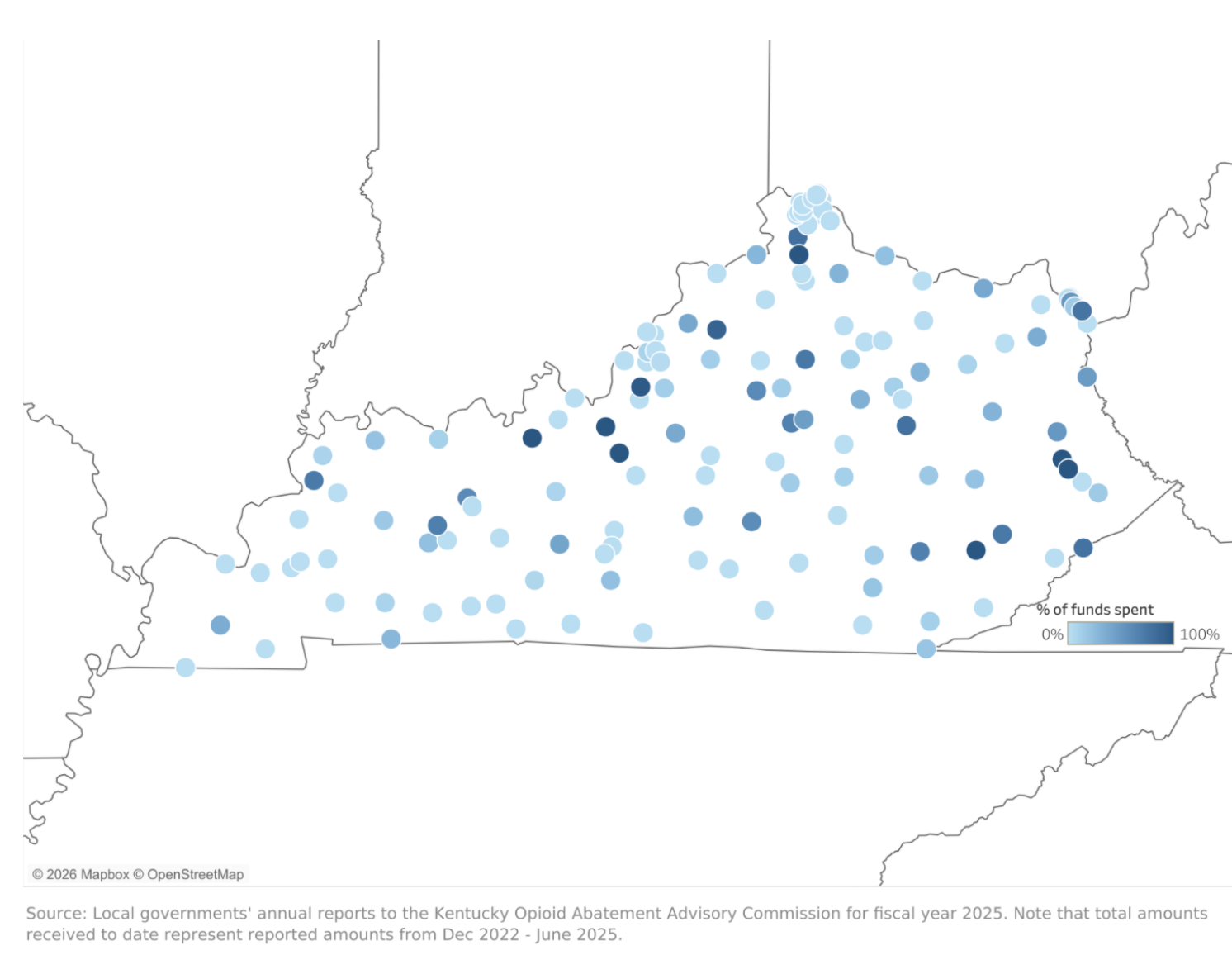
According to the analysis released earlier this week by the Kentucky Center for Economic Policy (KyPolicy), local governments received $122.4 million through June 30, 2025, but only around 10% of that money has been spent, in the aggregate.
Additionally, half of counties and cities reported zero expenditures for fiscal year 2025. That's according to Ashley Spalding, senior fellow at KyPolicy, who spoke with reporters during a media briefing on Tuesday.
Kentucky is expected to receive more than $1 billion by 2038 from national opioid settlements being paid by companies that were found complicit in creating and sustaining the opioid epidemic. The money is intended to help communities combat addiction, overdose deaths, encourage recovery, prevention and harm reduction.
“This is blood money that came from thousands of lives lost across Kentucky, many people that I knew,” Jennifer Twyman, a drug policy organizer with Vocal Kentucky, said during the briefing.
For its report, analysts at KyPolicy reviewed 1,700 pages of financial reports obtained through open records requests to review how counties and cities are using the opioid settlement money. It is the first comprehensive review of local opioid settlement spending in Kentucky since payments began in December 2022, according to the nonprofit.
The report found that 70 counties reported spending a combined $12.2 million during fiscal year 2025. KyPolicy said that around $7 million went toward evidence-based approaches to preventing overdose deaths and addressing harms caused by the opioid crisis.
However, the group also claims that much of the fund was spent on practices and prevention programs KyPolicy considered wasteful.
“At least $1.7 million was spent on ineffective, unproven, and/or harmful responses to drug use, addiction, and overdose prevention, such as punitive criminal legal system responses to drugs, treatment without an evidence base, and ineffective prevention programs,” said Spalding. “Moving forward, Kentucky’s local governments must be proactive in investing their opioid settlement funds rather than holding on to them and must ensure the monies are spent on programs and strategies that will save lives.”
The report includes spending information for every county and city government receiving opioid settlement funds, including Madison County and the city of Berea.
Currently, Berea does not have a plan formed on how City Council will use the money, according to Shawn Sandlin, Berea city administrator.
“We would look to use these funds to make a generational change. No programs have been identified or discussed at this time,” Sandlin told The Edge in an email. “We will utilize experts in this area to help guide our decisions.”
Madison County was among half of the local governments that reported spending none of its opioid settlement funds during fiscal year 2025. The County reportedly has committed its opioid settlement funding to a treatment facility and that the County's Opioid Task Force is finalizing the plans, but the County has not as yet been required to make a payment, according to KyPolicy. A request for comment from County officials was not returned by press time.
KyPolicy worked with other organizations to create a model ordinance local governments can use to make opioid advisory councils. In this model, the advisory councils would help local governments decide how opioid settlement money is spent. The councils would include people in recovery, family members, people who work in harm reduction and addiction services, and others who have been impacted by the opioid crisis.
“This is a once in a generation opportunity for us to repair harm caused by the overdose crisis and invest in solutions that save lives,” said Twyman. “We need a clear public application process with people directly impacted with voting power in that process.”
There is also a roadmap that includes suggestions for how local governments can spend the money on programs such as housing, harm reduction, overdose prevention, support, and recovery services. It also includes information about programs that advocates believe should be avoided, such as using the money to continue funding the war on drugs.
“This money should go directly to those communities to heal, to stop the cycles of trauma, to stop the cycles of incarceration and…above everything else, to keep people alive,” Amanda Hall, senior director of national campaigns at Dream.org and an Eastern Kentucky native, said during the briefing. She added that the crisis contributed to incarceration, family separation, trauma, and children being raised by grandparents after losing parents to addiction or overdose deaths.
Hall said involving those people could help make sure the money is spent on programs that directly help people and save lives.
“We want to be a voice. We want to help you decide where this money should go … We will literally help you set up these advisory boards,” said Hall. “Right now, more than ever, this money needs to get to the people that need it the most.”
7/1/26: This story has been updated to reflect that KyPolicy reviewed 1,700 and not 17,000 pages of data.
Sign up for The Edge, our free email newsletter.
Get the latest stories right in your inbox.