Ed. note: We had a complaint about not using standard scientific style in writing about birds. It comes down to the difference between scientific journal style vs. newspaper style. Capitalizing the species is the scientific style, while down styling as many words as possible is the news world's story. It's not just with birds, it's with all kinds of words normally capitalized in other house styles such as the MLA (Modern Language Association) or Chicago Style. The ethos in news is to not draw attention to one word more than another, whenever possible. So, don't be upset! We love birds just like you! ~Whitney McKnight
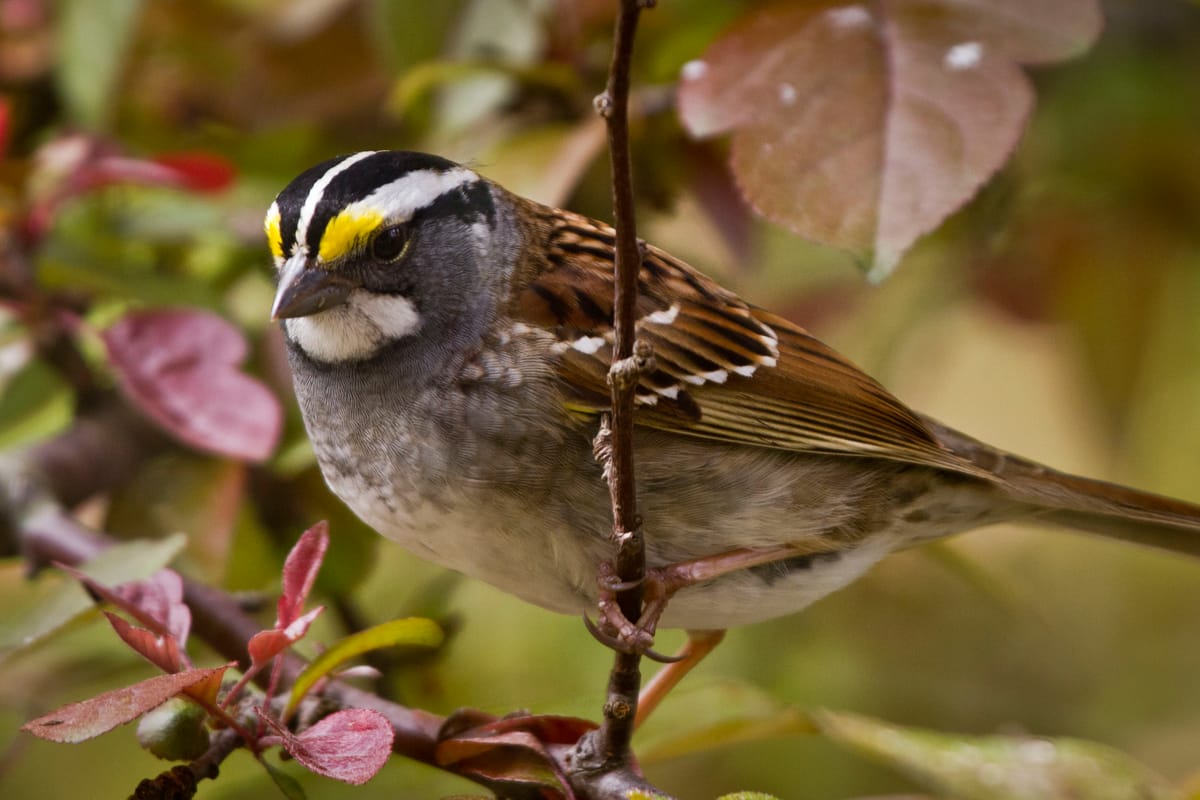
If you think all sparrows are the same and boring, you may want to take a closer look. White-throated sparrows have striking and colorful heads, sporting yellow patches above their eyes.
They also have either white or tan stripes on their heads, and the white striped birds typically seek out tan-striped mates and vice versa. Even more intriguing, white-throated sparrows have been known to mate with dark-eyed juncos, producing hybrid gray, muted patterned sparrows.
White-throated sparrows are common winter birds here in Berea, often foraging for seeds on the ground under birdfeeders. As spring approaches, you’ll likely see them in low bushes nibbling on fresh buds. And you’ll undoubtedly hear their thin whistling song, “Oh-sweet-Canada-Canada,” which may be an homage to the land where most white-throated sparrows breed.
Sign up for The Edge, our free email newsletter.
Get the latest stories right in your inbox.