Local police defend Flock cams as new state law regulating their use is set to take effect
'These cameras make us better at our job'
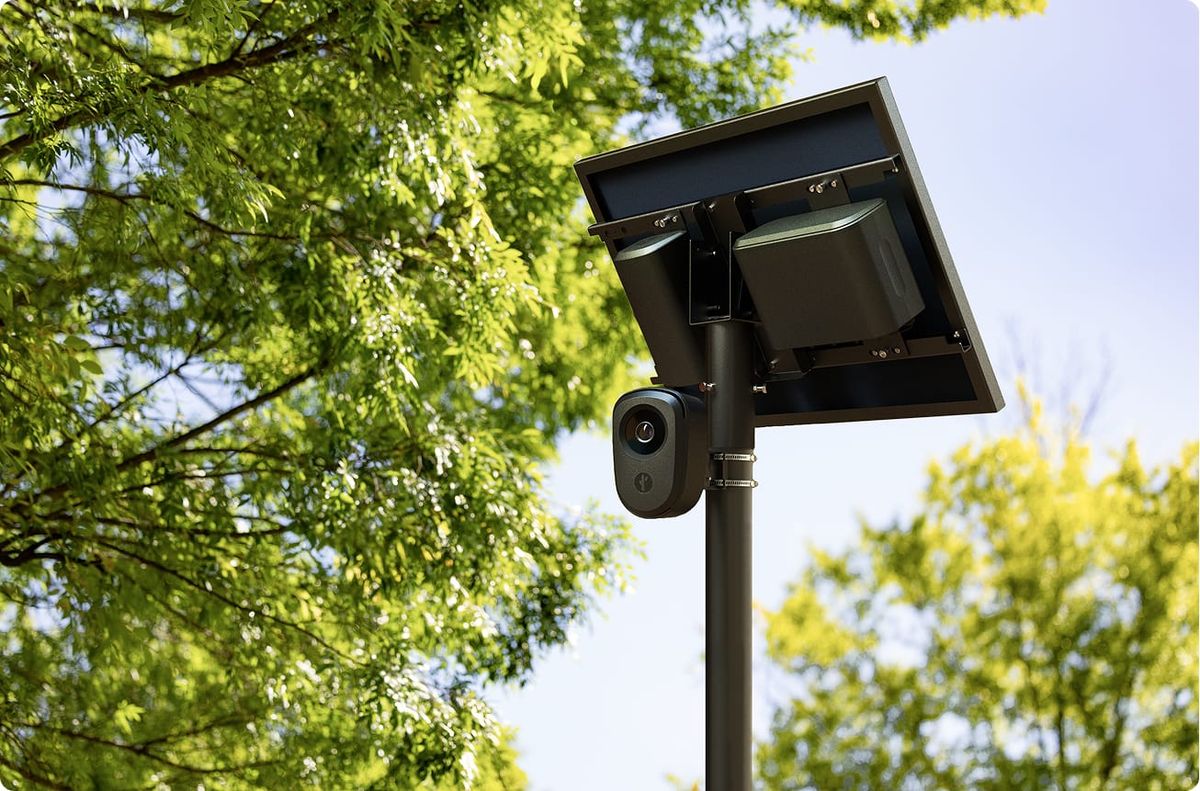
BEREA—The successes are many. By using Flock cameras, police in Berea have upped the number of stolen vehicles they've been able to recover, as well as the number of weapons seized and warrants served. In the case of a Michigan Amber alert, with the help of these AI-powered cameras, local cops even located a missing child who'd been abducted by a family member.
In the first quarter of this year alone, the Berea Police Department has leveraged data collected by these cameras to help press charges against seven persons they might not otherwise have been able to apprehend, according to data provided to The Edge by the Department.
And while the Federal Bureau of Investigation won't confirm it, and local law officers can't comment on it because it's a federal case, multiple unauthorized sources say Brailen Weaver, the suspect in the US Bank killings in Berea in April, was one of those apprehended thanks in part to images of his silver BMW collected by Berea's Flock cameras.
The use of this surveillance technology, manufactured by Flock Group, Inc., headquartered in Atlanta, Ga., is a tool for better policing according to Berea's two top law officers, Berea Chief of Police Jason Hays and Assistant Chief of Police Aaron Boycan.
"I believe these cameras hands down make us better at our job," Boycan said during a sit-down interview with The Edge. Hays was also at the interview.
But while these cameras, which, combined with AI technology, make them into automated license plate readers—known in the industry as ALPRs, and sometimes just LPRs—have helped boost crime fighting for local law enforcement agencies nationwide, there are those who insist these improved statistics come at the cost of our civil liberties, and that cities and other municipal entities should stop using them immediately.
A new state law set to take effect July 15 doesn't go so far as to prohibit ALPR use, but it does standardize how they are used by law enforcement across the Commonwealth.
AI-assisted policing
Flock Safety was founded in 2017. A company media statement claims that the use of its technologies contributes to the solving of more than 2,000 crimes per day—10% of all crimes nationally—across more than 5,000 US cities.
Flock Safety cameras at their most basic read the license plates of every car that passes by wherever the cameras are situated. The cameras also capture a vehicle's make, color, along with the time and date the vehicle passed by that location. In Berea, there are 10 ALPRs posted at various points around town.
Using artificial intelligence, the data collected by Flock cameras is continually compared to the Federal Bureau of Investigation's criminal database. If there is a match on a license plate associated with a crime, the system issues a real-time alert to local law officers that includes a still shot of the car with the implicated license plate.
"That normally happens within about 15 seconds. Then that is sent to officers to the computers in their car," Boycan told The Edge in the interview.
Rather than immediately tear off in pursuit of the car with that license plate, the BPD's policy is for the officer is to double check the data first. "The LPR has a degree of accuracy that it operates within. It's not always going to be right on what it interpreted the license plate to be, so it's on the officer to independently verify the information before making a vehicle stop on that car," Boycan said.
Another use for the data collected, according to the company, is to help law enforcement find actionable leads by determining which vehicle or vehicles were at the scene of a crime.
"You can actually search what images the LPR has captured," Boycan said. "So, if I've got a theft investigation and someone got a partial license plate, I can enter that in the database, along with information about the location, the time and the date range, and it's going to generate a narrow enough set of information that an officer can use to further their investigation."
Flock Safety also offers more souped-up versions of their surveillance tools, including a pan-tilt-zoom camera that takes live video feeds of pedestrians as well as vehicles, and highly sensitive microphones for detecting gun shots. The company also manufactures "drones as first responders", cameras that are flown to the geo-coordinates of incoming 911 calls, "so officers and dispatchers see what is happening and respond with confidence," according to Flock's website.
Across county jurisdictions
The City purchased the ALPRs in August of 2023, and the first cameras went up in Berea in April 2024. The cost per camera is $3,000 annually, so with 10 cameras, the per year cost to the City of Berea is $30,000.
Hays made a public announcement about the ALPRs at a City Council meeting on May 7, 2024. "I'd like to give a kind of what [Flock] does and doesn't do to the citizens of Berea so they know what to expect," Hays told Council at the time.
The ALPRs, he said, were intended to help officers detect stolen vehicles, stolen license plates, wanted persons, Amber alerts, missing persons, and to enforce protection orders. He also described how the cameras could be used to track the route of a suspect through town, and if necessary, alert surrounding jurisdictions that the suspect is en route.
Hays also told Council the ALPRs are not live video feeds, and emphasized that all data collected is destroyed every 30 days unless specific data are being used as evidence in a trial. The data, he said, is never sold to any third party. Hays also reassured citizens that Flock images are not being used for traffic violations. "It takes an officer to issue a ticket," he said.
Richmond City also has Flock cameras, although multiple attempts to learn the number of ALPRs installed by the Richmond Police Department were unsuccessful. Reports from 2023 were that Richmond had installed four cameras at major ingresses and egresses. Presumably, given that Richmond is twice the size of Berea, there are now more than four ALPRs installed within the Richmond City limits.
Chief Deputy Madison County Sheriff Tony Terry told The Edge in an interview that the County does not use ALPRs, but that he supports their use for solving crimes. "They're a good tool. They can be advantageous, but it's important to educate people so they know they're not being monitored," Terry said. "I don't think they're intrusive in people's lives. It's only affecting criminal behavior."
Terry said the Sheriff's Office had considered purchasing Flock ALPRs for the Madison County School District, but stood down due to the recent decision to create a police force within the District.
In Berea, Boycan said, "We went with 10 because it covers most major points of ingress to Berea city limits. We focused on inbound traffic so that the alerts we received would have a chance to be acted on. We also have cameras at our busiest intersection, Chestnut-Prince Royal-McKinney [the intersection in front of Walmart]."
Stalking v. best practices
Although Hays also told Council that officers are trained on how to use the ALPRs properly, across the US, there have been multiple instances of law enforcement abusing the surveillance tool to spy and stalk persons not part of any investigation.
In May, a Coffee County, Ga., sheriff's deputy was arrested and charged with using ALPR data to stalk a woman, among other claims of misconduct lodged against him by the Georgia Bureau of Investigation after a two-year investigation into his behavior.
 Sidney Bryant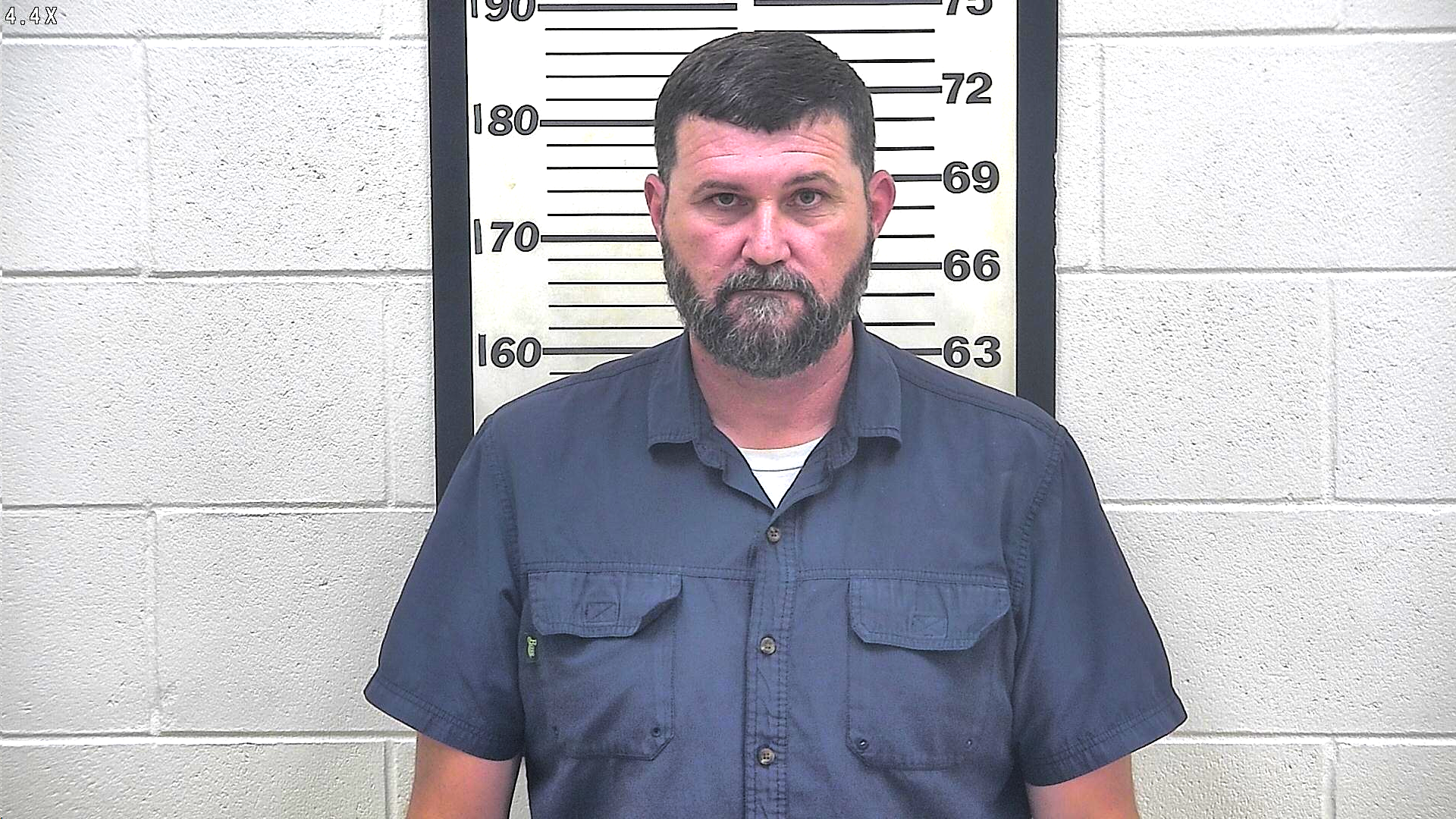
Earlier this year, the Institute for Justice, an Arlington, Va.-based public interest law firm, reported on 18 separate instances of law enforcement officers abusing their access to ALPR data. The IJ noted that these cases are just the ones that are discovered through internal audits or investigations, implying such incidents are more common than reported.
"[O]nly a few of the 18 analyzed cases were initially discovered through internal investigations, according to media reports," the IJ report reads. "Most incidents came to light only after victims reported the officers’ behavior to the police, typically in the context of a broader stalking allegation."
When asked in the interview with Hays and Boycan what prevents BPD officers from abusing the ALPR data, Boycan said that strict policies have been put in place to curb misuse. "Officers can't just go in there and search for whatever they feel like. It has to be connected to some kind of law enforcement investigation. We conduct audits to make sure all their searches are in compliance with our entire policy," he said.
Boycan also said the Department's policy is based on the ALPR template policy from the Kentucky League of Cities.
According to the KLC template, audits are to be conducted monthly and should "randomly select at least 10 detection browsing inquiries conducted by agency employees during the preceding period and determine if each inquiry meets the requirements established in this policy." Boycan said that to date, there has not been any detection of misuse of the data by BPD personnel.
The KLC policy adheres to municipal government's best practices for ALPR use. The new state law will make these same protocols mandatory across all Commonwealth jurisdictions, although the statute of limitations on data collection retention will be 90, not 30, days.
The new law also stipulates that public agencies using ALPRs must make their policy publicly available, "including the list of databases used to generate alerts, rules for retention and destruction of data, training protocol, supervisory oversight, rules for access to and security of data, and an audit schedule and process," according to a summation of the law. Plenty of private entities such as home owner associations and retail stores also use ALPRs, and will not be subject to the new state law.
Fourth Amendment takes hit
Even when law enforcement adheres to best practices, criticisms of ALPRs abound, centered on the argument that their use is an abridgment of the Fourth Amendment's protection against unreasonable search and seizure.
Earlier this year, In San Jose, Calif., a group of residents filed a class action law suit against that city, claiming its use of ALPRs is akin to search and seizure without a warrant.
Daniel Woislaw, an IJ lawyer representing the plaintiffs in the case, told San Francisco's KQED, "San Jose is operating nearly 500 license plate reader cameras connected with AI technology around the city to essentially spy on everyday people going about their business. This kind of intrusive technology that collects basically a dossier on people on a rolling basis is a search, and therefore has to have some constitutional guardrails around it.” The suit demands San Jose keep ALPR data for no more than 24 hours.
Meanwhile, the Boulder, Colo.-based deflock.me is a nonprofit organization dedicated to ending LPR use nationally. It is the sponsor of an upcoming national week of action this August against LPR use in cities, and is behind dozens of successful grass roots campaigns to end LPR use in cities nationally, including in Flagstaff, Ariz., Cambridge, Mass., Eugene, Ore., and Santa Cruz, Calif, among many others.
Another anti-LPR site, haveibeenflocked.com, partners with anti-surveillance organizations such as deflock.me, eyesonflock, and the ACLU to provide transparency around who is using this technology against whom and how often.
Boycan and Hays both objected to the characterization that LPRs are "spy" tools, saying, "That [is] maybe a little bit broad, and especially where I think there is a big difference, too, is with live video that is being monitored versus a still picture of a car passing by. Unless we had a reason to draw us to it and look it up, we're never even going to know that it happened."
Abortions and ICE
Boycan claimed that with the ALPR use policy in place, his department is sensitized to the power the data places in their hands and so are trained to use it correctly. "At the end of the day, yes, it gathers a lot of information. I want it to be used appropriately and towards a public safety goal, not just however we see fit," he said.
Nationally, this approach is not always taken with ALPR data. Because local jurisdictions are able to share their Flock ALPR data with other Flock subscribers, a sheriff in Johnson County, Texas was able to search more than 83,000 license plates across 6,809 different Flock systems nationally last year, in pursuit of a woman he believed had self-administered an abortion. Documents show his search included states where abortion remains legal, such as Washington and Illinois. In Texas, it is legal for an individual for self-manage her own abortion.
To look up a license plate, Flock requires a a reason be entered into a search field. The online outlet, 404 Media, reported the sheriff had used "had an abortion" and "non-viable fetus" as some of his search criteria across multiple databases.
The sheriff claimed his search was about protecting the woman's welfare, but evidence contravened this story, indicating he'd consulted with the county's district attorney over whether he could statutorily charge the woman with homicide. Flock Safety, meanwhile, claimed accounts in the media of the APLR search by the sheriff, Adam King, were "purposefully misleading reporting."
The case spurred several state actions against the use of APLR data to track reproductive-related care, including in Illinois, California, and Oregon. At the federal level, the Congressional Committee on Oversight and Government reform launched an investigation into how law enforcement agencies are using Flock data to enforce abortion and immigration law.
“Flock Group Inc. cannot claim to protect public safety while enabling surveillance that undermines reproductive freedom and civil rights,” Raja Krishnamoorthi (D, Ill.), the Ranking Member of the Subcommittee on Health Care and Financial Services, said in a statement.
ALPR data has also been used by police departments that have done searches on behalf of ICE, as indicated by this FOIA request of Danville, Ill., which indicates more than 4,000 national and statewide lookups in Flock databases have been conducted by local and state police, done either at the behest of the federal government or as an "informal" favor to federal law enforcement, or with a potential "immigration focus," according to 404 Media.
Boycan said the BPD has customized its use of Flock's ALPR to exclude features that allow users to track reproductive care-related activity or immigration law violations. "That's not stuff we have time to fool with. That's not what we're going to focus on," he said.
In a subsequent interview for clarification, Boycan said that the BPD will share its Flock camera data with federal agencies only if there is an active investigation. "So, for example, if there were a child sex trafficking investigation, we might share an image, but we would not share our log-in information," Boycan said.
The Richmond PD did not offer any comment on how it uses its ALPRs or with whom it shares its Flock data.
Future surveillance
Flock Safety cameras are not the only vehicle surveillance companies marketing their services to local police departments, and ALPRs are not the end all of surveillance technology. Last year, the Flock announced it had raised $275 million in its quest to "innovate" in its mission "to help eliminate crime."
To that end, Flock says it is building a 100,000 square foot manufacturing facility in Georgia where it will prioritize: helping investigators analyze multiple data sources more effectively and "breaking down information silos" by enabling no-cost data integrations with other safety technology providers.
A company called Leonardo is slightly ahead of Flock in these two areas. Leonardo recently launched SignalTrace (TM) as a "a groundbreaking software system for law enforcement, designed to identify suspect people or vehicles, even when a license plate number is not known." How does it do this? By using AI to collect all digital device signals associated with the vehicle's driver.
As Leonardo's website explains, "while 70 cars in 100 may contain iPhones, only one will have an iPhone 13rev2, an Audi radio, a pair of Bose headphones, a Garmin sports watch, a key finder, and the license plate ABC-1234. The collection of data represented by these specific things is an electronic signature."
When asked whether the BPD leadership would feel it incumbent upon them to keep up with surveillance technology as it evolves, Boycan said, "Everything is evaluated on a case by case basis. What is the problem we are trying to solve? How much does it cost? How does it work? I think you have to be responsible, you have to determine if it's a good fit for your agency."
Or if you're not a subscriber...
Sign up for The Edge, our free email newsletter.
Get the latest stories right in your inbox.