
Why home ownership is getting harder in the Bluegrass region
Existing-home sales are up both nationally and regionally, but local home buyers face a unique combination of obstacles to getting deals done
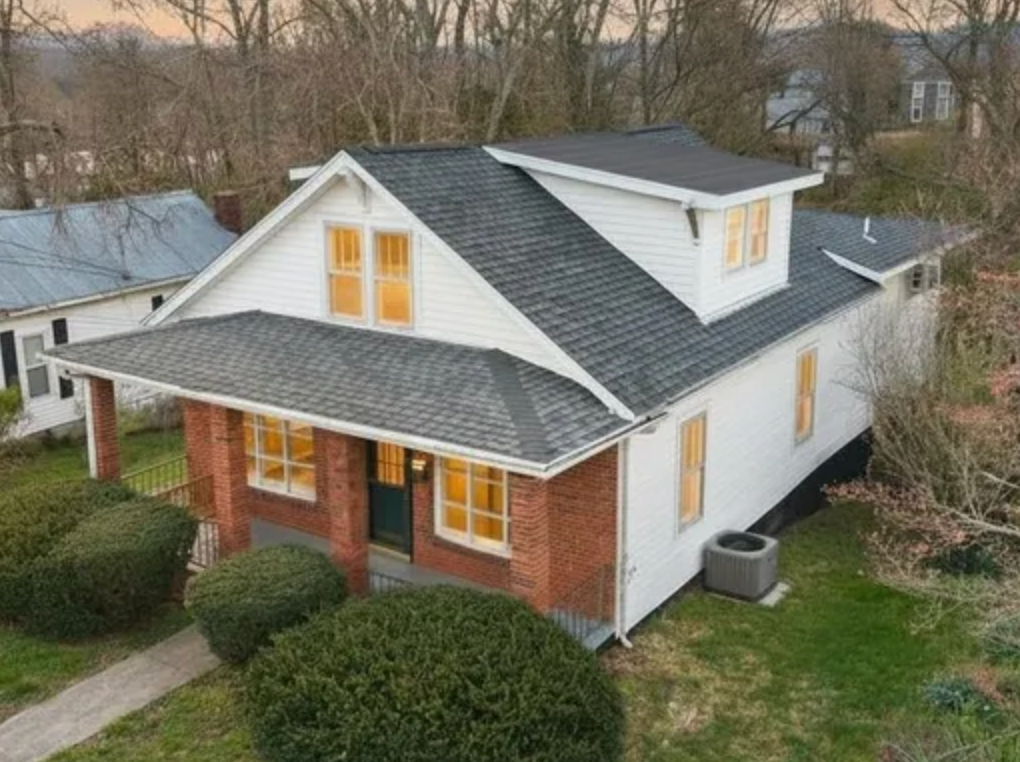
BEREA—A wave of wealthy Californians and others sniffing out real estate deals in the heartland, an increase in natural disasters across the Commonwealth, and the knock-on effects upon insurance rates and property values is disrupting the housing market across Central Kentucky, according to experts.
"I don't know what local first-time buyers are going to do. I can't wrap my head around how they can afford it," Devin Todd Azbill, a Berea-based realtor with Berkshire-Hathaway, told The Edge in an interview. "It scares me for my children. I don't know how they will ever afford to live here."
Home prices in Berea have risen by more than half since January 2019, according to data collected by Azbill and reviewed by The Edge. "We've gone from an average home price of about $146,000 to $265,000," she said. "In Richmond, a house built in the 90s is going for $50,000 more than that."
Covid-era frenzy
Outsized home prices in the region have their roots in 2020 when covid-era policies chased many of those who could afford it out of metropolitan areas. Out-of-state buyers began scooping up homes in more rural states, according to Azbill, who said these buyers also were able to pay cash, and would far outbid local buyers, sometimes by tens of thousands of dollars.
This helped push Kentucky's baseline home price higher. The average home price in the state in 2019 was $176,000, according to the Kentucky Association of Realtors. The current median existing-home sale price in Kentucky is $279,900. Compare this with the current median existing-home price in California, which is $911,400, according to the California Association of Realtors. Across the entire West, the National Association of Realtors reported this week that the median existing-home price is $625,900, down 0.7% from 2025.
"The interest rates were so low, and people who wanted to leave places like California could cash out their equity," Azbill said, adding, "Our cost of living and taxes are cheaper than the metro areas people are fleeing, which is the huge determining factor of them coming out this way."
Azbill said sight-unseen home purchases by out-of-state buyers became so common during covid, the MLS, a real estate listing service, created a special form to indemnify realtors against any fall-out from the buyers who were waiving their right to an inspection and purchasing homes without visiting them in person.
'Cheap' lake houses
US Census data show that 5,985 Californians moved here in 2022. The most recent US Census from 2024 Community Survey data found that Kentucky had a net gain of 5,937 Californians, second only to a net gain of 6,362 new residents from Tennessee. Net gains are the differences between the number of Kentuckians that moved to California and to Tennessee and vice versa.
The Census indicates that the age of those moving into the state is evenly split between working professionals and retirees, among other demographic groups, about 12% each.
But the wealthier buyers coming from out-of-state are driving up home prices on existing-home and new construction alike for locals, according to realtor John Fitzwater.
"I have several clients from North Carolina who want to leave Asheville because it's gotten expensive," Fitzwater, a realtor with Weichert Ford Brothers in Somerset, said in an interview. "They're coming to Lake Cumberland. They want to have a lake house, but they want it to be cheap. Or, they're coming from metro areas and just can't believe that they're buying a 5,000 square foot home on a lake for under a million dollars."
The out-of-state buyer's capacity to pay cash, and a lot more of it, means locals are being edged out of the market place, according to Fitwatzer, who said about 20% of his clientele are Californians.
Course correction
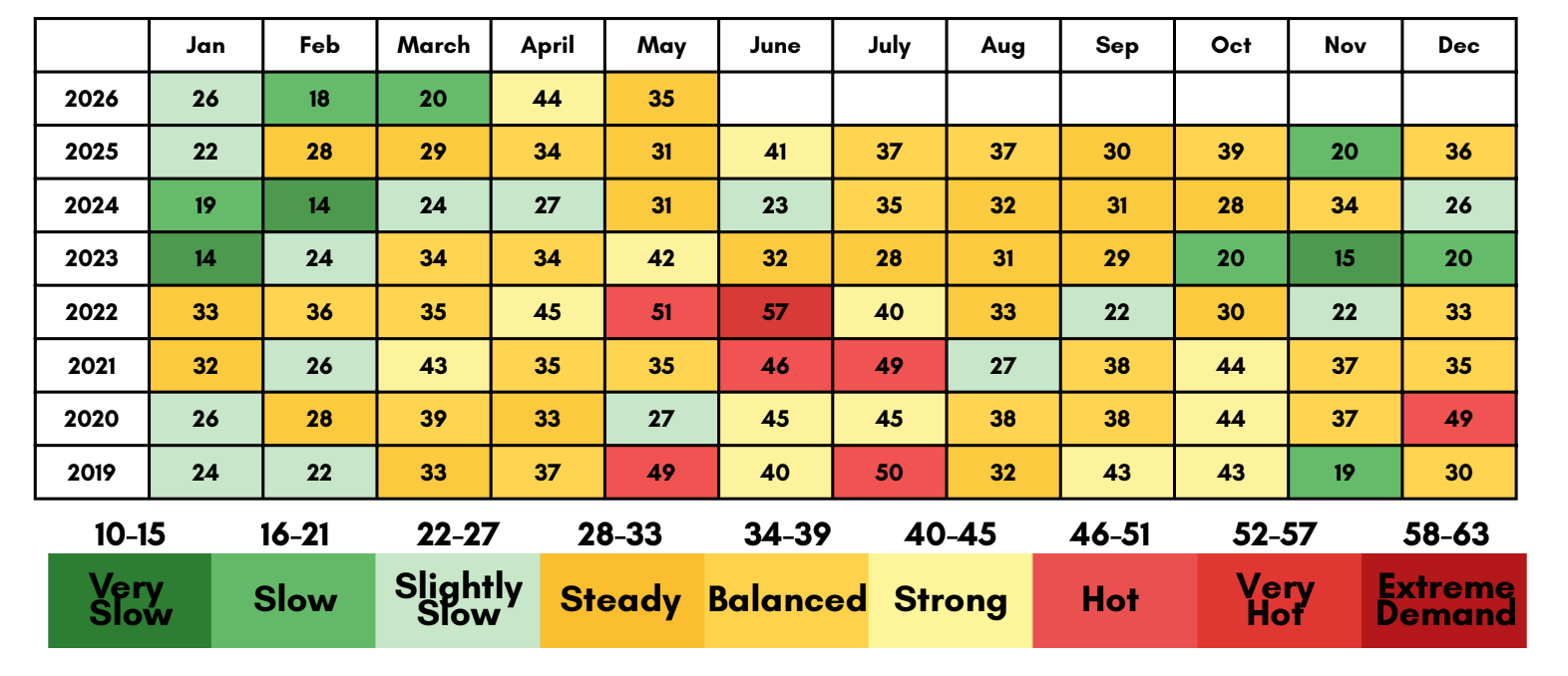
Azbill said she is seeing the market stabilize now that the covid madness has passed, and that there are less sight unseen purchases, but her list of buyers still includes a steady stream of Californians. "I've had calls from three this week," she said. "The secret about Berea is out. People from California seem to want what we have here. They want someplace that feels safe, stable. They also like how many trees we have."
Bob Sophiea, whose Lexington-area real estate brokerage firm, New Home Collective, sells properties across the Commonwealth, thinks the region's real estate market is turning toward buyers for the first time since 2020, and that out-of-state buyers help fill a need in the market that locals can't always cover.
"If you're competing against a person from California, then it's not a blessing," he said. "But if you're trying to sell your home and no one else is buying, then a person from California is a blessing. I sold a farm that had been on the market for over a year, to a family from California. Three generations of a family moved in together. So, there are opportunities."
Azbill and Sophiea both believe that the market will continue to even out as sellers adjust to post-pandemic realities. "We're settling into a balanced market which is something we've not had in quite some time. We have more inventory than we do buyers, which is why we're seeing longer days on the market and smaller sold-to-list-price ratios. Sellers seem to think we're still in the covid times and are still overpricing," Azbill said.
Sophiea agrees. "If a house doesn't sell, usually it's overpriced. Or there is something wrong with it, or it's not being marketed properly," he said.
According to Azbill, in a third of all year-to-date home sales (54/150) in the Bluegrass MLS, the seller paid all or some of the buyer's closing costs. Additionally, buyers are now paying slightly less than asking price (95%) for homes that are on the market for a median 71 days.
National trends also suggest buyers are in the ascendent. NAR released its annual existing-home sales report earlier this week. It showed a year-over-year 3.2% increase in existing-home sales nationally, with a month-over-month rate the same at 3.2%. Meanwhile, the national month-over-month unsold inventory was also up, at 3.3%, creating a 4.5 month supply of homes, down slightly from a year ago at 4.6 month's worth of inventory. The healthiest markets, according to NAR, have a 6.0 month supply of homes.
The median existing-home price nationally was $429,300, reflecting a 1.3% increase from one year ago ($423,700), which NAR reported was the 35th consecutive month of year-over-year price increases. NAR reported the median existing-home price in the South, which includes Kentucky, is up 1.1% to $373,100 since May 2025.

The coming storm
But even as interest rates are lower now than a year ago (6.44% v. 6.82%), and buyers have more negotiating power, there are those who worry about a rising threat.
"What myself and other mortgage lenders are worried about is the high cost of home insurance premiums. We don't think it's talked about enough," Katelyn Watkins, president of the Mortgage Bankers Association of the Bluegrass, and a local loan officer with the Ft. Mitchell, Ky.-based, CrossCountry Mortgage, LLC, said in an interview.
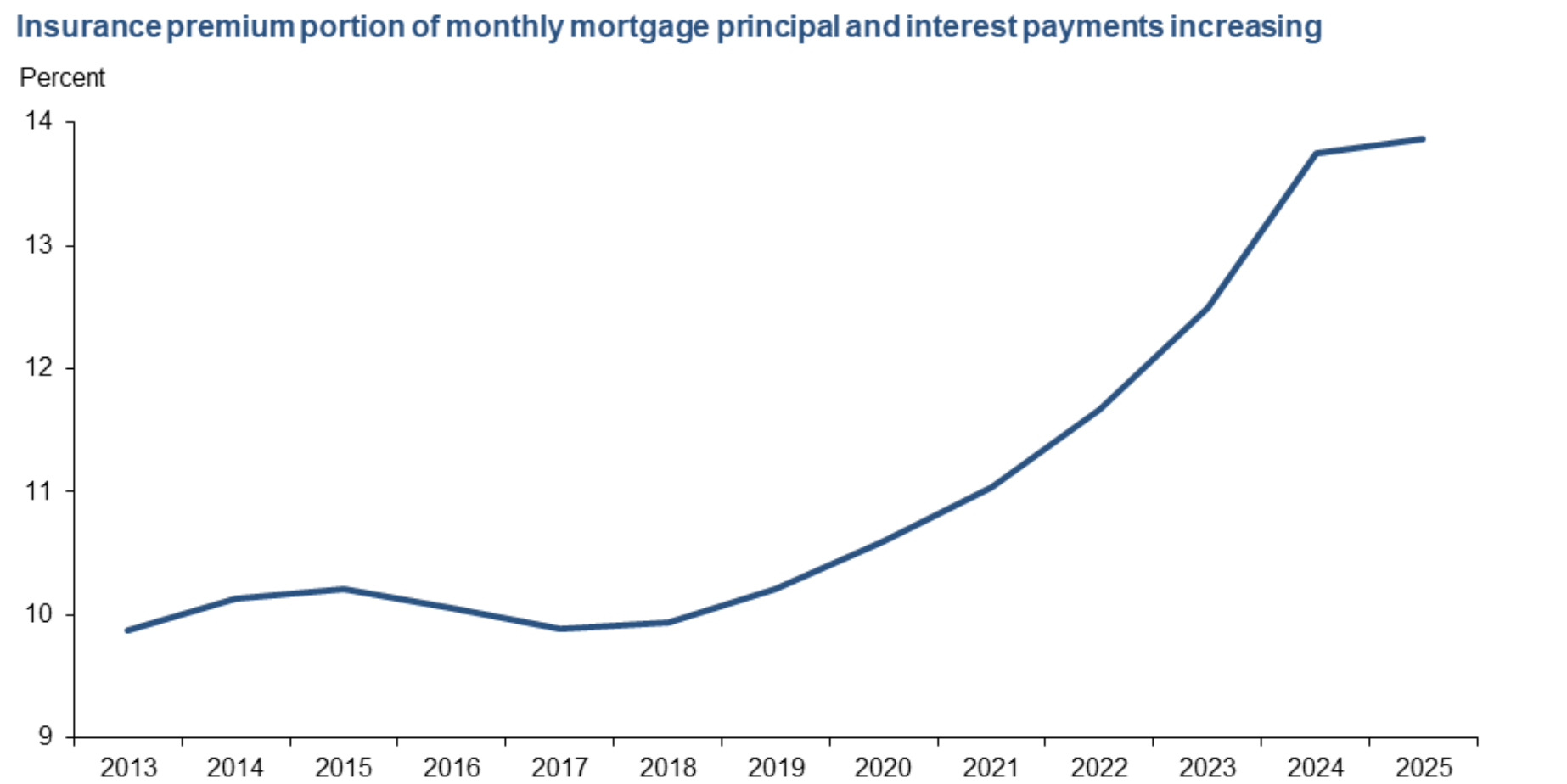
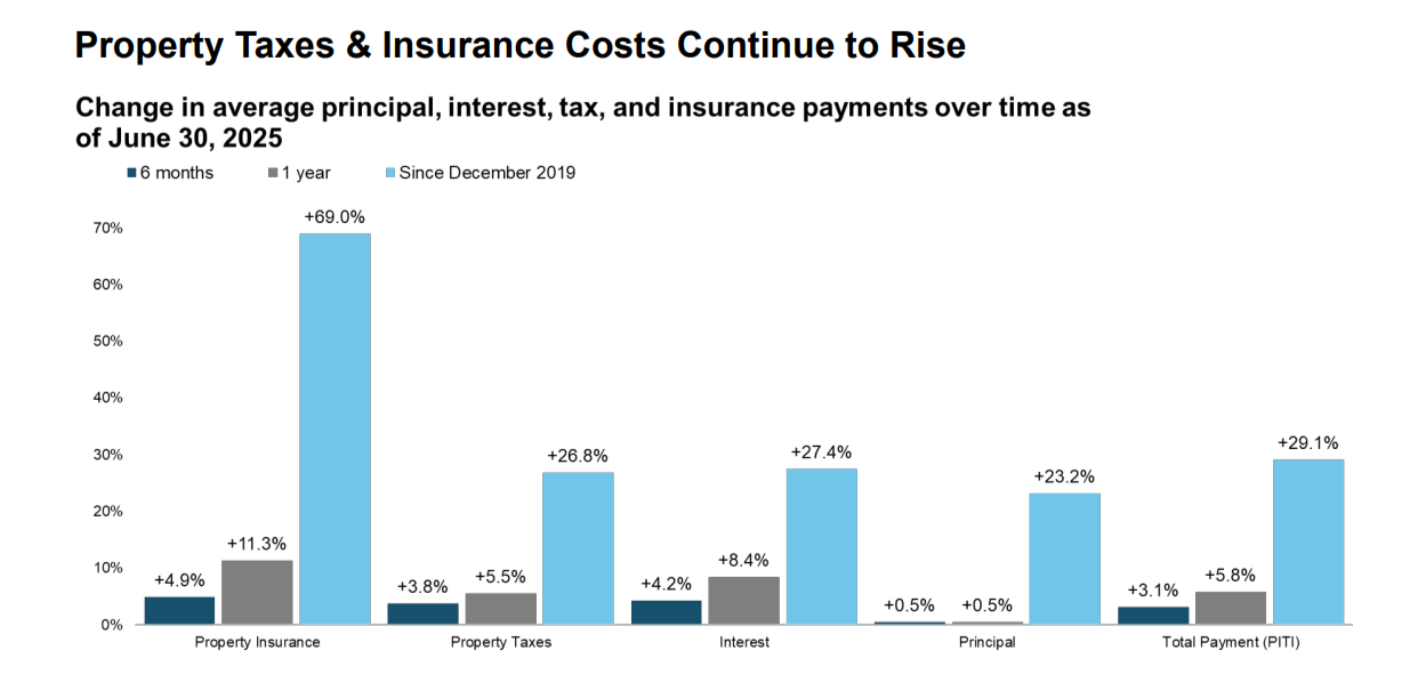
A study released by the Dallas Federal Reserve Bank earlier this year found that between 2019 and 2025, the median home insurance premium rose by 70%. For the average homeowner, the insurance premium went from being 10% of the total monthly mortgage note in 2013, to 14% in 2025.
"It was very common for home owner's insurance in the Lexington area to be about $1,000 to $1,200 annually," Michael Vires, an independent insurance agent with the Energy Insurance Agency in Lexington, told The Edge in an interview. "Now it's probably closer to $1,500 to $1,800 a year."
Vires said that in Kentucky, insurance premiums already tend to be higher than in neighboring states, thanks to local jurisdictions taxing insurance premiums, but that the state's recent spate of storms featuring destructive wind and water has forced underwriters to raise premiums on top of that.
"It's all the natural disasters we've been having over the past five years. That is the biggest contributor to the rising rates," Vires said. "Knock on wood, we've not had any crazy events lately, and if that keeps up, then I think the rates will trend more positively."
In addition, last year, a Kentucky Supreme Court decision stated that even a partial collapse of a roof can be viewed as a total collapse that an insurer must cover, a ruling that has prompted underwriters to restructure policies in their favor. Now, they are less likely to fully insure structures with a roof that is more than seven years old, and have created payment schedules where home owners pay their deductible and a portion of the roof's replacement, according to the age of the roof.
"It's because of the roof that deals fall apart the most," Vires said. "If it's an older home with an older roof, that can kill a deal because the insurance is either hard to find or it's gotten super expensive."
When premiums rise sharply, the Dallas Federal Reserve study found that a $1,000 increase in insurance premium rates corresponds to a %0.54 increase in relocation probability, saving the movers $14,274 over 30 years, if at a 6% discount rate.
Nick Ratliff, a realtor with REAL in Lexington, worries that for this cohort of home owners, relocating will still hurt their finances. "They will lose equity in the home they had to sell," he said. "This is only going to get worse. The next ten years will really see it become an issue. Insurance will be what bites us."
To that end, the study's authors found that for those unable to relocate or find lower rates, higher premiums increase the likelihood of mortgage payment delinquencies, and cited 31,000 insurance premium-related mortgage defaults in 2022. They predicted an additional 203,000 mortgages will fall into arrears between 2025 and 2055, driven by a 29.4% rise in home insurance premiums over that period.
For first-time home buyers whose finances are more constrained, the rising cost of premiums could mean they are shut out of the market altogether. "I see the cost of home owners insurance make home purchase deals fall apart all the time," Vires said.
One-two punch
"No one is really talking about insurance premiums, but property tax reassessments are also adversely impacting seniors," Ratliff said.
"Someone comes into a neighborhood where the people are older and have paid down their mortgage. That person pays a lot for the home, so now let's triple Granny's property tax on unrealized gains, and mess up her fixed income lifestyle," Ratliff said.
Watkins, the loan officer, said that over the past three years in Kentucky, she has seen this one-two punch as a trend that is forcing some home owners to either restructure loans or relocate because higher insurance premiums combined with rising property valuations is forcing them out of their homes. "It's gotten very common," she said.
Current property taxes across Madison County vary, but they have trended downward. The County's current property tax is $65 per every $100,000 of assessed value, down from $96 per every $100,000. In Richmond, the property tax is a steady $121 per every $100,000, and in Berea it's $89 per every $100,000 of assessed value. Lexington has gone up steadily over the years and is now $124 per every $100,000. Add to that the state property tax of $109 per every $100,00 of assessed value, plus the various local school district taxes, and any other special taxing districts.
Watkins agreed with Ratliff that the demographic most at risk when property taxes based on increased valuations go up are seniors and anyone else on a fixed income. "They are told their mortgage is at a set amount, that it won't increase, and it's cheaper than renting, but that is not entirely true. We're seeing their property taxes go up as their homes are suddenly worth more because of what's happening in the market, and it's just pricing these people out," she said. "They either have to find a way to make ends meet, or they sell and go back to renting."
But the rental market is also changing, said Azbill. "A lot of the people from California who buy something for retirement, but don't want to move here yet, are renting the homes out, usually to other people from out-of-state. In the past $850 would have been the top of the market, but now single family homes are starting at $1,700," she said. "Locals don't have that kind of money."
Inventory squeeze
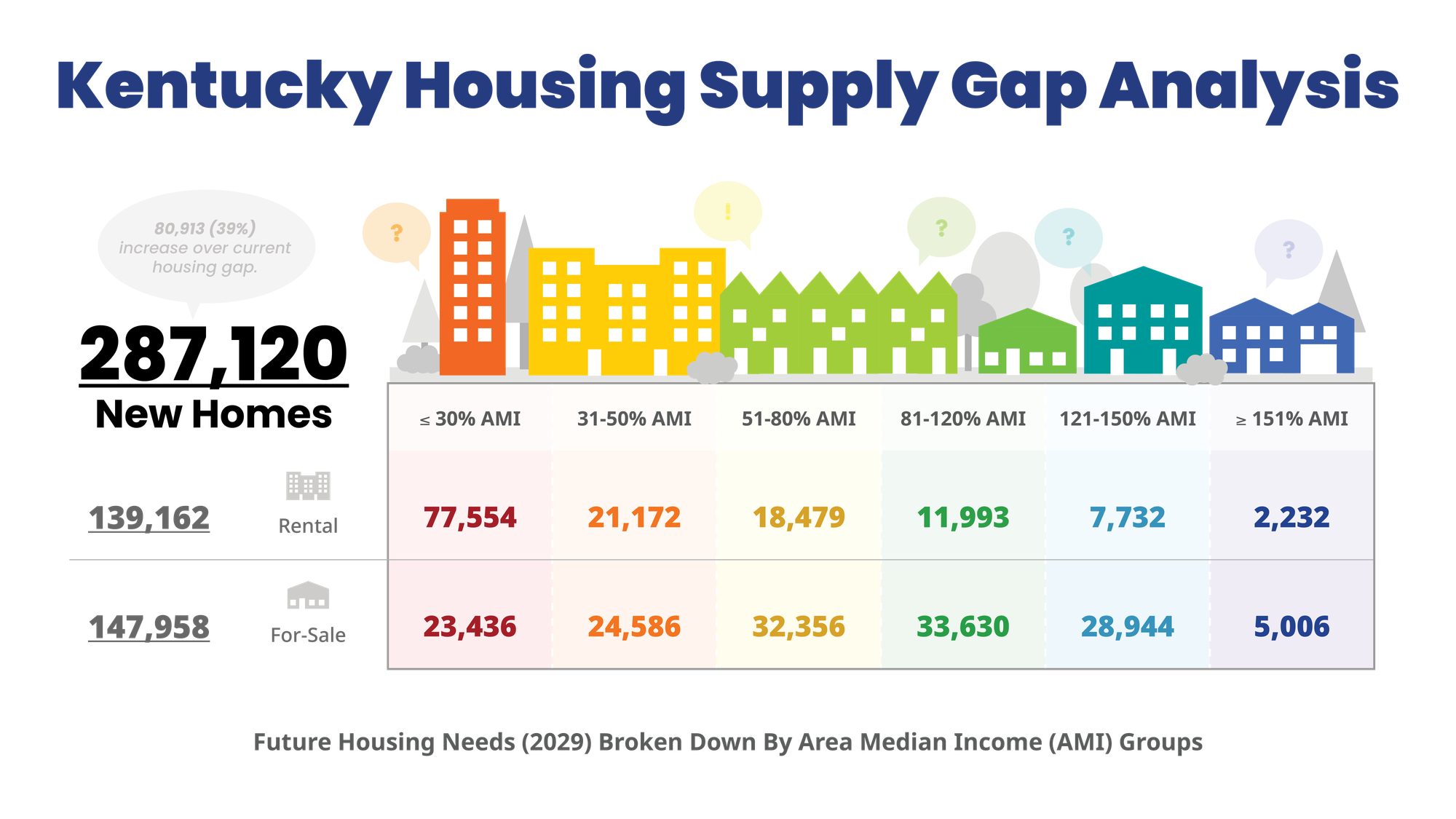
The Kentucky Realtors Association reports the state currently has 3.8 month's worth of housing inventory, but a new report out this week from the Kentucky Data Center at the University of Louisville portends a coming housing shortage.
The report says the state's population is expected to grow by 233,000 new residents by 2050. The current estimated population of the state is 4,606,864.
Not all of Kentucky is projected to expand—just 59 of all 120 counties are expected to grow—but Madison County ranks in the top five for new residents, bringing the total from its current population of 101,696 to 137,358 by 2050. The latest tally for housing units in Madison County is about 42,300.
The Kentucky Housing Corporation, meanwhile, is warning of an already acute housing shortage statewide. The KHC cites the high cost of building materials, tighter credit, less builders in business after the 2008 recession, and local resistance to the building of affordable units in existing neighborhoods as barriers to increasing housing stock.
These factors are exacerbated by higher interest rates, stagnating wages, and lack of moderately priced starter homes, which prevents first-time buyers stepping into the game, according to the KHC. Add to that, more than 5,000 homes were obliterated during the floods and tornadoes of 2021 and 2022, and there were no meaningful funds set aside to rebuild.
"Certainly, the projected increase in the number of households would need to be met by an equal increase in the number of new housing units available or prices will rise," Matthew Ruther, PhD, Director, Urban Studies Institute and the Kentucky State Data Center at the University of Louisville and lead researcher of the population report, told The Edge in an email.
Any new home construction in the state now tends to be higher end homes, as that is the demographic who can afford them are less constrained than other home buying demographics, according to Fitzwater, the realtor in Somerset. "I've seen high insurance premiums kill deals for people who are trying to move up the property ladder, but the retirees who are coming in from metro areas don't care about these things, because they are flush with cash. They can afford the new build, and they can afford the associated costs," he said.
Not many solutions
Florida Senator Rick Scott (R) has reintroduced a bill that would allow US tax payers to claim a deduction of up to $10,000 of their home owner's annual premium, but otherwise, at the national level, not much is being done to address the coming crisis of housing un-affordability.
The Dallas Federal Reserve paper found that when home owners fall behind in their mortgages due to increased insurance premiums, corporate buyers were more likely to purchase the property and score lower insurance premiums across multiple properties. This phenomenon could make the housing supply worse by conglomerating available inventory.
Multiple calls to the office of the state insurance commissioner, Sharon P. Clark, asking if Kentucky is tracking the impact of home insurance premium rates on consumers, went unreturned.
Watkins said the conversation has to start somewhere and soon, especially as industries are being invited to move here by the governor. "We need to have new jobs, but we also have to have places where people who fill those new jobs can live," she said. Without a fix for the rising cost of housing, Watkins worries the affordability that has traditionally been a hallmark of living in Madison County will be a reality for some but not all.
"People come here for the affordability, because if they are from the West or other states, even if our cost of living goes up, it's still so much cheaper than it was for them where they were before. Not just home prices, but everything—the cost of goods, gas, all the basic necessities of living. And if it's the ones coming here are on fixed incomes, it's still that they have a much higher fixed income than locals, so they will keep coming."

Bluegrass International Airport expands, doubles nonstop flights to NYC + Florida
Earlier this week, Delta Airlines began offering double the number of nonstop flights from Bluegrass International Airport to LaGuardia Airport in New York City.
"When you see an airline increase the daily or overall frequency of a route, it's due to demand that they are seeing in that area," Lauren Simmerman, spokesperson for the airport told The Edge in an interview.
And there are more passengers flying out of LEX, the airport's identifier tag and its new name in marketing campaigns, than ever before. The year 2025 saw the airport break all previous records for what Simmerman called "enflightments", persons boarding or disembarking from planes: 1.6 million in all.
"Usually, airport expansion reflects growth trends in the region where the airport is located," she said. "And this region is expected to keep growing."
In fact, the Kentucky State Data Center at the University of Louisville projects that the state will grow by 233,000 over the next 25 years.
To accommodate increased usage of the facilities, LEX is wrapping up the creation of 850 new parking spots on the airport campus, and will soon break ground on the first of four new terminals, bringing the total to 14, and a brand new concourse that will include expanded dining and shopping options. The baggage claim system is also being overhauled, according to Simmerman.
The airport also recently saw which airline expand its service to Bradenton and Sarasota, Florida, which Simmerman said helps accommodate Kentuckians who not only wish to have a beach vacation, but who own second homes in the Sunshine State.
The top three destinations for those flying out of LEX are Atlanta, Charlotte and Chicago, all of which are major air travel hubs.
Rendering of airport expansion courtesy of Bluegrass International Airport