Cherlynn Stevenson (D) is On the Edge
The 'Mountain Democrat' talks politics and the race for the US 6th District of Ky
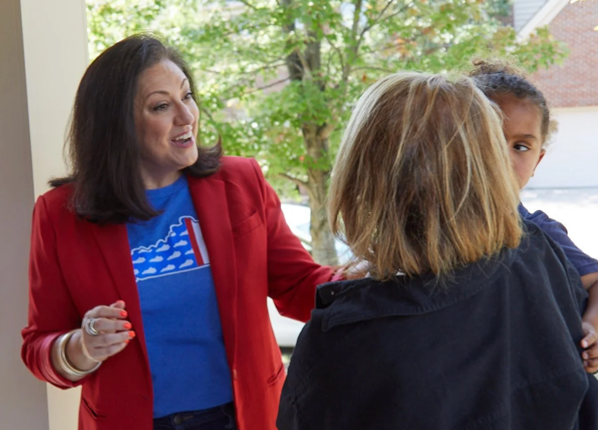
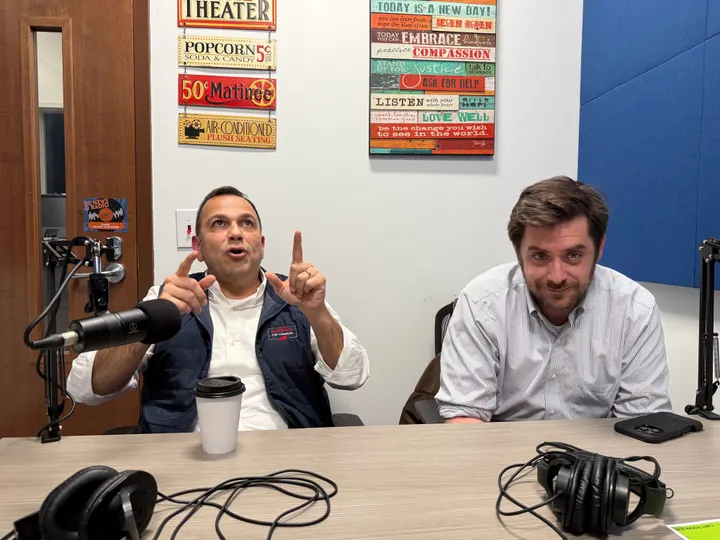
Cherlynn Stevenson (D) is running on the 'Mountain Democrat' platform, as she explains in this episode of On the Edge with Whitney McKnight. A former state representative in Kentucky (2019-2024), Stevenson says it's time for Congress to flip from Red to Blue, and she believes that if a Democrat wins Kentucky's 6th District then, Congress will indeed be Blue.
In this episode, Stevenson also discusses her own bad experience with healthcare in the US, and how fear of costs nearly took her husband's life. What does she see happening to change how Americans access healthcare?
Thank you for listening to On the Edge!
Reporting from The Edge of Appalachia in Berea, Kentucky.
Sign up for The Edge, our free email newsletter.
Get the latest stories right in your inbox.
This transcript has been lightly edited.
Speaker: 00:00
Sherilyn Stevenson, it's really nice to see you. You are now on the edge with me, Whitney McKnight. And it's nice to finally get a chance to speak with you.
Speaker 1: 00:09
Well, thank you so much, Whitney, for uh making the time for me and for having us on to talk about our campaign.
Speaker: 00:15
Well, let's start with the fact that you build yourself as a mountain democrat. Can you tell those of us who are, well, at least in Berea, we're on the edge, which is why I can't pay for what I do, but we're on the edge of the mountains, we're on the edge of Appalachia, and we're also in the bluegrass. So maybe not everyone here has an idea of what a mountain democrat is. So why don't you tell us?
Speaker 1: 00:35
Yeah, well, you know, I consider myself uh a mountain democrat, and that really came from when I first started running, a lot of people were asking me to label myself. You know, are you liberal? Are you a progressive? What are you? And I was like, I, you know, I don't I don't really like labels, , but I do call myself a mountain democrat. , and that's mostly about where I grew up and the values that were taught to me on front porches, in union halls, at church suppers, and around kitchen tables, , that we were a tight-knit community and that we value that community and we lift everyone up. All of our neighbors matter and how we take care of one another. You know, we are the people who would come together for quilting bees or to kill a hog for, you know, for food, and and that would happen and it would feed multiple families. and so that is something that is very dear to me. It's uh a loyalty to a people and a place, and it's about the values that uh you bring to the table, and the values that I bring to the table as a as a legislator, and I think that that matters, and it's really not about where you live, but it's about what lives in your heart. And, you know, recently my heart has just been broken for our people that we have so many neighbors that are are struggling. People are trying to decide if they can pay rent or by medicine or by food because they're finding it hard to do all three at the same time. And that's really what this is about about lifting up our neighbors and helping those that are less fortunate. Uh, you know, Mountain Democrats were a group of people that mined the coal that built America. We helped to build the railroads and and the roads and connect communities. And while sometimes those paychecks weren't always the most stable paychecks, , everybody always made sure that their neighbors who had even less still had enough. And that's the crux of me and what I bring to service and how I want to lift all of our families up, not just a privileged few.
Speaker: 02:52
Well, there's a lot actually baked into what you just said. So I'm gonna pull it apart so that we can go a little bit deeper into things. First of all, what you describe as this kind of village concern for everyone. Yes. I I will tell you that I was born here, moved away, came back, and I live mostly on the east coast. But this is unique, and I do see it here in Berea. But there really is something, maybe it's about Kentucky, maybe it's about eastern Kentucky, I don't know. But it is an attitude of I don't care if we see eye to eye, I do want to make sure that you are taken care of. And I I see that. I mean, it's maybe not as vibrant of a pulse as there used to be because I do think that politics has riven people, but I still see it. Now it's a beautiful thing, but I think it is in my experience, and you can tell me if I'm wrong, it works when places are small and where people know one another. And I have questions about whether what you're talking about is possible at a federal large level. So I'm wondering if you've thought about that. Maybe, you know, if you can give us your thoughts on how you amplify something that really does feel homey and feel uh rely like you can relate to it and rely on it from where you're coming from.
unknown: 04:21
Yeah.
Speaker 1: 04:22
Well, you know, part of it and part of that story is that as those miners were mining that coal back in the day, you know, they got tired of the wealthy folks who were owning the company town, owning the company store, and these people were doing all of this hard work and they were still owing money to that company store. And and they all decided that they'd had enough and that they were going to organize and band together and fight back. And they won. That's that was part of the birthplace of unions here in Kentucky. And I kind of see that as uh mirroring mirroring the moment that we live in now. You know, I say all the time that I think that this race is far past red versus blue, that it's about billionaires versus you. And so the parallel in that of, you know, we have this group of people that are invested in keeping us divided and fighting each other because they're profiting off of that. And if they keep using sideways at each other, we're not gonna punch up. And that's what we need to be doing collectively is punching up. , you know, I believe that everyday Kentuckians deserve to be represented by everyday Kentuckians and somebody that knows those struggles. And I am also someone who , you know, like I I run on my first name, Cheryln, because I want everybody to feel like I am approachable, that they can come to me and talk to me about whatever that is. You know, I want people to feel safe telling me what's keeping them awake at night. I want people to feel safe telling me what their hopes and dreams are for themselves and their family and their future, and that future that I can hopefully help create as I go to Washington to represent these people to build a better life here. So many people feel like the basics of a good life are slipping away from them, , especially our younger people. And so I want to be a champion to go fight for those things because I want every single family to be able to not just survive, but to thrive. And and I think hopefully that people will hear the authenticity in that because it is absolutely who I am and what I am. , you know, I tell people all the time, uh, Mountain Democrat, those two words absolutely define me, and you can s up all the rest of us with just four more, which is how can we help? Because that is the crux of who we are as a people. And I think that part of that comes from so many of the immigrants that came and settled here were Scots Irish kind of people. And so we are clannish, like like they were. And I think that that that feel of coming from , you know, the the clans uh uh in Scotland is what kind of helped to make that that tight-knit community feel and that we're all one and we all do better together than we ever do apart.
Speaker: 07:30
Well, I I guess what I'm asking is, you know, trying to amplify that idea of village living, you know, where you take care of each other. I don't know if that would be possible for one congressperson to do. So I guess I'll I'll be a little bit more explicit then. Are you looking to do what you hope to accomplish along with other people such as yourself? And you know, is this a movement that you're a part of?
Speaker 1: 07:60
, I would I would love for it to be a movement, you know. I think it's it's no matter who you are, where you live, what religion you have practiced, there's always the golden rule, right? Yeah, treat others the way that you want to be treated. And for me, that's exactly what this is. You know, what I would want from for myself and my family, I should want for every other family, instead of having this mentality of, I've got mine, you're on your own to get yours. , again, this whole bit that we're stronger together than we ever are apart. , and I so I hope it is a movement. I hope it is something that, you know, this moment in time demands of us to start looking after one another again. I believe that we have uh a critical juncture in our nation's history that it is upon us, and we have got to do the work collectively to start bringing us back together rather than pulling us even further apart. And I hope to be a part of that. I hope that we can start that here in central Kentucky, and we've got a lot of great candidates running nationwide, and I do believe that we are going to flip the U.S. House. , Congress has got to start exerting itself as an equal branch of government, and I think that it's time that we finally say, , you know, that's that's not the way that we're living right now is not what we're about. That's not what we are as Americans, that's not what we are as Kentuckians, that we want a better country for everyone. Again, not just those privileged few. So, you know, we again we've got all of these millionaires and billionaires that are and they have bought our Congress, and like we collectively have to say no more.
Speaker: 09:57
What's interesting is that there are 99% of us and 1% of them. And I think I think that there really is an awareness of that ratio at the top, and there is this kind of do what we can to manipulate the message so that they are fighting each other instead of looking at the reality. I think that's a really astute observation. I did want to say one more thing about that, and I want to move on to healthcare. , the clannishness can sometimes be too bellicose, you know, it's also very warring. But what I would say is that , in my experience of having lived and traveled all across this country, uh what I see is the landscape actually impacts the way people are. And after they get to the United States, wherever they've come from, there's actually something about America that that generates a collectiveness. How can I help? I think that's very American. And so let's move on to healthcare. But with that in mind, that the American spirit does actually, it is tangible, it's a thing. There is an attitude of we can do it and we can help each other do it. And that's that's kind of what I've seen and experienced. Okay, so we have this situation where healthcare is not affordable, housing is less and less affordable, food is becoming uh more of a there's a crisis. Either it's not available, it's uh less good quality, the quality has gone down the hill, and it's expensive. So that's kind of demoralizing, I think, for people.
unknown: 11:25
Yeah.
Speaker: 11:25
And I'm wondering, as a congressperson, what would be your first, what would you tackle first? And with affordability in mind, how would you go about it?
Speaker 1: 11:35
Well, you know, I have said from day one, I will work with anybody, absolutely anyone that is willing to work with me to get our health care back on track. Obviously, we just uh the big beautiful bill is going to strip a trillion dollars out of our healthcare system. And uh we have got to try to roll that back as quickly as we possibly can because a lot of those cuts aren't set to come until after the midterms. So I think that right away that has to be something that we address. , that is a ton, a ton of money. And we know that Kentucky is the state that's set to probably be hurt the most by that. We have the most hospitals that are at stake about this. , you know, we have 35 hospitals that are are are set to potentially close. The one in Fleming County has already shut down everything except their ER. Uh there was the birthing center in West Louisville that was set to open. And with like three weeks to open, they announced that they weren't gonna open that. And so there are already healthcare entities that are having to forecast. Any business has to do forecasting, right? And they have to know what's coming in so they can plan and know what they're doing. And so we're already seeing these rollbacks happen because of these proposed cuts that we know are coming. , and so that's not even talking about clinics, nursing homes, that kind of thing. So we know that this huge cliff is coming for us. And I believe that that has to be the n ber one thing that we address because people can't work if they're sick, students can't learn if they're sick, and also wrapped up in that bill was the snap cuts as well. So uh I cannot abide that we are going to have millions to go to bed hungry because a handful of billionaires want to sleep a little bit better at at night on their piles and piles and piles of cash.
Speaker: 13:31
You're saying, you know, people are gonna go hungry or they're not gonna have the care they need, but billionaires are gonna have more money and therefore they're gonna sleep better. The real the the conduit between those two ends of the line is Congress. Correct. And and what you're saying, and what you've already said, then I just want to make sure that it's clear that it's Congress that's making it hard for people to have their own ends meet while billionaires are not even worrying about anything because Congress is supine. They're not doing their job.
Speaker 1: 14:00
No, not at all. And you know, Congress technically has the final say on tariffs as well, and so we're seeing these chaotic tariffs right now that are causing so much uncertainty here at home. You've got our bourbon industry, our automotive industry, our agriculture industry, and then just the across-the-board tariffs are making everything more expensive. We're talking from housing to hamburger, everything is more expensive. , I just saw a study came out that said that the average Kentucky family spent about $1,000 more last year because of tariffs than they did the year prior. And in 2026, that's expected to go up to about $1,500.
Speaker: 14:40
So because Congress did not actually stop the tariffs that the president placed on pretty much most of our major trading partners.
Speaker 1: 14:50
Yes. And , so that dire election of duty is astonishing to me. , we have three branches of government because that is supposed to be checks and balances. And so we need a check on an unchecked, unbalanced president right now. That again, chaos, corruption, cruelty is just pouring out, and Congress is just idly sitting by and allowing it to happen. Kentucky families are finding that there's more month than money, and that is something that we've got to fix because wages have not kept up, and that's another part of this. Inflation just keeps rising and our wages are staying stagnant. So everything from minim wage up has to grow. We have to rise to meet this moment. Healthcare overall is deeply personal to me. my husband actually uh suffered a pretty scary uh health crisis. I had just gone into our state legislature uh in 2018. I was sworn in on January 8th and did not get health insurance until March 8th.
And he was starting a new job at the exact same time as well. , we decided that we were not going to afford the Cobra insurance because it was just so astronomical. So we rolled the dice to go about six or seven weeks without health insurance. And he gets up one morning and I can hear him as he's coming down the stairs, laboring for breath. And he walks over to me and he pulls up his pajama pant leg and he's like, Look how swollen my leg is. And I was like, Oh my gosh, you have a blood clot. And he was like, Oh, well, let me get a shower. And I'm like, No, no, no, no, no. There's no time for that. We need to go right now. We live four minutes from St. Joseph East. We got there within about three minutes of walking in, he collapsed. I thought he died. , they worked on him for over an hour in the emergency room trying to get this under control.
They had a pastor there standing with me because they thought he was going to die. And he almost did. he then spent three days in ICU, another couple days in a regular hospital room. And in the blink of an eye, there we were. We were in tens and tens of thousands of dollars of debt. And I immediately went to work in the state house, filing bills, trying to work to make things better. , no family should ever have to do that. As we pulled into the parking lot, he said, you know, I think I'm feeling better.
We probably just shouldn't go in because we don't have this bill's gonna be crazy. And he was just thinking about an emergency room bill at that point. And that is not something that any family should ever have to go through. We were very, very fortunate that, you know, we got on a payment plan and we were able to get those paid off in about five years. And it was kind of like an extra car payment, but we absolutely could afford that, but we couldn't have afforded another house payment. So, how many families do you and I both know that that would have just absolutely crippled? , and so I believe that healthcare is a basic h an right, and we should never ever allow ourselves to get into a position that people don't go to the doctor because they just can't afford it. It's it's well, we are there.
Speaker: 18:04
We we are there. People don't go to the doctor for that reason. What do you do about that? Because it's already happening. Yes. It's not right. Yes. What is the reason that we let this happen?
Speaker 1: 18:15
, well, I mean, it it's pretty simple, I hate to say, but it's capitalism right amok. We have allowed a for-profit health industry to grow and become so big and so monopolized that, you know, it the prices just keep rising, rising, rising, and nobody's doing anything about it. We have uh, you know, there's a there's a a clip going around right now on uh TikTok, Facebook, Instagram, and it's AOC, and she is in a uh in a committee hearing, and so she's talking about how you know CVS is this big entity, and they own uh insurance companies, and then they own these uh they own the PBMs too. Yes, they own clinics, and then they own PBMs and they own the pharmacies, so it's just this big circle of themselves just making money at every single level. And again, that has gone unchecked.
Speaker: 19:19
Ironically, I was a reporter in Washington, I was an antitrust reporter, and I covered that merger, the one between CBS and Aetna. Yes. And as I was covering it, the question was it was a very new kind of potential monopoly forming. It was called a vertical monopoly, meaning that one company would essentially own all of the inputs as you just described. So it would own the insurance input, it would own the and actually by by purchasing all of these minute clinics, they also own the people who do the billing for the for the services. So they so they own the actual care at the uh chronic care level mostly, and you know, because they do diabetes, and I think they're trying to get into dialysis as well. So basically they own, and you said it, it's a monopoly. I personally do not think that the judge understood what he was ruling on, yeah, and he ruled in favor of the merger. I mean, people get upset about the idea of socialized medicine, but that is what CVS is, it's just a corporate version of it, but they own everything. So, really, what you're talking about is better antitrust enforcement.
Speaker 1: 20:24
Yeah, , you know, and we see practically every other industrialized nation has some form of socialized medicine. They pay far less money than we do per person, and their help health outcomes are better. So we are clearly doing something very, very wrong in this country, and we gotta look at exactly what that is and and start to roll that back. I our our I mean, literally our people's lives are depending on it.
Speaker: 20:52
Well, you've you've been in this situation before. You you've already alluded to it. So you were a legislator from was it 2018 or 19?
Speaker 1: 20:59
So I was I was elected in 18, took service in 19 through the end of 2024.
Speaker: 21:04
And and what kinds of lessons in compromise and you know, just the the legislative process because what what kinds of lessons did you learn? I can imagine some of the ones, but I'm curious, what are what are you gonna take from Frankfurt to DC should you be elected?
Speaker 1: 21:19
Well, you know, I think it takes a little while of of getting in and really learning the ropes. This is a job that until you've done it, nobody can really teach you how to do it. So experience does matter. I know that we have all of these arg ents out there against career politicians and things like that. But in my six years, I learned some really valuable lessons that I believe can step up as to when you need to compromise and when you need to draw that line in the sand. , serving in a super duper minority, , you know, it was it was imperative that I build relationships across the aisle and find.
Who I could work with, what we could work on together, because even though we have uh two different parties and they are vastly different, there are many, many things that we can agree on. And so it's about building those relationships and finding out where you can agree with each person and what they are really passionate about and where you can come together and try to get good work done. People send legislators to Frankfurt or Washington to work together to move the country forward and to make lives better for everyone. That's that's what we are supposed to be doing. So knowing how to make those relationships, knowing the way to have those conversations is is really important.
And for me, it was never about me getting glory or my name being on a bill. If we could make good things happen for Kentuckians, then that's all that I cared about. So working across the aisle under the radar to get good things done, to make bad little bad bills a little less bad, or to add a lot of good little nuggets in as you could was something that was really important to do. what was your biggest accomplishment, do you think?
Two things passing medical cannabis was really, really huge for us, and capping insulin copays. , those are two things that I'm just very, very proud of that we got done. , but helping and protecting and supporting our signature industries because of the direct impact that they have on our state's economy and the n ber of jobs that are tied to those was very, very important to me. , working on anything that we could do that made health care a little bit more accessible or more affordable for folks, that was something that was really, really important as well. I did a little bit of regulation on the check caching industry. There's a there's a lot that that happened and got done in six years, but again, it just wasn't super flashy. Just because my name wasn't on a bill doesn't mean that I didn't touch it and kind of helped to force those things to happen. , as I continued my my last two years, I actually served in leadership. I was the House Caucus chair, so it gave me an even bigger platform to lift up the voices of those who felt voiceless very often and to work side by side with Governor Bashir to make things happen. , and I'm really proud of the work that we were able to do and the good things that we were able to get done for Kentuckians, and I'm ready to take the fight and heart to DC.
Speaker: 24:36
Well, that was going to be my last question here because , as you're describing what you were able to achieve in Frankfurt, I mean, this is kind of a nuanced question, but here's what I was thinking. Okay, let's say that you win, you go to Washington, you currently would be in an environment that is unwilling to actually exert its power. We can ass e maybe that the reason why that is, is because they have their own interests already covered. Citizens United has made it possible for a lot of money to show up without having having a real accountability around where that money's coming from. So you'd be going into an environment that I guess is perhaps similar to what you already experienced in Frankfurt, where there was a supermajority. So you had to work harder to be heard or to actually get traction on anything. So Congress is for two years. Let's say you go for two years, that would come, that would end around the same time that the current presidential term would be ending. Look, what would be your plan for what happens next? Because things are going to change. Whatever happens, they're gonna be dramatic. Yes.
Speaker 1: 25:35
Well, I won't lie. The I believe if we flip the sixth district, then the U.S. House will absolutely flip. And the the possibility of serving in a majority has my tail wagging. I'm not gonna lie, , to be able to actually go in there and do good things and stop really, really bad things, , which, you know, weren't always possible in Frankfurt. So I'm really anxious for that. And I think that if we can get in and again put put a stop to a lot of the terrible things that are happening, really slow that down, I believe that then the the wave or the blue wave that we are anticipating this year after having a great blue wave last year as well.
I think that is gonna continue. I think that we're gonna see people really having a strong backlash to what we're what we're seeing now. I think a lot of people are regretting their votes. I I am seeing a lot of people say, you know, I I I I voted to lower costs immediately, and all they've done is continue to, you know, sometimes there has to be some pain for growth and change to really happen. And I believe that we are at an inflection point here and that we are about to see great change. We're seeing people say things like, oh, well, if all of the information in the Epstein files comes out, then the entire system will collapse. And at this point, I'm like, okay, I that's fine. Democrats, Republicans, if you hurt children, you're going to prison. And guess what? We can build back something better because what we have right now is broken in so many ways and so many places.
Speaker: 27:14
It sounds like to me, you understand the conflict is not between Americans who have different points of view. The conflict is between having and have not and having nothing. So, or not enough. So when you're building back, how do you take into consideration that it's actually it's better to be bar bipartisan? And and you know, I'm gonna tell you, I don't think Democrats really, a, have had a feasible economic plan for decades. They haven't come up with anything that works. And secondly, there's just as much corruption. Well, maybe not just as much, but there are corrupt people in leadership and Democrats. So I don't think it's gonna be that easy because you guys got to clean your own house.
Speaker 1: 27:51
Correct, correct. And I, you know, I hear that, and that's that's fine. And I think that we have a lot of good people that are running for office right now that want to do that.
Speaker: 28:02
There's that's actually that is a good point, Sherlyn. There are strong candidates in Kentucky for this seat.
Speaker 1: 28:10
Yeah, on both sides. On both sides. I think uh there's strong candidates for Senate as well, but I I think nationwide that there's a lot of great candidates running. There's a growing movement, you know, to in Citizens United to cap, I'll just call it insider trading. A lot of people think that Congress people should not be able to trade stocks. I think that I'll just be real clear about that. They should not have that information. A lot of people talking about term limits, there's a lot of people talking about doing away with lifetime appointments. So there's a lot of lifetime appointments on the Supreme Court, you mean?
Yes. , yes. And so there's just a a lot of of sentiment that's rising, and I think that you're seeing that from both sides, and I think a lot of those ideas could make us stronger in a in a in a big way. now I do have the folks from the constitutional convention that can contact me all of the time, and and you know, they talk about let's do let's open this up for because of term limits. And that idea is really kind of scary to me because once you open up the the constitution, then anything could happen. And that's really scary to me right now in a time when we are so, so divided but I think that there are a lot of things that we can do. There's no magic bullet that's gonna save us.
So there's uh a thousand little BBs that we have to uh deploy to to make things better, but I think that I think we're gonna see Congress look vastly different. There are things happening right now in the United States that people never thought would be possible. The ideals that we were founded on are wonderful, and I believe that they are still very much valid. , but there's some tweaking that that needs to happen here. I you know, I think that there are some things that our forefathers just could have never foreseen that are are happening now, and that we , you know, we need to make some major changes because things just things aren't going well for the average family right now, and that is what we have got to address and get back on track.
Speaker: 30:23
Unless there's anything else you'd like to add, I would like to thank you very much for being on the edge with me, Whitney McKnight. And I wish you all the best, Sherilyn, in your campaign, and we'll see how this turns out in May. Yes, absolutely.
Speaker 1: 30:36
Well, we are very much looking forward to May. We believe that we are going to win this primary and we are ready to roll straight into the fall. I have a wonderful team here. , five members of my staff, actually, six members of my staff, live right here in Kentucky, which was super important to me that we have a campaign staff that knows our people, that knows this state. , and I have a wonderful group of volunteers that have been with me since 2018 when I was running. And thank you so much for having us on today. I appreciate your time.