College eminent domain case poses unique dilemma, according to judge
Diminishing the public good to serve the public good hasn't got much case law behind it
COUNTY COURTHOUSE—Lawyers representing a cooperative utility and a local college rested their respective cases on Friday after a two-day bench trial to decide if the utility has the right to take college land in order to build a new transmission line. The project is known as the Big Hill Line. The verdict is yet to come.
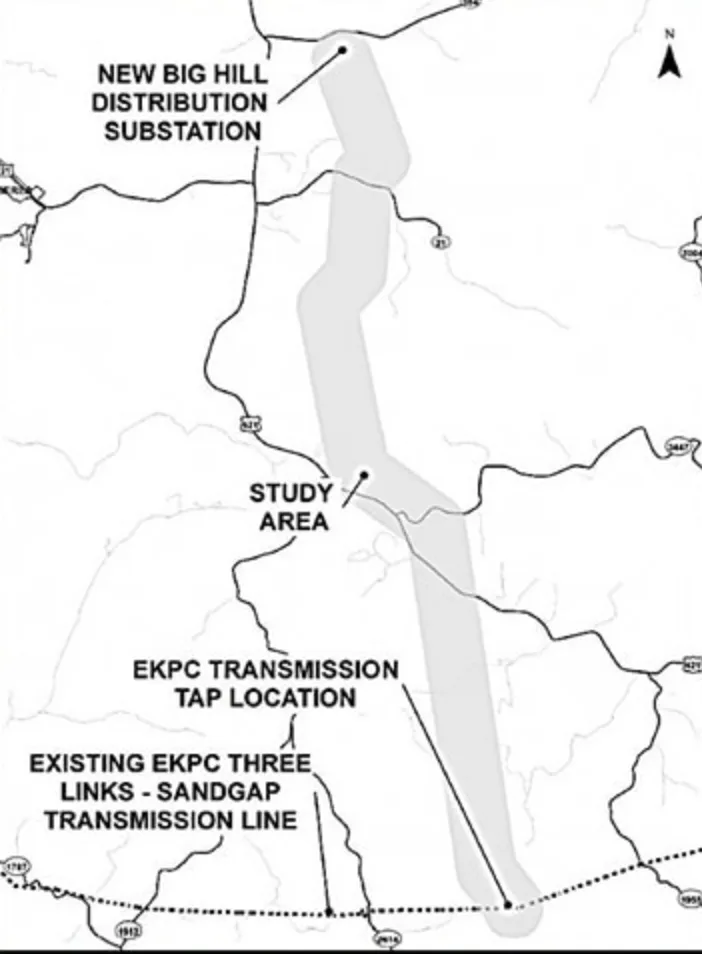
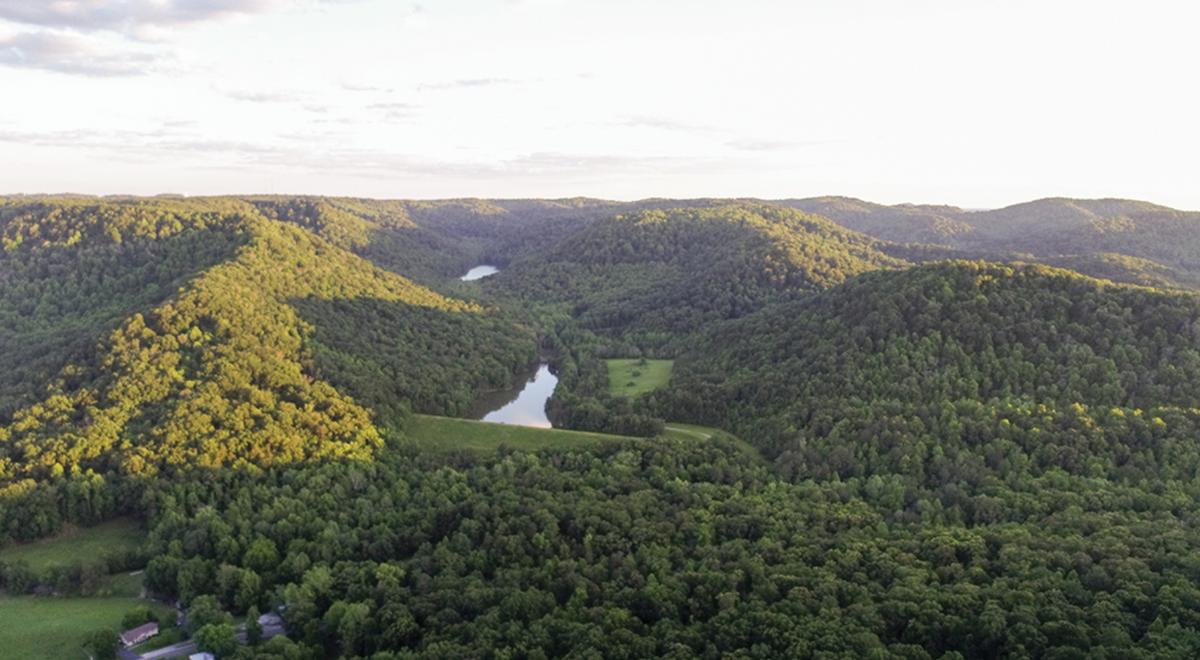
East Kentucky Power Cooperative sued Berea College last summer after the College refused to negotiate the purchase of a mile long and 100 feet wide right-of-way through the College's forest. Presiding over the case is County Circuit Court Judge Kristin Clouse. The burden is on the College to prove that the utility has somehow abused its power of discretion by choosing to route the line through the forest.
'Necessary' but questionable
Both parties mounted compelling arguments, as reflected by the judge's comments in her closing address. She said she was struck by the fact that in this case, one public service entity is asking to take from another public service entity.
"I must look at the public need," Clouse said in her closing address. "I heard a lot about reliable energy. I understand EKPC has discretion to accomplish public need but could they do it without taking this particular swath of land?"
After reiterating that this is a statutory case, and that she can only rule on whether the co-op is being abusive, Clouse instructed the lawyers to include in their briefs any case law they could find where conflicting public needs were tried in an eminent domain case.
"Case law is rife with what is not considered abuse," Clouse emphasized. "I want to drill down on the path chosen that would [run] between some very important landmarks," she said, referring to the College's telescopic observatory and the property known as Windswept, a conference facility designed by a student of the American architect, Frank Lloyd Wright. The line as currently planned would also disturb various ecological restoration projects.
Battling public needs
In the trial, the College emphasized the historical, educational, recreational, and public roles its 9,300-acre forest has had in the community since the late 1800s, calling upon an expert witness to describe alternative routes the transmission line could possibly take.
EKPC meanwhile argued that without the easement through the forest, they would soon be unable to deliver reliable power to its cooperative member-customers in the surrounding region. The utility shot holes through some of the College's expert testimony while stressing the utility's right to take because, according to Medrith Lee Norman, counsel for the utility, her client is operating in good faith on behalf of the public interest to provide reliable power.
Alternatives no good
As previously reported, the College's attorney, Lexington-based Joe Childers, opened the trial on Thursday, calling upon an expert grid consultant in order to establish that there were alternatives to running the nearly 9-mile long transmission line through the College's sustainably managed forest.
On Friday, Norman, who is a Lexington-based lawyer at Frost, Brown, and Todd, had her turn to call three witnesses on behalf of EKPC, beginning with Darrin Adams, who directs transmission planning services at the co-op.
Over the course of about an hour, Norman's questions to Adams established that the decision to pursue the project was made according to an ethos known as "one system planing" by which the generation and transmission utility and its 16 member-owner cooperatives do not act independently of one another, but plan in accord. This was relevant because the Big Hill Line will help EKPC maintain power reliability for member-owner Bluegrass Energy, while also helping it to distribute more power to customers in the southeastern end of the County.
Although Childers objected to Norman's "leading questions" which Clouse sustained, Norman was able to lead Adams through a detailed argument as to why the power co-op did not find the two alternatives put forth by the College's expert power grid witness to be feasible.
The first alternative would feature building a 4.4 mile line that would connect into a 69 kilovolt line that runs power between a two substations, one in West Berea, and the other at Duncannon Lane. Three breakers would be placed around the new connection to provide protection should one of the substations go down. A third substation would be where the new line connects in Big Hill.
Adams nixed that option, saying the utility had considered building a line from a substation for the Big Hill project with a line from it tot the West Berea line. However, it was determined that to do so would make the the entire line from Fawkes to West Berea vulnerable to outages, because the line would then be over 30 miles long with no breakers. Adams also testified that the line from West Berea to the substation at Duncannon Lane was already planned for future industrial use.
The second alternative would have added two new transformers at its Hickory Plains substation, and to help increase conductivity on the line. Adams said this option was unworkable in part because Bluegrass Energy wanted a substation and feeder lines in the same vicinity as Big Hill, and that it would still leave 1,500 meters connected to the Hickory Plains site. EKPC has argued from the outset that with more than 4,000 meters connected to Hickory Plains, the substation is overloaded and has zero capacity for growth.
Cross examining Adams, Childers asked about whether a solar initiative would also be an alternative, but Adams testified solar energy was insufficient to create enough power to consistently generate 8 megawatts of energy, which is the amount EKPC says is needed on the Big Hill Line.
The EPRI method
Norman also called two other witnesses, including an energy planning consultant in Georgia and an EKPC employee responsible for planning transmission routes. The former, Kevin Mara, described his consultancy's role in determining the problem at Hickory Plains, while the latter, Lucas Spencer, described his method for choosing the route through the forest.
Spencer detailed a process known as the EPRI Kentucky Method. This method was derived about 20 years ago, a synthesis of what multiple stakeholders, including farmers, said needs to be taken into account when siting new utility lines.
Childers asked Spencer why during the planning process, EKPC had not included any public input from the landowners during open house meetings. Spencer said he didn't need to because the EPRI method accounts for that.
Spencer said he had not known the path would lead through the College forest, and also described how once several potential routes are determined, a team will study each in a competition to prove which line is the most appropriate. He said this forces objectivity in choosing which route to ultimately take. Throughout the process, engineers are kept unaware of where property lines are in order to preclude any favoritism should the engineering team know which property owners are likely to be affected, Spencer testified.
Verdict due end of March
Before the trial, the attorneys and Clouse had agreed the trial would not include closing arguments in person. Instead, the parties will submit briefs. Clouse offered to allow the attorneys to file as late as the first week of April, but Norman objected. "I'm all for courtesy and accommodation but this is taking too long," she said.
Clouse set March 20 as the date for the counsels to file their closing arguments, and promised that she would be quick with her verdict once the respective arguments were filed.
Sign up for The Edge, our free email newsletter.
Get the latest stories right in your inbox.