Skies over the Pinnacles
January star party: did you know the sun is hurtling through space and we're tagging along with it?

Greetings, Star Watchers!
We're very sorry about December's star party never making it to your email inbox. Whitney was under the weather, our assistant producer was studying for and taking his final exams, and we ran out of time!
But we're kicking off the new year right, by getting this to you on time!
In this episode, which we've shortened by the way, Jeff and I hash out just what the heck is happening on that gas giant, Jupiter, whether Galileo was really persecuted for running afoul of the Church, and what is the sun doing hot doggin' it through the heavens at hundreds of thousands miles per hour, or the like?
I didn't even know that as earth and all our heavenly neighbors orbit the sun, the sun is spiraling away through space, with all its space rocks in tow. Huh? That's why you have to listen to this star party!
And of course, we break down all the celestial movements it's possible to see here in Berea this month. And that creaky sound you hear when Jeff talks is his chair, lol. We recorded this in a church library, but next month we're back in our studio.
Do you have a question for Jeff, Berea's resident amateur astronomer? Just send it along to: editor@theedgebereaky.com
Thanks for listening!
Whitney
January’s Four Principal Phases of the Moon

What are the constellations?
Is there really a giant soup ladle forever swinging around the northern sky? Do we look forward to a mighty hunter rising in the east on December evenings, destined to slay a ferocious lion that in turn appears in the east when spring arrives? Unless you’re a follower of astrology, the answer is “no”.
We have strung unrelated bright stars together to form pictures of heroes, monsters and even kitchen implements because the clear night sky seems so overwhelming that it is comforting (even to me) to be able to pick out familiar patterns that appear overhead. If you’ve been lucky enough to experience the night sky, free from light pollution and obstructions you must have been struck that the whole sky looks like an inverted bowl. The stars, Moon and planets seem to be stuck up there (and ‘over there’ if you look toward the horizon).
There are two human-made contraptions that some folks get conflated. The first is an observatory which is often a metal dome with an astronomical telescope inside. This dome has some sort of shutters that open to allow the telescope to view objects in the sky. The other contraption is called a planetarium. A planetarium also uses a dome but this one is set above a small auditorium with comfortable seating. Visitors to the planetarium are treated to a simulation of the night sky with stars projected from some sort of mechanical or computerised device. Berea College has a fine example of a computerized planetarium.
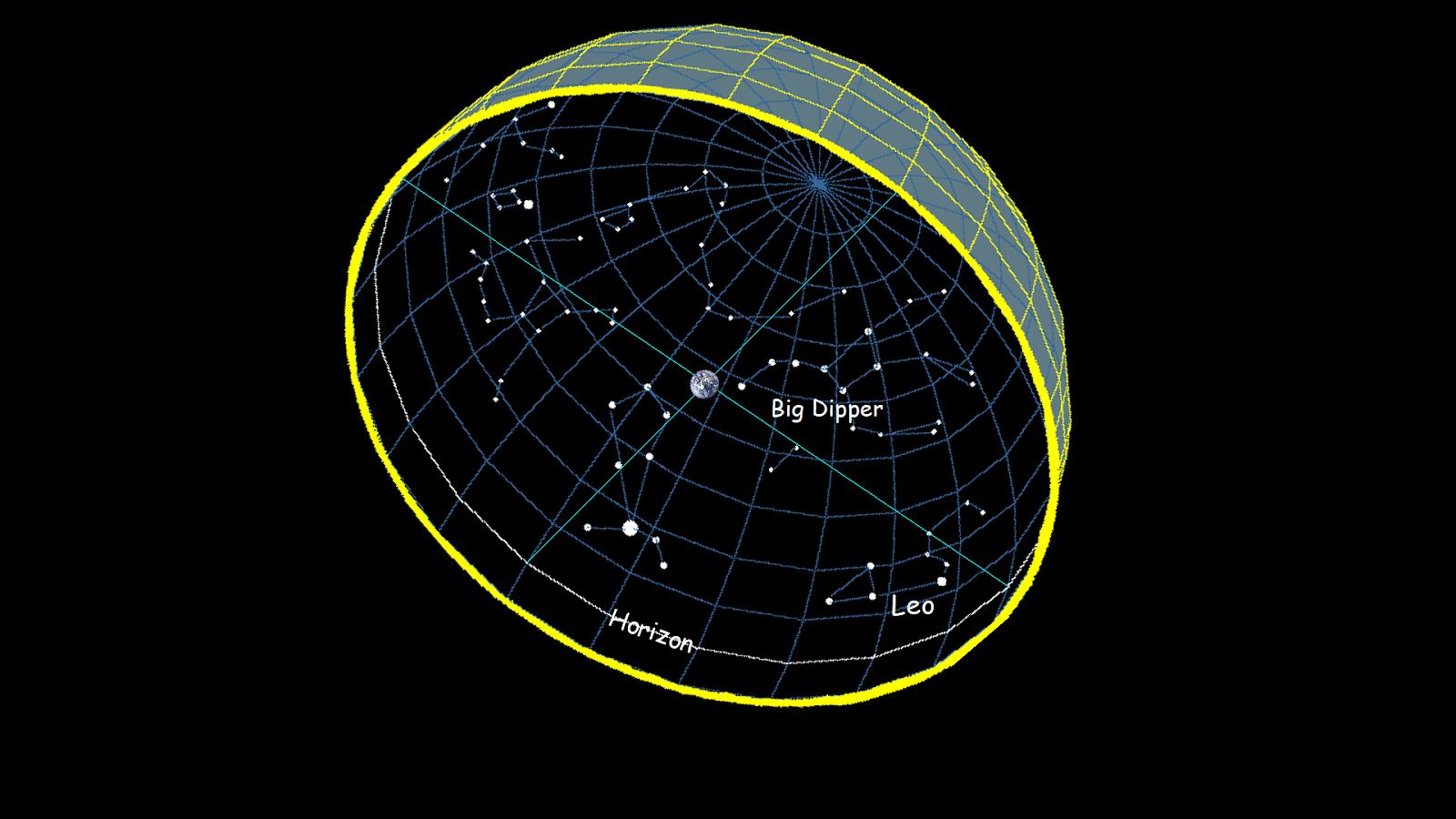
Take a look at the drawing above. The dome may represent that of a planetarium or the night sky. I drew in the Earth at the center of the dome and set her even with the horizon, shown in white. From the Earth, you would look right (to the west in summer) to see the constellation of Leo, the lion. As the ancient myth goes, Orion the Hunter slayed the ferocious Leo as one of his assignments to prove his awesomeness.
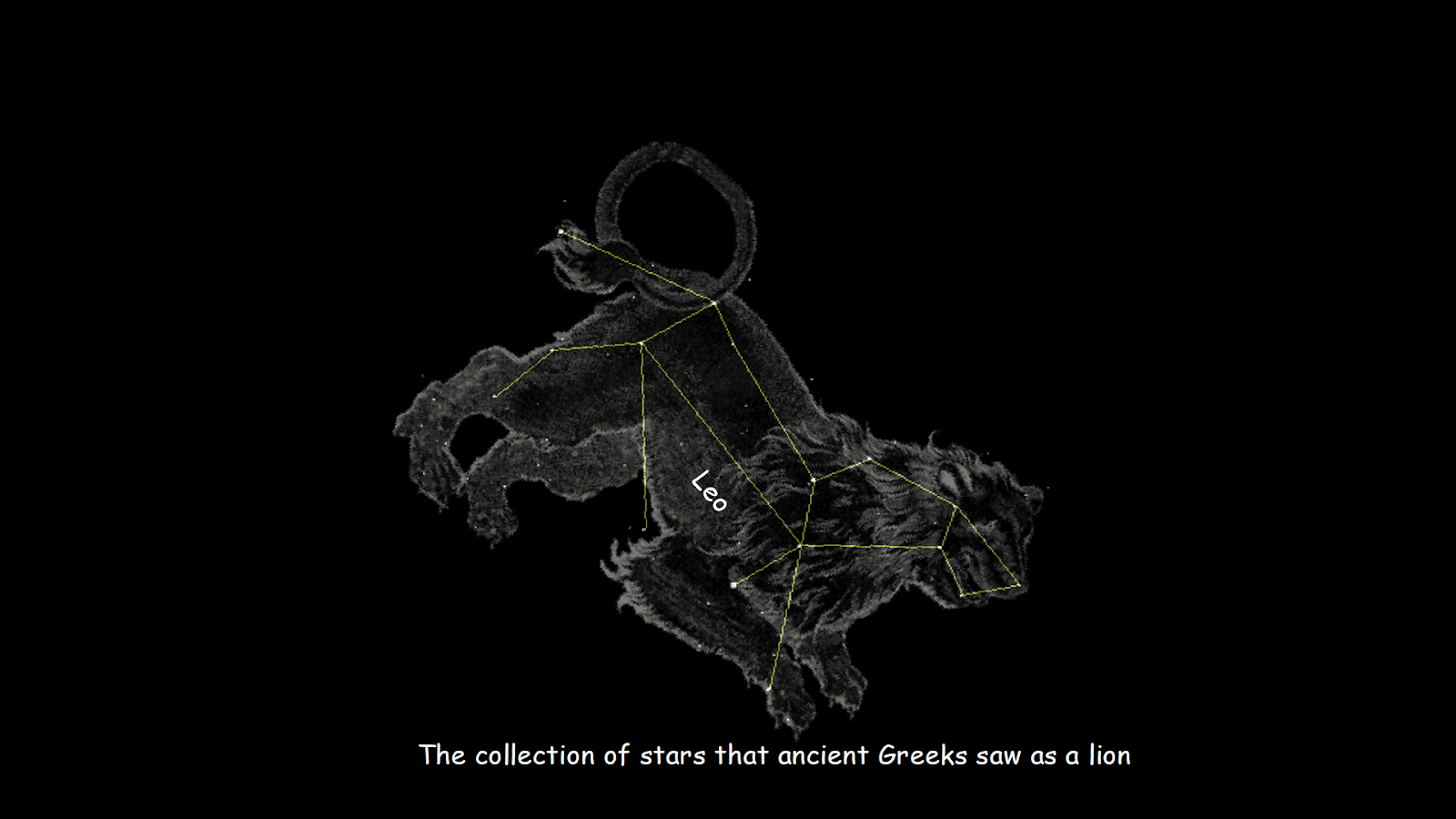
Above is how Leo is often shown, drawn over the stars that make up the constellation.
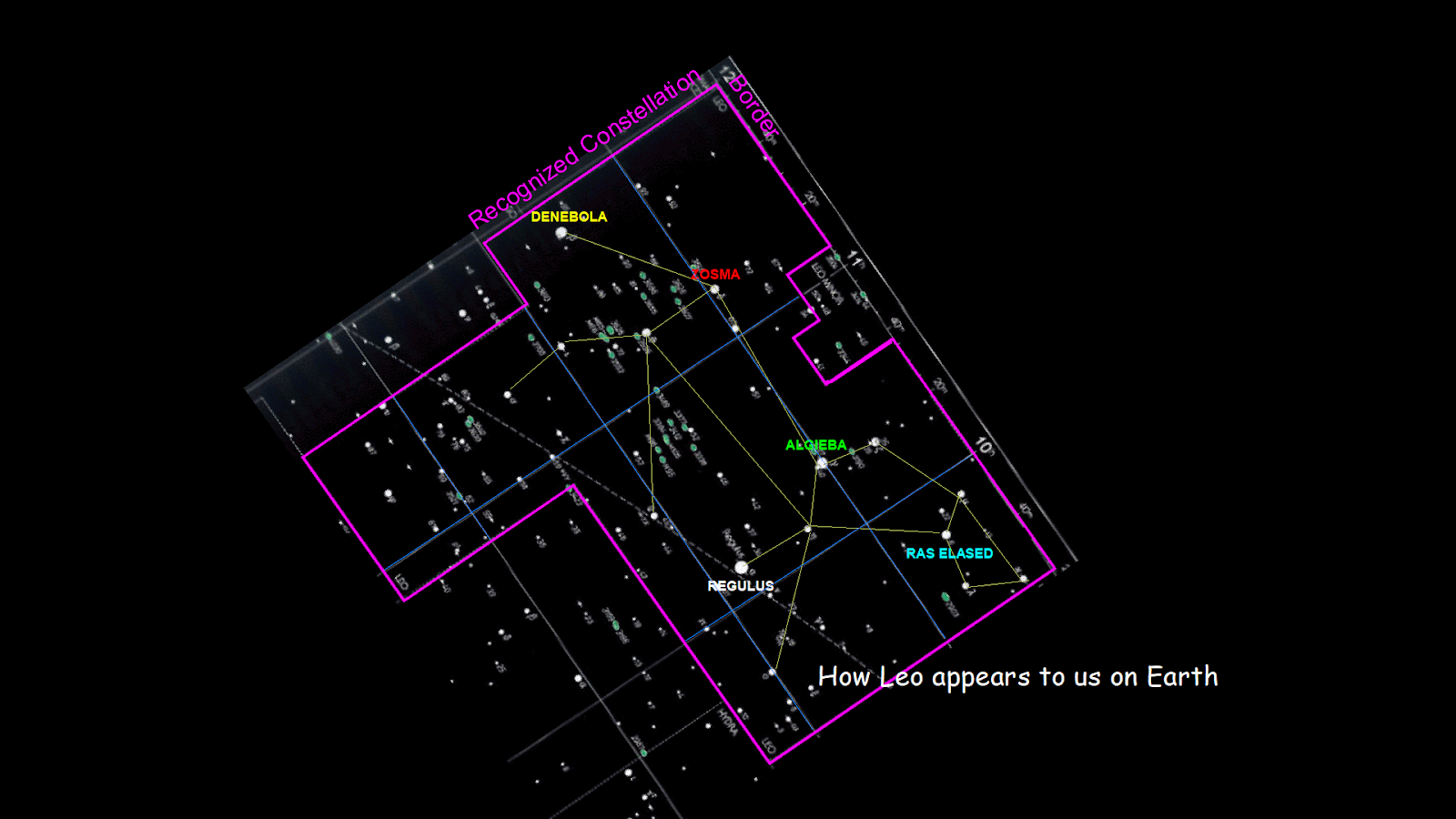
This is how the constellation Leo would appear on a modern star chart. The purple border shows the accepted ‘borders’ that mark off Leo’s official neighborhood.
Who says? The same people who demoted Pluto from being a planet (don’t blame me). I have color-coded some of the stars of the constellation for future reference.
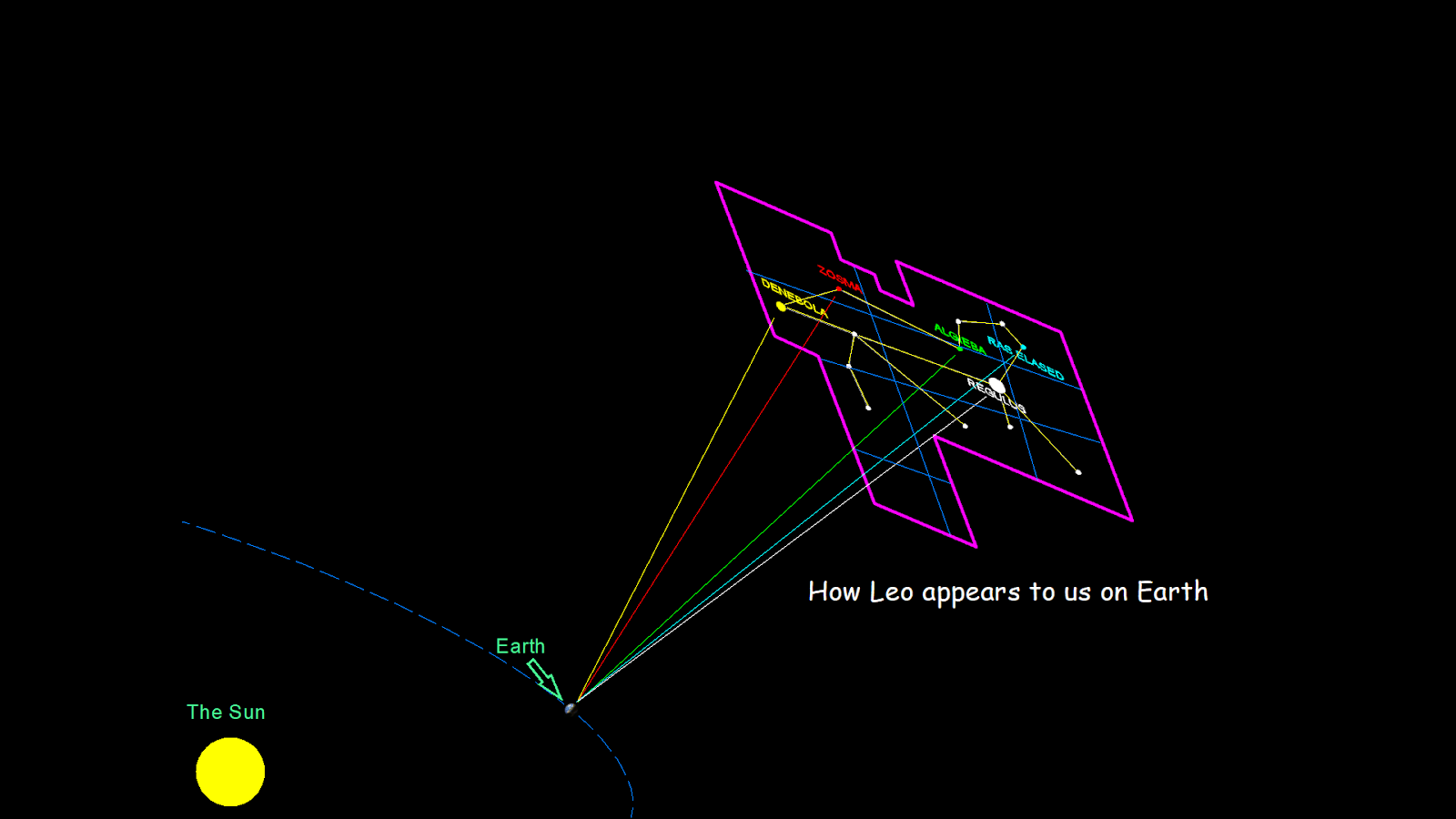
Now imagine that you were on a space ship and looking back on both Earth and the star map at right that shows the area around Leo, pasted to the inside of the dome. Because the stars are so far away that we never get a sense of the fact that the Cosmos is three or more) dimensional and that the stars aren’t just stuck on the inside of a dome.
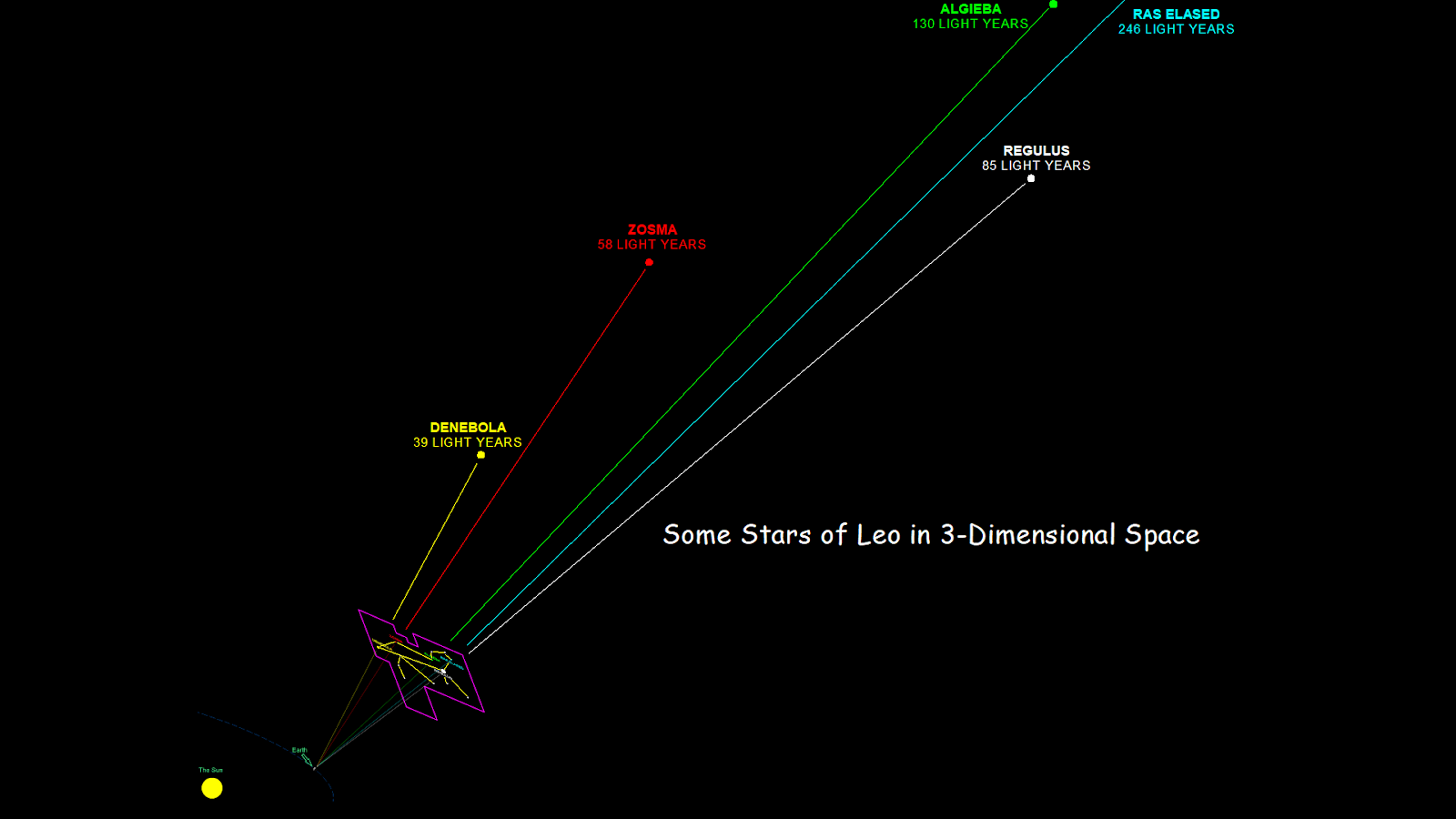
In the illustration above, I try to show that the constellation isn’t only a bunch of stars that faintly resemble a reclining lion on the celestial dome, but the stars, some of which I color coded for easy identification, really are very far from one another. They are separated from each other by, in some cases hundreds of light years! Closest to us is the star Denebola, representing the hind quarters of Leo, at around 39 light years.
One light year is about 6 trillion miles! The star Regulus, brightest of Leo, is about 85 light years from us. Most of the stars in Leo are too far away to fit onto my drawing. So if an astrologer tells you that your ‘sign’ is Leo, you might want to ask, “What exactly does that mean?” Do these particular and unrelated stars, so deep in space, have something to say about the trajectory of your life?
Now let's consider the Big Dipper which isn’t an official constellation, but part of a much larger constellation known as Ursa Major, the Great Bear. Who says? Back to the Pluto thing. The International Astronomical Union (IAU), who says so. These folks have mostly ‘standardized’ constellations from the western Greek and Roman traditions. There are many cultures and cultural traditions on planet Earth and many of their constellations use the same stars we see as the familiar patterns declared as official’ by the IAU.
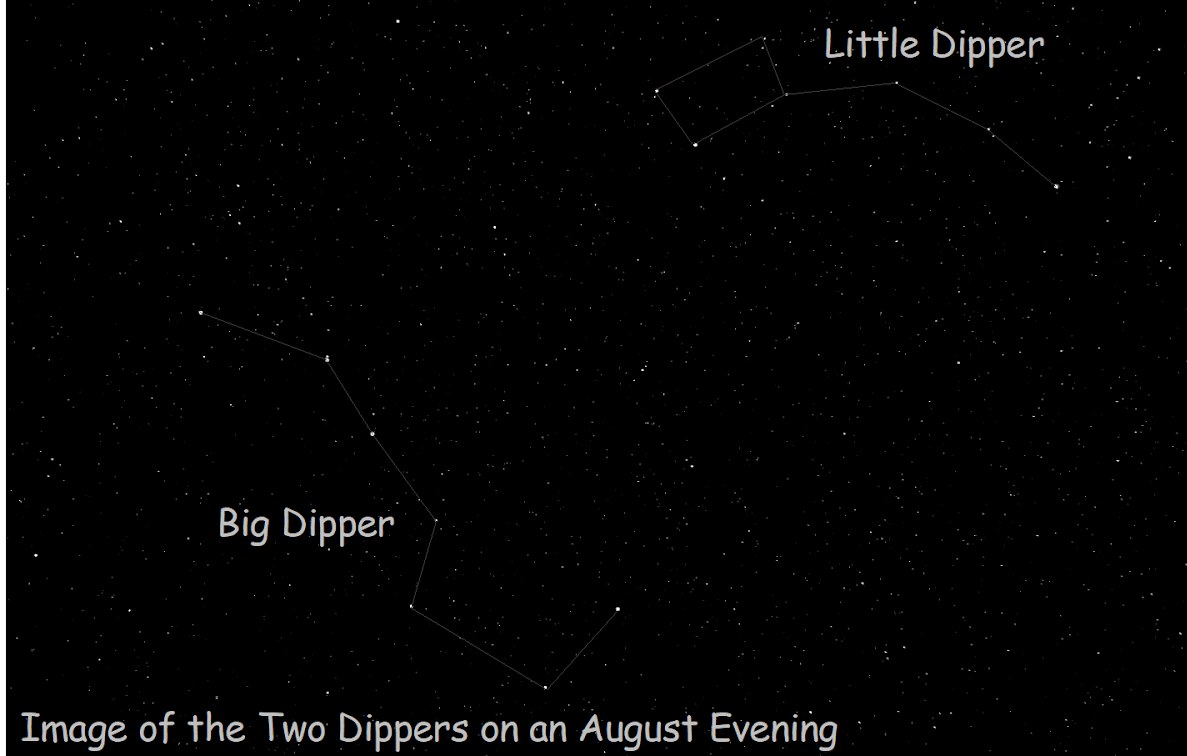
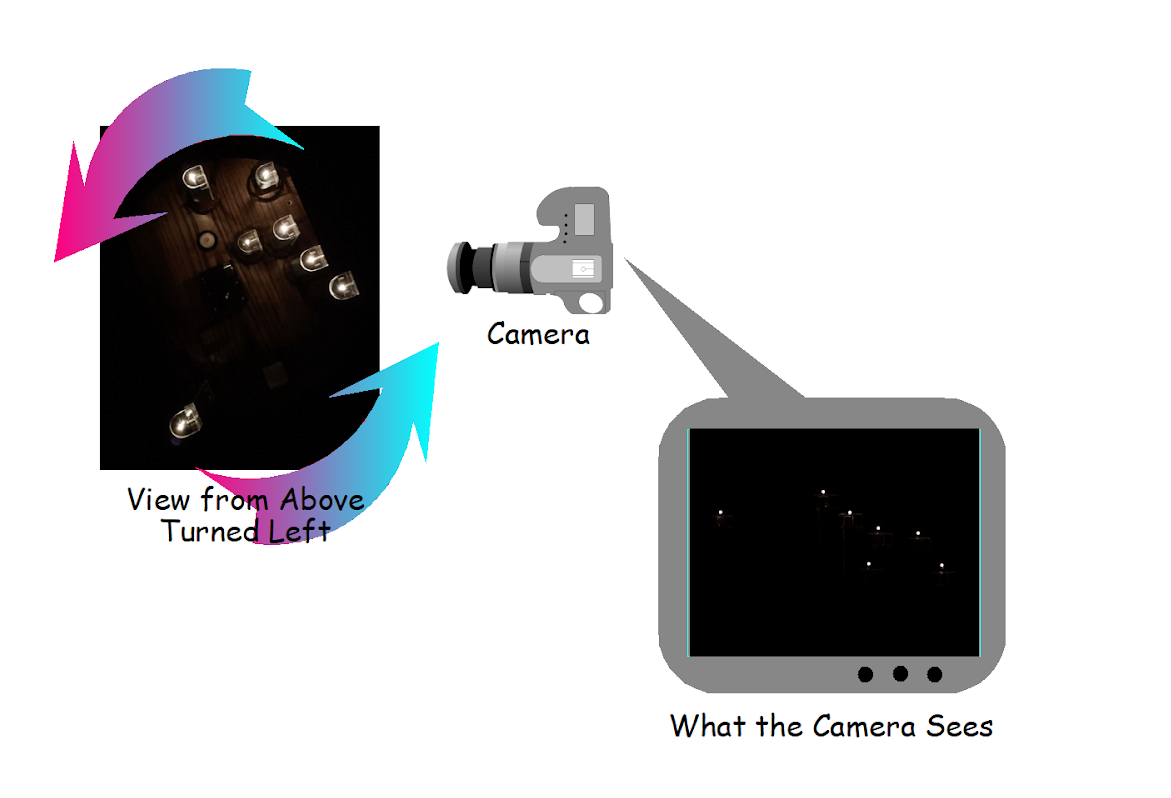
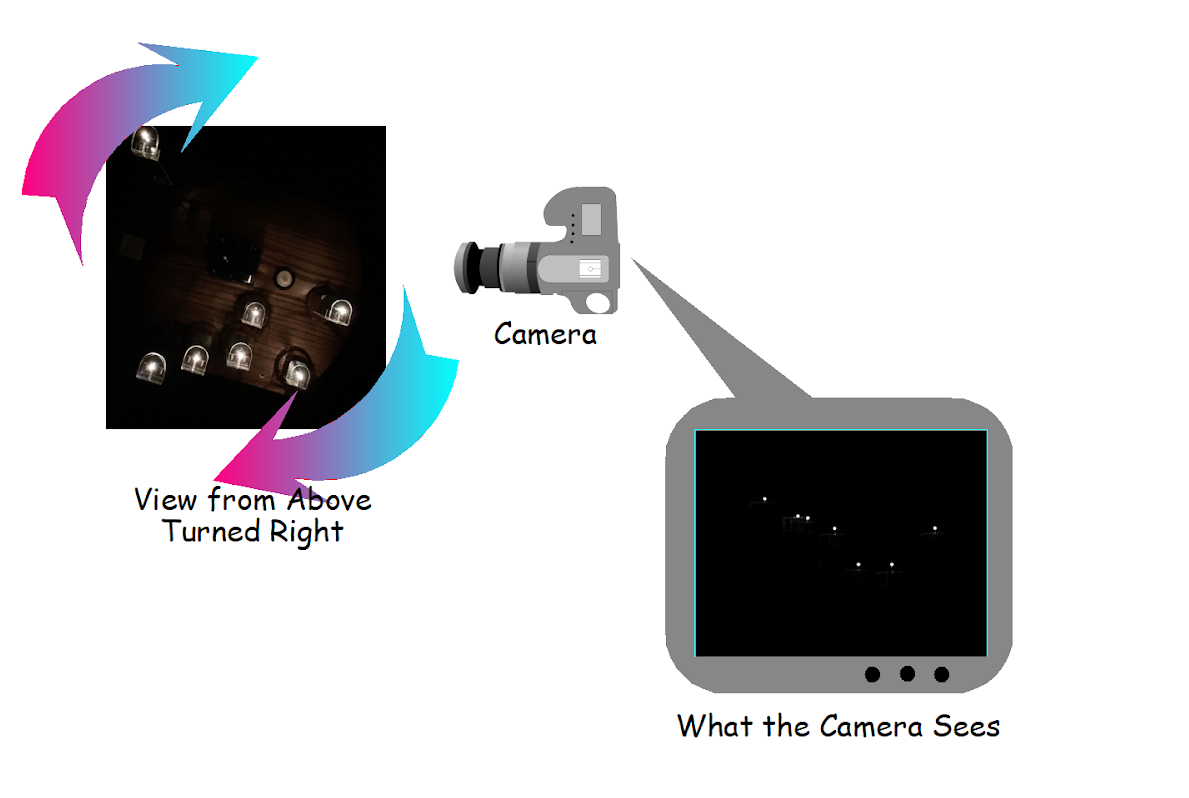
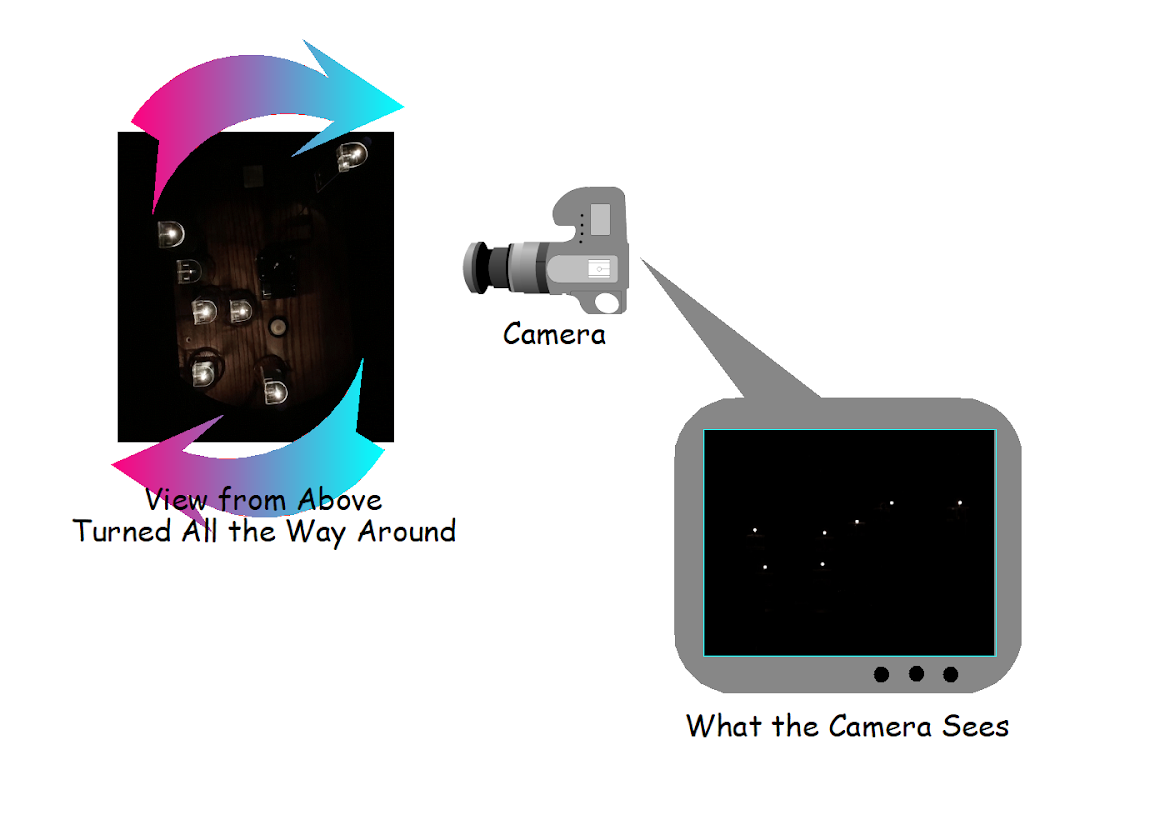
About 10 years ago, I used a drafting program to create a 3-dimensional map of the seven principal stars of the Big Dipper. The distance to each of these stars is more uniform than those stars that make up Leo. That made creating a physical model easier. Below is pictured the physical model I created of the stars of the Big Dipper, showing their distances relative to the Earth. Here it is, pictured below.

So from some plywood, a battery, some wiring and little light bulbs I constructed what you see above. At right is where I set up a camera to take pictures of my contraption as I rotated it, changing the figure made by the little lights.
In the illustration below, you see a picture of my model, taken from above, then a drawing of the camera and, at lower left, the normal view of the Big Dipper that the camera sees.
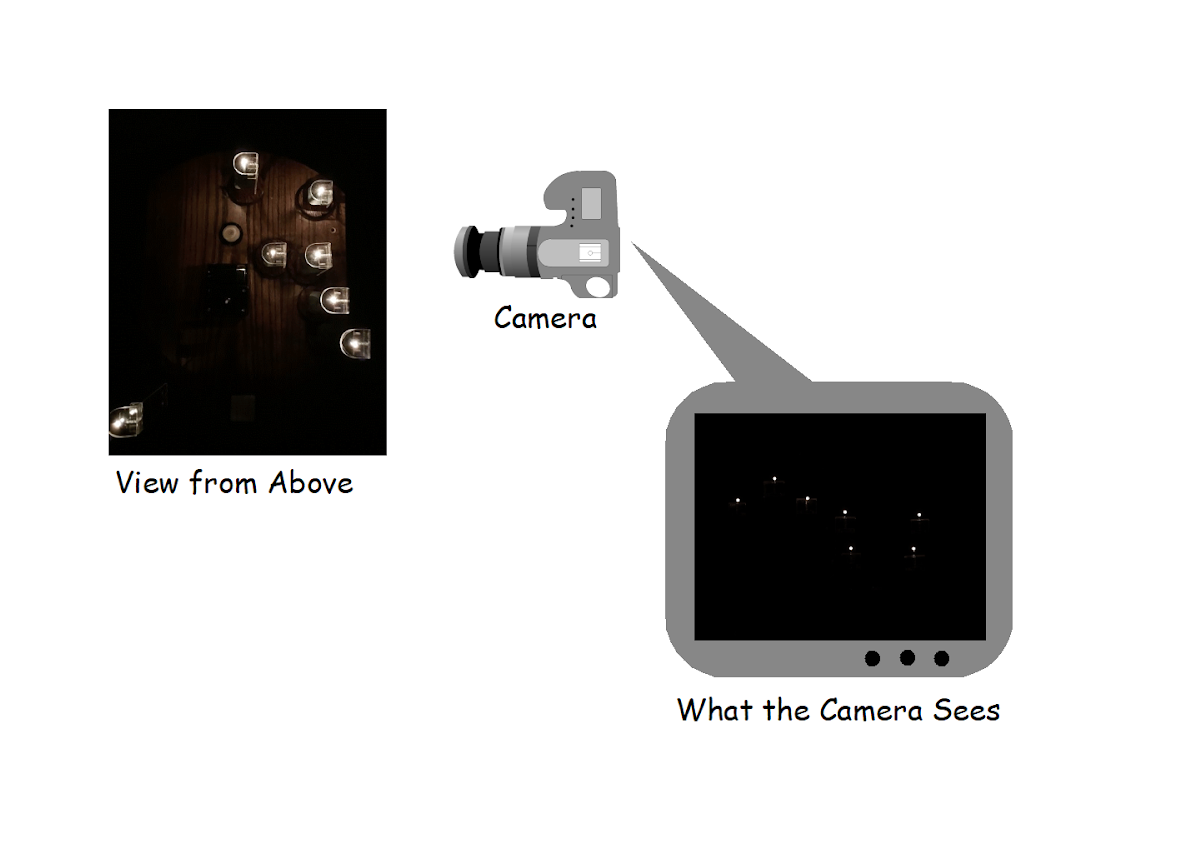
Now, I rotate the model a little to the left. Notice that the familiar shape of the Big Dipper completely disappears!
Rotate the model to the right and yet another “constellation” appears!
Now, turn the model all the way around and you get a “reverse Big Dipper”.
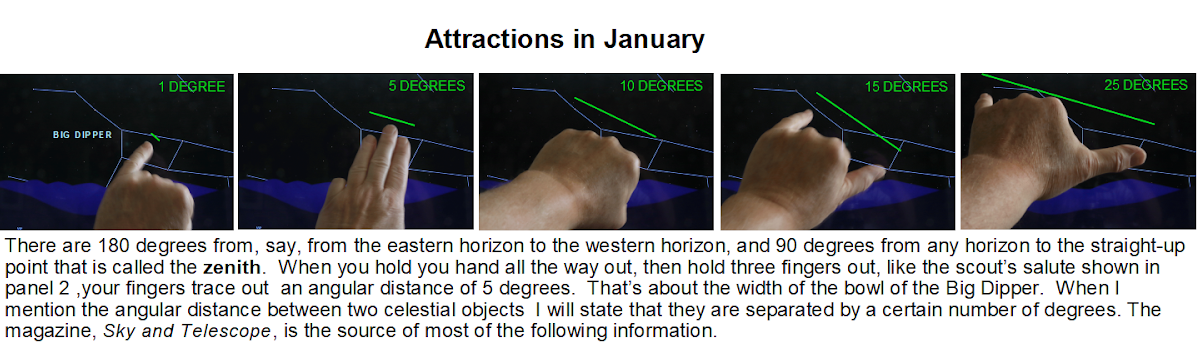
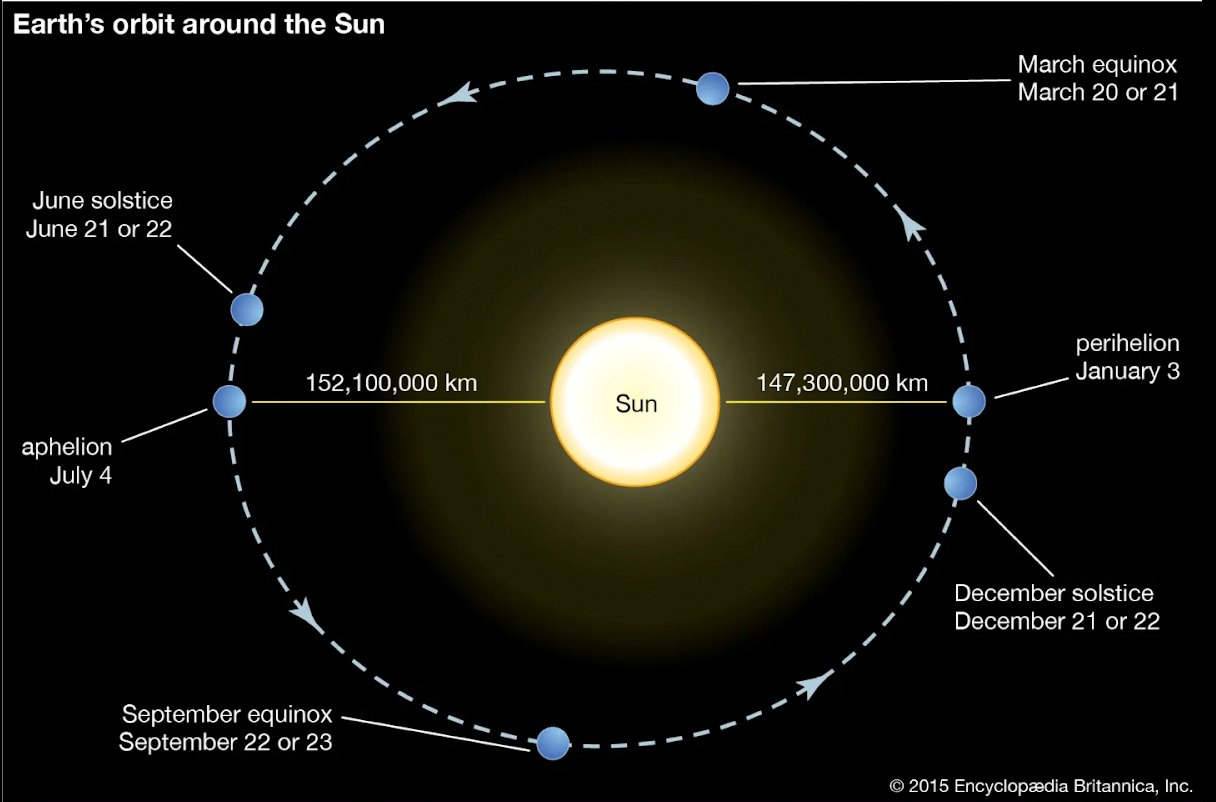
January 3 Nothing really to see here but today is the day that Earth is closest to the sun on her elliptical orbit. That ‘event’ is called perihelion.
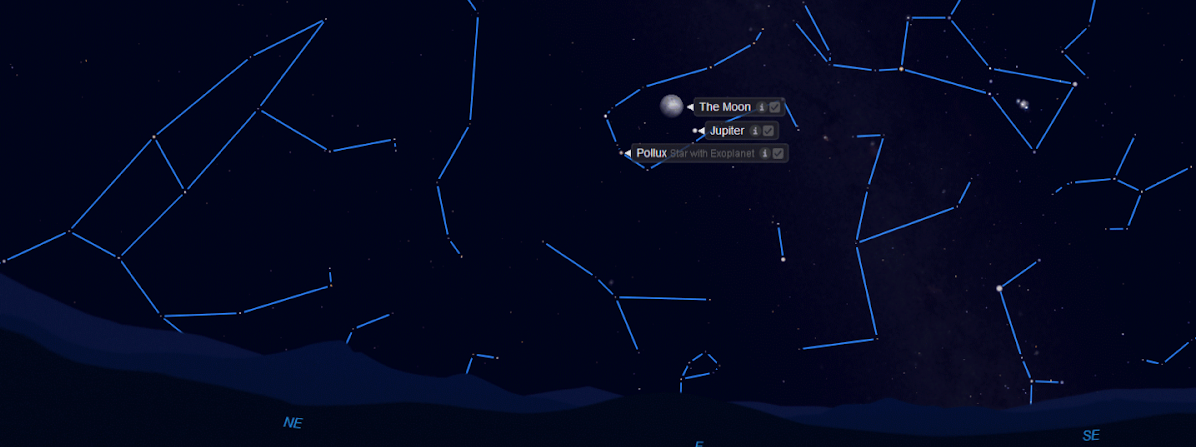
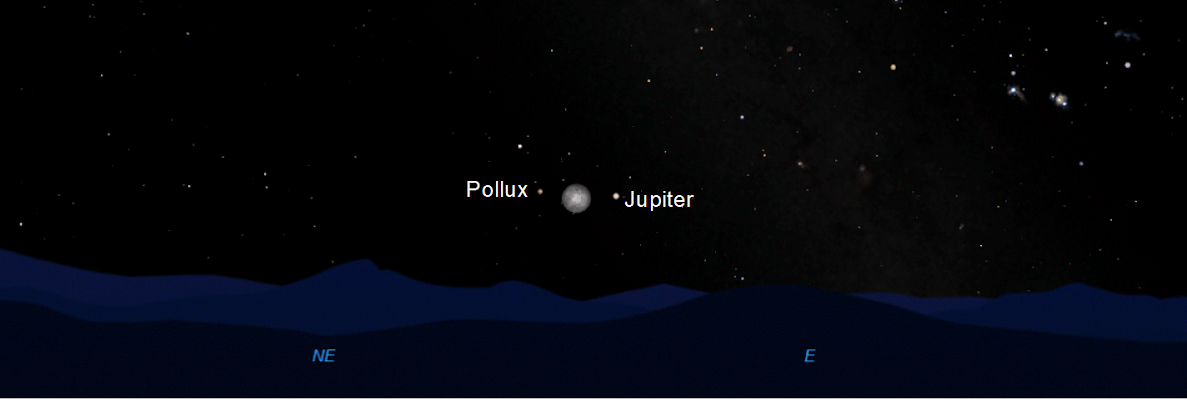
January 3 This evening look to the northeast to see the very pretty sight of the full Moon rising flanked by the star Pollux, in Gemini, just over 3 degrees to the left and the planet Jupiter about the same distance to the right.
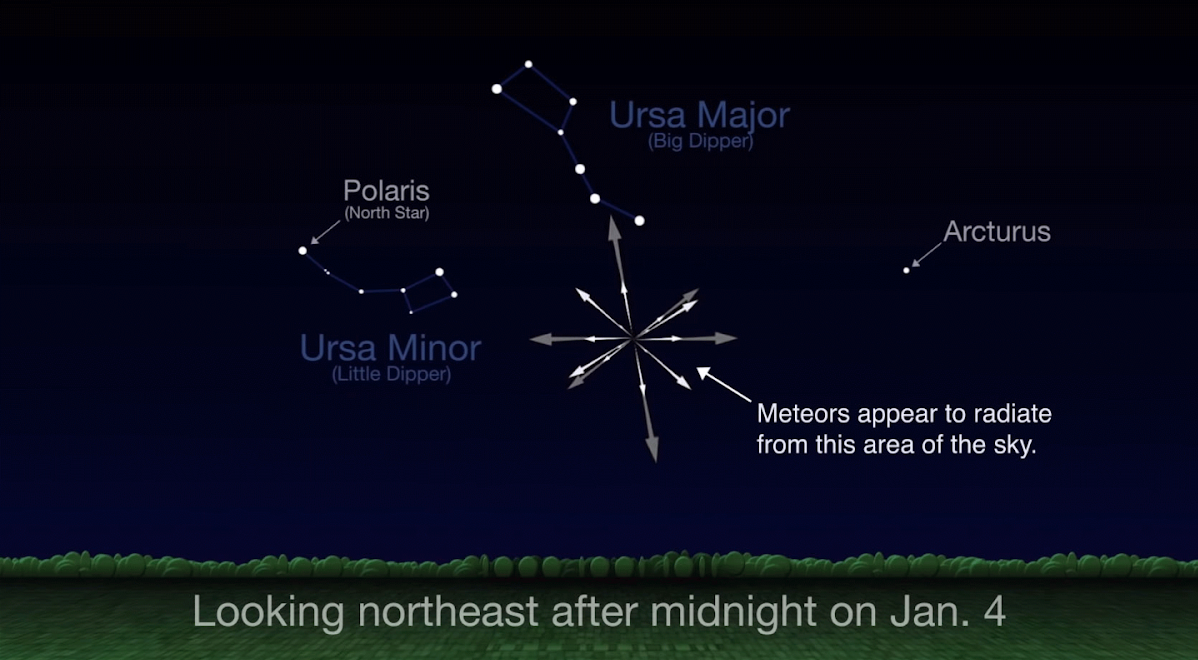
January 3-4 Tonight is the night for the annual Quadrantid Meteor Shower. I’ve said in previous issues of Skies over the Pinnacles that meteor showers are named for the constellation from which they seem to originate. Not this one. The constellation called “The Quadrant”, representing a drawing tool was eliminated by (you guessed it) the IAU.
The Moon will make nighttime skies too bright to see many meteors this time. Still, use the finder chart below and head out around 2:30AM if you want to fetch a few “shooting stars”.
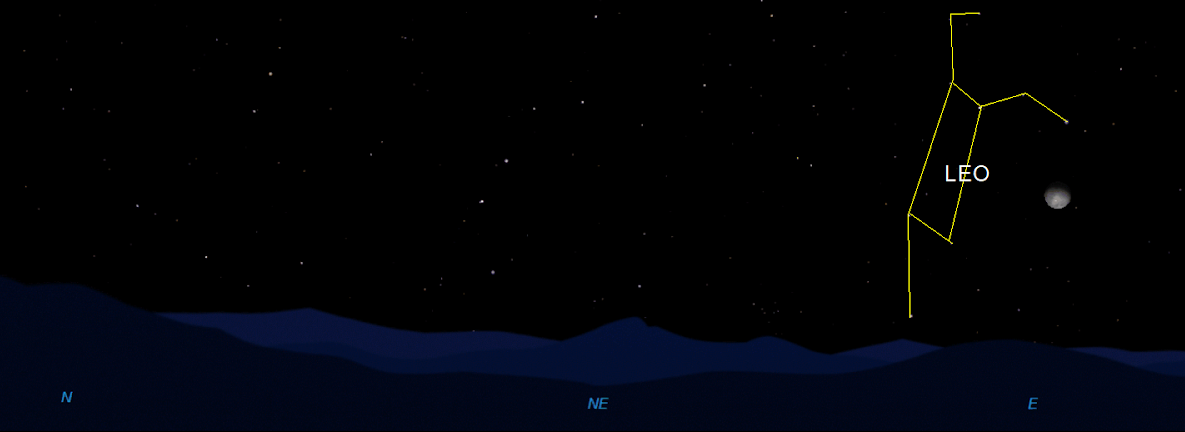
January 6 Tonight the Moon pays a visit to our friend, Leo, sliding about 6 degrees past the bright star, Regulus.
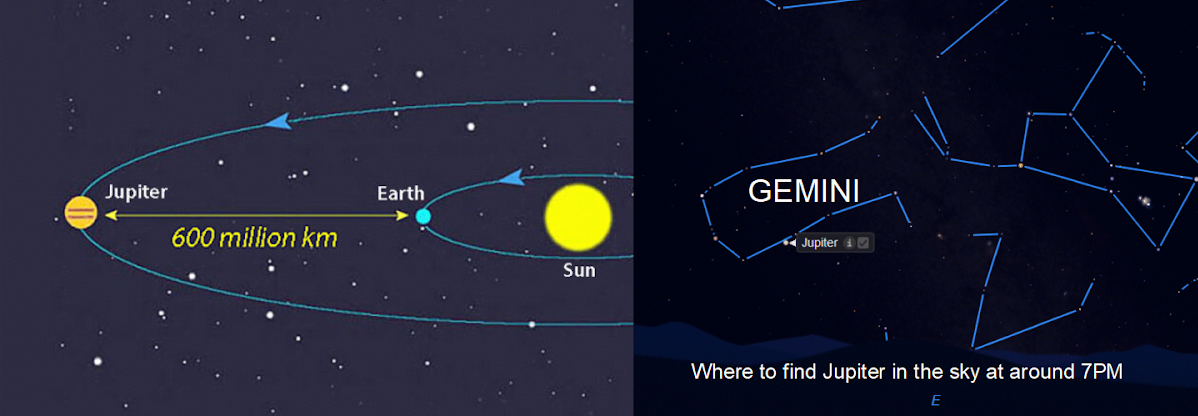
January 9-10 The bright planet Jupiter reaches opposition to Earth. That means it will be the closest to us as it will get all year. Opposition means that on this night, you can draw a straight line from the Sun, through the Earth and directly on to Jupiter.
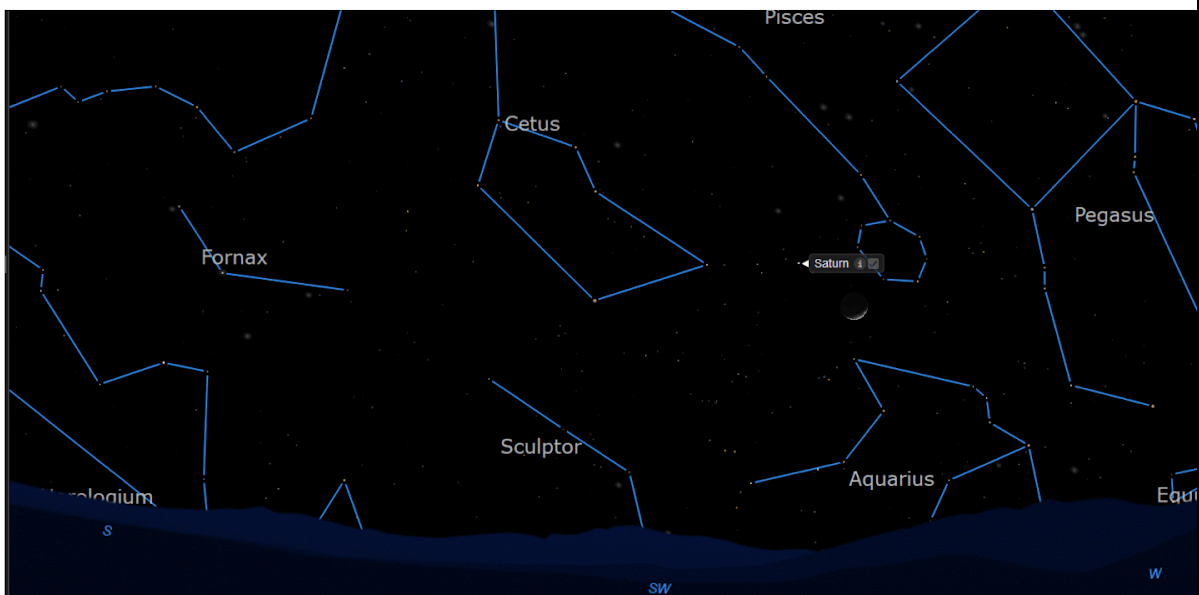
January 22 Find the waxing (increasing) crescent Moon just 6 degrees to the lower right of the planet Saturn.
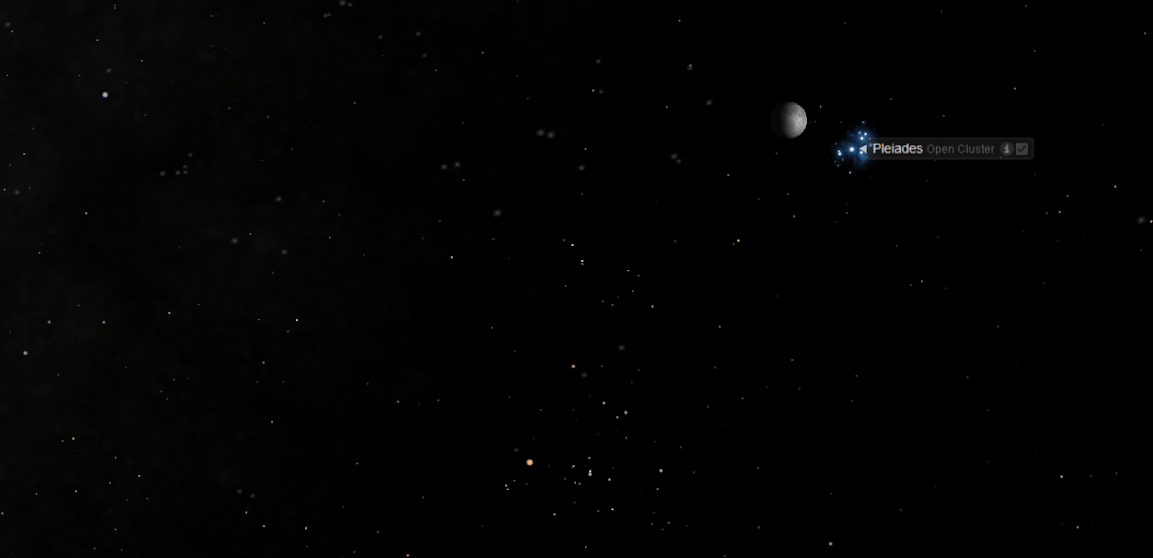
January 27 Tonight, the Moon pays another monthly visit to the Pleiades.
January 30 Look again at the constellation Gemini to find that the Moon has managed another January triad, again with Pollux and Jupiter.