Our Land of Promise keeps Berea's Black history alive
Aaron Banther is rediscovering what's been forgotten about our shared story
BEREA—It was in February 1906 when Carter G. Woodson, Berea College Class of 1903, by then a Howard University professor who'd obtained his PhD from Harvard, announced the concept of Negro History Week.
Woodson chose February, it is said, because it is the birth month of both the emancipator, President Abraham Lincoln (Feb. 12), and the prominent civil rights reformer, Frederick Douglass (Feb. 14). But according to experts, Woodson's true intention was for history to accurately reflect the story of Blacks in this country.
"[Negro History Week] uplifted the achievements of Black Americans while reinforcing one of Carter G. Woodson’s core convictions: that such special recognition would be unnecessary if history were taught honestly and without bias," writes Yohuru Williams, a history professor and dean of the College of Arts and Sciences at the University of St. Thomas in Minnesota.
Now, 100 years later, a local man, Aaron Banther, seeks to archive, share, and celebrate the histories of the Black men and women who settled and farmed our area, including those who called this area home before it came to be known as Berea.
Via his nonprofit, Our Land of Promise, Banther is especially focused on reclaiming the history of the Farristown section of Berea, where he is from. He named his nonprofit to commemorate what Woodson said Berea and Farristown meant for freed slaves who sought a place to settle and farm after the Civil War.
Abolitionists in 'The Glade'
In 1853, when abolitionist land owner Cassius Clay offered the Rev. John G. Fee and his family ten acres in Southern Madison County, many Black families were already living in "the Glade", as this area was then known. The Glade's pro-emancipation attitude was also well-established, according to a historical narrative on the City's website. Eventually, Fee founded a church in the Glade and called the area "Berea" for residents of the Biblical city who studied the word of God in hopes of a revelation.
By the time Fee had started his coeducational, interracial experiment, Berea College, in 1855, New Liberty Baptist Church was also being founded in nearby Bobtown, another African-American settlement, in the late 1700s. The Rev. Madison Campbell, a former slave, was New Liberty's first pastor and the church became central to the lives of local Black families.
However, as demands for segregation grew, an armed, pro-slavery mob raided the area, forcing Fee and other abolitionists to run for their lives, never to return until after the War. Fee continued his interracial model then, but what became of Campbell and others who predated Fee's project?
These are the kinds of mysteries Banther has set out to uncover.
"There are so many things you don't know because you weren't taught them. Black history is one of them," Banther told The Edge in an interview.
Becoming a historian
After retiring from the Navy in late 2020, Banther and his family left Jacksonville, Fl., and returned to Kentucky where Banther took possession of the 9-acre farm his great-grandparents had started in Farristown. As Banther began tending the small farm, he became curious about its history, leading him to uncover much that had been forgotten about the place.
"My dream of engaging in small-scale farming not only reconnected me with my roots, but also fueled a desire to highlight Farristown’s significance," Banther wrote in an article for Kentucky Folk Life Digital Magazine.
Eventually, Banther connected with two local historians, Sharyn Mitchell, a member of the Berea Human Rights Commission who sits on the board of Madison County Historical Society, and Jacqueline Burnside, PhD, a sociology professor at Berea College, and the author of, Berea and Madison County, part of the Black America Series published by Arcadia.
The two women suggested Banther conduct oral histories with the descendants of Farristown, and his history project was born.
"Mary Rice Farris was known around the state for her Civil Rights activism, but a lot of people don't know that," Banther told The Edge. "Or Moss Farris, who was a farmer in Farristown. He was known for training horses."
Banther began obtaining grants in support of his efforts to collect oral histories of the area, and even earned a Community Scholar certificate from the Kentucky Folklife program. Our Land of Promise became an official nonprofit in 2024.
The more Banther discovered, the more he wanted to learn. "I'm just a student of history," Banther said.
His explorations have also included the history of Bobtown and Middletown, the latter so named because it was between the other two Black settlements.
Community outreach
As his organization has grown and Banther's knowledge about his ancestors and their history deepened, Our Land of Promise has begun sponsoring community outreach events, including the October 2024 exhibit of Farristown-related artifacts at the Berea Arts Council, which was featured on KET.
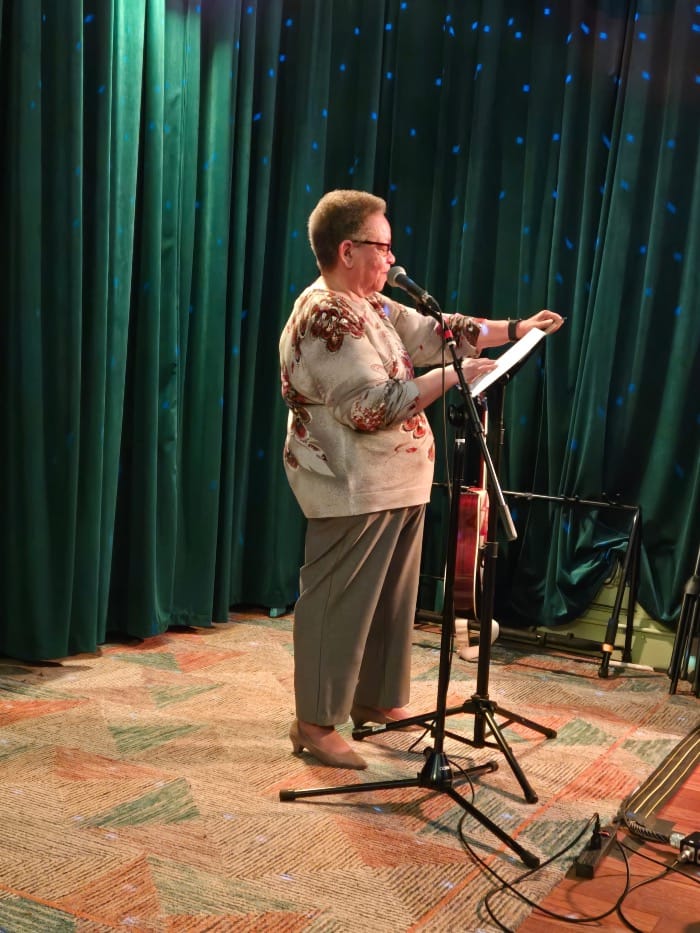
Also that year, Banther organized an African-Appalachian storytelling event held at Rebel Rebel in town. The event featured several Black storytellers from Appalachia, including Emily Jones Hudson, founder of the Stories Behind the Quilts program at the Southeast Kentucky African American Museum and Cultural Center in Hazard, among other well-known Black Appalachian storytellers including Jess Mullins Fullen from the Cumberlands of Kentucky and Aristotle Jones from West Virginia.
Middle school essay contest
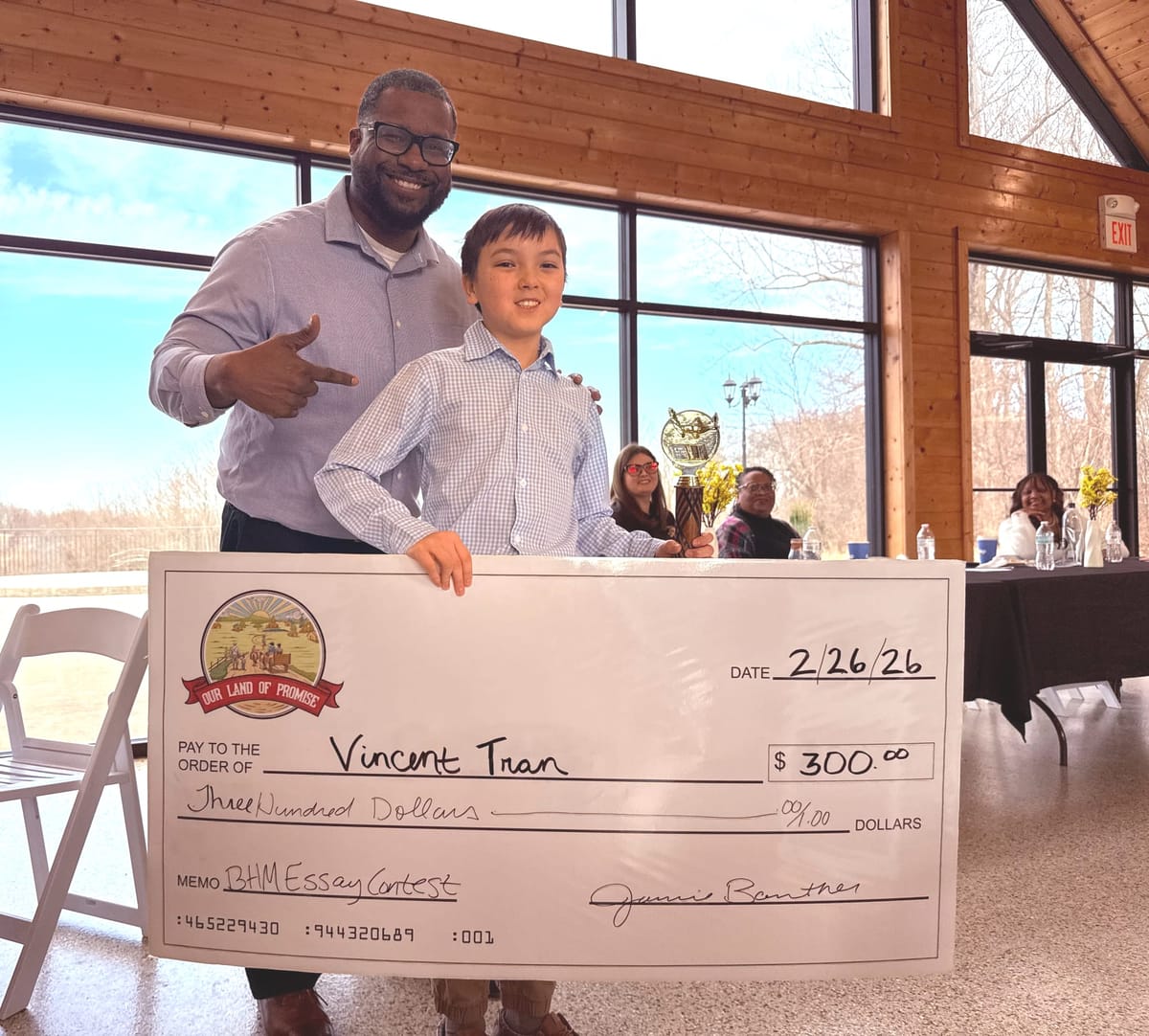
In 2025, Our Land of Promise started the Black History Month Essay Contest held across all Madison County middle schools, with a cash prize for the top three winners. This year's contest was held last Saturday at Lake Buck Lodge on the Blue Grass Army Depot campus.
"The essay contest is our way of encouraging students to learn Black history," Banther told The Edge at this year's essay contest. "And this year is special because it's celebrating 100 years of Black history."
This year's first place winner was Vincent Tran, a sixth-grader at Farristown Middle School, who wrote a detailed essay about Mary Rice Farris and her Civil Rights activism. Tran won $300 for his essay.
Foley eighth-grader Eleanor Smith took second place, also with an essay about Rice Farris. In third place was Madison Middle School's sixth-grader, Hana Abdelhay, who also wrote about Rice Farris. This year's event also included a story told by Sharonda Steele, Ed.D., emphasizing how all Americans are better off knowing their full history, which includes Black history. Steele is the associate director of nontraditional student services at Berea College.
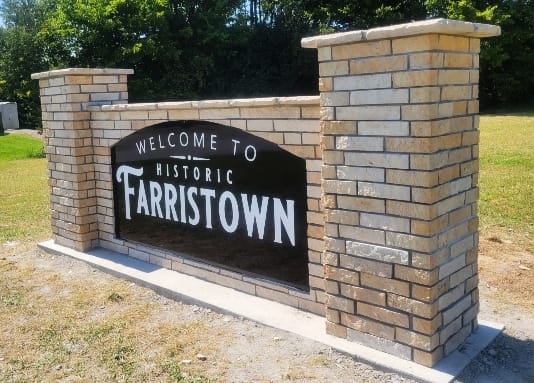
Farristown Community Center
As industrial development has increased in the Farristown section of town, Banther took his concerns that the history of his hamlet might be lost to the City, and asked for help recognizing the community's historical significance. Eventually, Banther and Mayor Bruce Fraley began working together on the Farristown mission.
"Farristown history is a critical part of the history of our city and our people," Fraley told The Edge in an email. "Historic preservation efforts, especially those of Our Land of Promise, are important because they document the history of Farristown and will make sure it available for future generations."
Fraley helped Our Land of Promise obtain a $750,000 in federal monies earmarked for community development. The grant will be used to create the Farristown Community Center that Fraley called "a gathering space that brings people together and will be used by citizens from all parts of Berea and Madison County."
The Center will house Farristown and other local Black history artifacts and photographs, as well as written and oral histories of Berea's Black communities to be preserved and shared, according to Fraley.
Banther's wife Jamie Banther told The Edge in an interview at this year's speech contest that the Center is expected to be completed in the Spring of 2027.
"Black History Month is especially important to celebrate the strength, creativity, resilience that shape generations of Black leaders, speakers, and change leaders," Jamie Banther told the audience at the contest. " They help us remember the past, celebrate the present, and inspire the future."
Sign up for The Edge, our free email newsletter.
Get the latest stories right in your inbox.