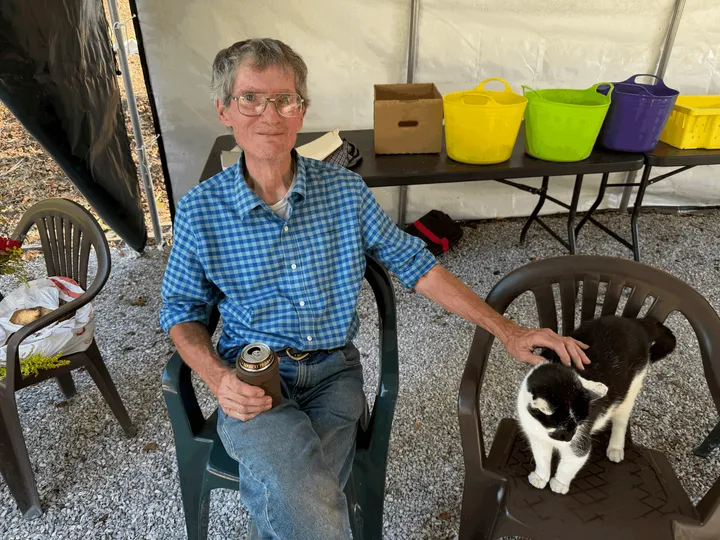
On the Edge with Democrat Zach Dembo, candidate for Kentucky's 6th Congressional district
Election coverage kick-off

RICHMOND—On January 15, 10 candidates were still listed on the Federal Election Commission's web page as in the race for Kentucky's 6th US Congressional seat. Four are Democrats. One is an Independent. The rest are Republicans.
A few haven’t raised any money, and while Deanna Gordon (R), current representative in the state's 81st District, is still listed as running for Andy Barr’s seat in Congress, as of last month, she had dropped out. She has a lot of cash in her coffers, though. Nearly 400K. That's almost as much as Congressional candidate, Ralph Alvarado (R), whom several politicos have told The Edge, is expected to win the race (for whatever that's worth).
Instead, Gordon is asking voters to forget she ever said Congress, and that what she meant to say was Frankfort, and that you will believe her and send her back to her favorite capitol city so she can continue to represent the 81st, and not her opponent Anthony Looney (D).
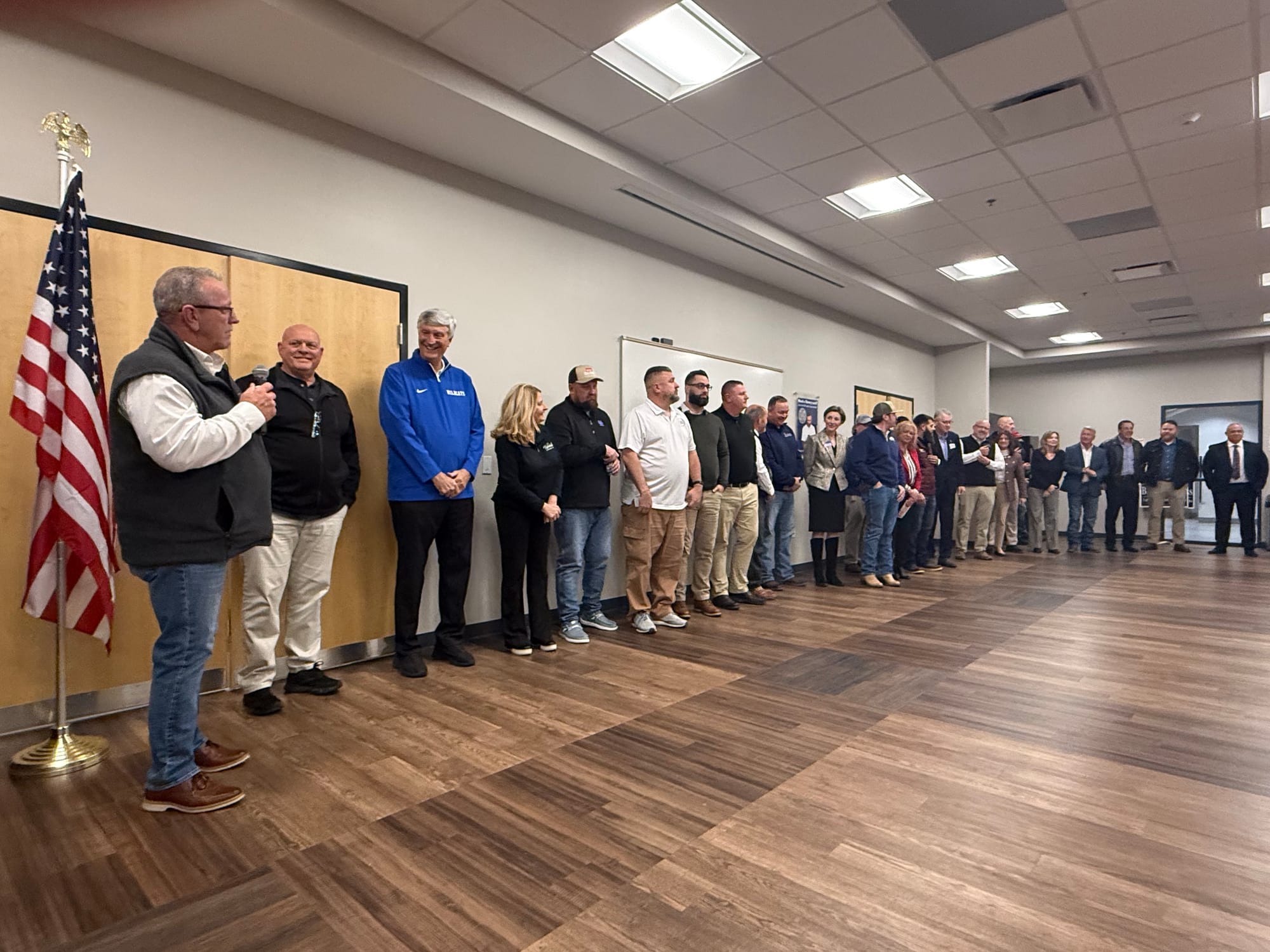
The line-up
In Madison County, there is a long list of mainly Republicans running for all offices, or for re-election. Most of them stood in a line at a meet and greet event sponsored by the Madison County Republican Party earlier this week at the Richmond Public Library. Several incumbents demurred from lining up, including Berea Mayor Bruce Fraley and County Magistrate Billy Ray Hughes. Missing entirely from the event was current the Madison County judge executive, Reagan Taylor (R).
Fraley eventually took the microphone, quipping he finds it hard to turn one down, and announced himself and what was, until last week, his unopposed run for another term as mayor. Now he is running against two men without much name recognition: Ricky Clontz and Troy Lane. Are they Republicans? Unknown at the present moment. The Edge has been unable to reach either of them.
None of the aforementioned is to say that County Democrats aren't in the race. However, if a snapshot of current elected officers in Madison County is any indication of what's to come this election year, then Republicans will sweep.
The only current elected official anywhere in the County who openly identifies as a Democrat is Jimmy Cornelison, the County coroner. The bigger question might be which Republicans will win, given that there are several competing for the same office, including that of county judge executive. In that race, Donna Agee (R), a career nurse with administrative experience, is running against incumbent Taylor (R), who is a builder, and newcomer Chuck Givens (R), a horse breeder. If social media is any indication of how that race will go, land preservation v. industrial growth will loom large in the race.
The primary this year will be on May 19. Then in June, election season for City Council will begin for Berea. All elections are in November.

Election coverage kick-off
The Edge is covering as much of this election year as is relevant and possible, meaning we'll do our level best to get all the candidates on the podcast. These podcast interviews will be the centerpiece of The Edge's election coverage.
We’ll kick off our coverage with Zach Dembo (D), a Lexington-based attorney and former federal prosecutor who is entering politics for the first time, to run as a Democrat for the 6th Congressional district.
Dembo hails from nine generations of farmers in Shelby and Henry counties. A Lexington-based attorney, Dembo is a former federal prosecutor, and was Gov. Beshear's legislative director.
Please note: Because this post includes the transcript of my interview with Zach Dembo, making it longer than usual, it's possible your email service will "clip" it when it arrives in your inbox. If so, and you wish to read the entire transcript, please click on the headline of this post and you will be taken to this article in its entirety.
On the Edge, with Zach Dembo:

Transcript of interview:
Ep. 2 On the Edge
With Kentucky Congressional 6th District candidate, Zach Dembo (D)
Welcome to On the Edge with me, Whitney McKnight, your host and producer.
It’s election season. And you’re listening to The Edge’s election coverage. It is still early, but with so many candidates, I am going to need a lot of time to get them all on the podcast! There are at least 8 candidates alone in the race to fill Andy Barr’s 6th district Congressional seat.
We’ll kick off our coverage with Zach Dembo, a Lexington-based attorney and former federal prosecutor who is entering politics for the first time, to run as a Democrat for the 6th Congressional district.
Dembo and I recorded this interview in early December, which means the US still had not invaded Venezuela. Instead, we talk about the veracity of claims Venezuelans are fentanyl traffickers. We muse why Democrats allowed themselves to become elitists, although they haven’t been alone in that. We also tackle corruption at all levels of government, as stopping it is the key to why Dembo says he has entered the race.
We also discuss whether politics attracts corrupt people, or if politics corrupts people.
Thank you for listening. Here’s my interview with Congressional candidate, Zach Dembo.
Whitney Welcome, everyone. You're listening to The Edge. I'm your host, Whitney McKnight, and I'm here with congressional candidate Zach Dembo. Zach is running for the old Andy Barr seat, the sixth congressional District here in Kentucky. I'd like to welcome you, Zach. Thank you for coming.
Zach Hi, Whitney. Thanks for having me on. I really appreciate it.
Whitney Well, I'm sure my listeners are going to be very interested in what you have to tell us before we get into the issues, though. Who are you? Tell me a little bit about your background. Why are you doing this?
Zach Sure. So I grew up in Lexington. I'm a ninth generation Kentuckian. I come from a long line of farmers. My mother grew up on a small dairy and tobacco farm in Shelby County. Uh, she decided she would be the last generation to be farming. And so she put herself through UK, and was the first in her family to go to college. But thanks to her hard work and my dad, who was a New York Jew that she convinced to move to Kentucky, I was able to go to college too, but I never forgot that I was really lucky to have that opportunity, and so I spent the whole rest of my career trying to pay it back through public service. I started as an eighth grade English teacher with teach for America in the Mississippi Delta. Even if I'm lucky enough to be y'all's congressman, the hardest job I will ever do being an eighth grade English teacher.
Whitney I've been there.
Zach Yes. Um, did you teach as well?
Whitney I taught high school Spanish for almost three years in new Jersey. Hardest job I'll ever have.
Zach Absolutely.
Whitney No question.
Zach And, you know, I've been lucky to have a lot of jobs. It's also the only job that I still dream about. Sometimes they're nightmares.
Whitney I was gonna say, bad dreams?
Zach Sometimes they're bad. Sometimes they're. You know, I finally get everything going the way I would have always dreamed in the classroom.
Whitney Um, well, let me stop you there. You've already said two things that I think are intriguing and make you an interesting, uh, just interesting person in Kentucky. First of all, a New York Jew that your mom convinced to come to Kentucky. How did she meet him?
Zach She met him when she--so she not only it wasn't enough for her to just be the first to go to college, she also put herself through med school.
Whitney Wow. Is your mom a doctor now?
Zach Well, she's retired, but. Yes. Yes, she was a practicing physician in Lexington her whole career. But she did her residency in Iowa, where she met my father, who was also doing his residency there. And so, um, I don't know what the discussion was. I'm so, so glad she convinced him because I loved growing up in Kentucky.
Whitney Well, he was already broken in. He was in Iowa. He knew a cornfield or two.
Zach Exactly, exactly. And now it's really funny. He's taken to it. He drives a tractor. He has a pickup truck. You know, he's a long way from Long Island.
Whitney Is that where he was from? I was going to ask you. Where in New York.
Zach Long Island, Oceanside, on the South Shore. Nice.
Whitney Very nice, very different.
Zach Very different. And, you know, it's I obviously love my Kentucky roots, but it's fun to have a little bit of both. Um, sorry. You said there were two things.
Whitney Yeah, well, no, I could just sit here and talk about New York and New Jersey and all the different places for a long time. But the next question I had was, I had read that you had went to you had gone to Stanford University, and then you went off to the Delta to teach. And I thought, okay, well, was that the plan?
Zach No, definitely not. And it won't surprise you to know, Whitney, there is not a big Stanford and Mississippi Delta pipeline.
Whitney Yeah, I kind of figured that. Which is what made it interesting.
Zach Yeah, I graduated from college in two thousand and seven, which was really when the tech world was exploding. And so, so many people I knew were taking very lucrative jobs in Facebook and Google. And, um, it was always clear to me that that wasn't really the path that I wanted to go down. Um, I knew I wanted to do something in the rural South. Uh, that's where my roots are. Um, at the time, there wasn't a teach for America site in Kentucky. Otherwise I would have done that. And so the Mississippi Delta was just, as I'm sure you know, just a storied historic region.
Whitney Um, Mississippi has. I think it ranks fiftieth in the.
Zach States.
Whitney For education.
Zach Yeah. Growing up in Kentucky, we used to always say, you know, thank goodness for Mississippi.
Whitney Because.
Zach They're fifty instead of us.
Whitney Um, I don't think were we ever forty nine.
Zach I think you're right. I don't know that it was ever that bad. Certainly much better these days. But, um, but anyway. So, yeah, I wanted to learn about people from a different walk of life, a different perspective. Um, certainly in Mississippi, in my classroom, I was the only white person, which was a new thing for me coming from Kentucky and my upbringing. Um, but in the end, of course, you know, rural folks are rural folks. People all want the exact same thing. And so it was really fun to get to know my students and their family families. Um, and I think of them all the time. I'm still in touch with a few of them.
Whitney Oh, nice. And that was through Teach for America. It was. And you were there for did you say three years?
Zach Two years? Yeah. I was unlike a lot of the amazing teachers I'm still in touch with and some that I know. Not good enough to stay on. Beyond that.
Whitney It's a calling. It is a calling.
Zach It is. And bless anyone who's willing to do it. I met someone on the campaign trail the other day who's been doing it for forty three years and just absolutely amazing.
Whitney No, I knew I was not cut out for it, and that's why I didn't want to do it anymore. Because, I mean, you don't even know all of the different ways you have to be tuned in.
Zach Exactly.
Whitney And then you have to deal with parents, and then you have to deal with administrators, and you have to deal with the testing and all that. And it's just it's endless. It never stops.
Zach No. Exactly. Even as I was getting good, I was, uh, realizing everything I was doing could be reversed by the local superintendent or the state superintendent. And it just occurred to me I wanted to be doing something that made maybe had a larger impact. And so that's why I went to law school. Um, yeah. So I went to law school and at University of Michigan in Ann Arbor and was very lucky to go there. And, uh, you know, thought about various paths, but ended up deciding I'd go active duty in the military, in the Navy. Also, not something I would have ever predicted.
Whitney Well, what made you do it then?
Zach I think it was a combination of things. Uh, I grew up across the street from a World War two veteran who was basically my adoptive grandfather. We saw each other every day. We were very, very close. And he had participated in the Pacific Theater on Iwo Jima. Guadalcanal, saw them raising the flag over Mount Suribachi. That was a huge influence to me. And then also, I came of age during Operation Iraqi Freedom and Operation Enduring Freedom. And it really bothered me that because of the all volunteer force, so many people I knew had very strong opinions on what was happening with our troops for or against, but so few people were actually affected by it personally in any way or even understood how the military worked. So I ended up being a judge advocate, a uniform lawyer, and I'm certainly not suggesting that I was deploying on the front lines, although I certainly raised my hand a few times to to do that. Um, but I wanted an understanding of what men and women who swear the oath and put on the uniform go through. And I'm glad to say that for four and a half years on active duty, I was able to do that because often I was their lawyer. And so I got to know their very most intimate concerns and what was going on in their lives and what they were worried about, and standing up for them and advocating for them. And, you know, getting to meet sailors and Marines from all sorts of specialties, everything from corpsman who treat people in hospitals to Navy Seals to helicopter pilots. Um, yeah. So that was that was wonderful. After my honorable discharge, I went to the Civil Rights Division in D.C.
Whitney Oh, please, let's not go down D.C. roads yet. I want to stop. And, you know, I kind of gave you a list of things we could talk about. This wasn't on there, but I think you're going to have a an impassioned response. I'm going to guess that you will. So you're talking about your military service? Yes. You know what is going on with us? Bombing boats coming from Venezuela. Is this legal? What's your thoughts on this?
Zach Yeah. From everything that I've seen, uh, and I want to be cautious because obviously I've not seen any classified materials. And maybe there's more. But from all the reports I've seen, I don't see how it could possibly be legal.
Whitney Well, I would like to know whether or not you think there is a strong line of command responsibility. That's kind of been my question. Are you aware, Mr. Hegseth, when you're bombing, ordering these people to be bombed, there's civilians. Yeah. And you're asking your military men and women to kill civilians. Maybe. Maybe not. Armed. Who knows?
Zach Yeah. No, it really bothers me in two different ways, you know? The first is just from a practical perspective, you know, if indeed these people are truly bringing drugs in which, by the way, there's been very little proof shown of that beyond just the administration asserting it. But even accepting that I'm the only candidate in this race who's actually prosecuted drug dealers. And so I have no sympathy whatsoever for them. But what I'll tell you is if we really want to stop the drug trade, it's not going to be just executing low level drug smugglers. What we need and the way we do it at DOJ and DEA is you arrest them, you prosecute them, and inevitably they will probably flip and give you information on someone up the chain.
Whitney Is that what's always happened when you've– or is that a typical thing that happens?
Zach That's very typical. Yes. Whereas with this they're killed before they can give us any actionable intelligence. So first, in a way of stopping the drugs, I don't think it's going to be effective. And then the bigger concern is just the normative issue of what role the military should play. And, you know, I found it extremely concerning when this administration came in that they fired all of the uniform JAGs. That is a very nonpartisan position. Um, and I think, you know, the secretary, unfortunately, has evinced a real disrespect for the role of Jags. Uh, and he views it as nothing more than just unnecessary bureaucracy as opposed to, I'm thinking, say, of World War Two and Nuremberg and everything that created the rules that we govern armed conflict with.
Whitney Were JAGs involved in that? I wasn't aware of that. So the JAG. What do you call it, a corps?
Zach Yeah, the JAG Corps.
Whitney Exactly. So the JAG Corps were involved in writing the rules of conflict during World War two?
Zach Sure. And they still are. They still--you know, we're the primary advisors. And I should say that I have there's been certain reports that some judge advocates, uh, were either dismissed or, uh, not allowed to give their input. I also think it's highly suspicious that the former four star leader of the command over the Caribbean, the Southcom commander resigned, which is very unusual. I think there's a lot of pushback going on in the military. But of course, I know that everyone is, uh, trained not to be political in the military. And so I'm imagining they're not speaking out about it, but getting to what you're talking about. Exactly. The military is not supposed to exercise law enforcement powers. That's not their job. That's not what they're trained for. And so my worry is whether or not there's all this concern about the second strike from the September second. No matter what happens, the military should not be in a situation where they're summarily executing criminals.
Whitney Okay. So are you considering that law enforcement? Because I unless I misunderstand, I think the Trump administration is viewing this as terror. Is terror the same as law enforcement. I know that there's been discussion in previous administrations as to whether or not that the same thing, but what is your view?
Zach So as best I've seen, the Department of Justice has issued an opinion, which I'm sad to say is the, you know, just one of many that seem to be based on little more than the president's bare assertions of fact that they are somehow combatants. But these people are just criminals, like so many other criminals, like, frankly, all the drug dealers we have in America.
Whitney Wait, let me at least insert this into the argument, though I don't personally, I haven't seen any evidence that we know for sure there were drugs on any of these boats that have been blown up, so maybe they were criminals. Maybe not.
Zach No. And I yeah, that's exactly right. And, you know, that's one reason why I'm Congress has let this go for way too long without exercising oversight. I'm glad that finally it looks like there's some bipartisan consensus. So there's this pressure for them to release the full, unedited video of this September second strike and also to release the actual orders, the execute orders or Ex-ords so they can actually see what the order was to the staff. You're right, there's a lot we don't know. And so that's why, you know, obviously there may be more than what I know here. And maybe there's something that seems to legitimize this in some way. But from everything that's been publicly reported, I simply don't see how it comports with the law of armed conflict or anything involving international law or what I was trained as, as a JAG.
Whitney Well, let's go back to the question of is terror law, you know, is fighting terror law enforcement activity because you were saying that the military is not meant to enforce the law. Well, we see that happening wherever the National Guard has been deployed, however. I mean, that is essentially a law, unless you're really going to declare war on cities, that's a law enforcement activity, would you say?
Zach Well, so first, I think there's been some pretty clear court cases that have ruled against the use of National Guard. Um, you know, I think that whole idea of that's making cities safer is just such a red herring. Because if we really care about making cities safer, there's training budgets that are completely cratered in these police departments. There's recruiting budgets that are completely cratered. If take the money that we would have been spending on these National Guard deployments, which appear to me to be just for show and use them to actually help the police departments, because those are the folks who know, for example, how to arrest folks, how to conduct investigations, whereas these National Guard men and women, they're there for disasters, they're there for emergencies.
Whitney That's what they're trained for.
Zach Exactly. That's what they're trained for. And so I want them to be available for that mission. And I want to support the police. But let's do it by supporting police rather than trying to get someone else to take their job.
Whitney Well, I want to go back to your time in D.C., but I still want to follow this thread a little bit more because you mentioned, you know, it's become more of a bipartisan concern the way the Department of War is handling things. Um, you know, in Berea at least, and certainly in Madison County. So in the district that you are, you are running for there there are people who might have. In fact, I know some people who have who've spoken to me about the fact that, you know, I voted for Obama, but then I voted for Trump because and I'm thinking to myself, that's like a trunk swerve on the road, right? Because you couldn't have two more different outlooks on on how governance should work. But I understand I understand both. Yes I have. When someone has thought rationally for themselves. This is what I believe. This is who I think is going to make that happen. Um, but I think we've also been disappointed by presidents for the last twenty years. Personally, in my opinion, I think that you could say that there have been more failures than successes. So it's I think it goes beyond bipartisanship. but right now we're just kind of like, what's happening? What's next? Yes. So how do you approach law enforcement? How do you approach any of this anymore? As a let's say you're elected, you're a member of Congress. How do you how do you carry a vision through in a, in a in a nation? Now, that is that is beyond the point of actually trusting that things will happen when they elect people.
Zach Well, look, I love the way that you described it, because I feel exactly the same way, which is you can understand why someone would vote for Obama and then Trump, or you can understand why someone would vote for my old boss, Governor Andy Beshear, and then turn around the next year and vote for Trump. Because, as you say, they're looking at what's going on and making rational decisions for their family. And so when President Trump was running, he said he wanted to secure the border and get costs down. He didn't say anything about deploying National Guard to cities, or bombing Venezuelan boats, or any of the other chaotic, crazy things that have happened. And he's frankly betrayed folks who trusted him with solving these economic problems with these tariffs that are making the prices of everything go up.
Whitney But he did he did at least honor his his promise. Whoever in his administration wanted this done. The borders closed.
Zach Yes. That's true. Now the concern is what are we going to do about the folks who are here? And I have real concerns about people's due process rights being respected. But you're right, that part is good. But I think the major thing that it's looking like the thread through all of this is, you know, it's the economy, right? And President Trump was saying prices would go down on day one and they very clearly haven't. But I think the point you're getting at is exactly what we have to do to change this in Congress and everywhere, which is first, we don't need to be judging anyone based on who they voted for, right? If they made a rational decision for their family, let's figure out how we make sure we're crafting a policy that helps them. But second, as Democrats or politicians or whatever, I'm running as a Democrat, but I'm running first as a Kentuckian and a public servant. Um, we have to think about more than just the tit for tat of the current politics, because you're right. I think presidents and frankly, D.C. has failed a lot of the country for more than twenty years, frankly, which is why I can understand when Trump was running and he said, basically, let's burn it all down. There were some people who said, you know, it hasn't been working for me. It has not been serving me. So I think, obviously we need to reverse some of these terrible decisions the administration is making, but we need to look beyond that to say, what were the problems that led us to this situation in the first place, and make sure some of the fundamental systemic structural problems that led to D.C. not helping people in most of America, including in our district in the sixth, that those problems are fixed too. It can't just be, oh great, we get the house back and maybe the Democrats get the white House back in twenty eight. That's just more of politics as usual. I think you're absolutely right that there's a fundamental disconnect that we need to fix. And that's how I would approach this as a first time candidate and someone who's new to politics, because I share everyone's frustration with politics.
Whitney Yeah, let's bring that back then, to your experience in DC, because you and I both have spent a large part of our careers. I'm older, but, you know, I spent a decade in DC, other cities. Um, I loved DC. I will say right up front, I miss it. However, you're dealing with an entirely different species of human being. Sure, it really is not like the rest of the country, and I have been pretty much to every state, and I've spent a lot of time in different places. Washington is its own bubble. It really is. And the complaints that people have about Washington are true. Yes. They're true. So, um, you're you're let's say you're elected. You're entering a machine. So if you're a cog in a machine, how do you, you know, how do you not get just run over, ground down.
Zach I mean, I think the real answer is, uh, the biggest problem I see that people seem to fall into is they just assume that the only measure of success is being reelected.
Whitney That's true. Yeah.
Zach And look, I obviously, if I'm if I'm honored to be everyone's congressman from here, I'd like to make some policies and be there long enough to do what needs to be done. But in the end, you're there to do things. You're not there to just be there. And so when I look at the problems with both Republicans and Democrats, it's just the idea that they just think this is just a gravy train. They get to stay on their entire life until they die.
Whitney And and then they do disconnect. I've interviewed so many congressmen and women and senators, and I used to kind of get irritated, actually, because I find myself thinking, would you please come back to this planet? Yeah. Would you please not have all the Botox in your face and all the, you know, the tailored suits? Very nice. You look great. Right. But could you deal with the problem? Right.
Zach And what about your constituent who's struggling to make ends meet?
Whitney And I'm. I'm kind of being. I'm dead serious when I say this. It was because I care, and I. You know, I want them to care. Sure. It made me mad.
Zach It makes me mad, too.
Whitney Well, it just popped into my head. I'm thinking one of the reasons that I personally have been frustrated with Democrats, so I don't know if this is shared with other people, but I will tell you my own observation. Being in Washington. Sure. And I would love to hear your thoughts about it. Being a Democrat. Mhm. Um, I don't hear any economic policy worth really taking seriously coming from the Democrats. Why do you think that might be if you agree with that?
Zach I definitely agree that, you know, the Democrats have been just as responsible for a lot of the failures as the Republicans. I mean, to be clear, I think there's a lot. I'm very worried about right now from Republicans in terms of them sublimating what's best for their constituents to the president, because no matter what you think of Trump, there is no one president who understands and has the interests of the Kentucky sixth at heart. That's the congressperson's job. That is what I hope my job will be. But I agree with you. I think there's a way in which Democrats and I think, frankly, it's because corporate interests took over a lot. I think lobbyists took over a lot. And there's a real way in which working folks felt that even though we're the party of the New Deal, we're the party that did a lot to help the working class. They felt that that legacy was over. And the other thing I'd add is Democrats like the ones you're talking about in the tailored suits and the Botox, they left their constituents behind. And there was a real sense of elitism. And some of that, I think is unfair. Some of it definitely isn't. I think there's you know, Governor Beshear, I think is a good exception and a good you know, the only politician I ever worked for was Andy Beshear. And, you know, you've probably heard he's been saying these days, politicians need to talk like real people.
Whitney I have heard--I actually saw him go on Bill Maher and I thought he was very boring. And I guess that's what they want is people to just just say the things that people. I mean, I understood every word he said. Sure. And he wasn't talking in some cloud. So that was effective. But yeah, I mean, I did think it was kind of like--
Zach Well, you know, but his point is like, let's stop using buzzwords like food insecurity.
Whitney I totally agree with that. People are hungry. Right, exactly. It's like a George Carlin routine where he would say, you know, all these words just to separate you from the actual experience.
Zach Exactly.
Whitney It's not. It's not what the. Well, yeah.
Zach Well, and so I think even that communication method is showing like what you're talking about in terms of this distance between the represented and the representative. And we've just got to close that distance.
Whitney Well, um, we are running out of time, but I want to make sure that we don't miss anything really key here. Um, one thing that you have already shared on the campaign trail is how much corruption bothers you? Yes. Let's talk about that. Sure. What? What do you mean when you say, you know I am upset by corruption? You've indicated that in other places, but never really. I've never heard you unpack it.
Zach Sure. So, you know, the first thing I'll say is I spent a lot of my career fighting corruption. Right? We were getting to this part, but, you know, at the Civil Rights Division or when I was a federal prosecutor in Lexington, but I covered sixty seven counties in Kentucky, including Madison County.
Whitney Well, give us a little more detail. What did you do in each of those prosecutorial positions?
Zach Sure. So in the Civil Rights Division, I was based out of D.C., but I was all over the country prosecuting cases, federal felony cases. Usually they were cases in which someone abused their power in a corrupt way. So we're talking crooked cops, crooked public officials, crooked jailers or prison guards, something where there was a real abuse of power. We're not talking about like lawsuits. We're talking about true crimes, um, where there were victims and there was investigations. And usually the FBI was my investigative partner. I did that from New Mexico to Maryland to Minnesota to Georgia, Louisiana, all over the place, including some cases in Kentucky. Um, there was a brief stint in there when I worked for Governor Beshear. I worked for Andy Beshear in twenty twenty to twenty twenty one, and then I got to return to that, which truly was my first love being a federal prosecutor. Um, when I was in Lexington as a federal prosecutor, it was still focusing mostly on abuse of power or corruption issues. Um, but I did get to do more of what you'd consider the standard prosecutor role in terms of drugs, guns, um, kidnapping, uh, sexual assault, labor trafficking. So I got to see a lot of different crimes and work with a lot of different crime victims. But in terms of what offends me about corruption, I think unfortunately, there's a lot of it to go around in the country, right? I mean, obviously, I think there's a lot that the administration is enabling and doing right now that is corrupt in the sense that it is serving the interests of the ultra rich at the expense of many of us here. Um, but it's not just this administration. I think, frankly, the electeds on both sides, kind of in the way we've been talking about are corrupt. I mean, the fact that in twenty twenty five, congresspeople are allowed to trade individual stocks based on information that they received that the public doesn't have. That's just like a complete.
Whitney Well, just as egregious is that they don't see anything wrong with that.
Zach Well, I'm hoping that's going to change. And let me say that's a that's a very low hanging fruit that I think we can fix. But you know, there's there's that. And then there's the pernicious, the pernicious role of money in politics. You know, I mentioned to you that I'm the only the only person that I know of. Another journalist told me, I'm the only person in the race who has a job because I have to have a job.
Whitney Um, you are you are a practicing attorney.
Zach I am a practicing attorney. And that's because, you know, I have a mortgage and my wife has student loans, and we couldn't get by on, on, you know, my wife's an amazing prosecutor herself, but she's she's on a state salary. Um, politics shouldn't be that way, right? Like politics shouldn't be that. Just people who are wealthy or retired, um, are the ones who get into it. Because I think that's also the issue. If you already start out separated from most folks who don't have to worry about where their next mortgage payment is coming from, who don't have to take out student loans, you're already starting with a separation from folks. And so, um, you know, this isn't Madison specific, but I'm sure it's just as effective in Lexington, we just saw two city council people, uh, not run for reelection, citing the cost of, you know, doing a quote unquote part time job. They're paid about forty thousand dollars. Um, but they end up doing a full time job and then some. And so, um, it was difficult for them to, to, to make ends meet on that. So, um, I think corruption can be seen in many different ways. Uh, I'm obviously thinking about it primarily from my role as a prosecutor. And I think what always offends me the most about that is when there are people who should know better. There are people who have the power, who have the money. It just seems like it's never enough for them. And that's and they're just going to get more. The answer is they're always going to get more. And this is true of the people I prosecuted. This is true of some of the politicians we're talking about. It's just never enough. And I just think it's so offensive when so many of us, including my relatives, you know, my mom's family, they're still farming. Um, she's still the only one in her family who went to college. Um, I know things aren't easy for them, but they're working hard, and they should be able to get ahead. They should be able to afford a vacation every now and again. They should be able to have the things that everyone. I think that's part of the American dream. So I think that may be a longer answer than you wanted, but that's what I think of when I think of corruption.
Whitney No, but what it does is it opens up another question we may not have time for, but it is. Um, yeah. I just wonder, do people who start off not corrupt get corrupt because of the system they have to participate in? I don't know, it's philosophical, perhaps, but.
Zach No, but I mean, it is a good point because you're right, there are some people who end up going to this with good intentions and they get twisted. And people ask me that a lot. And it's very helpful because I think the only way that I can tie myself to the mast is not to say, oh, I'm so much better than everyone else, and I'm so much more moral, but it's just to say, remember, this is just a temporary thing. You know, Washington served two terms and went back home, right? No one ever intended for congressman senator to be a lifelong thing. And so then when you're sitting and looking and you're making the decision, this vote, this vote is the right thing. But it may mean that I'll lose reelection. The reelection shouldn't even enter into it. If you're there to make hard decisions and your time comes up, that's your time to act. That's why you ran. And so that's the only thing I've been trying to tell myself, because I think it is a real concern. And, you know, there. But for the grace of God go I right? I don't think that I'm any better than any of these folks. You just have to be ready for that. And I think you're right, there is something inherently corrupting, and I hope we can fix that.
Whitney Well, anything else you'd like to offer our listeners? I'm going to have to let you go pretty soon. I know you're running out of time, and I really appreciate you making time to be here with The Edge today. But anything else you want to close with? Feel free.
Zach Sure. Yeah. So, you know, the only other things I would say is, first, I'm very grateful for what you do with the edge. I'm very grateful for local journalism. I think it's so important, especially in this time. So thank you for what you do. The other reason I was excited to come on this, you and I met at the Spoonbread Festival here in Berea is I'm from Lexington, as I think are all the Democratic candidates. But it's very important for me that people know that. I know there are a lot of counties in this district, and my job is to represent all of them, not just Fayette. And frankly, you know, there are fifteen other counties that I need to represent. And so I just want people to know how much I care about Madison, how much I want to learn from folks like you and others. Obviously, I have family friends who are in Madison, but I recognize there's plenty I need to learn and that the problems in Lexington aren't always the same as the problems in Madison. And so one of the things I'm going to be doing on the trail, including I'm about to leave to go to an event right here in Berea, is to be listening and to learn. I'm just the only other thing I'd add is, um, I've the only thing I know how to do is serve folks. That's all I've ever done. When I've sworn the oaths, when I've done these jobs. That's the only reason I'm doing this now. And I would just be honored to be y'all's congressman here in Madison. And I will work hard every day to be worthy of that honor.
Whitney Well, thank you, Zach Dembo, running for the sixth Congressional District of Kentucky. It's been a pleasure to speak with you, and thank you for coming on the edge.
Zach Thanks, Whitney. And thanks for what you do.
This story was updated on January 16, 2026 at 1:20pm to remove County Magistrate Tom Botkin from the list of incumbents running for re-election, and to add Anthony Looney to the 81st District race.