'If the community doesn't trust you, what good are you?'
On the beat with the Berea PD
Ed. note: This is a three-part series, reporting on the Madison County Citizens' Police Academy and a typical day in the life of a Berea Police officer, as experienced by a reporter who rode along for a day.
Part Three
BEREA – Officer McFarland pulled out of the Shell station on 595, and soon, we were back on Walnut Meadow Road, headed towards Community School, which we passed, and turned on Jefferson Street. By then, I had already torn into and finished a Snickers, and had downed half a bottle of water. McFarland had broken off only a piece of his chocolate bar. I wasn't sure if he'd eaten it.
He was explaining to me about "zones", and, as we crossed the railroad tracks, that we had just entered the green zone, leaving the red one, his actual patrol beat, behind. "But sometimes we move out of our zones," he said.
Some numerical gibberish, to my ears anyway, came over the radio. McFarland translated for me: the man who'd had the restraining order against his wife had been contacted about her request to enter their home. He did not want her to, and was asking for the restraining order to be enforced. I wondered if we were about to head back over, but instead, we continued west.
I'd had a burning question. A reader had contacted me after I'd reported that I would be riding with a Berea police officer, to express disapprobation for my working with law enforcement. The reader had claimed the cops in town harass the homeless. So, I asked McFarland about it. He turned his attention from the road to me. In his eyes, I saw surprise and then, if I am correct, hurt.
"Did you know we have an organization in town that helps to house people when they need it? They put the people in the Motel 6," he said. I did know it, Room in the Inn. "We work with them when we can," he said, with eagerness.
"And then we have something called the Frank Gailey Fund, which is for people who are going somewhere, but something happens and they need a place to stay, like stranded travelers on the highway, but homeless people, too."
I already knew about the Fund from a previous interview of the Fund's administrator, Tony Crachiolo. The Fund is often how those fleeing domestic violence find safe shelter, I'd learned.
"Yes," I replied. "I am told it is the only fund of its kind in all of Kentucky."
"We distribute backpacks with food and other things to them, too," McFarland added.
We took the curve where Jefferson becomes Prince Royal Drive, before McFarland pulled in behind a building that I am choosing not to report in order to protect the privacy of two older women who sat behind a Dumpster, hidden from street view. They were smoking cigarettes, talking excitedly about something, one of them in an enormous parka, its hood trimmed in faux fur, surrounding her craggy face. McFarland told me to stay in the cruiser, but that I could roll the window down if I wanted, in order to hear them.

"They're very funny," he said, closing the driver's side door. I did as instructed, and rolled the window down a few inches as I watched him approach the ladies. They clearly knew him and welcomed his arrival, screeching out their hellos.
I studied the women more closely. One of them, the lady with short hair, had what looked to be a new purchase: a pup tent, still in its sturdy box. They were sitting on several blankets and a sleeping bag. Another sleeping bag was rolled up next to the boxed tent. It looked to me a violation of the Safer Kentucky Act, House Bill 5, which makes "public camping" – a bowdlerized term for being homeless – a misdemeanor. Then again, they weren't technically camping. Not yet anyway.
I listened as the two women grew even more excited now that they had McFarland's attention. The one under the parka hood had said something to provoke a good laugh from her cop friend. The woman had long, straight, dye-blonde hair. She was thin and sat stick straight under her furry hood, smoking and talking, looking into the distance. She had an air about her. Did she notice me in the car? I wasn't sure. Her rough living most likely had helped turn her face leathery, and I couldn't be sure of her age. She spoke in a gravely voice.
The other woman, broader and inelegant next to her pal, also spoke with a smoker's rasp, and in an accent thick with the mountains. I had difficulty understanding what either of them were saying.
I rolled the window back up, aware they figured this was a private encounter. McFarland stayed standing a few feet away from them, but occasionally laughing at whatever the two women were saying. It occurred to me that the two of them were good friends: had they met on the street? Had they been friends in a former life where they each lived in warmly lit homes with kitchens and bathrooms that had plenty of toilet paper? I wondered what it might be like to be homeless, and alone. These two seemed carefree, laughing with, and perhaps even teasing, their young cop friend.
At last, McFarland returned to the cruiser. He opened the door, and without looking at me, grabbed all the snacks and waters, and carried them back to the two women. They took them with smiles all around and waved goodbye to their friend. Once back in his seat, McFarland looked at me and said, "I figured they could use all that more than we could."
He continued talking about the two women, he spoke their names, and said they had assured him they had a place to sleep tonight. I mentioned the tent. He didn't reply, instead telling me about the possibility that the long-haired woman would be arrested by the end of the day anyway. "There are seven warrants out for her," he said. I asked why. "She keeps skipping out on child support for all her husbands in Louisville."
I pondered this unexpected detail. But why hadn't he arrested her? I considered that maybe he was just aware of the time, that my ride-along was nearly over, making an arrest and another trip to the detention center inconvenient. More likely, I thought, was that he did not have the heart to break up the two friends.
I didn't ask.
Also on my mind was whether or not this had been our destination in the green zone all along, or if we had ended up there because of my question to do with how cops in town treat the homeless. I didn't ask that either, deciding it didn't matter.
What I did ask, as we waited for the light to change at the intersection of Hwy 21 in front of the Walmart, was whether there were things he saw on the job – dead bodies, people in car accidents mangled but still alive and in pain – that stayed with him. He took a moment to think about it before he answered. He told me about the time there was an 11-year-old girl who'd been hit and dragged along by a large truck. She didn't die, and eventually was restored to a level of health, but to picture it happening still haunts him.
"I've talked about it in therapy," he said. Then he described the therapists in Danville that the Berea force has access to, therapists who specialize in PTSD for first responders. When I mentioned the mental health services later in an interview with Berea Police Chief Jason Hays, he told me that some of the therapy sessions are mandatory, all paid for by the Department, but that from insurance records, it is clear that the officers largely continue the sessions on their own. "They use their copays and keep going," Hays shared.
"What I really have the hardest time with," McFarland began to confess as he turned into traffic, "is animal abuse."
He then recounted several call-outs to homes for one reason or another, where it was clear, he said, from the filth and lack of attention to the homes, that the scrawny animals there were not treated well. He said he often calls animal control on the scene, but sometimes he just hopes it would be evident from his write-ups. So many abused animals, it overwhelms him to think of how to address it.
We were headed back to the station now. I was to be dropped off right on the hour we agreed to end our ride-along. I reflected aloud on what an interesting day it had turned out to be. "I even got to see an arrest. That's unusual right?"
No. McFarland said that he makes, on average, about one arrest per 12-hour shift. But at least I experienced it, I said. "It was good to see what I'd learned at the Academy actually applied in action," I told him.
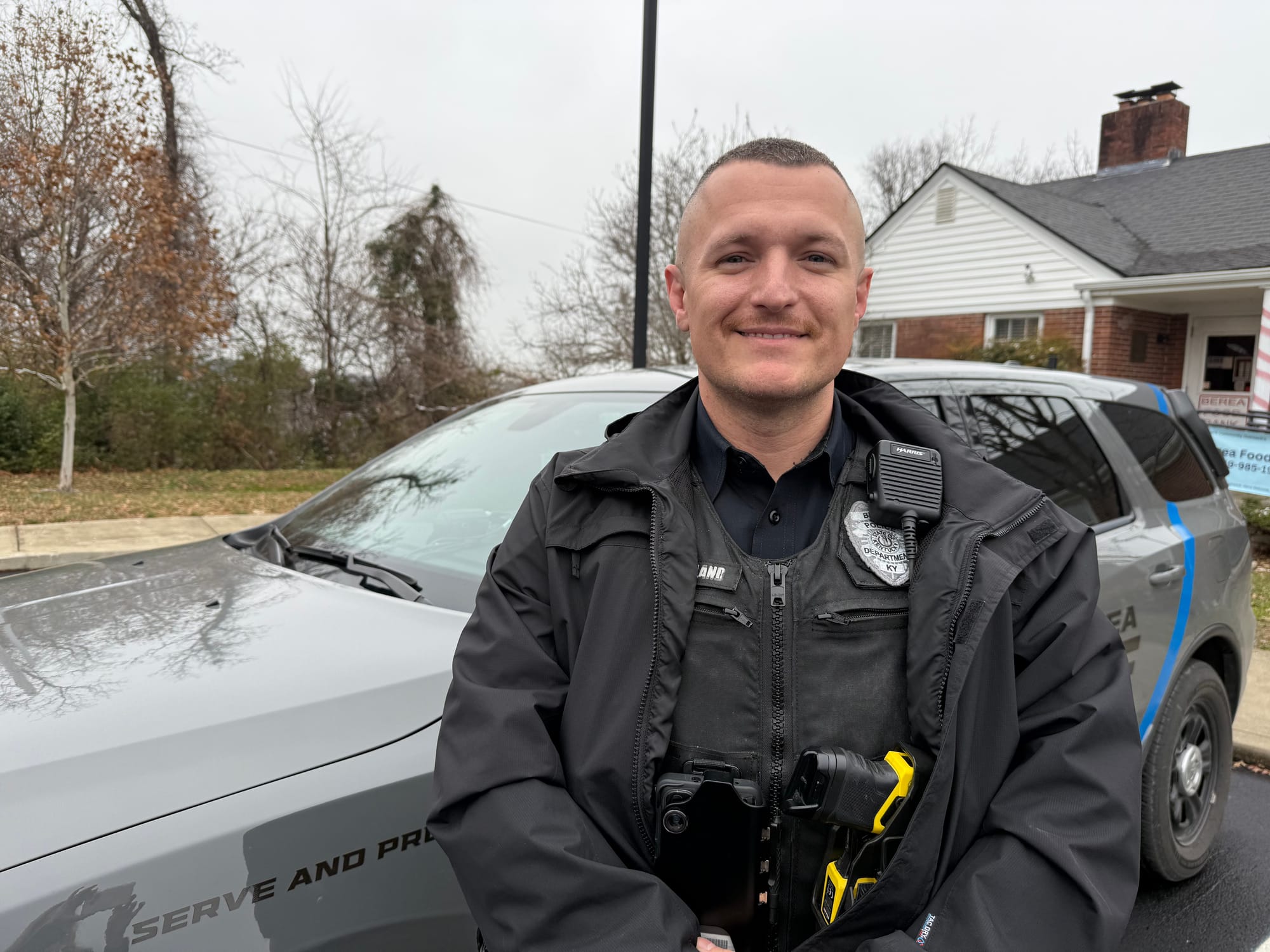
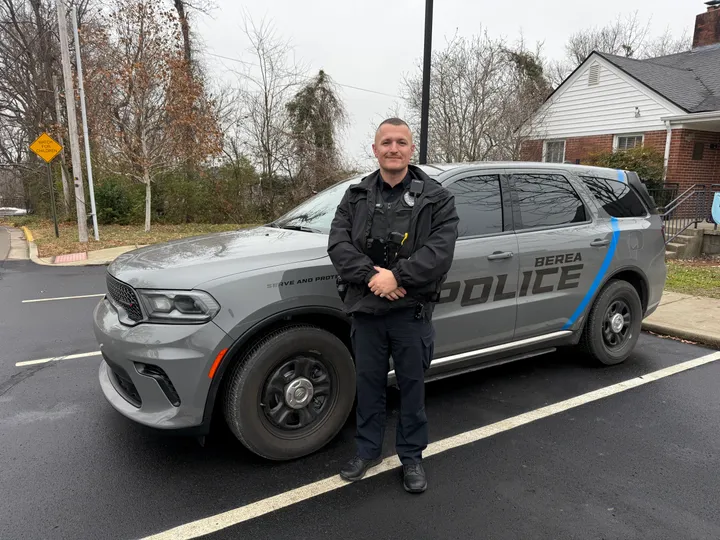
We pulled into the parking lot behind City Hall, and I asked if I could take his picture. The radio called out the latest event, the strings of numerical code blaring. McFarland agreed to the picture, and got out of his cruiser. He stood next to it, then, and held his hands together in front of himself. I took a few snaps then said thank you and good bye. I shook his hand, and walked back to my truck.
When I recall how McFarland posed – not shy of the camera, but also not seeking it, his body ready to spring into action if necessary – it occurs to me that he is energized by serving others. And that calls to mind what Hays, the police chief, told me in our interview: that his policing strategy is for his officers to be known as a force for good in the community, not just law enforcement that nabs the bad guys.
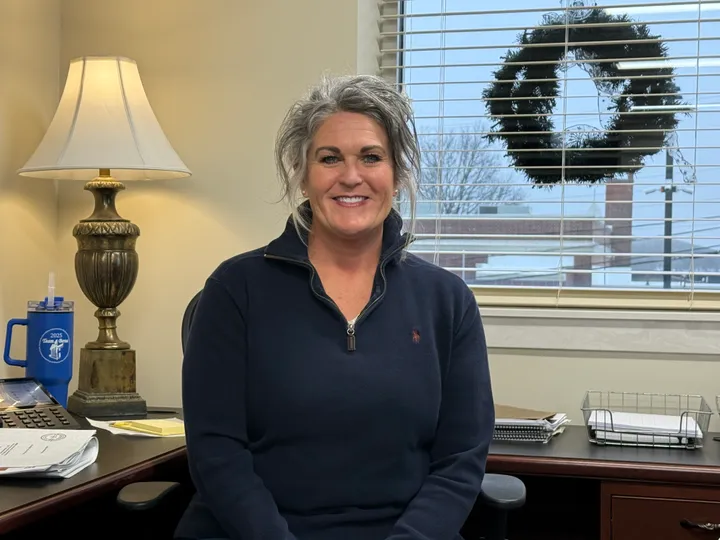
The Department is currently hiring, Hays told me. They are eager to add some women to the force, but to date, none have passed the hiring process, he said. Aside from that, Hays said he and his colleagues are seeking to hire officers who understand that community is key to the job.
"We try hard to be good community partners," Hays told me. "If the community doesn't have trust in you, then what good are you to them?"