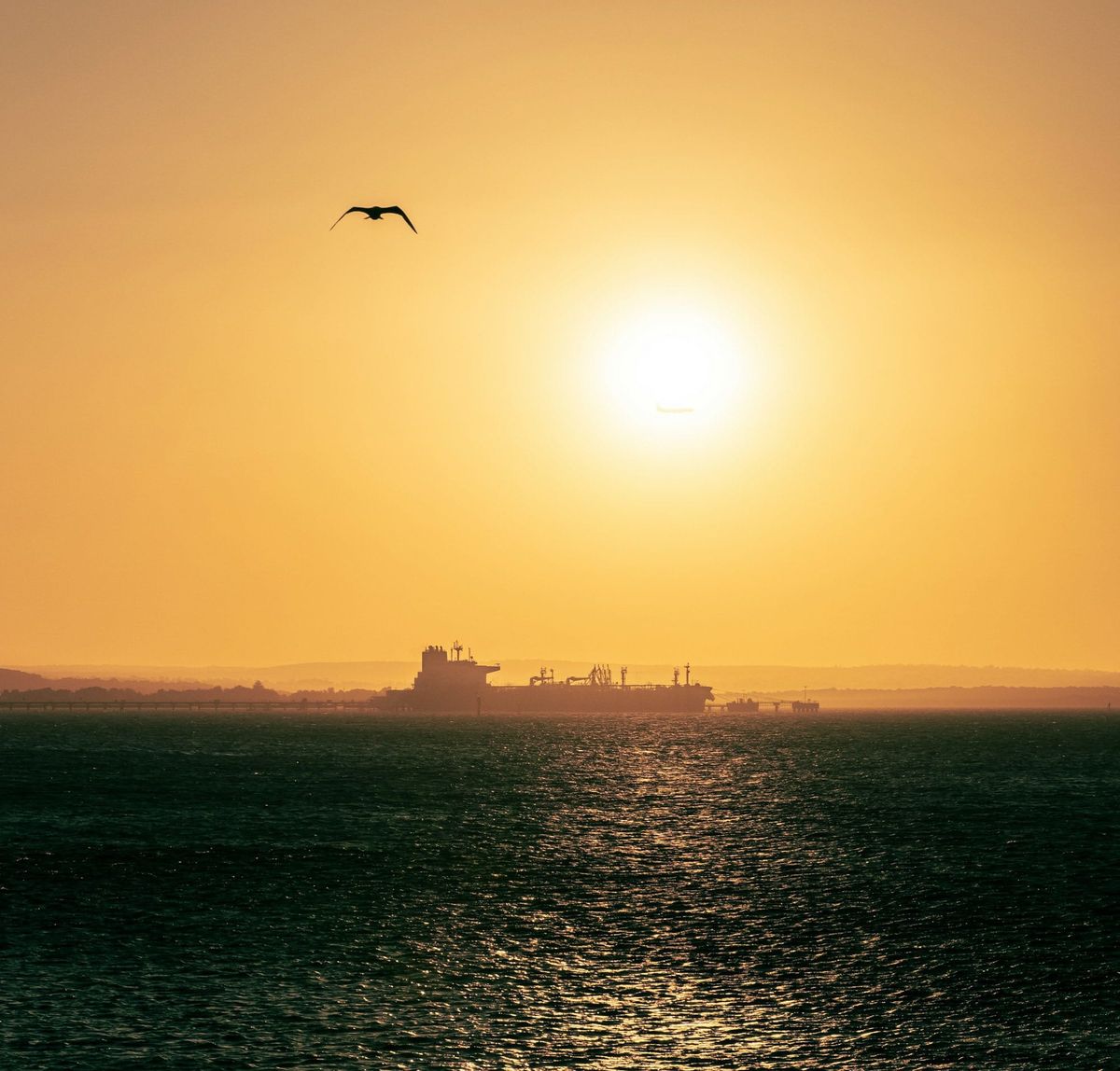
As the US President waffles on his threats for Iran to reopen the Strait of Hormuz, the White House is learning a hard lesson in "geopolitics," a term too often used as a catchword but rarely understood. While the US focuses on Operation Epic Fury's strikes and leadership decapitation, it is unable to control the 21-mile-wide stretch of water that remains the main artery of the global economy.
In the realm of international relations, we often talk about abstract power. But geopolitics, as defined by naval theorist Alfred Thayer Mahan, is about the cold reality of geography and chokepoints, and their effect on how much power a country has. Today, that chokepoint is the Strait of Hormuz. Despite the U.S. military’s undisputed sophistication, it cannot solve the problem of a narrow waterway where one-fifth of both the world's oil and its liquified natural gas are now essentially held hostage.
For decades, the US has acted as the Middle East’s primary security provider. In exchange, the world benefited from an open global economy. But the 2026 conflict has exposed a fatal flaw in this arrangement: geography favors the local power, not the superpower.
Iran is four times the size of California and home to 93 million people. Most importantly, its coastline dominates the Western side of the Gulf. Even as US and Israeli strikes decimate Iran’s land and air assets, the threat to the Strait remains. You cannot bomb a geography into submission. As long as Iran possesses those islands and that coastline, it maintains the leverage to crash the global economy, a reality reflected in current high Brent crude oil prices.
The current strategy of escalating threats against Iranian infrastructure is a move of desperation, not strategy. It ignores the fundamental geopolitical truth that the Strait cannot be effectively "defended" from the air alone. To truly secure the waterway, the US would require a significant land-based beachhead, a move that would trap American forces in a quagmire far worse than the engagement recently promised by this administration.
If the US wants to regain the advantage, it must treat the Strait of Hormuz as a strategic imperative. Washington should pivot from broad regional destruction to a focused, international maritime convoy system, similar to operations Earnest Will and Prime Chance during the “Tanker Wars” in the 1980s, which prioritized the safe physical movement of ships through the Strait over regime change.
Why should this matter to Kentuckians? The primary reason is the cost of oil. Even though the US produces most of its oil, prices are set by world markets, supply, and demand. Oil is used for gasoline and diesel. Everything that requires transport will cost more. It is used for fertilizers and plastics. All agriculture and industrial production will cost more. It affects natural gas. While spring has arrived and there is less need for heating, liquified gas has multiple industrial applications, such as in the manufacture of steel or paper, all of which will cost more as well.
The extended conflict will also mean something else. It means higher appropriation for defense spending. This contradicts earlier administration statements.
The US has the world's most powerful military, but power is ineffective if it is applied to the wrong map. The Strait was a natural countermove for Iran. The month-old conflict should have started by securing the Strait. Until it is so, the world’s economy remains exposed, and the US remains at a geopolitical disadvantage that multiple ultimatums cannot fix.
What in the World?! addresses current world affairs with an eye toward discussing how international events impact Kentuckians. To help keep the column grounded in Kentucky, please send me your comments or questions: jose.e.mora.torres@gmail.com.
Jose E. Mora, PhD, is a former Professor and Chair of Global Affairs of the American University of Phnom Penh in Cambodia. Mora and his wife, Melissa, recently moved to Berea in order to be closer to their four adult children.