EKPC cannot build Big Hill Line through Berea College Forest, judge rules
Victory for College bucks state trends in eminent domain
COUNTY COURTHOUSE—A circuit court judge has ruled that an electric utility abused its power of discretion when it planned to build a new transmission line through a beloved natural landmark.
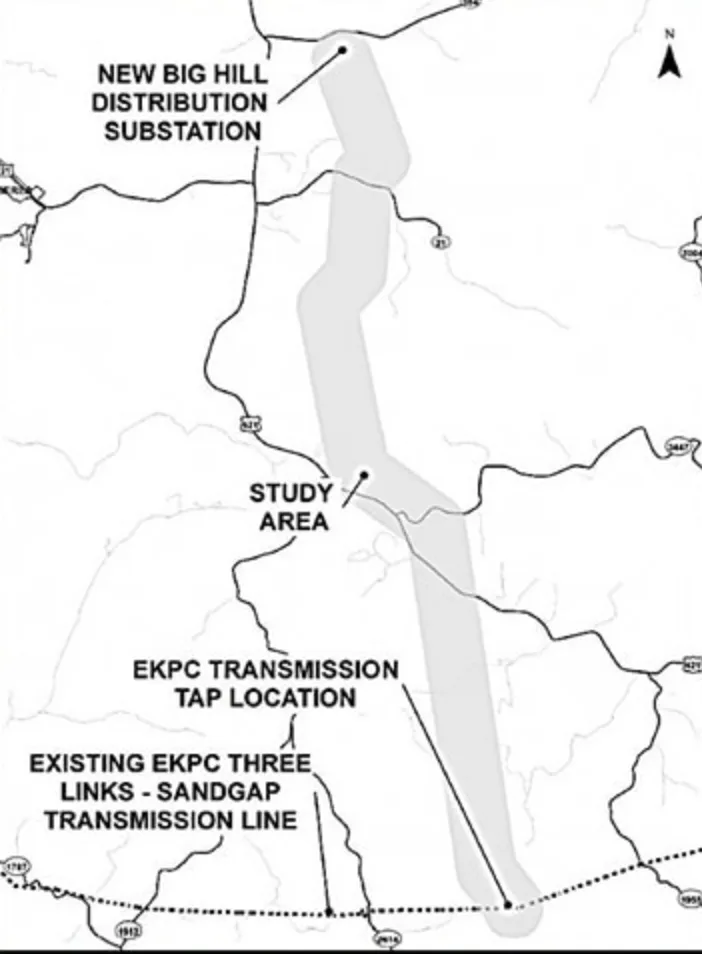
Last summer, East Kentucky Power Cooperative brought an eminent domain suit against Berea College, asking the court to condemn about a mile of the College's forest in order to build a new transmission line through it. The utility says it needs the line to ensure reliable service for residential customers in the Big Hill and Red Lick areas outside of Berea.
On Thursday, Judge Kristin Clouse dismissed EKPC's petition heard during a two-day bench trial in February, and ruled the utility must pay all of the College's associated costs of the lawsuit. The utility plans to appeal.
That EKPC failed to heed the College's argument that the forest is historic and important for a number of reasons did not sit well with the judge. Citing the immense power the Commonwealth gives utilities to take private property, she wrote that it was "an abuse of discretion for EKPC to not consider those factors. If EKPC does not consider the unique quality of the land proposed to be taken, including the factors enumerated above, no one does."
College, community not consulted
In her 14-page decision, Clouse also rebuked EKPC engineers for not seeking feedback from the College and others when making their decision to site the line where they did. It wasn't until after multiple deals for right-of-ways with nearly all affected property owners had been struck that EKPC acknowledged the damage the line would cause to the College property. Similarly, the community did not learn of the utility's plans until after EKPC had finalized them.
"[W]ithout prior community engagement or evaluation of current use of the land subject to taking, EKPC had determined the need, the proposed solution to that need, and the proposed route for the feeder lines necessary to effectuate that proposed solution," Clouse wrote.
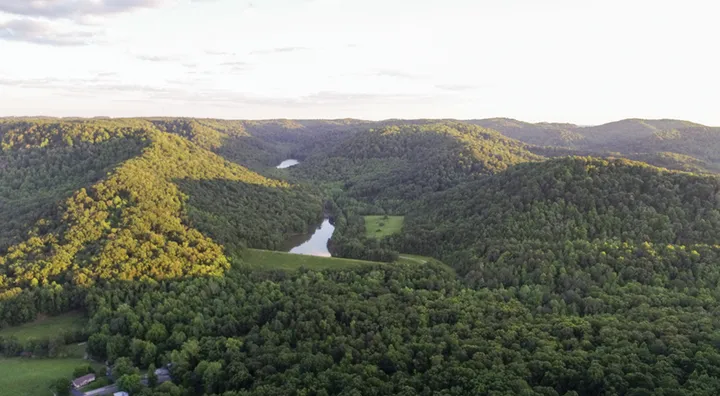
EKPC engineer Lucas Spencer testified during the trial that neither he nor anyone on his team knew the power line's projected path would interfere with the view shed of Windswept, a conference center owned by the College, built by a protégée of renowned American architect, Frank Lloyd Wright. The Windswept view of Owsley Fork reservoir and the knobs has been described as "the best view in Kentucky you can drive to." Spencer also testified EKPC had not known the power line would also damage the view of a dark sky observatory run by the College.
No different than a 'parking lot'
In addition, Spencer said under oath that the utility industry's EPRI-KY method was the singular siting tool he and his team had used while planning the transmission line's route. The computer modeling method is designed to objectively determine transmission line routes with the least amount of angles, as these create the risk of failure on a power line, he said. Under cross examination, Spencer said that neither he nor his team knew this method had favored a route that cut through the College forest. "As a matter of objectivity, we don't talk to land owners," Spencer said. "I have no memory of who owns what in Kentucky."
Clouse took issue with this in her ruling, noting that the EPRI-KY method was fallible, designed to calculate routes that avoid national parks or wildlife refuges, but not unique lands such as the forest. "The College’s historically, academically, and community significant Forest was treated no differently at any point in the deliberative process than an empty field or the parking lot of a Dollar Store," she wrote.

'Nothing unique or significant'
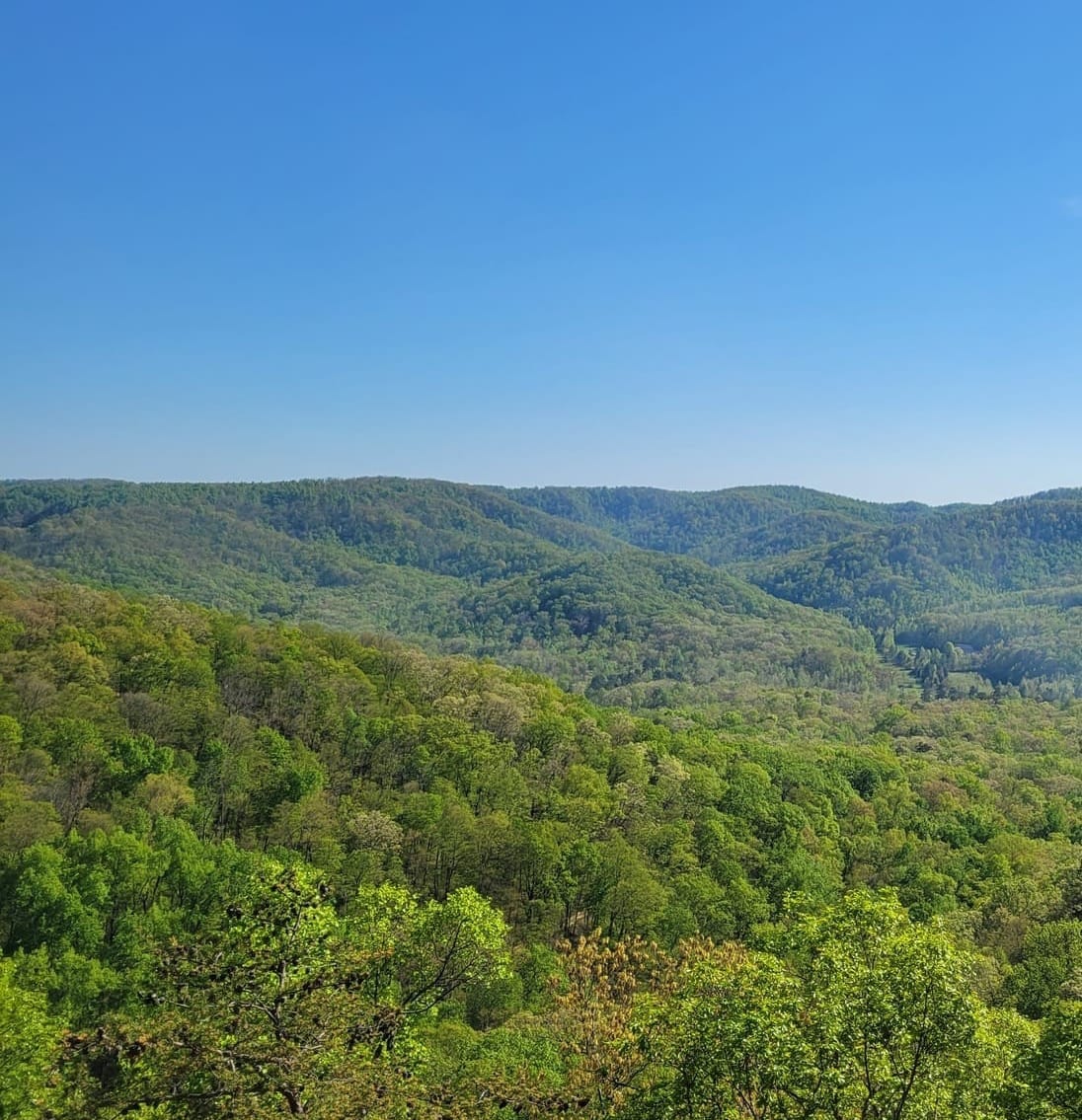
Clouse based her findings on the testimony of the College’s forester, Clint Patterson, who testified as to the Forest’s unique features, including its “ties to the birth of academic forestry management.” In her decision, Clouse noted Patterson’s claim that for the College to continue its award-winning forestry management program, contiguity of the Forest’s more than 9,000 acres was essential. Patterson's testimony also described multiple research activities taking place in the Forest that would be interrupted by the power line's construction.
Clouse compared Patterson's testimony with that of Spencer and Darrin Adams, an EKPC senior engineer. "Berea College Forest has a historical, educational, environmental, and communal significance that is rarely encountered in eminent domain actions, in contradiction to Plaintiff’s witnesses’ testimonies that there was 'nothing unique or exceptional about the project,” she wrote.
Interrogation of 'public need'
Clouse's much-anticipated—and to many, unexpected—verdict goes against eminent domain trends in the Commonwealth, where courts rarely second-guess a condemnor's claim that land-taking is a public necessity. Citing multiple cases for precedent, Clouse herself ruled against a private land owner last summer in an eminent domain case filed by the state transportation cabinet.
According to the Arlington, Virginia-based Institute for Justice, Kentucky law does not place the burden of proof on utilities to prove necessity. Describing their amicus brief filed on behalf of Boone County residents attempting to block a utility's land takings in 2023, lawyers at the Institute wrote in a statement, "The decision of how much land and under what conditions to take is ultimately 'left to the condemnor’s discretion'."
At the close of the trial in February, Clouse noted that she was bound by statute to rule narrowly not on if land should be taken, but whether this particular portion of the College's land was necessary to take. She pointed out the unusual dilemma the case posed, given that one entity sought to act in the public good by taking land from another entity that also serves the public good. At the time, Clouse posed the question, "I understand EKPC has discretion to accomplish public need but could they do it without taking this particular swath of land?"
Clouse's ruling is unique in that it challenges the assumption utilities routinely and solely act on behalf of "public need" when taking private land, and calls out the potential negative impact eminent domain can have not just on a private land owner, but on an entire community.
The forest is privately owned by the College, but like many College-owned amenities in Berea such as Memorial Park, the College leaves them open to the public. Clouse noted this in her decision, writing that "The Forest is open to the public, contains over nine miles of hiking trails, and is utilized both by students of forestry and community members. The Forest also attracts a tourist presence which has economic impacts not only for Berea College, but for the community as a whole."
Importance of public outcry
Counsel for the College, Lexington-based Joe Childers, who specializes in land use law, noted the importance of public outcry in the Big Hill Line case. "The decision recognizes the importance of the community, and the fact that EKPC did not take that into consideration," he told The Edge in an interview. "I don't think she liked that."
Members of the Stop the Big Hill Line group began organizing against the power co-op in September of 2023, virtually one day after EKPC's "open house" where plans for the line were announced. The group created a website advising property owners of their rights, and calling into question the utility's tactics. This news outlet was founded soon after, specifically to ensure community coverage of the Big Hill Line.
Saying that writing to judges "on matters of public interest is a valid thing to do" citizen activist Elizabeth Fels-McDowell of Mercer County told The Edge in an email that after failing in her attempt to file an amicus brief on behalf of the College from her group, No Kentucky Data Centers, she instead organized a letter-writing campaign to Clouse. "We are hooping and hollering and very grateful to Judge Clouse right now!" Fels-McDowell wrote in her email. She said she did not know how many letters actually reached Clouse.
EKPC to appeal
Clouse also pointed out in her decision that the College did not dispute the need for the transmission line, only that the utility had acted without transparency, and without exploring other options. During the trial, EKPC disputed they had not considered alternatives, and presented evidence for why each alternative was not found viable. One such alternative would have run the line along Hwy 421. This was rejected according to the power co-op, in case the state ever decided to widen the road, forcing the power line to be re-situated.
"The Big Hill to Three Links transmission line is an important project to maintain reliable electric service for thousands of electric cooperative members in southeastern Madison County," EKPC spokesperson, Nick Comer, wrote to The Edge in an email. "EKPC took an objective approach to siting the transmission line to minimize the overall impact on property owners, the environment and cooperative members. EKPC is disappointed in today’s court ruling and plans to appeal."
Read the decision in EKPC v. Berea College:
Read the decision in Kentucky Transportation Cabinet v. Gabbard:
Sign up for The Edge, our free email newsletter.
Get the latest stories right in your inbox.
This story has been updated.