Andrew Simpson (R) is On the Edge
Talking traffic, urban sprawl, locally sourced food, and preserving farmland
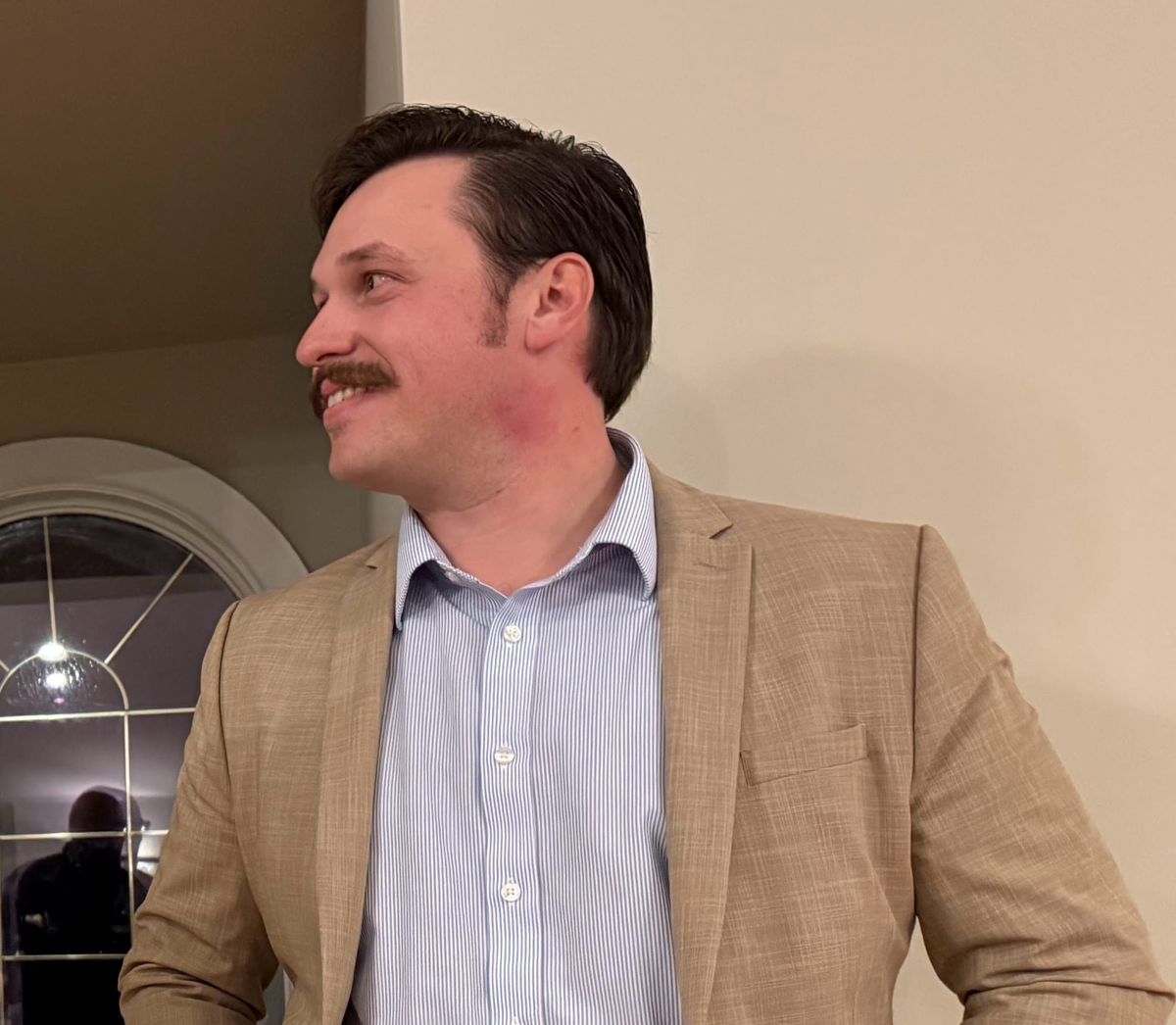
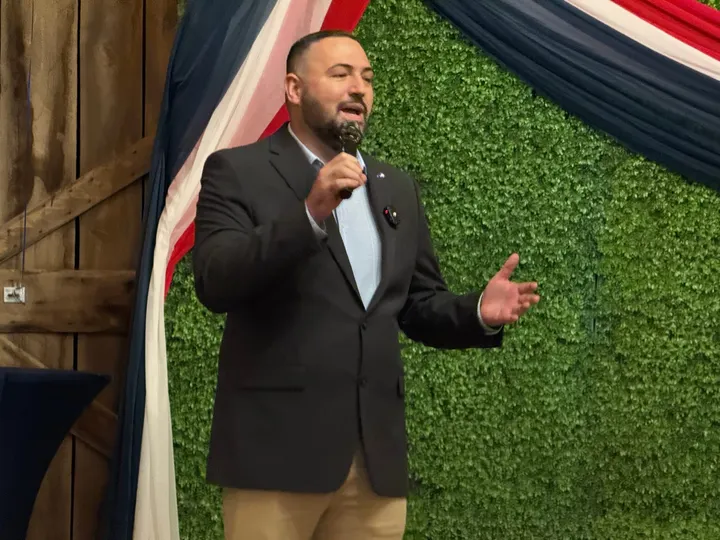
This conversation was lively because Berea native and candidate for the state's 81st District, Andrew Simpson (R), has a thorough grasp of land use issues that are most pressing to Madison County, and it was good fun to banter the policymaking possibilities for slowing growth, developing according to community needs not zones, supporting agriculture, and respecting property rights.
Simpson is a life-long conservative who came to farming through his wife's family, and who is now a leader in the state's agricultural community, formerly serving as the chair of the Kentucky Farm Bureau's Young Farmers District 8 (farmers age 35 and younger). In this role, Simpson said he learned about the land use pressures facing farmers across the Commonwealth, but especially here in Madison County where two of the nation's fastest growing communities--Richmond and Berea--are located.
Sign up for The Edge, our free email newsletter.
Get the latest stories right in your inbox.
UNEDITED TRANSCRIPT
Speaker 1: 00:00
Andrew Simpson, welcome to On the Edge with me, Whitney McKnight.
Speaker: 00:05
Thank you for having me.
Speaker 1: 00:06
You are running for the 81st District of Kentucky. You're looking to go to Frankfurt. Why don't you tell our listeners a little bit about who you are, what you do, and why you're doing this?
Speaker: 00:15
Sure. I'm Andrew Simpson. I grew up here in Berea, went to Madison Southern, uh, went to the Brea community for a short stint. Um, been in Madison County my entire life. Uh our uh ancestors came in with the boon party years ago, was awarded 600 acres, uh, not far from where my farm is now, uh, which is kind of full full circle there. Uh we live out in Poosie Ridge currently. Uh we run a farm store. We run a uh a venue that's coming up, gonna be open this year. Uh we we farm. I I I work uh in manufacturing at Interciss in Richmond, been there for 10 years. Uh just you know doing everything I can for my family and uh doing everything I can for this district. I don't think anybody that's in this race is is working as hard as I am, knocking doors, meeting the people, uh, you know, mingling, eating with the people, uh worshiping with the people, just getting out there and meeting people. So uh uh, but that that's a little bit of my background.
I've been in farming for about 12 years now, didn't grow up on a farm, started working for my father-in-law uh back then, which was not my father-in-law, but I married a farmer's daughter. Uh so worked in him with him and tobacco for you know through high school, met my wife through high school here at Madison Southern. We bought that farm back in the end of 24, and uh we've just been working to uh you know start that business. We have a retail business now that we travel around kind of like a farmer's market, but it's our own farmer's market. We sell all our products off the farm: canned goods, beef, chicken, um, uh pork, you know, you name it, if it it can be grown, we we sell it. And uh we we kind of wanted to do that and kind of bring bring the community together and offer, you know, not just our products from our farm, but other people in the community and and even in the uh surrounding counties.
Speaker 1: 02:07
Okay, well let's go from there to your main platform, which is land use. But land use is very general. What is your specific view of how land use is carried out currently and what you'd like to see instead?
Speaker: 02:20
Well, it's it's not specific to this county, but all across the state. When I worked with Farm Bureau uh as the young farmer chair for I had nine counties in District 8, uh, and I represented the young farmers. So with with Farm Bureau, I I recognize that it wasn't just an isolated issue here in Madison County with with urban sprawl, um, but it's going on all over the place. I feel like we're a little bit unique because we have two of the fastest growing cities in the state, and they're right here in this county. And uh, you know, I I'm not anti-growth. I'm pro-growth, but I'm pro-smart growth. And I feel like, you know, if you look at traffic issues that we've had in the re recent years, uh especially last summer for, you know, eight to ten months with the the interstate, uh, I just want to, you know, plan our growth better. I feel like we're we're not really doing that as a community. And uh we're taking up a lot of farmland. And, you know, it's great for people to make money now and and build homes and and whatnot, but um what does that look like in in 10 years? What does it look like in 20 years when we have to rely on another state or another country or or wherever, you know, lab grown meat or something like that to feed our children. So it's something I'm passionate about. I'm passionate about keeping farmland in farmland. Um obviously I I don't want to limit what you do with your farmland if you want to sell it or you want to subdivide it and maximize your profits. I I completely understand that.
And that's that's not the issue, issue I'm bringing up. The issue is is, you know, property property owners have rights, and um I want them to be able to do what they want to with that land, but I also want young farmers and and older farmers to be able to afford that property and and make farming profitable. Uh it right now it's profitable with the the beef industry, but that then you know it's not gonna hold on forever. And uh we've lost tobacco in this community, and there's still a few farms that grow here here in the county, but um that was a uh economic driver here in the county for many years, probably centuries. Um I I just want to make farming profitable so we can compete with the the big developments, uh with the the data centers or whatever it may be.
Speaker 1: 04:25
When you say you don't want to tell somebody what to do with their property if they want to sell their farm for development, uh that's happening. And that's happening concurrent with the traffic issues.
Speaker: 04:35
Well, we're right now we're we're kind of a bedroom community for Lexington. Uh Lexington's kind of grown at its capacity and can't really do much else. So people come south uh, you know, for cheaper taxes, uh potentially better schools here in in as opposed to Fayette County. And uh I I think that you know that's okay. Uh I I I like growth. I want growth, but at the same time, I I would rather build up than out. And uh I that's kind of what our platform is going for. I I it it's a tough issue because you you you know, you look at that 80-year-old farmer who's been farming that ground since, you know, maybe generations, and uh you don't want to tell that guy if he wants to go to Florida and retire that hey, you can't sell that to a developer, you have to sell it at this rate. That's that's just not that's not what freedom is. Uh they have the freedom to decide. It's when it comes to you know what we're going to do with that and and how we uh how we grow as a community, if that makes sense.
Speaker 1: 05:28
Oh sure. Well, what do you recommend instead?
Speaker: 05:31
Well, there's uh a number of things you could do, you know, as far as solar. I feel like solar is is starting to ease its way into this community. Um, and I'm not anti-solar, but I'm anti-solar farms, quotation marks. Uh, you know, we could do a number of things with solar as opposed to put them on farms. You can put them on parking buildings, uh garages, houses, uh, you know, large manufacturing facilities. Uh the issue I see with solar is is the pollution that it causes in our ground. And uh I I feel like, you know, if you look, I've got some notes here on solar. You you're looking at you know, a hundred companies, solar companies are going out of business and they get a year, and you get these huge tax incentives from us, the taxpayers.
And uh when they go out of business, then what's left? You know, uh there's been a number of cases that's that's been shown with the the solar issue. Um, but I feel like there's a ton of things you can get away from solar, you can get away from some sort of development. Uh businesses are good. I work at a factory, uh, you know, I think the play place I work at Interstit's there, they've been there for uh nearly 40 years. They employ around 700 people. So businesses are great and we need growth, but we need to manage how we how we grow and how we get there.
Speaker 1: 06:42
Yeah, that's that's kind of what I'm getting at is a developer or specifically a land speculator will purchase a lot of land and hold on to it until they get to the temperature they need it to be in order to either develop develop it themselves or sell it to a developer. But that's happening independent of actual needs in the community. Maybe we need housing. We do need housing. But a developer is thinking to him or herself, maybe I'll do housing, maybe I'll do something else, maybe I'll do a solar farm, maybe I will do a data center because that's where the money is going to be.
That's really difficult to manage because the emphasis is on private property. I think we're at the place where we would have to find a solution that not forces, but suggests to developers, look, you can meet the needs of our community that are real and you can make money. But right now it's just two independent operations. The city has needs or the county has needs, but the developer and the land speculator, maybe they're the same person, maybe not. They're thinking what's just the best way to make money. I'm just wondering if leadership will find a way to say, we need houses and we need them to not be a burden on traffic, and we need schools and we need them to be uh situated so that they're not a burden to traffic. Traffic really ends up becoming an issue that you can't control if developers are just doing their own thing. So those are the solutions that I would hope people in Frankfurt are looking for, but I don't know that that's happening.
Speaker: 08:08
Yeah, uh speaking on on road conditions, uh our roads are crumbing as they are. Uh, you know, you look at the the 25 project uh between Duncan and Richmond there. You know, originally that was everyone on this promise it was gonna be four lanes, it was gonna open things up, and that's you know, it's barely three lanes. Um so there's things that are that are promised to us that that are not being accomplished. I feel like the the 25 really should be four lanes from Richmond to Berea at this point. Uh it's it's uh very high traffic area. Um Duncan, you know, they're they're expanding out there. Um I I would rather, you know, focus on these these small urban, I say small, you know, focus on Berea, focus on Richmond, grow Richmond to what it needs to be, put the infrastructure in place first. It seems like we're we're just building, building, building, building and building, and and the roads are just not holding up for us. Uh air road specifically, I drive it every day, obviously. You know, it's which road are you talking about? Kirk Kirksville Road or Kirksville, Poozy, Barnes Mill, uh, any of them. They're they're they're crumbling, which Poozy is a dead end road, but it's also a state highway. Um, you know, there's huge swags, big potholes, there's sinkholes opening up, and you know, nothing's being done about it. But we as even a just a small community out in that area have grown a lot. There's there's houses being built every day out there. Um so you gotta focus on the infrastructure before you can focus on building and building and building more homes.
Speaker 1: 09:31
Well, yeah, I would absolutely agree with you. However, that would mean that they would have to work together. But if a developer is coming in and saying, this is my land, this is what I bought, I'm gonna do whatever I want to do. And it may or may not fit in with what the county needs or what the city needs, if we're talking about Berrier or Richmond. So that that would be, I think as a constituent of whoever represents us in Frankfurt, that would be something to approach creatively or innovatively. And, you know, I've put forth before in an editorial that maybe we should tax land more, which would make it less uh interesting to developers and land speculators to hold on to it for as long as they can right now without really incurring any kind of, I don't know, air quotes penalty. But if we taxed land more and then also had an agenda of what we need as a community for a developer to build, I think we would end up with less traffic and more infrastructure because the municipal or the jurisdiction in the situation that we're talking about, whether it's the county or the city or whatever, they would say this is what we need in order to have smart growth. And then the developer would make money, but would cooperate with a plan. And right now it just seems like developers are gonna do what developers do.
Speaker: 10:37
Well, you kind of touched on two things. The people that are developing, they're gonna make their money, whether it be, you know, housing, talk about uh uh affordable housing. If you tax that developer more, he's just gonna charge more for the homes that they build or the department gone.
Speaker 1: 10:50
Not if you're taxing the land, but not the buildings. I think a developer would like it because the developer would be the one who necess a lot of times they'll hold on to those buildings. They'll be the owner after they've finished developing it. They're paying less on it because now it's developed. They're not paying so much tax on the land, they're paying it on the actual structures, and it'll be less on the structures.
Speaker: 11:08
Yeah, you would really cripple the the farming community, which which we put up in 2022, $68 million uh gross revenue here in this county. A lot of times you talk about the revenue that this county brings in with just specifically farmers. $68 million, nothing to you know, shake a stick at. That money comes directly back to these local businesses. That's tri-county, southern states that you know uh gets put back in the local banks here. It's it's not it's not sent out elsewhere. It stays right here in this community.
Speaker 1: 11:35
Um Well, that seems like then it it's working. It's a good thing. And what it because it's coming back to the community and going to the banks that are local, is that what you're saying?
Speaker: 11:42
Aaron Ross Powell, The revenue, yes.
Speaker 1: 11:44
Yeah. So what if there were a tax that a different tax rate for agriculture?
Speaker: 11:49
Instead of I'm I'm all for a different ta tax rate for agriculture if it's lower.
unknown: 11:54
Yeah.
Speaker 1: 11:55
I mean, and and how would you justify it? Because I'm sure there is a justification for it. So you as a farmer, how would you argue we could lower the the tax rate on agricultural land that is actually farmed versus what I'm proposing? You know, how would you look at that as a legislator?
Speaker: 12:08
Aaron Powell Well, so you can lower property, you can pretty much cut out property tax. Uh you still have your local taxes or you know, state tax or local property tax. You could cut to cut out your your property tax period, and that's just for everyone. That's not including or that's not uh uh excluding, you know, just residential homes. That's including farms, residential um uh businesses, wherever it may be. And you could add uh uh consumption tax, you know, and it's it's very minuscule. I think it's 0.9% would get us uh, you know, it'd be 6.9 percent in sales tax would be able to alleviate that burden that's put on uh people that are 65 and older, um, you know, on fixed incomes that are retired, it'll it alleviate that burden off small businesses, it would alleviate that burden off of uh um all property owners.
Speaker 1: 12:53
Let me make sure make sure I understand. Okay, so a point nine a.09, I guess it's 0.9% percent on our current state sales tax of six percent would raise enough revenue statewide that all all jurisdictions could do away with property tax?
Speaker: 13:10
Not all jurisdictions, the state, the state property tax. When we get your when you get your property tax, it's this goes line item by line item, your fiscal courts, um, your school, your school's a huge one, your extension office, your EMT, those will still be in place. Those are those are county regulated. Um but just to kind of go back to what you said before on your on your last point with we need a plan, we need to do this. Well, you have a comprehensive plan for the county. The county puts it together, I think they're actually getting ready to start putting it together here in a few weeks. They are. Um and they they open that for the public for for public discussion. The problem is the public never shows up. You know, they they gripe and stuff on Facebook, but then they don't want to show up and and actually show face. Uh, we've dealt with that in my community with with uh you know, they want to shut down these small county roads. Uh we want to keep them open for um you know our our farming businesses and and uh uh side-by-side usage or whatever it may be. Um they had several forums on this, they you know, town hall meetings, and I told everybody I knew, I thought there was like three people that showed up that were that were concerned. So the you know, if you're that concerned, you need to be there, you need to voice your opinion because you know these people do listen, whether whether you think they don't or not, they they they do listen. They they listen. I I don't know if they'll actually take uh what you say into account.
Speaker 1: 14:24
Yeah, but they will show up. That's true. They will come and they will hear you.
Speaker: 14:27
Correct.
Speaker 1: 14:29
Well, you're right. There is the comprehensive plan which kind of acts as as it's governance, it's a governing tool, and it's a it's a living document in that it gets revised every five years. However, it's not it's not a real proscription. It doesn't say this must be what you do here. It's very loose. It'll say, you know, for example, you can have mixed industry, you can have zoning that meets several needs. It doesn't necessarily say this is what we need in the community. We need X number of affordable houses. It just says this is where affordable housing would be. But the city or the community or whomever cannot say to a developer, you will do this here. The developer has to be the one to say, I'm interested in building XYZ. And it happens to be what the community needs. Great, it's gonna be in this zone. But it's rare when those two parties come together. I really want to build exactly what the community needs. And the community says, Great, and we're gonna make sure you make the money that you want. That's lucky when that happens.
Speaker: 15:27
Yeah, so when when a developer goes in to purchase a piece of property and and develop it, they're not um, they are looking at what the community wants and needs. Uh so when you when they go to build a subdivision, they're looking at, well, I can sell these homes. They're they're business people. You know, they're they're not gonna go in here and and uh you know build something that that absolutely nobody in the county would want. Uh they're gonna go in there and and build something that, hey, that they're building a nice home over there. I would like to go over there and look at that and purchase it. So they're they they are already doing that. They're not gonna just build uh uh something that's that's random that's not gonna serve any of any needs in the in the community.
Speaker 1: 16:02
I think that's true. Uh but for example, most of the you said a nice home. I don't know what that is anymore because it's really hard for people to afford something. Correct. I would say that the people in your scenario maybe are the ones coming from Lexington. So it's not necessarily meeting the need of the people already here. And and that is not a slight on transplants. Um that does seem to be an issue with a lot of people, though, is we don't want people coming from someplace else. That's gonna happen. You just have to deal with it.
Speaker: 16:28
You get to colleges here, yeah. People are gonna come.
Speaker 1: 16:32
But that does put pressure then on the inventory that's necessary. And I do think it's fair to say that a developer is not that interested in building so-called affordable homes. And that's not because they're selfish or greedy, it's because it's expensive for them. It's hard for them to get the materials that they need and the labor and so forth. Things have gotten very expensive, but it means that it's harder then to build what the community actually needs. And we need houses that people can actually afford or can afford to rent. I I think that the way to meet that need is gonna be in some kind of partnership between whatever the municipal jurisdiction is and whoever the developer is. And that's gonna need some more levers than we have now. So I don't know whether or not that's a utterly practical idea, but it seems like it might be. That kind of let's tax something more and tax other things less.
Speaker: 17:16
Yeah. Well, that's kind of what I'm talking about is consumption tax. The consumption tax is fair. Everyone has to pay. You know, you you have to pay 6% sales tax. Now, if you go to the store and you buy more than I do, then you're obviously going to be more in taxes. Uh, but a family of four like myself or a family of four uh down the road, we're more than likely gonna spend the same, same money. And if you decide to save, then you're saving actually not only on the um your your goods that you're purchasing, but also on your tax. Uh property tax is just to me not fair. I mean, it's it's across the board, everyone has to pay it. You know, you're you think, oh, I'm gonna rent. Well, you're paying property tax, whether you you know it or not. You might get one bill that says I owe a thousand dollars a month, and that includes utilities and property tax for that matter. So uh taxing taxing one one segment, especially the farm ground, that that's just a a big, big no for me. I don't I don't think that'll that'll um that'll hurt farmers that won't bring in and or stop uh uh developers.
Speaker 1: 18:14
Aaron Powell Should okay. Well, you already said that uh any farmer, anybody who owns land should have the right to sell it to whomever they want to. But should there be other mechanisms that keep a certain percentage of a community's farmland designated as agriculture?
Speaker: 18:30
Aaron Powell There there's stuff that's already in place. You know, you can put yours in a uh conservation easement or a ag district for that matter.
Speaker 1: 18:36
Um But that's the farmer's choice.
Speaker: 18:38
Correct. Correct. That's the that's the farmer's choice if they want to keep that in. I mean, you can actually have a uh a wheel or uh put it in a trust or do whatever amount of things you want to do and keep it for three, four, five generations. That my family cannot sell this piece of property until you know uh the year three thousand.
Speaker 1: 18:57
But that is up to the individual farmer. So if you are as a community want an X number of acres that are agriculture, you know, you really don't have control over that unless you're zoning it that way.
Speaker: 19:08
But But you do have control.
Speaker 1: 19:10
How do you how do you have control?
Speaker: 19:11
You have a pocketbook. And and people hate hearing that. Um when I purchased my place, you know, I I had to give a substantial amount of money for it. Um, you know, and people, if they don't like what I do there, I'm sorry. You were at the same auction I was, you could have raised your hand and you could have bought it. If you can't afford that, I'm sorry. I can't afford it. I'm I'm paying month to month. I'm I'm just trying to slave away to make it work. Um so if it it's kind of a tough, tough uh predicament to be in. You you don't want to tell people that what they can and can't do with their own property. Uh you but you also want to see green space, you want to see farmland. I get that, I get all that. Um but it you know, Lexton has certain laws in place where they have to keep X amount of green space reflecting.
Speaker 1: 19:51
That's what I'm getting at. Like uh when you're talking about uh conservation or a will, that's useful and it can help, but it is up to the individual farmer to make that choice. And that's why I was saying, look, well, how how do you as a community make sure that there's a certain percentage of open space, agricultural space, however you want to designate it? It does seem that we have to take some kind of legislation to make that happen.
Speaker: 20:14
Yeah, I mean, I'll I'll pose the question, um, you know, what what farms are you gonna keep available? You know, what what is a community do you want to see in green space?
Speaker 1: 20:24
Yeah, so there would have to be something to help the farmer still be able to make it.
Speaker: 20:31
Is that fair for the the government and the community to come in and say, hey, you can't sell that piece of property? Well, no, it's not fair. You know, I it I I bought this place thinking, hey, I'm gonna I'm gonna be here for 40 years, I'm gonna make a living, and then I want to relocate. I want to go move with my kids in Florida or uh wherever it may be with my grandkids and spend spend the rest of my days out. That's not fair, and you couldn't just go through and pick, pick and choose who you where you wanted a green space.
Speaker 1: 20:56
Yeah, no, you can't. Not not with the value system that we have anyway, which values property rights over pretty much anything. It it does seem like you could do things that modify the situation, but don't necessarily solve it. Maybe it slows it down. Um I want to move on to something that you said, unl unless you wanted to say anything more about that.
Speaker: 21:17
No, I don't feel like I covered that.
Speaker 1: 21:19
Okay. You were saying maybe that the uh US 25 between Richmond and Berea should be widened to to four lanes. Okay. If that were the case, there would have to be eminent domain situations for many people. Maybe some people would sell to the transportation cabinet, but maybe many people would say, I don't really want to sell you an easement or a right of way to my property. In some cases, they're just gonna have a road in their front yard. Let's talk about eminent domain, because I know you have feelings about it. Absolutely. Yeah. So how would how would that work in your mind? Because why don't you start with telling us what you think about eminent domain?
Speaker: 21:54
Uh well, I'll I'll let's go back to to your original question on 25. To me, the road is is wide, you know. It's huge. You have a a large shoulder on on both sides. You have the you know the lane, you have a turning lane, but uh there's a turning lane for what? You can't turn into the depot and you can't turn into a field.
Speaker 1: 22:10
There, there's nothing you're talking about at uh where Duncan meets it.
Speaker: 22:12
Dun yeah, Duncan to Richmond. You know, there's nothing there's a huge turning lane there that could be opened up for uh uh secondary lane. Um I f I feel like that's that's something that that should be done and and should have been done. Um and then your your other question on eminent domain. So eminent domain is very, very personal for me, specifically for this community. Um the Brea Bypass. You know, my my grandparents have lived there for uh close to 65 years. Uh Brea Bypass cut through their yard. Now their bedroom windows seven feet from the bypass. You know, and at the time, great, you know, we're we're getting a new road, whatever. They're gonna pay me X amount of dollars, you know, whatever. It project took 10, 12 years to ever, ever even start. And uh once it came in, you know, they were like, geez, we can't sleep at night. There is so much traffic. We we just can't sleep at night. Fortunately, they're retired, they can move back and forth to Florida, go to the we have a lake house, they go to the lake house and and things. But um, you know, they they talked about, okay, we're we're just gonna we're gonna sell this place. So they they wanted to sell. Uh they wanted to to get what they paid for, well, obviously more than what they paid for it, but get market value for what it is. It's a residential, zoned residential, and the you're just not gonna get that. No one's gonna, you know, spend $250 or $300,000 for a two-acre plot of land in a house that sits seven feet from the bypass. Okay, what's the other avenue that we can we can go down? We can get it rezoned and and uh maybe a McDonald's or a Dollar General or or something will come in and and give us what we want for this piece of property. No. They they got shut down twice for for rezoning it, and it's it's right on the on the corner.
Speaker 1: 23:55
Well, isn't that that I mean, eminent domain is in the constitution, but constitutionally your your grandparents should have gotten market value.
Speaker: 24:03
Correct.
Speaker 1: 24:04
But market value has to take into effect that you've ruined the the value of the home, and it doesn't.
Speaker: 24:08
Yep, yep. You you've ruined ruined the value of the home, you've ruined the you know the the the future value of whatever it may be.
Speaker 1: 24:15
That's what I'm talking about.
Speaker: 24:15
Yeah, you know, 25 years, what's that value gonna be? And it's hard to put a number on that, but you know, you can try to make it right. Uh and then I'll bring up Scott Gabber, which we're you know, we're mutual friend of ours. I've been in his farm three times looking at this project that they're wanting to cut through his farm. Uh it makes zero sense to me. You know, you look at the plans, and I I just can't, it's not feasible to me when they already have a road that they can widen there, that they already own the the easement. You know, they can expand that road without well, let's be more specific.
Speaker 1: 24:43
Okay, and yeah, I I got to know Scott through covering this exact situation. Yeah. He bought a farm twelve years ago on John Ballard Road, uh, where part of his land, part of his property runs along John Ballard Road where the airport road is going it it it dead ends in it. But they want to extend it through his farm. Okay. So I think he has 150 acres and they want to take 13, 12 or 13 acres, but straight through the center of his farm. So since he's a cattle farmer, that's going to make half of his farm useless because he's not going to be able to completely, you know, or constantly move his cattle from one side to the other when it's going to be a road with traffic on it. Currently, there's no traffic there. There are there's grass in the road, in fact, because there's no traffic going through there. What the state has proposed, and they have one in court because uh Scott challenged it, he did not take their deal. My take on it was the judge was saying, I see your problem, I wish I could do something about it. I have to go with what the law is. So, first of all, that is a problem. Our law is going to constantly favor so-called public good. But I don't know that we need that. I don't see the state really taking an examination of what the public good is. Correct. First of all. And then secondly, there were other options. And they do own the road already. They own Cal East Road.
Speaker: 25:59
Correct.
Speaker 1: 25:60
Anyone I've talked to, and any authority I've spoken to in a transportation cabinet, I've talked to everybody. Airport board as well. They say Cal East Road is too dangerous.
Speaker: 26:07
What about the Berea side of Airport Road? Is it safe to get from the airport to 76? You know, exit 76? Absolutely. The roads the road's pretty wide through there.
Speaker 1: 26:16
Well, you wait, which way are you talking about?
Speaker: 26:18
Are you talking about Peggy Flights area?
Speaker 1: 26:19
Oh, the Peggy Flats, yeah. Well they did just widen that actually.
Speaker: 26:21
Yeah, it's very safe from there to 76. You know, there's there's alternate all alternate routes. Um, but you know, if if you look at an imminent domain through his farm, you're right. It it it comes in, it it you know, they here's what we're gonna pay you. If you don't like it, the next check's gonna be lower. Um you can fight it in court, but you're not gonna get anywhere. You know, you kind of feel feel helpless, and and I really felt for him uh as you know, my family's been through that before. But uh, you know, I don't know what good what public need that there is for that road. You know, and if there is a a a genuine public need, why is the public not been informed or they did this very much what you talked about. Any any series of public hearings.
Speaker 1: 27:04
There there was a town hall, they called it. Well um, and then they surveyed people, what do you want? And it looked like the is the people chose that road.
Speaker: 27:13
Yeah, I I don't I don't see that. I would I would like to like to see some more more notes on that. But um, you know, I I worked with uh Ryan Bivens last year on a bill that that died, went went nowhere, it got out out of uh the A Committee House site.
Speaker 1: 27:27
He is he Western Kentucky? Okay, yeah. And his bill was uh remind me, because I don't remember, but he had an a bill that was specifically targeted at changing eminent domain law.
Speaker: 27:37
Correct. And it it would what it did, it it put in uh infrastructure, you know, if you're a farmer, um, you know, fencing, uh waterers, uh barns, whatever it may be that's not currently covered, or and not just the raw acreage value, because the raw acreage value could be anywhere from $1,500 to $10,000 an acre, depending on how it how it uh uh what location it's in. But it it targeted what that property was going to be worth. What what what's it worth to that farmer or what's you know that that pasture land. You can't just go by on on raw raw acreage value. Um but also targeted in and asked specifically for uh a series of public hearings. Right. If eminent domain indeed uh you know is for the benefit of the public. It has a series of public hearings and forums where people can come voice their opinion. And if the community says, hey, this this needs to happen, well, then let's go from there. Let's not, you know, put a a small blurb in in the newspaper which no one reads, saying, Hey, we're gonna have a town hall here show up on Project X. No one no one's gonna take the time to do that.
Speaker 1: 28:44
Well, sometimes they do. It's hard for the public, as you're pointing out, it's hard for them to slow down, take some time, go to something like this, go to a meeting. But especially if it's not clear what's at stake.
Speaker: 28:54
Yeah. Yeah, I I agree with that. I mean, I don't feel like it's totally the the state or the county or anyone's duty, civic duty, to educate the public. The public should be educated. They should be educated voters. They should know what they're voting for. They should know the issues at hand. But unfortunately, people just uh they don't care.
Speaker 1: 29:12
When do you know that you're gonna need to know about eminent domain? You're just living your life doing your thing. I as actually Scott said to me one time, um, I never knew about this. I didn't even know this could happen to me until he was in the middle of it happening to him. And then he had to learn about it. So, I mean, there is only so much that we as citizens, even responsible citizens who are trying to be good stewards of their community's resources, sometimes you just don't know what's going to come at you. The government is big and has a lot of things that it can do. So I do think there is uh in my opinion, anyway, that there is something that is incumbent upon a government to explain when it's about to do something that, yeah, is constitutional, but sure does feel like in the end, what property power powers do you actually have when the government can just come in and say, Yeah, well, that's nice for you, but we're gonna take it anyway. Yeah. No, I just wanted to talk a little bit more about why you've lived your life the way you've lived it. Specifically, you told me that you did not go to college, you just wanted to farm. You don't you don't come from farmers. Uh you know, how did you build yourself into a cattle rancher not having inherited land? And what was your viewpoint about why that was important? I mean, obviously it probably interested you, but you've you've built a lifestyle around it. So I want to know what your beliefs are. How did you put this life together?
Speaker: 30:29
Yeah, so even as a child, I I I love uh carpet farming with my tractors and and whatnot. But uh, you know, now looking at my kids growing up on a farm that that have the ability to actually grow up on a farm, something that I I didn't have, there's no better way to raise a child. You know, they're outside all the time, they're they're around livestock, they learn life lessons, they learn the uh moral values, they they they tend to the land, they take care of the land, they appreciate the land. And I feel like that's something that's lost. Uh, you know, we're currently three generations removed from the farm, which means your your grandpa probably didn't farm, uh, you know, most most likely. Uh, but something that tied me really getting into involved in farming was was my father-in-law. You know, he had a large tobacco crop and cattle and uh started working for him a little bit. And I just I loved it. I I ate it up and and I really enjoyed it and met my wife. We moved, moved uh, you know, on the farm there. And uh, you know, I here and there I just start picking up a few things and and learning from him. Um, but you know, I love it and it it's something that that I want my kids to love. But if they don't love it, it's that's that's their decision, you know, if they want to move off the farm or or whatever. But it's it's their it'll be theirs to sell it someday if if they don't uh take any interest. Um but specifically back around COVID years, we always sold beef off the farm, you know, a few here a year, we'd kill one and put it in the freezer for us and and eat on it. But back in around you know 2020, 2021, I just had a child, my first child, and your whole perspective on life changes when you have it uh someone that you actually have to take care of. And um, when you couldn't go to the grocery stores and and things were sold out, and you know, as far as you know, toilet paper, I couldn't help with that, but something that I could offer to the public was was beef. So back in 2021, we really my wife talked about it, we we really settled down and we wanted to offer our product to people. And uh it kind of took off from there. And I I love meeting new people that come in, they ask questions, they're you know, if you want to come to the farm and you want to see it, see an animal, if you want to pick out the animal that you're gonna you know put on your on your family's plate, you can do that. And uh it's just making that connection with the public and and really I get to educate people about farming and farming issues, what's in their in their meat, what's in their you know, produce, and uh, and kind of bringing it full circle. And I'm not in competition with anybody in this county if the if they're uh uh selling meat off the farm. That's not my competition. My competition is save a lot, Walmart, Meyer, and Kroger. I want people to come to me. I want people to come to these these other farmers and help them be profitable so they can buy more farmland and keep it in their family and and keep our green space. So um that that's just uh kind of sums that up, but I'd love to expand if you have any more questions.
Speaker 1: 33:17
Are you competing with the grocery stores or are you competing with the the bigger corporations, the industrialized farming? That's really, it seems to me anyway, that'd be who your actual competition is.
Speaker: 33:25
Uh both, I would say. You know, when you talk about industrialized farming, you know, you think of uh uh of large feedlots with with those those are small family ran businesses, a lot of them, those feedlots out in western uh western part of the the country. Um but I I'm talking about the Packers specifically, the the monopoly that they have control over. You know, they have control over, you know, it's kind of a trickle down. They they make these contracts with with the feedlots. This is what you're gonna get on this date for this amount of of beef.
Speaker 1: 33:55
It's because they have the monopoly. They can do that. Correct. Because antitrust never did anything about it.
Speaker: 33:59
Exactly. You hit the nail on the head. Um, but you know, it and that trickles down to to producers like myself. You know, you have you know, you're stalker guys, and then they they raise an animal from 500 pounds to a thousand pounds traditionally in this area and ship them out west to the feed yards, and then they they finish them out and then sell them to the kill plants. Well, that trickles all the way down to the producer who's having the calf, you know, on the ground. And uh for the last few years it's been successful, but from about 2014, 2015 until about two years ago, the cow calf guy just couldn't make it. You know, when you're when you're raising a calf up to uh weaning weight, four or five hundred pounds, and you have that animal for six months, including the bull and and the mother who goes along with that, and that calf sells for you know six to eight hundred dollars, you're not you're not making uh making a living. Uh fortunately the cattle market's really strong right now, but then people see the high hamburger prices. But the really the beef, the the what you eat is actually just cotton up to all the other inflation, and it's still not where it should be for uh producers. Um so I kind of I I go against the Packers. I I I want that to be clear. I'm not going against the feedlock guys because that you know they're small family businesses as well. But I want people to be connected with their community, be connected with what they're eating. They know that guy that, you know, if you go to Walmart and you buy a pound of burger, where does that money go?
Speaker 1: 35:22
It it's where does a bur burger even come from? I think you don't know.
Speaker: 35:41
So it's kind of voting with your dollars. You know, keep your keep your money as local as you can.
Speaker 1: 35:47
That's actually an interesting um to think about how how how slowly but surely there is a lot of outside industry coming to Kentucky that are incoming coming to our county that bleeds away that community support. You know, grocery stores are just one example. There are temptations to put your money in things that are just convenient but not necessarily uh will support the community. And I do think grocery stores are they are guilty of that. So growth is definitely an issue that is germane to our county. Madison County is one of the top ten fastest growing counties. What other issues do you think need attention? Should you go to Frankfurt? Or is everything really just an outgrowth of what's happening at the municipal planning level?
Speaker: 36:36
Aaron Powell Yeah, so uh as far as small businesses goes, that's another one of my big topics is you know, I'm a small business owner myself and and farmer. It's cutting some of this red tape that that businesses go through, um, with a you know, a lot of regulation, um, specifically in taxes and and a lot of permits. And, you know, just recently we're we're trying to sell sandwiches at in in my farm store. And you wouldn't believe the amount of of uh money that it's gonna take for me just to sell a sandwich, whether it be pre-made or not. I can't sell a, you know, I can't cut a uh piece of deli meat off the farm and and sell it to you without going through a series of in inspections and uh uh whether it be in Frankfurt or at the county level. And you know, obviously everyone wants to be safe, um, but you know, at some point you're kind of squeezing these small businesses out of business. You know, look at the COVID years, how many small businesses went under. You know, they're propped up by the government for for how long, you know, you have to make payroll and and those people that weren't working, well, I'm not an essential employee. I'm gonna have to go have to actually find a job over here. You know, I don't want to do that, but I have to go over here and I have to be labeled as that essential employee, whatever that means. But yeah, uh, you know what, just just the red tape there it is uh is uh kind of asinine to me what you have to go through as a as a small business owner and and all a lot of your politicians, not all of them, but we'll you know, we're standing with small businesses, but you know, they don't come to any of the chamber lunches, they don't they don't they don't mingle with the business people. They're just they show up when it's time to time to you know run for office. Pick up a check. Pretty much, yeah.
Speaker 1: 38:10
Yeah. Well, why is it so expensive? Is it is it just tedious and it takes your time and time is money, or does it actually cost you money?
Speaker: 38:17
Both. Both. I mean, it does cost you money. You know, you look at uh uh for instance the Madison County Health Department, they called them, said, Hey, what do I need to do here? They're very friendly, you know, very nice, told me what I needed to do, but it it was, you know, you have to you have to have a master plumber come in and put this, this, this, this, and this. And before they do that, they have to have uh, you know, a blueprint of the whole store, and then they have to send those blueprints into us, and that's gonna cost you two hundred and eighty-five dollars. And if we approve it, then it has to go before the state uh health department, and they have to approve it, and you have to do a grease track, and you have to get a waiver from your your city water, and then every time you do this, it's two hundred, three hundred, four hundred dollars each time.
Speaker 1: 38:54
Isn't there a way that they could streamline it then where you pay, say, two hundred dollars and it checks everything that you need?
Speaker: 39:01
Oh, I'm sure you could, but there's too many bureaucrats and administrative stuff that, you know, uh I want I want my money, you know. You will let's do it this way, and you can you can get paid for this, and we can have five more people to do, you know, sit in office and not do anything all day. Um but but yeah, I I feel like you definitely could streamline that and you should streamline that. And if there's certain actual protocols that's gonna make it healthier for people, then let's streamline that and not put these businesses out of out of business before they ever even get started.
Speaker 1: 39:28
Is there any uh legislation being crafted to that end that you're aware of?
Speaker: 39:32
Not that I know of.
Speaker 1: 39:33
Is that something that you would spend your time working on?
Speaker: 39:35
Absolutely.
Speaker 1: 39:36
Okay. Well, I've asked I've asked you all the questions that I had. Is there anything that you want to make sure that the listeners hear about you before going to the polls?
Speaker: 39:44
Uh I mean, you know, I I've been a conservative my whole life. Uh and that that doesn't define me though. I'm not voting with the Republican Party all the time if I don't disagree or agree with everything. Uh that's you know, that's a struggle that that I see that goes on all too frequently. Um, but you know, been a conservative, been in this community. I'm from this community. My family's lived here for for generations and generations. Uh uh my boys, you know, I talked about me being a first generation farm, but my boys will be a ninth generation on the same farm if they take it up, you know, when they turn 16 or 18 years old or whatever.
Speaker 1: 40:14
Is that because of your wife's family?
Speaker: 40:16
Correct.
Speaker 1: 40:16
Yeah, okay.
Speaker: 40:17
Yeah, they've been down there for um, I couldn't even tell you how long. And well, her is is eight generations and and then they'll be nine, so quite a quite a long time. Um, but I'm I'm from this community. I'm I'm of this community. This this is my community. I grew up here, I went to public school here. Um I'm raising a family here. You know, we were at baseball games last night with my kids. You know, this this is my community, this is where I live. I want it to thrive. I want everyone to to be successful, and and a rising tide lifts all boats.
Speaker 1: 40:46
Well, thank you very much, Andrew. It was a real pleasure to get to speak with you. And I'm sure that our listeners found our conversation very interesting, particularly around land use.
Speaker: 40:54
Absolutely. Thanks for having me.
Speaker 1: 40:55
You're welcome.