A bomb threat, an arrest, an ICE encounter, all in under an hour
For Berea police force, danger is the daily norm
Ed. note: This is a three-part series, reporting on the Madison County Citizens' Police Academy and a typical day in the life of a Berea Police officer, as experienced by a reporter who rode along for a day. How beat cops spend their time encompasses more than just traffic stops, and how often your tags are run by cops on the road might surprise you, as this series will share.
Part One
BEREA – I clicked in my seat belt, shook hands with my ride-along officer, pulled out my notebook, then heard the word "bomb" over the communications radio.
And off we went.
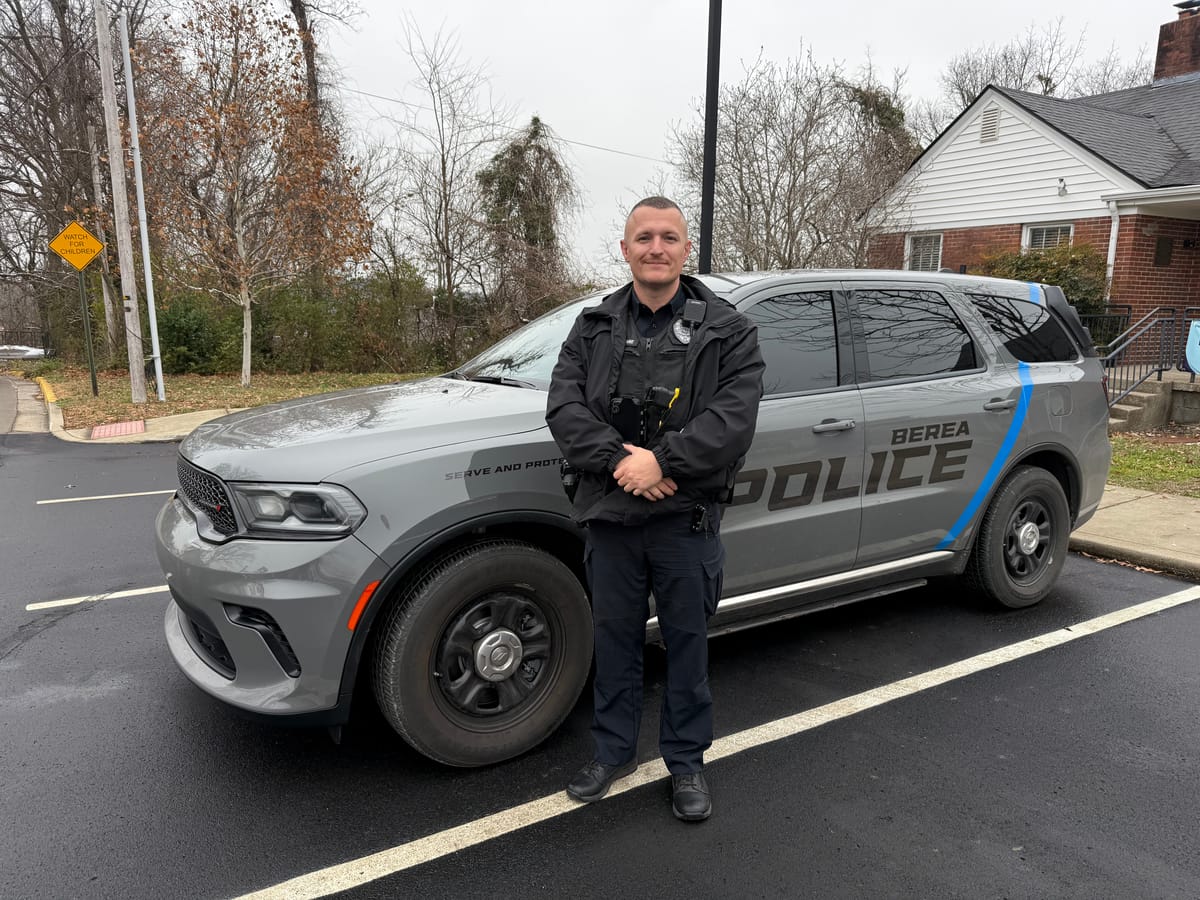
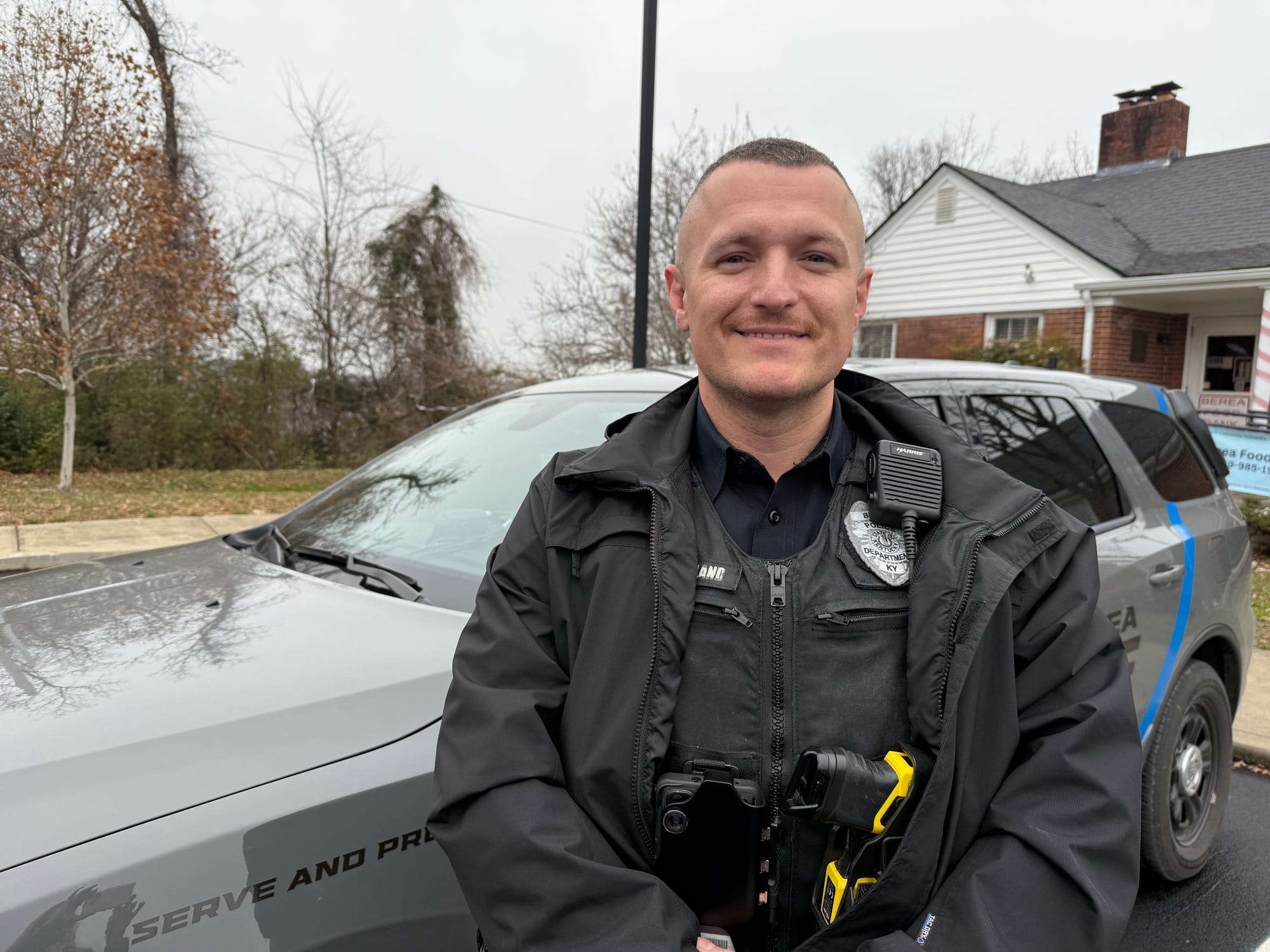
At a slightly elevated speed, we headed from City Hall, where we'd agreed to meet, toward the Artisan Center. That was where someone identifying himself only as "a detective" had called 911 to report a bomb was on the premises. En route, Officer Josiah McFarland of the Berea Police Department alerted Dispatch that the citizen scheduled to ride with him that day had entered the vehicle.
We were diverted to another call for my "protection". So, we headed to the Stoney Creek development, off Hwy 25, between Richmond and Berea.
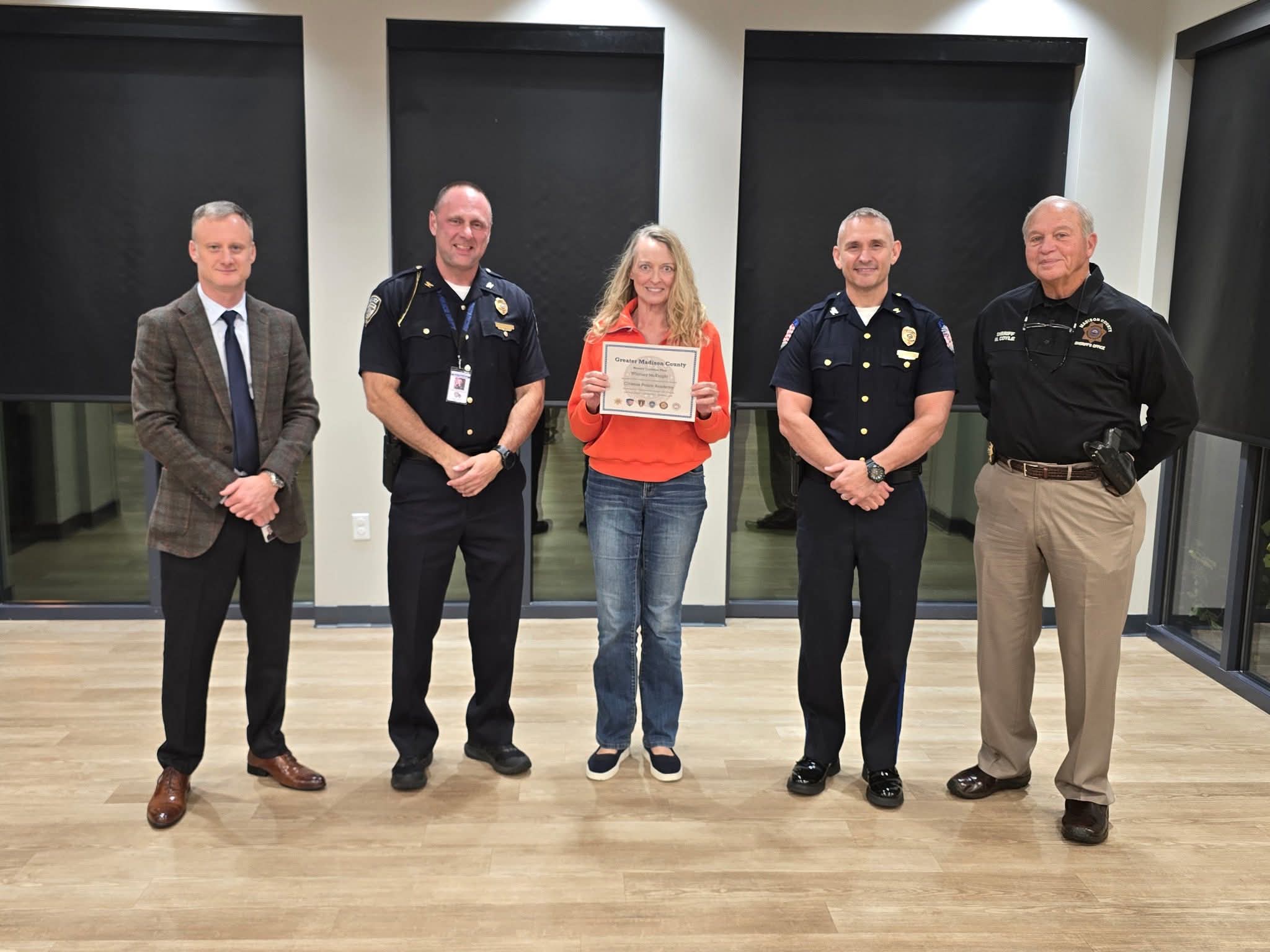
The Citizens Police Academy
Part of Madison County's combined law enforcement's attempts to deepen ties to the community, and to make clear what they do on behalf of citizens, ride-alongs are offered to graduates of the cornerstone to this coordinated public relations campaign: the Citizens' Police Academy.
Application to the Academy opens in early May each year. There are a few criteria you must meet to be admitted, chief among them, that you are not a convicted felon. Once selected, your first class will be held in the Funderburk Building Media Room, on the campus of the state's Department of Criminal Justice Training, located at EKU in Richmond.
Twelve weeks later, you will have been run through the same training modules as DJOCT's officer recruits who, once they graduate, will go on to staff law enforcement departments statewide. The one exception to the curriculum is that you will not have the same firearms training as recruits.
The participating agencies include the Madison County sheriff's office, the Berea and Richmond police departments, the EKU police department, and the Kentucky State Police, Post 7.
High speed chase
Among the many things you will be invited to do, is to slip behind the wheel of a police cruiser and drive as fast as you can in a mock high chase pursuit. These faux bad guy chases take place on a special driving track at the DOCJT campus.
I had been anticipating this class with delight, as I am a speed freak who admires Formula 1 race drivers' handling skills. But the moment I heard the announcement from the control tower, "Car 4, you are cleared to go," I froze up and drove like I was in a parade. My police chaperone, sitting in the passenger seat, said "Flip the lights, flip the lights!"
So, I did. I heard the sirens and saw the lights flashing outside of my cruiser, and, unexpectedly, also inside of it. Reflexively, I started to pull to the side of the road, thinking I was being stopped by an officer. I was the officer! It was so confusing.
Ground rules for my ride-along
During class, we'd been offered the option to ride with any law enforcement of our choice. I considered the KSP at first (high speed chases on the highway, for real!) but in the end, I chose the Berea PD, as Berea is home base for The Edge. And that is how I found myself on a dreary day in early December, riding shotgun (without a shotgun) for McFarland.
Our ground rules were: I was not allowed out of the cruiser unless given permission by McFarland. I could not take pictures of anything occurring during his shift. I could ask any questions I wanted and take notes.
The Stoney Creek stop was a dispute between a property owner and a construction crew who kept walking through the disgruntled man's yard, instead of using the easement, to get to their new-build site. They denied it, but the property owner had camera footage showing otherwise, so that was that. Soon, we pulled back out on Hwy 25.
I asked McFarland if a lot of his shift is spent just driving around, making his presence known, until he gets a call out from Dispatch. Yes, he said, but that gives him time to regularly visit the public schools on his beat, something he said is encouraged in the Department, and is also something he likes to do, as he enjoys the relationships he's built with the kids over time.
Soon, we pulled over and into a stump road on 595, the extension road that passes Tractor Supply, just a bit before the Dollar General, if you are driving west.
McFarland had been told by Dispatch about a woman whose husband had been granted an emergency protective order against her. Now she was kicked out of the house, homeless as a result, and wanted back in. For good or just to pick up her things, wasn't clear. McFarland called her on his police-issued cell phone. He was so polite and helpful with her, I noticed. He told her to call the sheriff's office, which handles protective orders, and they'd take care of it. We drove past the address in question, just in case, but nothing was happening.
Now driving east on the 595 extension, we came to the intersection of 595 and Walnut Meadow Road. A small pick up truck was stalled in the left lane, blocking traffic right at the stop light. McFarland parked behind the truck and flipped on the lights. He got out and locked me in the cruiser with his key fob. I heard the "ca-chunk-ca-chunk" of the locks being engaged automatically.
Traffic stop procedure
The truck had taken a bashing on its rear bumper at some point and had withstood plenty of other bumps and bangs in its industrious, clearly lengthy, life. The driver had been outside of the cab, throwing something into the bed of the truck, but when he saw McFarland get out of the cruiser, the man's eyes bugged and he fled back inside the cab. The light had turned green, but the truck had died during the red light, so the man was stuck.
McFarland did exactly what I'd been taught at the Academy cops should do when they pull over a driver. I watched as he hewed close to the truck's body and approached the driver slowly, stopping just before the driver's window.
Whether he asked the man to place his hands on the wheel so he could see them, I don't know, but he never presented himself to the driver squarely in the window. There's always the chance the driver is armed and dangerous.
It wasn't long before the driver got out of the car, placed his hands behind his head, and seemed resigned when McFarland cuffed him and then guided him over to the cruiser, stopping when they'd reached the rear passenger door. It had dawned on me when the cuffs went on that I would soon be sharing my ride with a prisoner.
Watching through the side view mirror, I saw McFarland put on thick black latex gloves, then search every pocket of the man's clothing. He approached each pocket gently, as if he knew there were sharp objects he was about to encounter, which he told me later, there were: three hypodermic needles, one filled with blood.
With each find drawn from pocket depths, McFarland dropped it on the roof of the cruiser. Clink. Clink. Dunk. Clink. There were a lot of things in this arrested man's pockets.
Another beat cop appeared and got out of his cruiser, and I heard him say hello to McFarland. They discussed something, but I couldn't hear the conversation well enough to know what it was.
Headed for jail
When the pocket emptying was done, McFarland tried to unlock the doors with his fob, but it had quit working, so I pushed the button on the front passenger door to free the rear one. He opened it, and helped the man to take his seat in the back, directly behind me. Whether there was a seatbelt or any further restraints involved, I wasn't able to see. For one thing, there is a thick plate of either plastic or glass between the front and back seats, and for another, I didn't want to gawp. The man's sadness was resonant.
From the radio which was on loud in the cruiser, I heard "suspended license" as part of the largely unintelligible string of argot that is police communications, replete with numbers and codes. That must have been our passenger's infraction, I figured.
McFarland closed the rear door. It was just me and this guy. Manners took over, and I said, Hello, how are you? I'm fine, he said, then asked, How are you?
Then I realized the absurdity of the exchange, and figured he wouldn't be offended if I didn't answer his question. We sat quietly after that. Looking south, down Walnut Meadow Road, I saw two fire engines blocking the entrance to the Artisan Center. There didn't seem to be an emergency, though. No flames, no ambulances.
Next, a tow truck arrived. It looked to me like a rough business, how the front end of the man's truck was suddenly jacked up high by the tow arm. McFarland and the tow truck operator exchanged paperwork and waved good bye. Then McFarland got back in the cruiser, flipped off the lights, made a U-turn, got on the highway, where we drifted into the fast lane headed for the County detention center. McFarland read the man his Miranada rights from the front seat, by memory.
It hadn't even been a full hour since I'd started this ride-along.
This article has been updated to reflect that applications to the Citizens' Police Academy open in May, not August.
Next up: Encountering ICE at the County detention center, why recruits are drawn to join the force